2027 Audi Q7

View All Media
2027 Audi Q7 Review

Updated July 28, 2026
Pros
- More potent engine options
- Taller body results in more interior headroom
- Luxurious options
Cons
- Is the third row any roomier?
- No efficient engine option
What's New?
- Redesigned third-generation Q7
- Shapes up as the sportier 3-row SUV to the Q9
- More cargo room and headroom
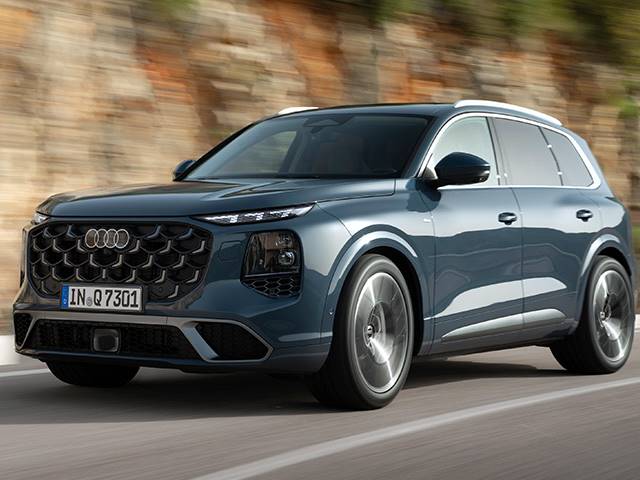
The redesigned 2027 Audi Q7 sports two new engine choices for a sportier take on the luxury 3-row SUV. Pricing starts at $72,295.
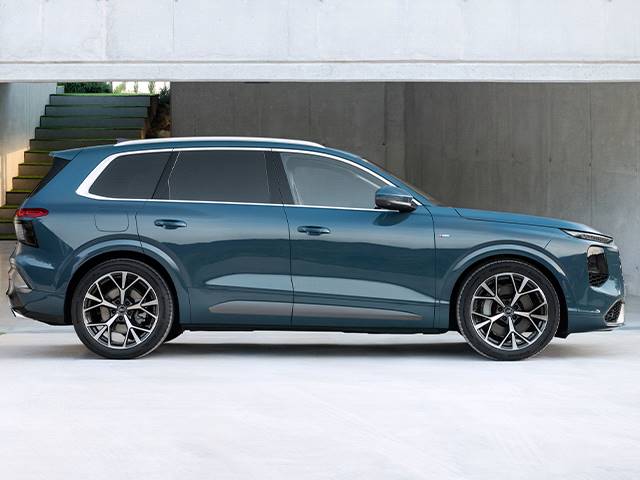
The third-generation Q7 measures up to its predecessor in most dimensions, most notably in its wheelbase. But it’s taller, so there’s more headroom and cargo room. That might not address the problems of the cramped third row, but the new Audi Q9 does, as the largest Audi in the family and its first full-size SUV.
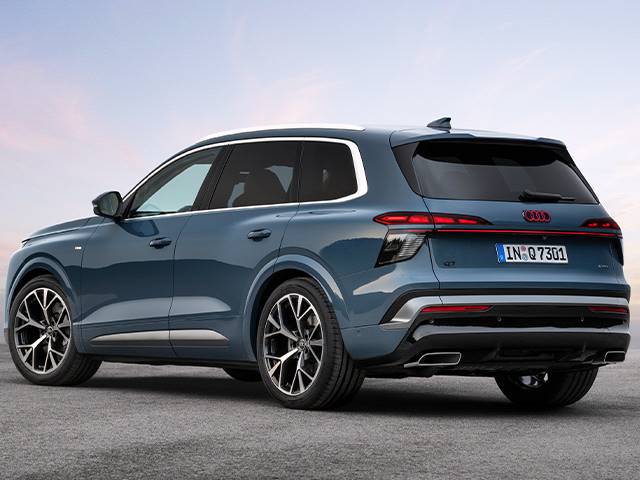
With two more powerful engines and design elements including flared wheel arches and an integrated roof spoiler, the new Q7 aims for the fun side of the 3-row family haulers. A more luxurious interior, with wood-grain trim and a dash of screens hosting the latest tech, complements the innovative light signatures on the front and rear. The upgrades, both in refinement and technology, should keep the latest Q7 competitive with the BMW X5 and Mercedes-Benz GLE, as well as the Genesis GV80 and Acura MDX.
It arrives late in 2026, and pricing will be announced nearer to the on-sale date.
We’ve logged hundreds of hours driving and researching this generation of luxury midsize SUVs, and we’ll add to those impressions with the next-generation Audi Q7.
2027 Audi Q7 Pricing
The 2027 Audi Q7 has a starting sticker price of $72,295, with the range-topping Q7 Prestige TFSI kicking off at $86,295. But Kelley Blue Book Fair Purchase Pricing currently suggests paying $3,595 to $4,295 less than MSRP, depending on trim and equipment. These prices are updated weekly.
MSRP | KBB Fair Purchase Price (national avg.) | |||
|---|---|---|---|---|
$72,295 | $68,700 | |||
$76,695 | $72,900 | |||
$86,295 | $82,000 |
The 2027 Q7 comes standard with quattro all-wheel drive, and Audi has yet to announce if the base Q7 45 will return. Given the new look, more robust engines, and more standard safety and convenience technology, expect the price to exceed the $69,395 of the 2026 Q7 55, which is priced $6,100 more than the base 2026 Q7 45. We expect the 2027 SQ7 to exceed the $95,095 of the current SQ7.
Standard features include a dual wireless device charger, power-adjustable seats in all three rows, a power liftgate, a large digital instrument cluster and center touchscreen housed under a single pane of curved glass, a passenger infotainment touchscreen, a panoramic sunroof, and 20-inch wheels.
Advanced driver assist technology fitted as standard includes automatic emergency braking front and rear with pedestrian detection, blind-spot monitoring, and parking assist. Other features may be added as standard when pricing is finalized in the fourth quarter of 2026.
Engine and Suspension Options
The new Q7 and high-performance SQ7 launch with new engines. Audi hasn’t disclosed whether there will be a base Q7 45 as in past years.
| 2026 Q7 55 | 2027 Q7 | 2026 SQ7 | 2027 SQ7 | |
| Engine | 3.0-liter turbo V6 | 2.9-liter twin-turbo V6 | 4.0-liter biturbo V8 | 4.0-liter twin-turbo V8 |
| Horsepower, Torque | 335 hp, 369 lb-ft | 429 hp, 442 lb-ft | 500 hp, 568 lb-ft | 591 hp, 590 lb-ft |
| 0-to-60 mph | 5.5 seconds | 4.8 seconds | 4.0 seconds | 3.7 seconds |
In addition to quattro all-wheel drive, every Audi Q7 comes with an 8-speed automatic transmission and a new limited-slip center differential that more evenly handles torque distribution between the axles, which should result in greater stability when tossing it around. On the other hand, towing capacity remains 7,700 pounds, which is near the top of the chart for the midsize SUV class.
With grip in mind, the SQ7 can be had with a 23-inch staggered wheel setup and summer performance tires. Otherwise, wheel choices range from 20 to 22 inches, and all-season run-flat tires will be the shoes.
A retuned steel-spring suspension returns as standard, while an adaptive air-spring suspension remains optional on the Q7 and standard on the SQ7.
The SQ7 can be had with a more sophisticated air suspension that lowers the ride height by 1.2 inches in its sportiest setting for reduced aerodynamic drag. On the optional setup on the Q7, it lowers 2.4 inches from the normal driving height on exit. Audi did not specify if the ground clearance changes from 8.3 inches in the 2026 model.
Interior Comfort
With the same wheelbase as the outgoing model, the new Q7 shares the same frame dimensions. We haven’t been in it or seen it in person, but by the tape, the new Q7 measures up to be roomier, which was one critical flaw of the cramped third row in the 2026 Q7.
It’s 2.7 inches taller, so both headroom and cargo volume increase. There’s 1.5 cubic feet more behind the third row, now totaling 15.1 cubic feet, which is about the same as in the trunk of a sedan. Power-fold down the two seats in the third row to open up 43.9 cubic feet.
There are more clever seating arrangements, too, for the standard seven-seater. All seats are power-folding through the touchscreen or physical buttons in the cargo area and rear doors. The second-row bench can fit three child safety seats side by side and remain in place while occupants get into the third row, Audi says. The second row can be folded in a 65/35 split, but the center section or middle seat can be manually folded down for a more versatile 35/30/35 split. Second-row captain’s chairs are available for a six-seat configuration.
Compared to the outgoing model, legroom is about the same in all three rows, so there will likely need to be some negotiating between third-row and second-row passengers. If space is your primary concern, look to the all-new Audi Q9 3-row SUV.
Cars You May Like
We’ve Rounded Up Cars That Could Be Your Perfect Match.
2027 Audi Q7
KBB.com Consumer Reviews
We don't have consumer reviews for this vehicle.
Be the First to Review This Car2027 Audi Q7 Styles
Calculate Your Budget With These KBB.com Tools
Specifications
Dimensions, Weights & Capacities
Curb Weight | 5137 lbs. | ||
|---|---|---|---|
Fuel Capacity | 21.1 gallons | ||
Front Head Room | 39.1 inches | ||
Front Leg Room | 41.5 inches | ||
Max Seating Capacity | 7 | ||
Overall Length | 199.1 inches | ||
Front Shoulder Room | 59.5 inches | ||
Towing Capacity, Maximum | 7700 lbs. | ||
Trunk or Cargo Capacity | 78.1 cu.ft. | ||
Turning Diameter | 42.0 feet | ||
Wheel Base | 117.9 inches | ||
Width with mirrors | 86.8 inches |
Exterior
Alloy Wheels | Available | ||
|---|---|---|---|
Number of Doors | 4 doors | ||
Panorama Moon Roof | Available | ||
Power Folding Exterior Mirrors | Available | ||
Privacy Glass | Available | ||
Roof Rails | Available | ||
LED Headlights | Available | ||
Rear Spoiler | Available |
Mechanical
Drivetrain | AWD | ||
|---|---|---|---|
Transmission Type | Automatic | ||
8 speed | Available | ||
Recommended Fuel | Premium | ||
Parking Assist System | Available |
Performance
Horsepower | 429 @ 5500 RPM | ||
|---|---|---|---|
Torque | 442 @ 2000 rpm | ||
Engine | V6, Twin Turbo, 2.9 Liter | ||
0 to 60 | 4.8 seconds | ||
Top Speed | 130 mph |
Warranty
Basic | 4 years / 50000 miles | ||
|---|---|---|---|
Powertrain | 4 years / 50000 miles | ||
Corrosion | 12 years / Unlimited miles |
Comfort & Convenience
Entertainment
Interior
Seating
Technology
2027 Audi Q7 Safety
Safety Features & Technology
Best SUVs

More Audi Q7 News & Information
Sometimes the Middle of the Road is the Place to Be Roomier than small luxury SUVs but not…
As promised, Audi has begun expanding the powertrain scope of its largest SUV offering with the addition of a new…
After sitting out the 2016 model year in the U.S., the Audi Q7 has returned for 2017 as an all-new…
FAQs
How much should a 2027 Audi Q7 cost?
A 2027 Audi Q7 should cost between $68,700 and $82,000 according to Kelley Blue Book Fair Purchase Pricing.
What's the cheapest Audi Q7?
The cheapest 2027 Audi Q7 is the Premium TFSI, with a starting sticker price of $72,295 and a Kelley Blue Book Fair Purchase Price of $68,700.