
You’re standing at the gas pump watching the price tick up and up, then up some more. It’s the dead of summer, over 100 degrees out, and as you sweat while filling up, climate change is on your mind. You’re eyeing the electric vehicles (EVs) driving past, and that little inkling of “what if?” starts to creep in.
If you’ve driven gas-powered vehicles your entire life, EVs might still feel a little bit like a sci-fi concept. Charging stations may feel like foreign territory. And regenerative braking? How the heck does that work?! Or wait, were those just all the anxieties I had before driving my first EV? Prior to this article, I’d ridden in a few EVs with friends and ride shares, but I’d never had the chance to spend time driving one myself.
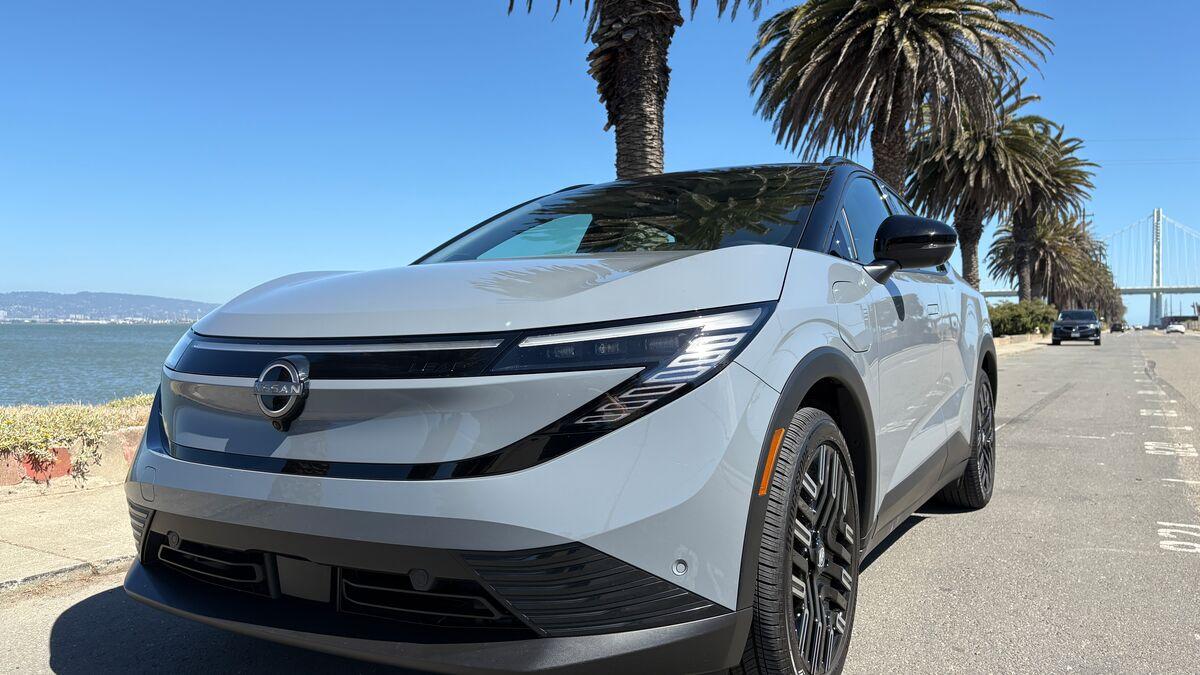
Despite these uncertainties, you (and I) might still be EV-curious. If you’re just setting out on your EV research journey, here’s a primer on the basics to get you started. With the help of a 2026 Nissan Leaf, I’ll take you along on my first EV drive and walk you through what to expect when driving an EV, how to charge, some exterior and interior differences between gas vehicles and EVs, and which models might be the best fit for your lifestyle.
- First EV Drive Video
- EV Driving Differences
- Charging
- Exterior EV Features
- Interior EV Features
- Lifestyle Considerations
- Final Thoughts
Come With Me on My First EV Drive: A Video
If you want, hop in the passenger seat and come along as I take you through my first EV experience. In this video, I’ll introduce you to EVs inside and out, and take you with me on my first drive.
If you’re interested in a particular aspect, you can jump straight to:
- The driving experience (01:40)
- A visit to the charging station (07:55)
- A walkthrough of exterior features unique to EVs (16:24)
- A look at some EV interior features (18:32)
- Lifestyle considerations (19:54)
Driving Differences
If you ask a longtime EV enthusiast about the driving experience in an EV versus a gas vehicle, you might be in for a lengthy explanation (don’t tell my colleagues I said that). But if you’re just looking at these cars for the first time, here’s what you’ll really want to pay attention to during your test drives:
Instant Torque
Most EVs today have a single-speed transmission, which means there’s no shifting between multiple gears. Instead, the electric motor operates across a wide RPM range. You don’t have to wait for an engine to rev up. Because the motor can deliver strong torque to the wheels immediately, EVs offer “instant torque.”
Noise Level
In the simplest terms, EVs work by storing energy in a battery, which then powers the motor that drives the vehicle’s wheels. Because there’s no gas engine, EVs don’t have to contend with engine noise under the hood. When you’re driving at low speeds, the quiet is definitely noticeable. As you get up to higher speeds, however, you’ll still hear road and wind noise.
Regenerative Braking
EVs (and hybrids) have a unique feature called regenerative braking. The friction of braking generates energy and heat, but in a gas vehicle, that energy simply dissipates. EVs manage to instead recapture kinetic energy and send it back to the car’s batteries, giving a little extra charge and extending driving range a bit more.
One-Pedal Driving
No current vehicles on the road actually use only one pedal; all still require at least two. However, many EVs employ an enhanced regenerative braking system often referred to as “one-pedal driving.” Different manufacturers have different names for this function — for example, Nissan calls it “e-Step” while Hyundai calls it “i-Pedal” — and what it does is allow you to accelerate and decelerate using just one pedal, helping to eliminate your foot’s time spent switching between pedals. It also helps preserve the car’s brakes, since you’re using them less.
When you are driving and want to slow down, you simply lift your foot off the accelerator. You may still have to apply the brakes to come to a complete stop, but far less aggressively than you would normally. It’s a feature that can definitely be a little surprising if you’ve never used it before, so if you’re going out for your first EV test drives, just know that it’s something that will take some time to really get used to.
I really enjoyed the feeling of immediate acceleration, as well as a quieter drive. One-pedal driving was the only aspect of EV driving that I found a little jarring. It’s something that would become second-nature over time, but for your first EV test drives, just be aware that it’s a new sensation and will take a little practice to adjust to the different timing that it requires from a standard gas vehicle. In the Leaf (and most EVs), you can turn one-pedal driving off entirely, or opt to adjust the intensity of the regenerative braking. While this affects the amount of energy your battery can recapture, if you don’t like the sensation, you aren’t permanently stuck with it.
Charging
One of my biggest anxieties about driving an EV concerned charging. If you’ve never done it before, it can feel a little intimidating. What I learned, however, was that while charging an EV looks a little different from a trip to the gas station, it isn’t dramatically so. It can be a bit confusing at first with levels and adaptors and volts and kilowatts (oh my!), but don’t worry — once you get the hang of how it works, it’s pretty much as simple as a stop at the gas station.
However, if you aren’t able to conveniently charge where you live, this can be a major determining factor in whether you pursue an EV or not. Charging at home is no problem — you can set-it-and-forget-it — but, if you have to go to a charging station, it’s a bigger time commitment.
Charging Levels
There are three levels of charging: Level 1, Level 2, and Level 3.
- A Level 1 charge will involve plugging your car directly into your standard 120-volt 3-prong household outlet. It works, but it’s slow. You’d probably need more than 24 hours to fully charge your car this way.
- A Level 2 charge happens at 240V of alternating current. This is what large household appliances like water heaters, dishwashers, and drying machines use. This is the recommended standard for charging at home.
- A Level 3 charge, or DC fast charging, is currently the quickest way to charge. Depending on the charger and the car’s battery, this type of charging uses a higher voltage (400V-800V) to achieve a power output that can reach up to 400 kW and beyond. This is the type of charge that’s most desirable if you have to stop at a station, because it’s the fastest.
Adaptors
Depending on the level of charge you are using, you might need an adaptor plug. The most common connector types include:
- J1772: This has been the standard connector for Level 1 and 2 charging, but it will gradually be phased out (alongside CCS) for NACS. Most cars with NACS Level 2 charge that way.
- CCS1: Combined Charging System (CCS) Type 1 connectors are the standard for DC fast charging.
- NACS: North American Charging System (NACS) connectors are used in all Teslas and at Tesla Supercharging stations, and are now available to other EV manufacturers. Other automakers have adopted this as the standard for high-speed charging going forward.
Depending on your car and how you want to charge, you’ll need the appropriate adaptor if your vehicle’s charging port cannot accommodate the level or type of charge you want.
Where to Charge
New charging stations are arriving all the time, and nationwide, the EV charging network has expanded significantly over the years. Unless you live in a very rural area, there’s a good chance you have a charging station not too far away. Home charging will always be the most convenient option, but other locations are starting to hop on the charging trend, too. More and more workplaces are installing chargers for employees, and some public institutions, like libraries, offer charging options for patrons.
Time and Cost
Charging will take anywhere from 10 minutes to hours, depending on the vehicle and type of charge. Cost will also vary depending on where and how you charge. If you’re able to charge at home or at work, that will probably be the most economical, but slower. A fast charge at a station won’t take as long, but the rates will be higher.
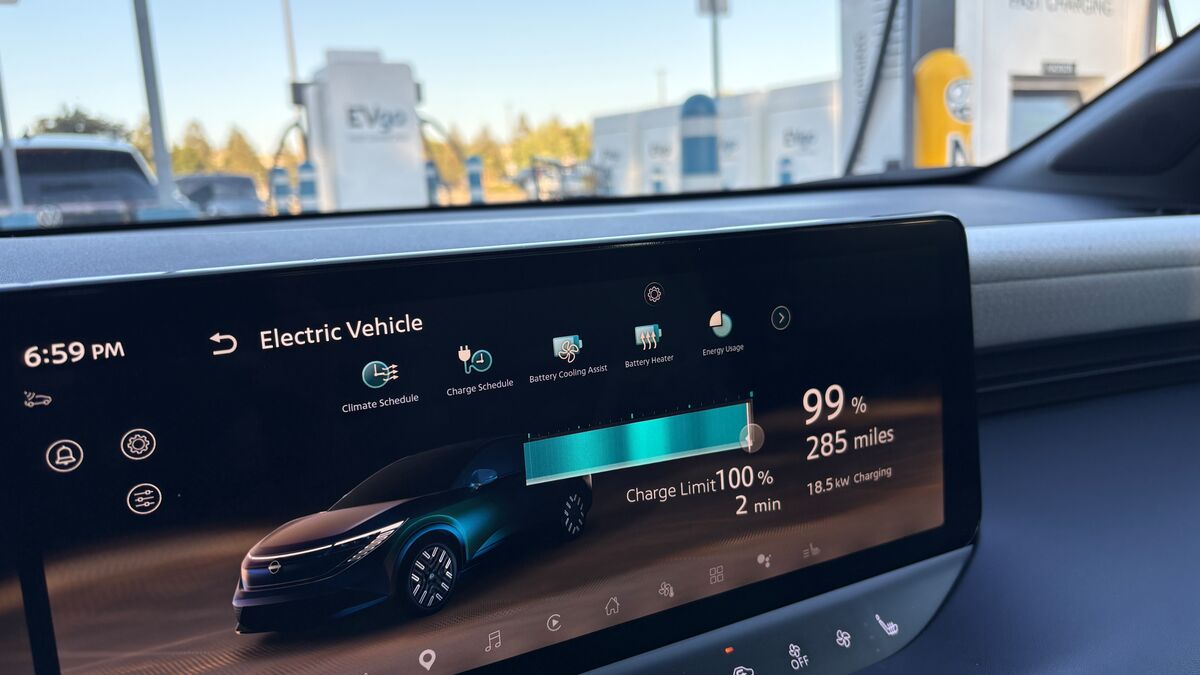
For my first EV drive, I went to a non-Tesla charging station in California that had a NACS charger and took credit cards (I didn’t want to have to download an app and create an account, though if it were a car I owned, I would definitely do that). It took me about 50 minutes to fully charge the car from 39% to 100%, and it cost about $31. I decided to do a full charge to see how long it would take. Most manufacturers recommend keeping your battery level between 20% and 80% for general daily use. This is another consideration for those who can’t charge at home and will have to balance how often and how much to charge.
The charging process was very simple, but you’ll want to come prepared with something to occupy your time while you wait for your charge to finish. Filling up with electrons not as quick as a stop at a gas station.
MORE: For an in-depth guide to charging, check out EV Charging Stations: Everything You Need To Know.
Exterior EV Features
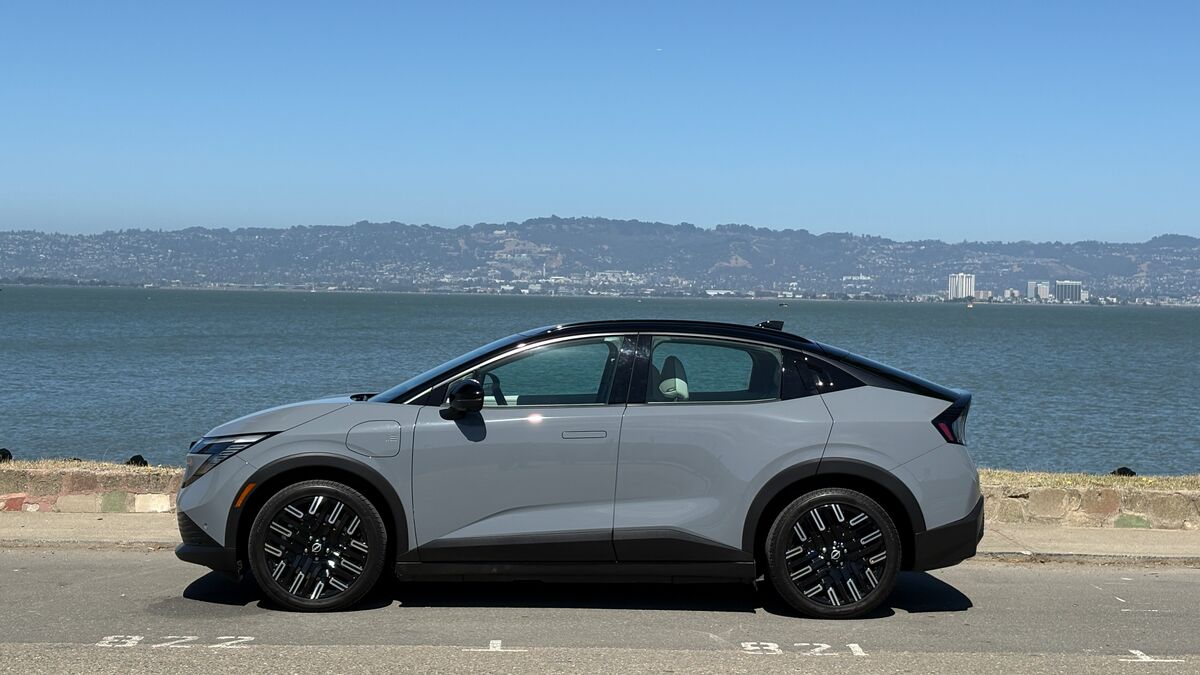
If you just glance at an EV, you might not immediately recognize it as such, but EVs do have some distinct exterior differences from gas vehicles. Most are subtle, but once you start to recognize them, you can distinguish an EV from a gas vehicle pretty quickly.
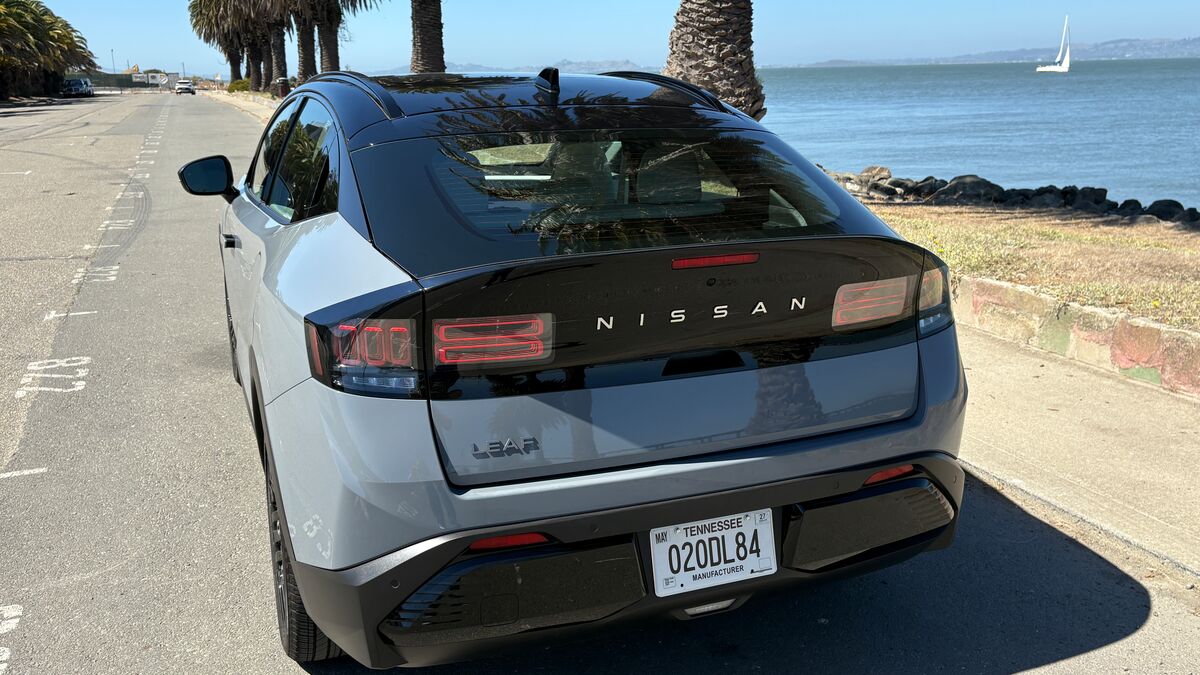
Front Grille
Because EVs don’t need air circulation in the front of the car to help cool the engine and radiator while driving, most don’t have a front grille. Some models still have a grille for aesthetic or other design reasons, but many popular models feature a smooth, closed front end.
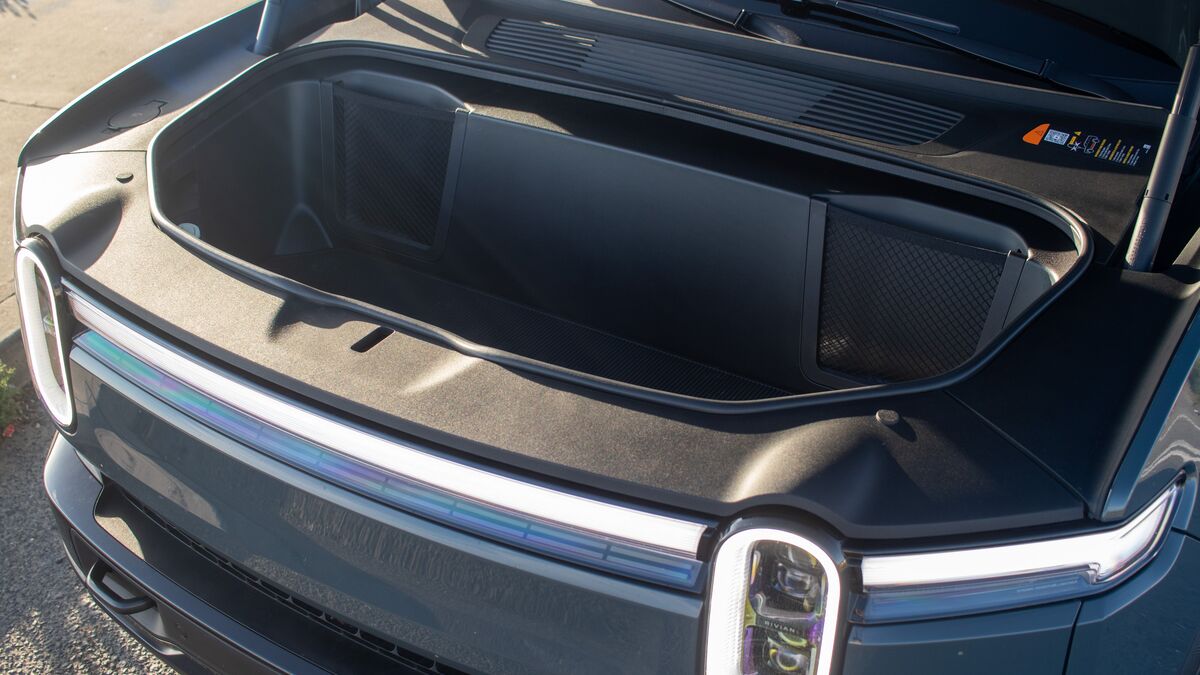
Frunk
A front trunk, or “frunk,” is a common EV feature. In lieu of an engine under the hood, many of these vehicles use this space as extra room for storage or cargo instead. Not every EV has a frunk, and you’ll find non-EVs that do; it all depends on the make and model of the vehicle.
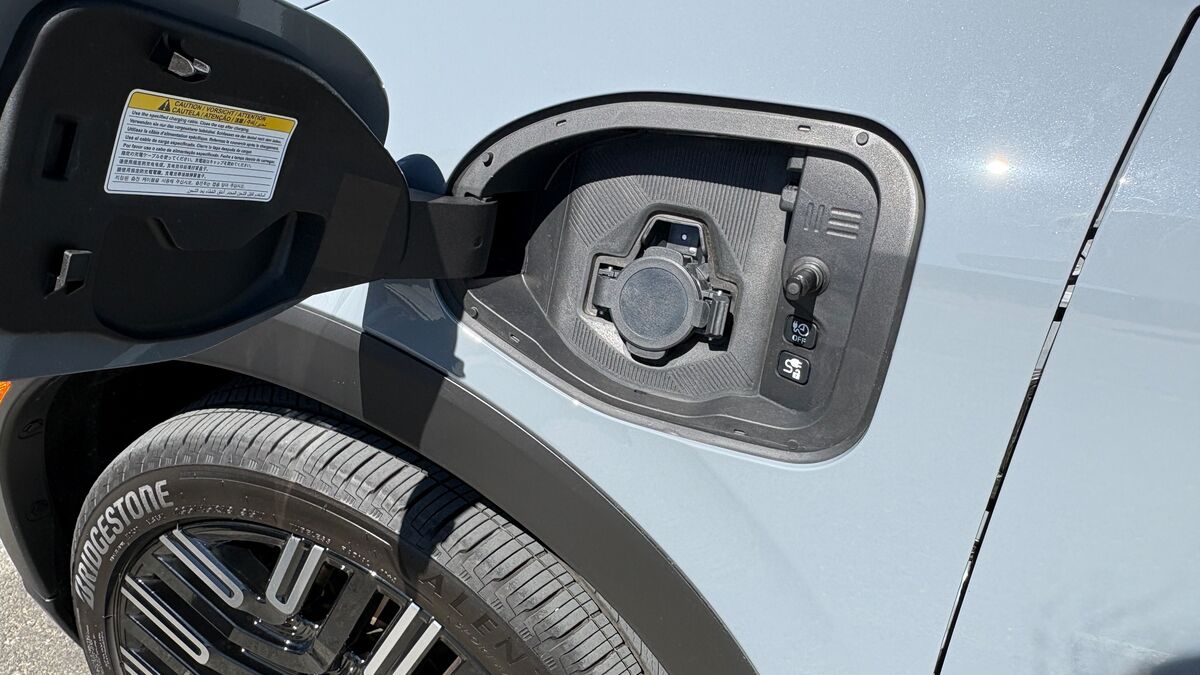
Charging Ports
Gas and hybrid vehicles feature a fuel door that opens to the gas tank. EVs have charging ports instead where you plug in to charge, but they look like a fuel door. Some EVs will have a single charging port and some have multiple charging ports; you may need adaptors depending on what type of charge you want to do,
Handles
Many EVs feature flush or pop-out door handles. These are primarily a style choice, although they also minimally improve the car’s aerodynamics.
No Exhaust Pipe
If you’re looking at a car and aren’t sure whether it’s an EV, check for an exhaust pipe in the rear. A tailpipe allows the car to release exhaust gases. Because EVs are emissions-free, they don’t need this element.
Interior EV Features
While some of the exterior differences between gas and EV are pretty distinctive, interiors are less so. EV aficionados who are deep into design elements will say there is as much to talk about inside the car as outside, but if you’re just getting started, you really only need to pay attention to a few features:
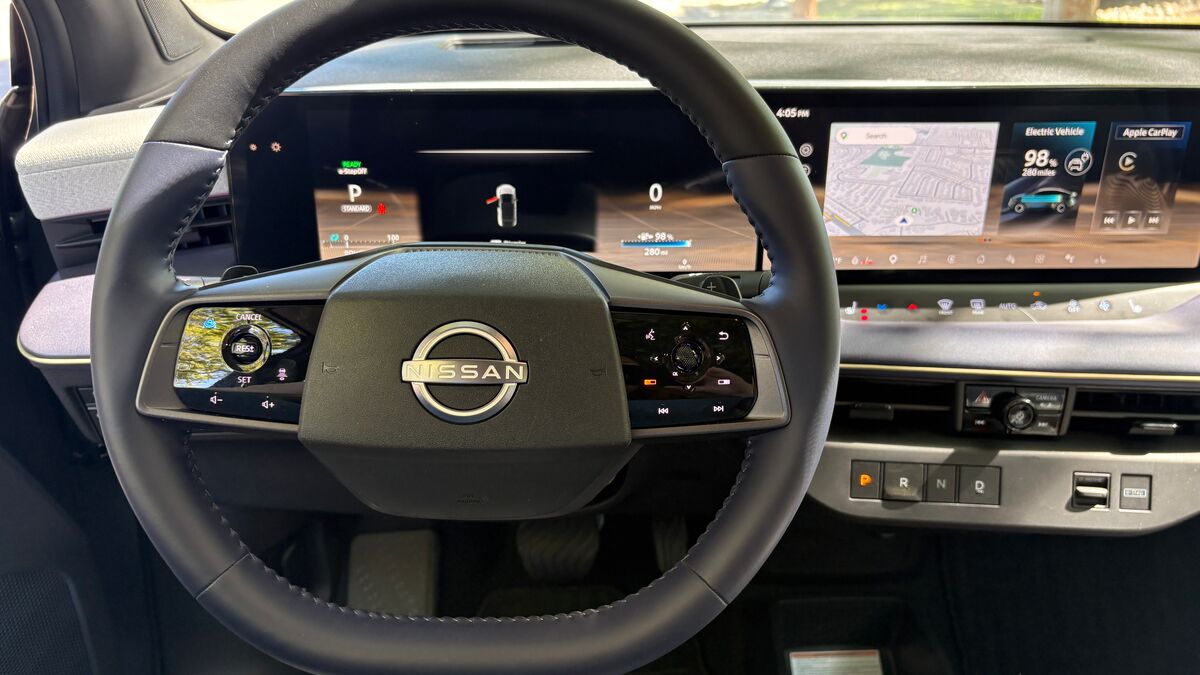
Charging Information
Inside the car, you’ll find all of your charging info instead of a gas gauge. The look varies across models, but you’ll always find a gauge or graphic display of the battery charge percentage. Some cars will estimate how many miles remain that you can drive on that charge. Others will display this in different graphical formats. EVs also display information while charging. Again, the look will vary from model to model, but you’ll always have an indicator of when the car is charging and when charging is complete.
Power Gauges
Most EVs feature a power gauge where you might find a traditional tachometer in a gas car. These gauges help to show real-time energy usage. As you accelerate, you can see how much power the battery is sending out. On the other side, you can see when the battery is being recharged by regenerative braking.
Charging Port Open
Most EV charging ports open via push-to-release or motorized auto-open. Some models will have an option to open the port by app or even voice control. However, some older EVs require you to manually open the port with a button or lever inside the car.
Lifestyle Considerations
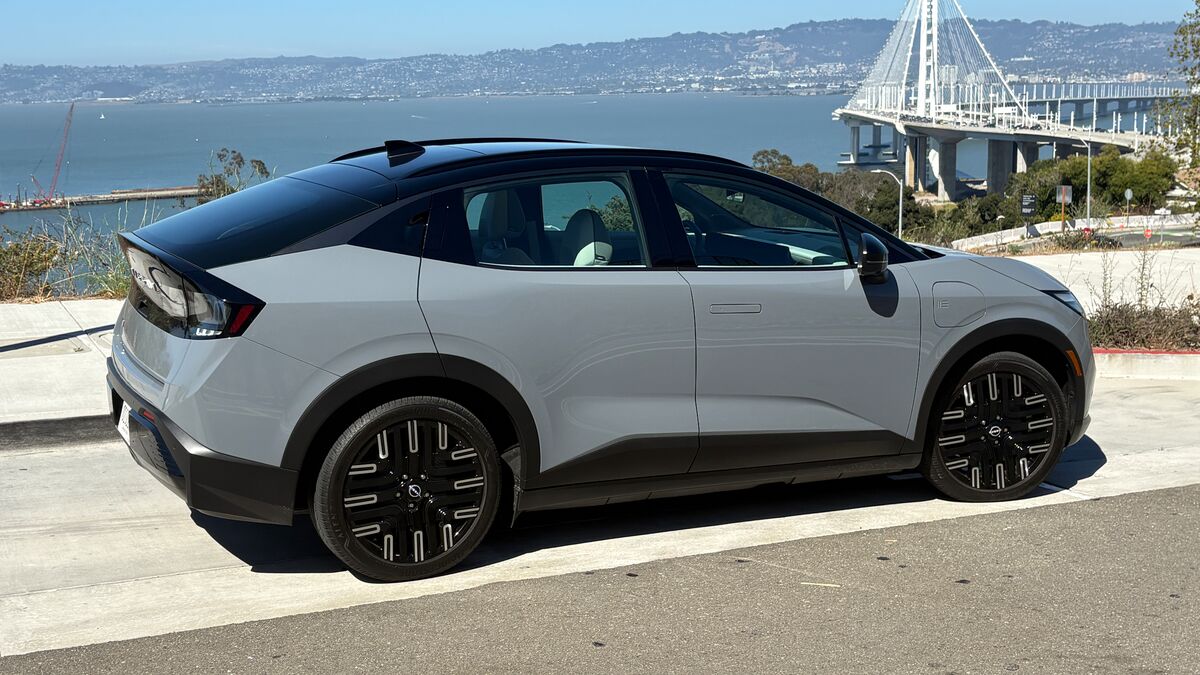
When you start your search for an EV, you’ll have a pretty wide range of vehicles to choose from. Manufacturers continue to release new models, and you just have to find the one that’s the best fit for your lifestyle. I live in a city where parking is very tight, and traffic is heavy, making a smaller option like the Leaf a great choice. If you live somewhere with a lot of open space, or you have a lot of people, pets, and/or stuff to haul, a roomier option may be a better fit.
Size
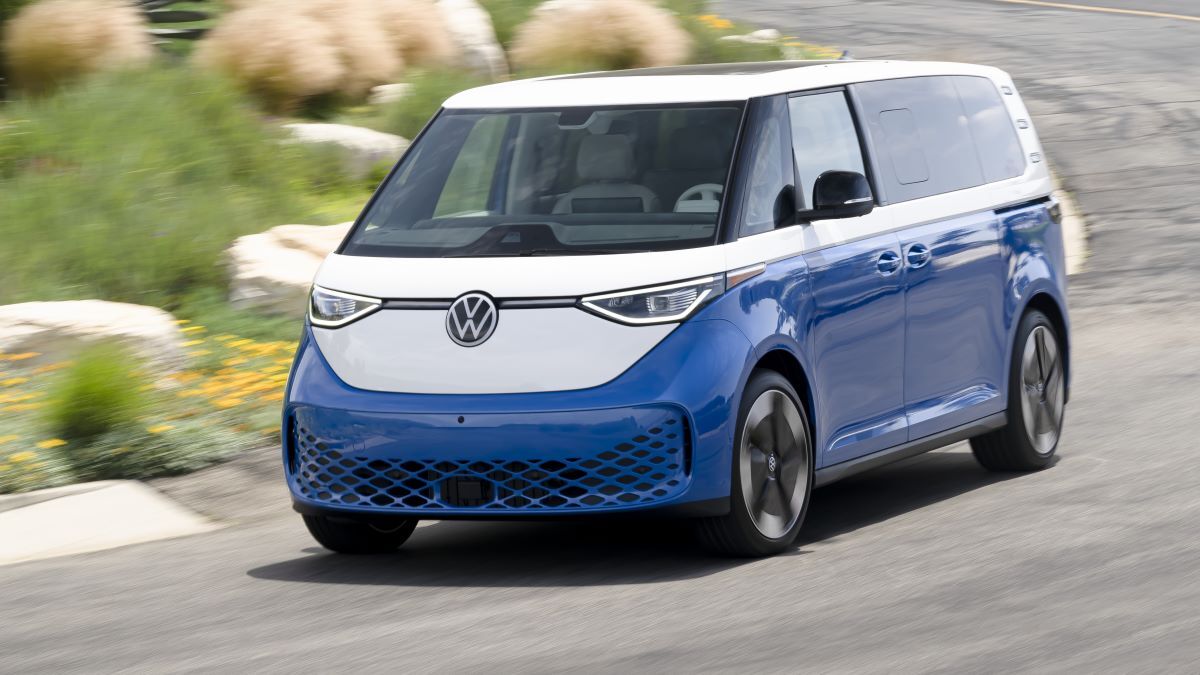
EVs come in sedans, crossovers, SUVs, and trucks. The ID. Buzz is currently the only EV passenger van option on the U.S. market. Ask yourself:
- How many people and/or pets do I need to transport?
- How much stuff do I need to haul?
- How much legroom and headroom do I need to fit my body type?
- Do I have accessibility concerns that require a different vehicle size or type?
Location and Climate
Where you live will also play a big part in determining which EV you buy. When you’re researching, consider factors like:
- Parking: Do you have a garage or a lot of space? Or, do you live in an area where parking is tight, and a smaller vehicle will be less stressful to handle?
- Weather: Do you live somewhere with harsh winters? You’ll need to make sure the vehicle can handle that appropriately.
- Charging options: Are you unable to charge at home? You’ll need plentiful charging station options. If you can charge at home, but still live far from charging stations, this could also be a concern if you frequently take long trips and the car cannot accommodate the range needed for them.
Pricing
EVs run a very wide pricing range. They can start around $25,000 and run more than $100,000 for luxury models. Here’s a quick look at where some popular EV options fall.
| Sedans/Crossovers | SUVs | Pickup Trucks | |
| $25,000-$40,000 | Chevrolet Bolt Nissan Leaf Subaru Trailseeker Tesla Model 3 | Chevrolet Equinox EV Hyundai Ioniq 5 Subaru Uncharted Toyota bZ | Slate |
| $41,000-$75,000 | Tesla Model Y Genesis GV60 | Cadillac Optiq Chevrolet Blazer EV Genesis GV80 Subaru Trailseeker | GMC Sierra EV Chevrolet Silverado EV |
| $75,000+ | Lucid Air | BMW iX Rivian R1S | Rivian R1T |
*Prices are based on the 2026/2027 base model plus destination fee, as of August 2026.
Final Thoughts
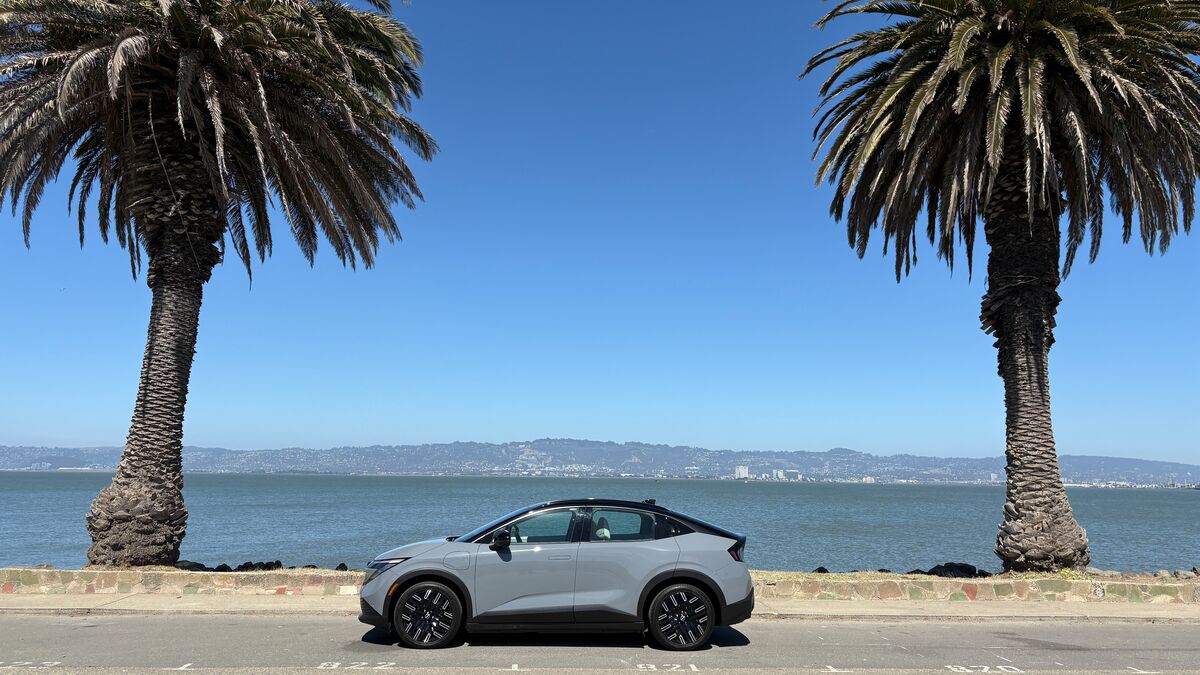
I was a little nervous about driving an EV for the first time. Even though I’ve ridden in them before, I just wasn’t sure how the experience would differ from that of a passenger. What I found was that I really enjoyed the drive, and that while there are some differences, none are so radical that it doesn’t still feel like simply driving a car. The quick, smooth acceleration was one of my favorite aspects. It was definitely a bit quieter without the engine noise, but once the road noise kicks in at higher speeds, the EV isn’t much quieter than a gas vehicle. Regenerative braking and one-pedal driving are amazing technologies that just require a little adjustment to your usual driving cadence. The learning curve isn’t steep, but pay close attention during your first few drives in an EV.
Charging was very simple, albeit a bit lengthy. If you can charge at home, that’s ideal, but the station stop wasn’t difficult. Download the app for your station of choice and it’s even simpler. Just bring something to pass the time while you wait. It’s a great opportunity to dive into a good book.
This first EV drive really helped shift my perspective on EVs from a kind of foreign, almost-theoretical, object to a very real vehicle option that was a lot of fun to drive, and for my next car, I’d definitely give them a very fair shake in my considerations. If you’ve been toying with the idea of an EV but have had your hesitations, I’d strongly encourage you to take a test drive or two to see what you think. If it fits the bill for your lifestyle and needs, maybe you’ll EV-entually call one your own.