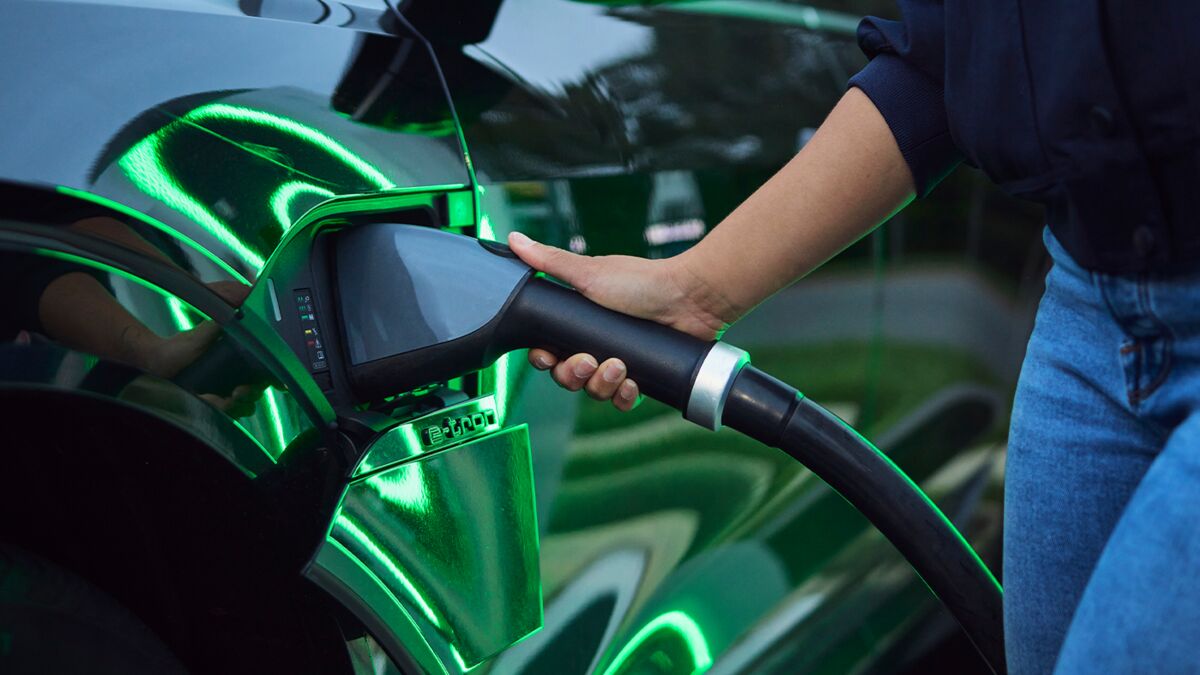

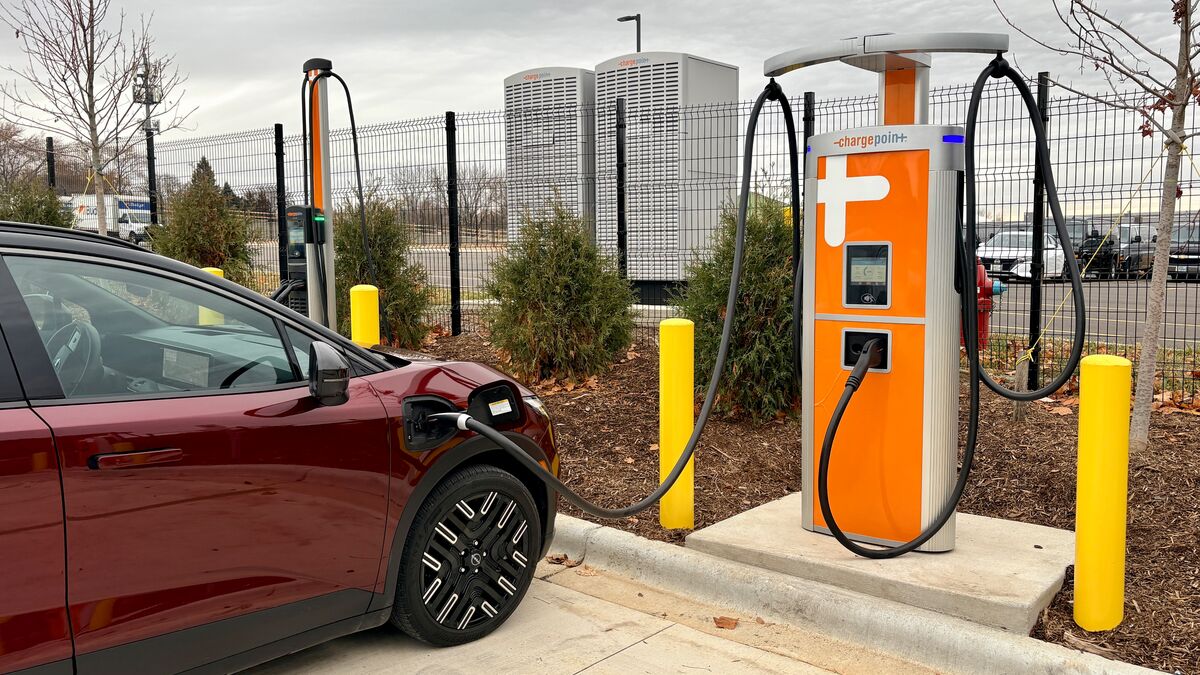
Unlike gas stations, there are generally far fewer electric vehicle (EV) charging stations, and they can be more spread out or sparse depending on your location. Before hitting the road on long trips, EV drivers should map out charging stops along their routes. Whether you’re an EV owner planning a trip or a potential EV buyer exploring charging options, we’re here to help.
You’ll find many public charging options, but downloading a few charging-network apps can give you more flexibility on the road. EVs use different charging connectors and may require adapters at some stations, but many newer EVs are adopting the North American Charging System (NACS). Before you start looking for charging stations, it helps to understand your EV’s charging port and adapter options.
Where to Charge Your Electric Car
The best and most convenient place to charge is often your home. If you have the means, we highly recommend installing an at-home charger to save time and money. If this isn’t an option for you, there are plenty of public charging stations, so there’s no need to worry. As EVs have become more common, more charging stations are popping up across the United States, both as standalone EV stations and at traditional gas stations.
RELATED: How Long Does It Take to Charge an Electric Car?
Home Charging
The easiest and best place to charge your electric car is at home. It’ll save you time and money and can provide peace of mind. Some studies show that about 80% of EV owners charge their cars at home, making it a popular choice. Many states, cities, municipalities, and electric utility companies also offer rebates and incentives for home charging. If you live in an apartment complex, try checking in with the leasing office or property manager. An EV charger might be available as an amenity.
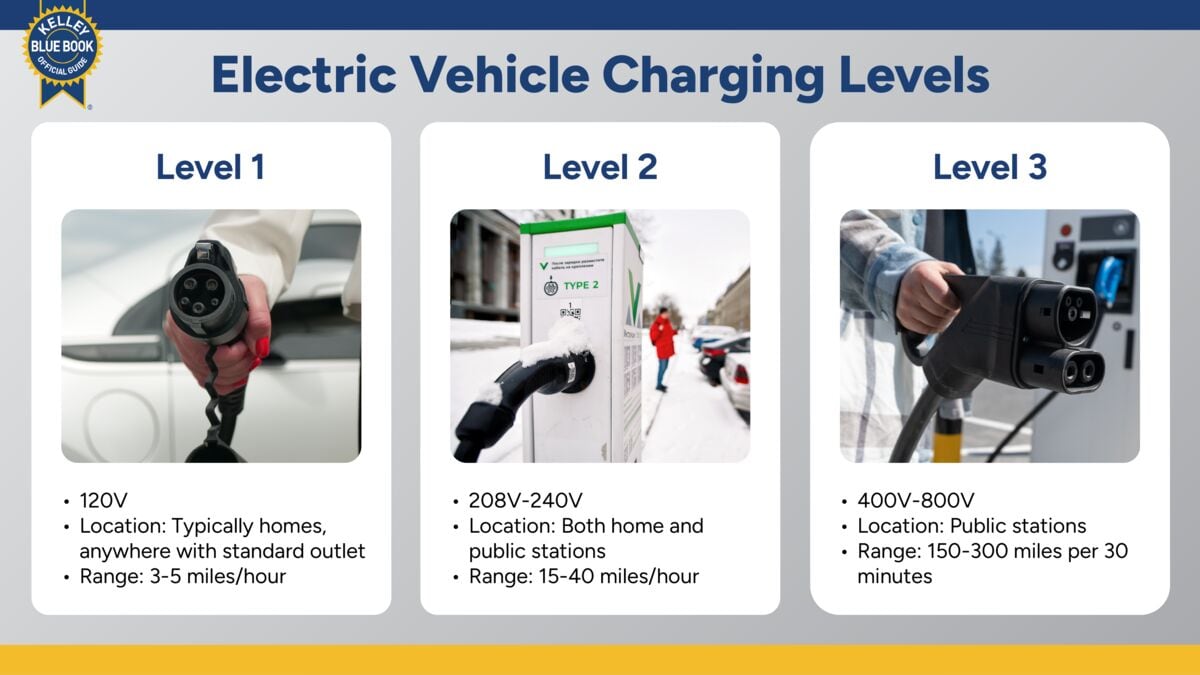
Most households will have either a Level 1 or Level 2 charger. Level 1 is the slowest and is best for owners who don’t drive often or who can recharge overnight from a standard outlet. Level 2 charging is faster and typically uses a 240-volt circuit, similar to what many electric clothes dryers use.
MORE: How Much Does It Cost to Charge an Electric Car?
Workplace Charging
Many companies have installed charging stations for employees to use while at the office. These chargers tend to be Level 2 chargers, which give your car a faster charge in fewer hours than Level 1 charging. Taking advantage of workplace charging can save you time and money, but remember charging etiquette: Move your car when it’s done charging and share access with co-workers.
Public Charging
A charging station might seem intimidating if it’s your first time charging an EV, as they can sometimes be unreliable, charge at different speeds, or require different apps or payment methods. You’ll occasionally find broken chargers or another EV occupying a spot longer than necessary, but many public charging stations are conveniently located in places where you run errands.
Public charging stations usually have Level 2 chargers or DC fast chargers, sometimes called Level 3 chargers. DC fast chargers deliver the most energy to your car in the shortest time. These chargers are great for long drives or when you need a quick charge to get home. Many EVs can DC fast-charge to about 80% in under an hour, and some can do it in roughly 15–30 minutes under ideal conditions.
Keep in mind that while DC fast chargers are great in certain scenarios, they should not be your go-to for everyday use. Frequent DC fast charging may accelerate battery degradation compared to slower AC charging, especially in heat or at high states of charge. For everyday charging, many automakers recommend limiting the charge to around 80% when a full charge isn’t needed.
MORE: Electric Car Range: Everything You Need to Know
What About Tesla/NACS Charging?
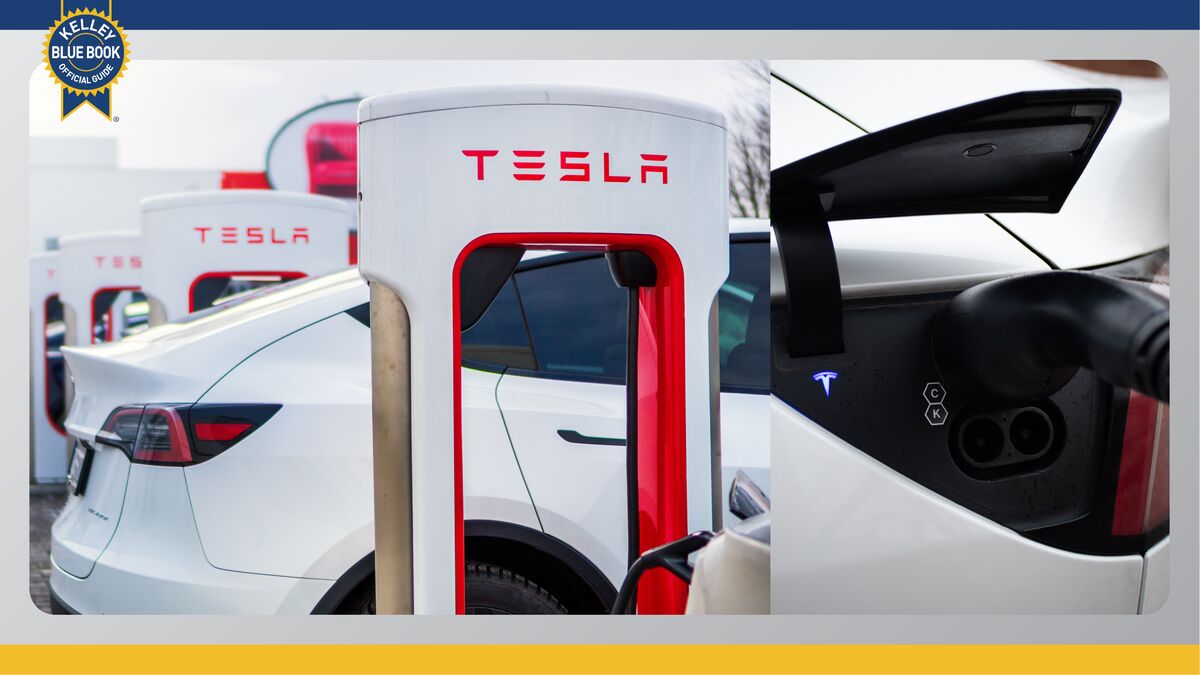
Fortunately for Tesla owners, the company has a large and generally reliable Supercharger network for charging away from home. Tesla’s connector design is now standardized as SAE J3400 and is commonly known as NACS. Many automakers have announced plans to adopt NACS/J3400 on North American EVs, especially for 2025 and newer models, but availability varies by brand and model year.
Until recently, most non-Tesla EVs in North America used CCS for DC fast charging. Some CCS-equipped EVs can now access select Tesla Superchargers using an automaker-approved NACS DC adapter, but compatibility depends on the vehicle, software support, adapter, and Supercharger site. Tesla vehicles can also use many non-Tesla public chargers with the appropriate adapter.
Visit Kelley Blue Book’s Safety Hub page to learn more about vehicle safety features.
Editor’s Note: We have updated this article since its initial publication. Austin Morris contributed to the report.