


As noted in the previous decade with the Clean Air Act, improved efficiency and air quality were catalysts for research and development of more efficient engine fuel preparation and delivery, both of which were substandard with carburetors.
The End of Carburetors
I spoke with Lee Markle, the current chair of the SAE Gasoline Fuel Injection Standards Committee, and David Harrington, the former chair, to learn more about how fuel injectors work and how they’ve evolved since their introduction in mass-produced vehicles in the 1980s. According to Harrington, the origins of gasoline fuel injection for automotive mass production date back to central port injection, originally used in limited production for 1950s Corvettes and special-order vehicles.
Engineers discovered that the pressurized fuel spray from injectors could be controlled far more precisely than that of a traditional carburetor, or even an electronically controlled carburetor, enabling significant efficiency improvements. Several years later, the technology advanced, with engineers moving from central port injection to throttle-body injection (a technology that Markle helped develop), then to electronically controlled low-pressure port injection, and finally to high-pressure direct injection (GDI), as used in many modern vehicles.
Because of higher fuel pressures than those used in carbureted engines and other technical issues that would only reveal themselves over a longer period — such as corrosion and buildup — fuel leaks were common, and widespread implementation would take the better part of two decades.
A Shift in Public Opinion
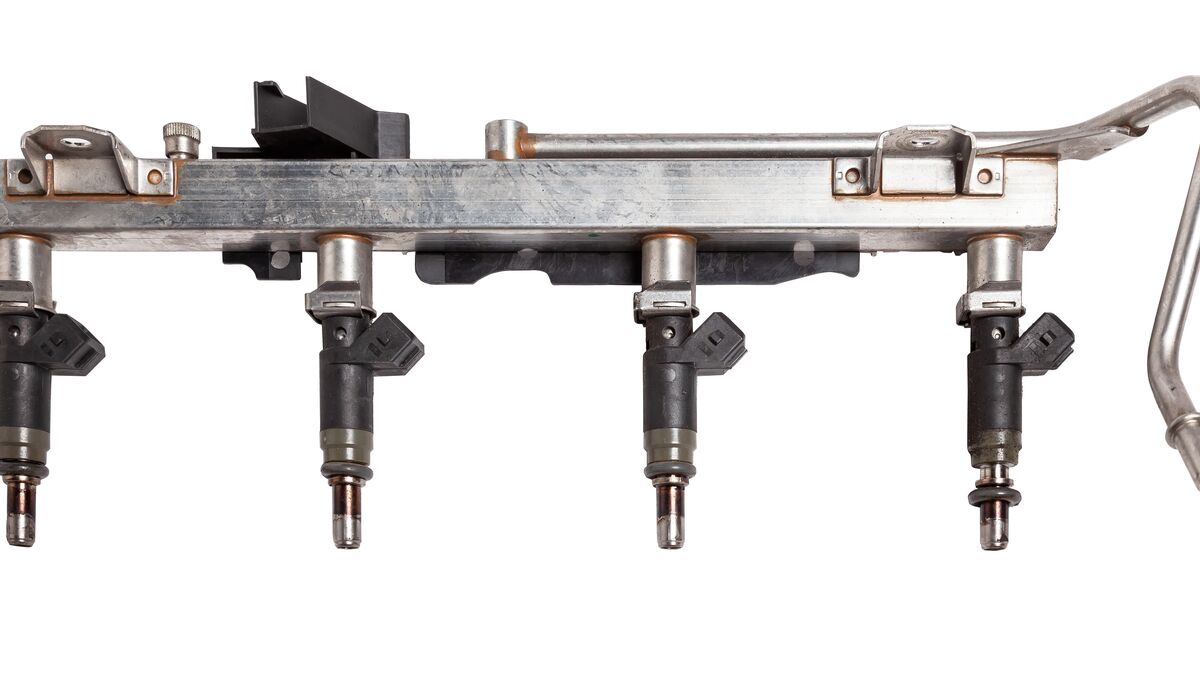
Eventually, as with many new technologies, these issues were resolved, and acceptance of electronic fuel injection increased substantially over a short time.
“The higher pressure of the PFI injection system (300 kPa or higher) versus the very low pressure of the fuel in a carburetor resulted in increased instances of fuel leakage. The news of these numerous problems became known by word of mouth among vehicle owners, which had the effect of temporarily slowing the rate of growth of fuel-injected vehicles for a span of multiple years. However, as is also the case for new systems with initial design and assembly problems, these problems were analyzed over that time period and were resolved. The number of significant EFI problems diminished, and the growth of vehicle models with such electronic systems resumed and, in fact, increased substantially. The public then began to acknowledge the significant advantages of EFI over carburetion … quicker starts, improved idle control, no choke for cold starts, no pumping of the gas pedal, no backfires, the ability to have remote starting, and many more.” – Lee Markle and David Harrington, SAE Gasoline Fuel Injection Standards Committee
It’s clear that, with the acceptance and standardization of electronic fuel injection in modern vehicles (with very few vehicles still using carburetors), the technology has matured and become critical to the modern automobile.