

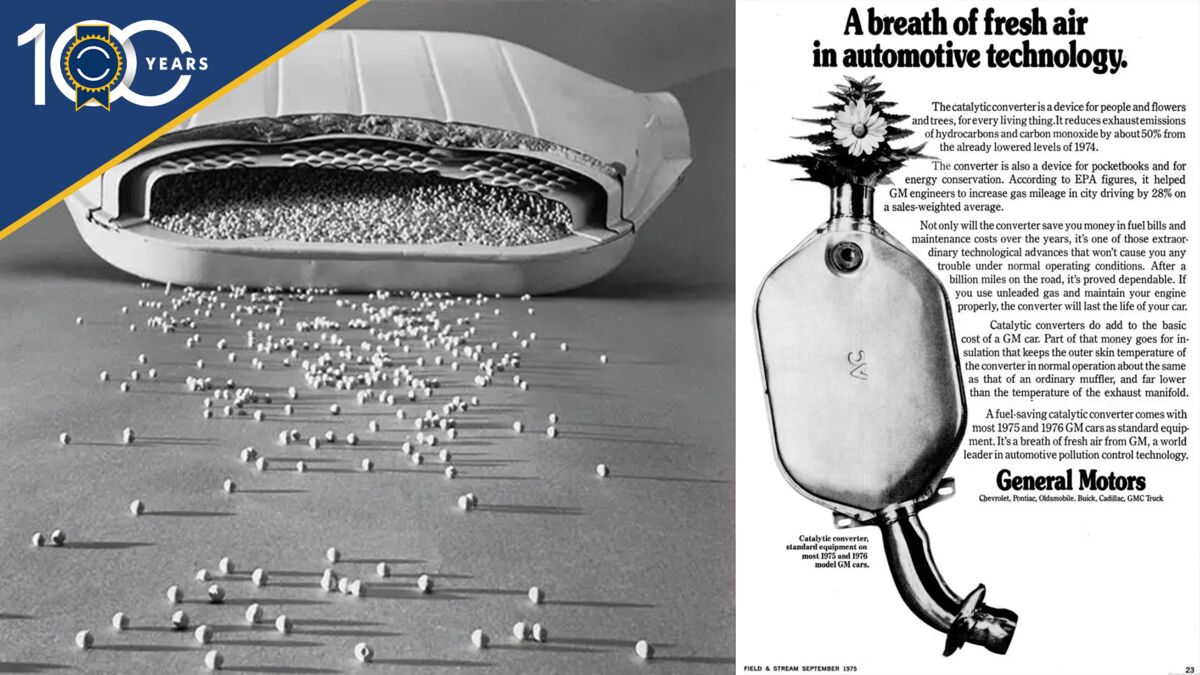
With the rise of automobiles and production reaching hundreds of millions by the 1970s, it was clear that emissions and smog were becoming a problem, especially in large cities.
The Clean Air Act of 1970

A significant step toward addressing the rise in toxic emissions began with the Clean Air Act of 1970. This legislation paved the way for regulation, which led to the introduction of catalytic converters first in California.
“The problem with automobile engines is that the by-products of combustion are not entirely carbon dioxide and water, but also contain unburned or incompletely burned gasoline, carbon monoxide, and nitrogen oxides. The catalytic converter was designed to correct this problem.” – Robert E. Haag in an article for EBSCO, a leading information services provider.
By 1975, there was significant resistance from some members of the automotive industry, such as Chrysler vice president Alan Loofbourrow, who insisted that catalytic converters were “the dumbest thing that ever happened to the automobile.” However, the 2-part catalytic converters had become standard equipment for the majority of vehicles by the end of the decade, improving efficiency and air quality. This also led to lead being removed from gasoline (as it would contaminate the converters) and was an overall step toward public awareness of environmental concerns tied to vehicles.
An Unintended Side Effect

The introduction of catalytic converters stands as one of the first major efforts in automotive environmental protection, rather than a component intended solely to improve the driving experience. Ironically, this focus on improving air quality actually led to improved horsepower and efficiency, as previously, engineers had tried to work around emissions by detuning engines and sacrificing performance.