

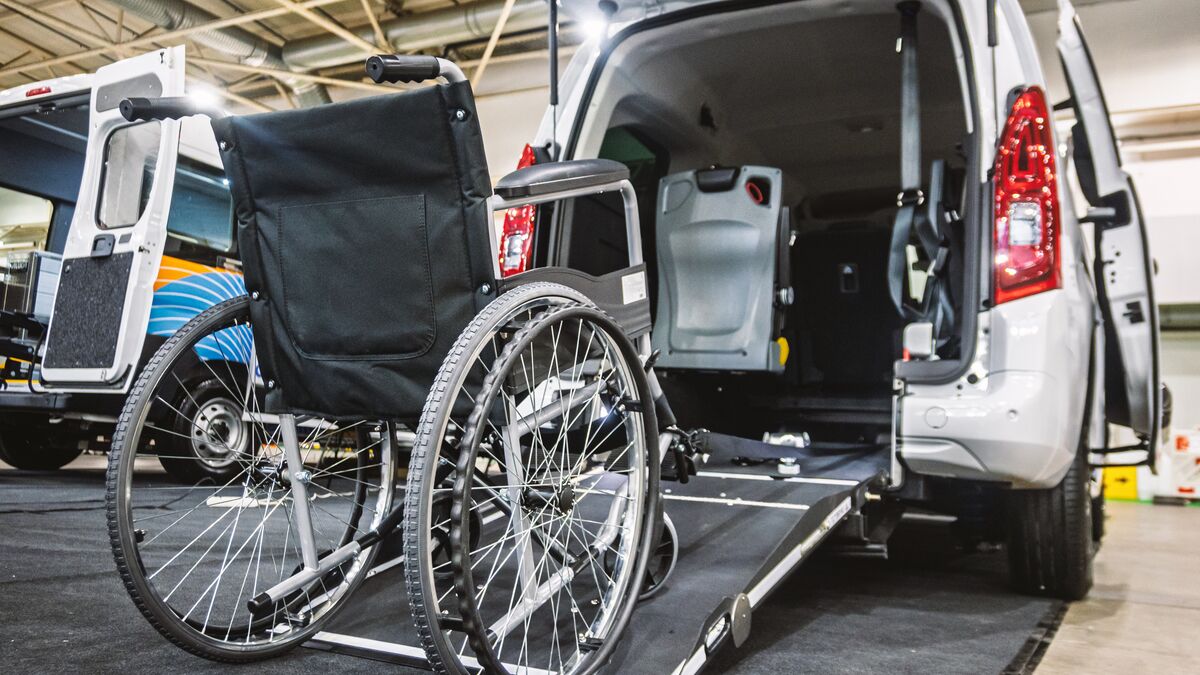
It’s no secret that cars play an important role in the everyday lives of most Americans, with some drivers spending hours each week in an automobile. As the need for automobiles has increased, so has the need for vehicles that cater to a wider range of drivers.
Adaptive vehicle technology ranges from built-in convenience features to custom-installed modifications that help drivers maintain independence and confidence behind the wheel. These technologies support drivers with limited mobility, strength, range of motion, vision, or other physical needs so they can continue to drive safely.
Focusing on Driver Needs
Before modifying a vehicle for yourself or a loved one, pinpoint the specific challenges you need to address. The right solutions will depend on the driver, vehicle, medical conditions, and local licensing rules. Here are some issues drivers may struggle with:
- Getting in or out of the vehicle
- Steering the vehicle
- Braking and accelerating
- Turning to check mirrors or blind spots
- Reaching buttons and other controls
- Loading and unloading mobility equipment
Consult a driver rehabilitation specialist or occupational therapist before buying or modifying a vehicle.
RELATED: Vehicle Features That Support Deaf and Hard-of-Hearing Drivers
Identify Helpful Built-in Vehicle Features
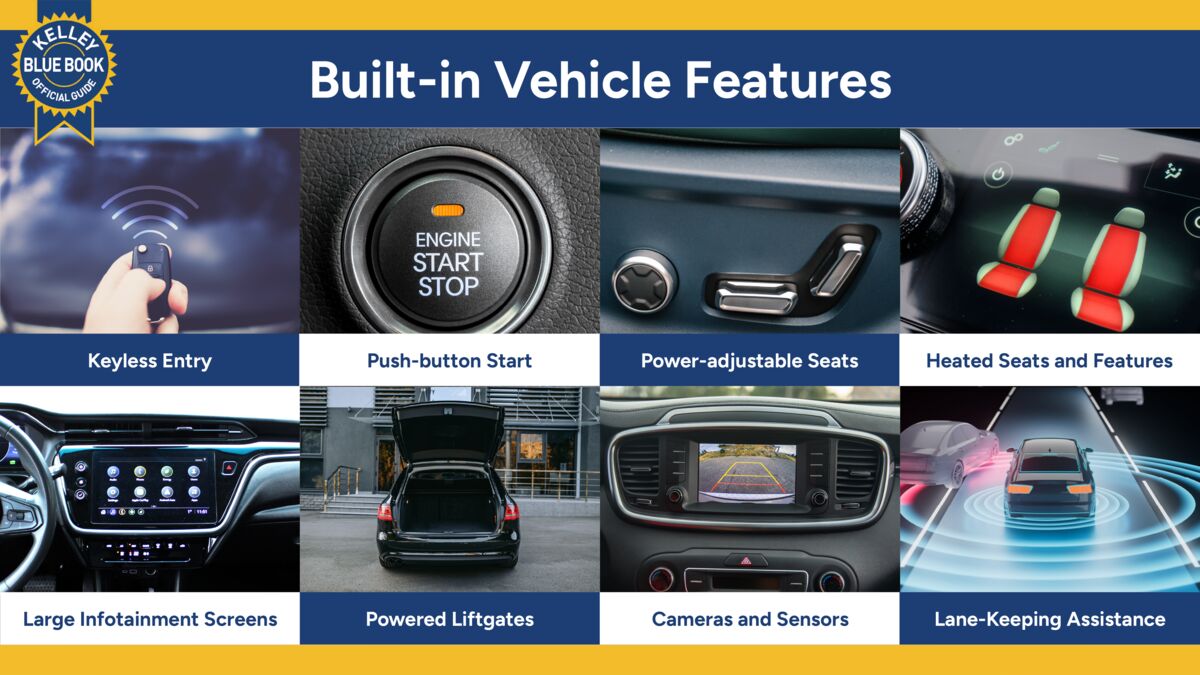
Fortunately, many mainstream vehicles already include features that can support drivers with disabilities or mobility changes. Familiarizing yourself with commonly available features helps you understand how a car can support a driver.
- Keyless entry: Automatically unlocks the car doors when it detects the key fob nearby.
- Push-button start: Allows drivers to start their vehicle with the press of a button. There is no need to twist a key.
- Power-adjustable seats: Let drivers and passengers electronically adjust their seating positions without exerting excessive force.
- Heated seats and steering wheels: Help ease joint or muscle stiffness, reducing discomfort that may distract from safe driving.
- Large infotainment screens and voice controls: Support people with vision impairments and allow them to view information quickly and efficiently.
- Power liftgates: Automatically open and close trunks at the touch of a button, reducing manual effort.
- Rearview cameras and parking sensors: Enable drivers to park and stay aware of their surroundings without twisting around to look through the rear windows.
- Blind-spot monitoring and rear cross-traffic alerts: Notify drivers of vehicles or obstacles they may have missed before changing lanes or backing up.
- Adaptive cruise control and lane-keeping assistance: Reduce driving fatigue and the physical effort required to keep the car centered in its lane and moving with traffic.
Common Adaptive Driving Modifications
Some drivers need specialized equipment beyond factory features. If you or a loved one needs extra support, here are some commonly made modifications:
| Modification Name | Description and Purpose |
| Hand controls for braking and acceleration | Allows drivers to use hand-operated levers rather than foot pedals to control the gas and brake. This is can help individuals with limited use of their legs to drive safely. |
| Left-foot accelerator pedals | A gas pedal is added to the left side, supporting drivers with limited use of their right leg. |
| Steering knobs or spinner knobs | Attach to the steering wheel to support steering with one hand. They can help drivers with limited hand or arm strength to better control the vehicle. |
| Reduced-effort steering systems | Modify the steering wheel to require less physical force to turn, reducing strain on drivers with limited upper-body strength. |
| Pedal extenders | Bring the brake and accelerator pedals closer to support shorter drivers or those with limited leg reach, helping them maintain a proper seating position and reach the pedals safely. |
| Turn-signal extensions | Extend or reposition turn-signal levers to support those with limited arm movement in signaling without taking their hands off the wheel. |
| Raised roofs or lowered floors | Create more interior space, enabling wheelchair users to ride comfortably without exiting their wheelchairs. |
Keep in mind that installing modifications, no matter how common they are, always requires professional help.
Entry, Exit, and Storage Solutions
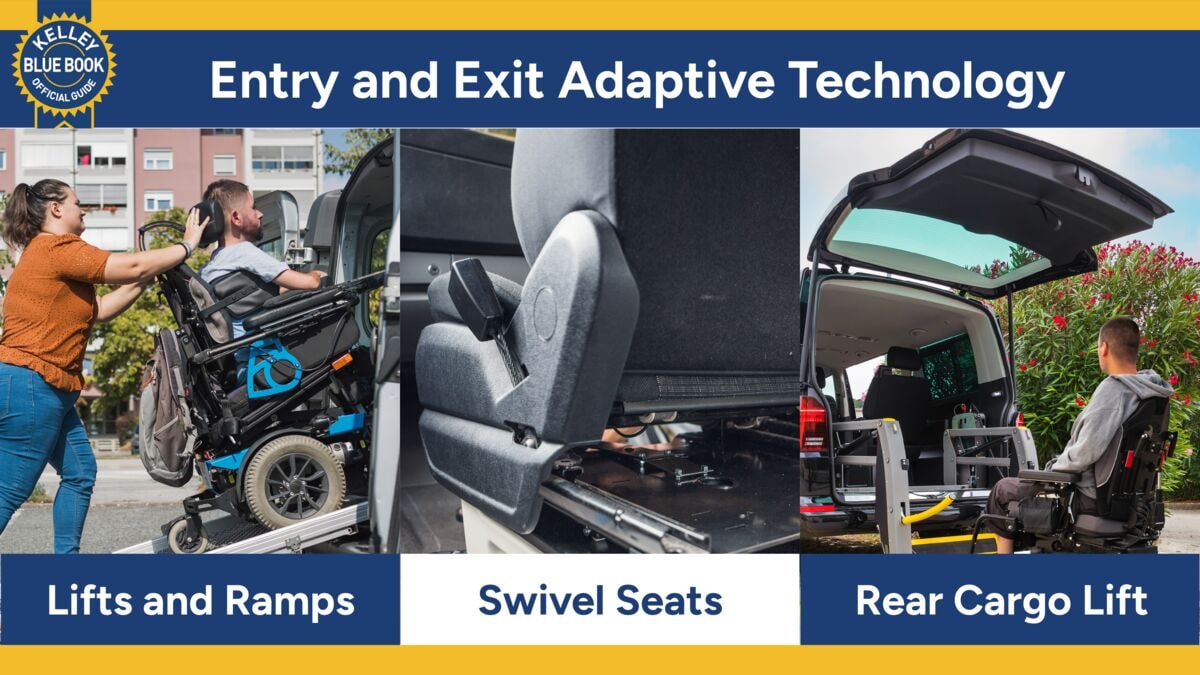
Limited mobility is one of the top reasons drivers may need modifications. Here are some modifications a driver can make to address exit and entry issues:
| Modification Name | Description and Purpose |
| Grab bars | Sturdy bars installed in vehicles or near entry points that provide a secure handhold. They help individuals maintain balance and safely enter, exit, or move within a vehicle. |
| Swivel seats | Seats that rotate outward from the vehicle, making it easier to sit or stand. They reduce the need to twist or step up, supporting people with limited mobility. |
| Transfer boards | Flat boards used to bridge the gap between a wheelchair and a vehicle seat. They allow users to slide across safely, minimizing lifting and reducing strain. |
| Power sliding doors | Doors that open and close automatically with the push of a button. They make vehicle access easier for individuals with limited strength or dexterity. |
| Wheelchair lifts, ramps, or transfer seats | Lifts raise the wheelchair into the vehicle, ramps provide an inclined path, and transfer seats assist with moving from a wheelchair to a vehicle seat. |
| Wheelchair/scooter hoists | Mechanical devices that lift and store a wheelchair or mobility scooter in a vehicle. They reduce physical effort and make transport more convenient. |
| Rear cargo lifts | Platform lifts are mounted on the back of a vehicle to load heavy mobility devices. They improve independence by allowing users to transport equipment without assistance. |
Safety and Shopping Considerations
Adaptive technology should not just make driving possible, but also support safe, confident driving. Whether you’re shopping for a new car or looking to add modifications to an existing vehicle, take time to research your options and confirm that any changes are safe and legal.
Before Buying:
- Bring mobility equipment to the dealership. This gives you an opportunity to see if your equipment fits in or works well with the vehicle you want.
- Consider seat height, door openings, visibility, and cargo access. Testing these areas can help you determine which modifications may be necessary.
- Ask whether modifications could affect the warranty. Depending on the answer, you may want to use this information during negotiations with the dealer.
- Research rebates, grants, veteran benefits, insurance coverage, or manufacturer mobility programs. You may be able to reduce your out-of-pocket costs.
- Budget for the vehicle’s price and the modification together. Make sure you consider all the costs associated with buying the vehicle or modifying it.
During and After Installing Modifications:
- Get evaluated by a certified driver rehabilitation specialist. They can help you identify which modifications may best fit your needs.
- Practice with new controls in a controlled setting. Familiarize yourself with the modified controls in an empty parking lot before driving in traffic.
- Check state licensing or endorsement requirements. There may be legal limitations on what you can do.
- Ensure that modifications don’t interfere with safety systems. After installation, make sure systems like airbags are not blocked by modifications.
- Keep service records and installation records for adaptive equipment. This can be helpful for future repairs, insurance claims, or warranties.
MORE: What to Look for When Shopping for an Accessible Vehicle
Visit our Car Features Information Center to learn about the different bells and whistles available in vehicles today.