


Accessibility means different things to different shoppers. For drivers and passengers with disabilities, the right vehicle can help maintain independence, improve comfort, and provide everyday convenience. Whether you need a wheelchair-accessible vehicle, adaptive driving equipment, or simply features that make daily travel simpler, here are some important things to consider before you buy.
Consider Your Needs
Before shopping, consider how the vehicle will fit your lifestyle today and in the years ahead.
Ask yourself:
- Will the vehicle be used by a driver with a disability, a passenger, or both?
- Do you need wheelchair access now or possibly in the future?
- Where will mobility equipment need to be stored?
- Is there enough room for caregivers, family members, pets, or additional passengers?
- Are the doors, seats, cargo area, and controls easy to access?
Details such as the location of warning lights, seating positions, door openings, cargo space, and cabin layout can make a huge difference in everyday use.

Consider How The Vehicle Fits Your Needs
Answer a few questions to explore vehicle considerations that may help guide your research.
Who Needs Accessibility Support?
What Matters Most?
How Will You Use It?
You may want to explore:
Suggestions are a starting point. Compare vehicles and confirm compatibility with your individual accessibility needs.
Compare Different Vehicle Types
Not every vehicle type works the same way for every shopper. Comparing body styles can help you understand which options may better support your lifestyle.
Sedans
- Lower seating position
- Easier handling
Shoppers need to consider whether the entry height, seating position, and interior space will fit their needs.
SUVs
- Wide range of sizes and configurations
- Higher seating position
- Cargo space
- Available high-tech features
Larger SUVs may offer more space, while smaller SUVs may be easier to maneuver.
Minivans
- Spacious interiors
- Sliding doors
- Flexible seating
- Available conversion options
They may be especially useful for shoppers who need more passenger or equipment space.
Trucks
- Capability, towing, or additional utility
However, shoppers should consider vehicle height, entry, and whether modifications are available.
Look for Accessibility-Friendly Vehicle Features
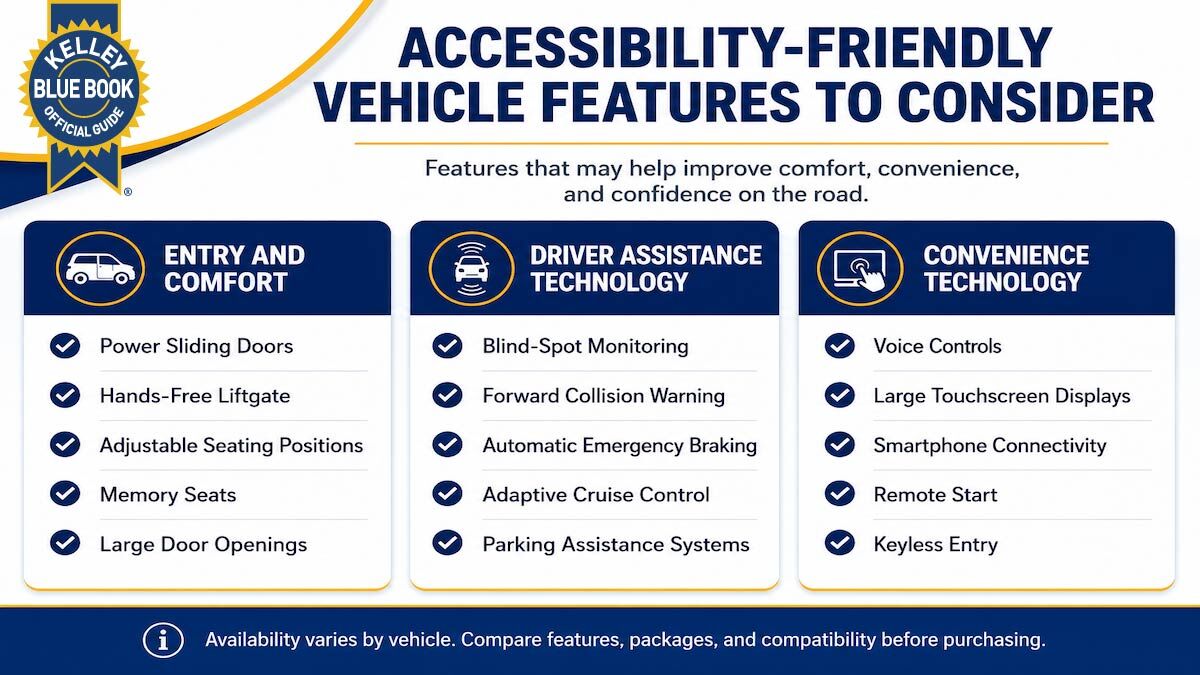
Today’s vehicles offer many features designed around convenience, safety, and comfort. While these features are not replacements for specialized equipment, they may improve the ownership experience for some drivers and passengers.
Consider Equipment Compatibility
If you need vehicle modifications, research compatibility before purchasing. Not every vehicle can support every type of adaptive equipment.
Common accessibility modifications may include:
- Adaptive seating
- Vehicle access solutions
- Mobility equipment storage
- Vehicle conversions
- Driver-assist controls
Consider contacting a certified mobility specialist to help determine the best vehicles to support the modifications you may require.

Research Automaker Mobility Assistance Programs
Many automakers offer mobility assistance programs that may help eligible buyers with the cost of approved adaptive equipment after purchasing or leasing a qualifying vehicle.
Programs may be available from brands including:
- Toyota
- Honda
- Ford
- General Motors
- Chrysler
- Hyundai
- Kia
- Subaru
Always review the automaker’s current requirements because eligibility, reimbursement amounts, deadlines, and approved equipment can change.
Work With Accessibility Professionals
Buying an accessible vehicle often involves more than choosing a model. Depending on your needs, you may want to work with a mobility dealer or driver rehabilitation specialist.
They can help answer questions about:
- Vehicle compatibility
- Equipment installation
- Safe operation
- Long-term usability
The appropriate accessible vehicle should fit your life, not just your driveway. Taking time to compare vehicle types, your everyday needs, available features, and possible modifications can help you find an option that supports independence, comfort, and confidence on the road.
Visit our Vehicle Features Information Center to better understand specific car features as you explore options.