
When it comes to important car documents, your title tops the list. The title establishes the vehicle’s ownership and provides crucial identifying information. Titles show the year, make, and model, as well as the vehicle identification number (VIN), date of sale, odometer reading at the time of sale, and the owner’s name and address. Additionally, if the car is being financed, the lienholder will appear on the title. A physical title also typically includes the seal of the issuing state. You cannot buy or sell a vehicle without the title.
Titles are one of the most important forms of consumer protection against being cheated in a used-car deal. Unfortunately, because a title is such a critical document, it is highly susceptible to fraudulent activity. Possessing a fake title, no matter how innocent you are, means you do not legally own the vehicle. Law enforcement can seize the car, and you may have little or no recourse for recovering your money. Here’s what you need to know about fake titles and how to protect yourself when buying a car.
How Common is Title Fraud?
More than 650,000 vehicles in the U.S. were stolen in 2025, according to the National Highway Traffic Safety Administration. CCC Intelligent Solutions, which analyzes data from nationwide auto claims transactions, estimated that nearly one in four auto insurance claims in 2025 declared the vehicle a total loss. Between stolen cars and totaled vehicles, opportunities are rampant for fraudsters to try to resell vehicles under fake titles.
Unrecovered vehicles or totaled vehicles can end up in foreign countries, be chopped up for parts, or, in some cases, experience “title washing” — this happens when a scammer removes or alters information (like a salvage title) from a vehicle’s history to make the car appear to have a clean title. Title fraud is not a specific crime, but it is usually prosecuted by local authorities as grand theft or under laws that forbid the submission of false documents. Even though title fraud is widespread, it is difficult to put exact numbers to it.
VISIT: Car Paperwork Information Center
Signs of Fake Titles
Depending on your state, you may have a paperless title, which in many cases can help to eliminate potential fraud, but if you still possess a physical one, here’s how to stay safe.
Although they’re widely referred to as “pink slips,” car titles aren’t pink in all states. Typically, they’re multicolor forms embossed with the state seal and imprinted with numerous watermarks. In California, for example, you’ll find a watermarked grizzly bear and borders that are engraved with finely printed lines that are difficult to duplicate with precision.
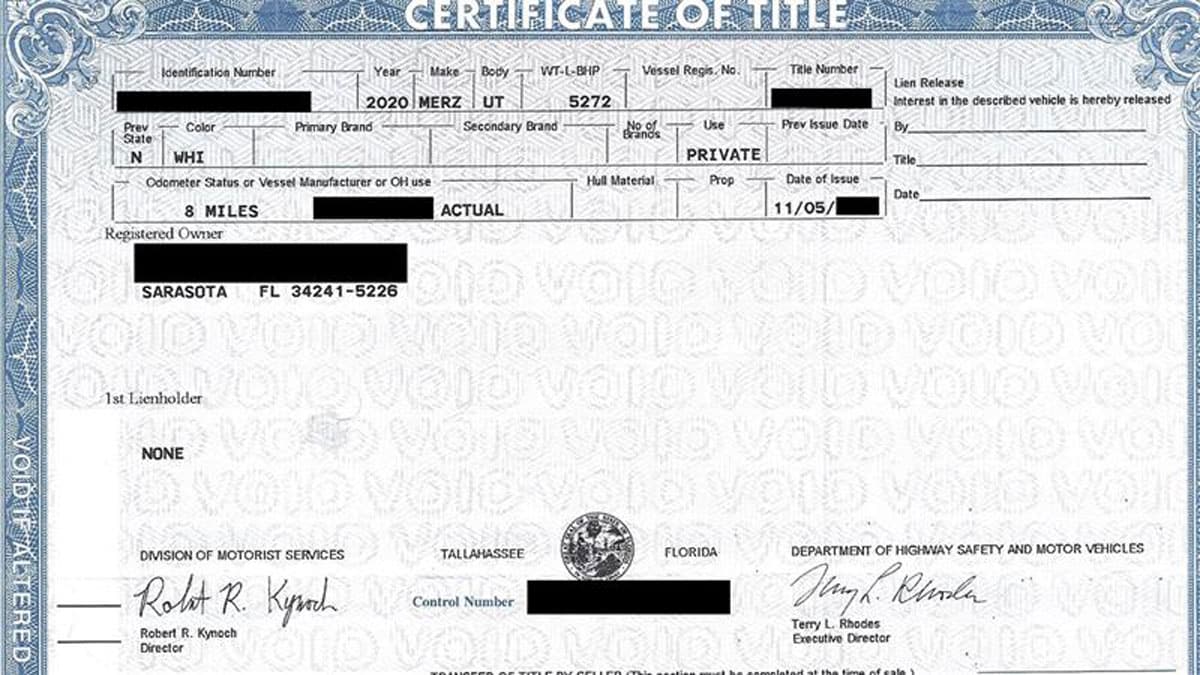
If you plan to purchase your car from a private seller, it’s a good idea to familiarize yourself with the unique features of titles in your state. If you know to look for the grizzly bear, for example, it’s a quick way to spot-check the title in the moment. Of course, there are plenty of different ways to falsify titles, so you should always also carefully look for:
- State seal and unique watermarks: Each state uses unique seals and identifying watermarks on physical vehicle titles. Know what these are for your state, and look for them immediately when you are inspecting the title.
- Missing features: In addition to seals and watermarks, every state has unique colors and features for its titles. Make sure the colors look right, the borders are the correct design, and that any color-shifting ink behaves as expected.
- Any text that looks “off:” This could be any text that looks fuzzy or blurry, text that is oddly slanted, or any fonts that don’t match. Check for any anomalous erasures, scratched-out letters, or mismatched ink.
- Incorrect information: Double-check all information listed against the vehicle history report, including owner, VIN, and all identifying information for the car.
- Unresolved liens: If a loan has been paid off, the lienholder should remove its name from the title. This process of “clearing” the title may happen automatically, or the owner may have to request a clean title. In any case, if a lender is still listed on the title, you need to confirm whether or not that company or bank still owns the car.
- Check the mileage: Be sure that the mileage of the car you are purchasing makes sense when compared with the title. Scammers may try to roll back the odometer to make the vehicle look newer.
Even if you carefully check each of these items, excellent forgeries can still exist, but a thorough look can definitely alert you to any immediate, clumsy mistakes.
MORE: Car Title Guide: Everything You Need to Know
Protecting Yourself
You need to take precautions both with titles that you currently hold, and any for cars you may purchase. To protect titles that are already in your possession:
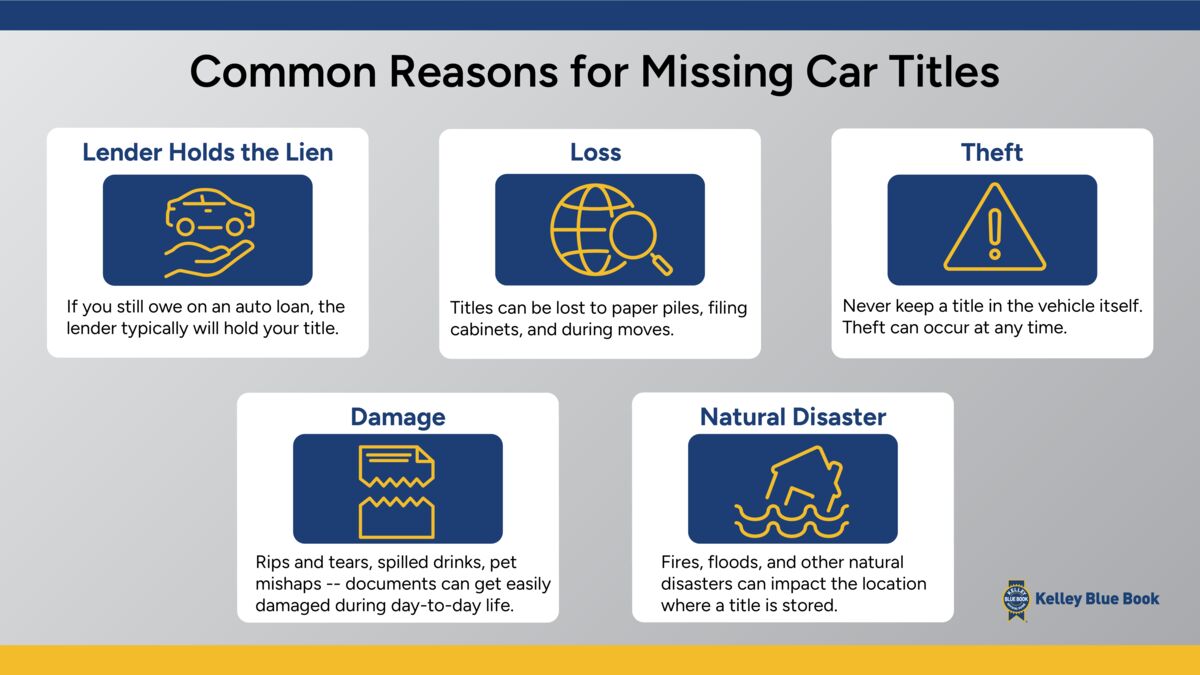
- Never leave your title in your glove box. Some people leave a vehicle title in the glove compartment. Don’t be one of them. With a legitimate title, a thief can easily and quickly sell a stolen vehicle, something that would be impossible without a clear title.
- Don’t leave it in your car, but make sure you know where to find it. Avoiding storing your title in the glove box isn’t enough; you need to keep it in a safe place. Don’t just toss it onto your stack of office papers — that’s an easy way for it to get lost or damaged. Keep your title with other important documents in a secure location, like your home file cabinet, safe, or a safety deposit box at your bank — a location where kids, pets, candles, or coffee spills can’t get to it.
If your title gets damaged or you misplace it, it is your responsibility to obtain a replacement.
When it comes time to buy, private-party vehicle deals are the most likely situations in which people get cheated with fake titles. DMV investigators also see a lot of title fraud executed by unlicensed used-car dealers, who often set up in shopping center parking lots. Taking some simple precautions can help save you from the hassle of buying a stolen car with a fake title:
- Always ask to see the seller’s driver’s license. It may also be a fake, of course, but it’s worth a look and should match the information on the title. If they don’t have one, it’s time to vamoose and look for another seller and car.
- Never initially volunteer specific information that you read in the ad. Always say, “I’m calling about your car for sale.” If the seller asks “which one” or is hesitant or evasive with the answer, you may be dealing with a “curbstoner” who illegally sells used cars and trucks for a living, or with an unauthorized dealer.
- Ask for the smog certificate. When you’re considering a purchase from a private seller, ask for the smog certificate for the vehicle if it’s required by the state, because obtaining a smog certificate requires a legitimate vehicle registration. And, typically, stolen cars with phony titles are offered at unusually low prices to get the deals closed as quickly as possible.
- Meet at the DMV to complete the tile transfer. If the seller resists for some evasive reason, that should be a warning.
- Get the Vehicle History Report. You can and should get a full vehicle history report online before you purchase a car. This may save you time, money, and headaches by revealing potential problems before they occur.
LEARN: How to Get a Car Title Replacement
Bottom Line
You may not always be able to fully protect yourself from highly sophisticated scams or forgeries, but using the basic steps we’ve outlined can go a long way toward helping to identify any immediate red flags. Never let a seller rush you into a purchase, and if anything about the transaction feels “off,” it is more than okay to step away, take some time to reconsider, and then either return to the transaction or walk away. A car is a major purchase, and protecting yourself is paramount.