

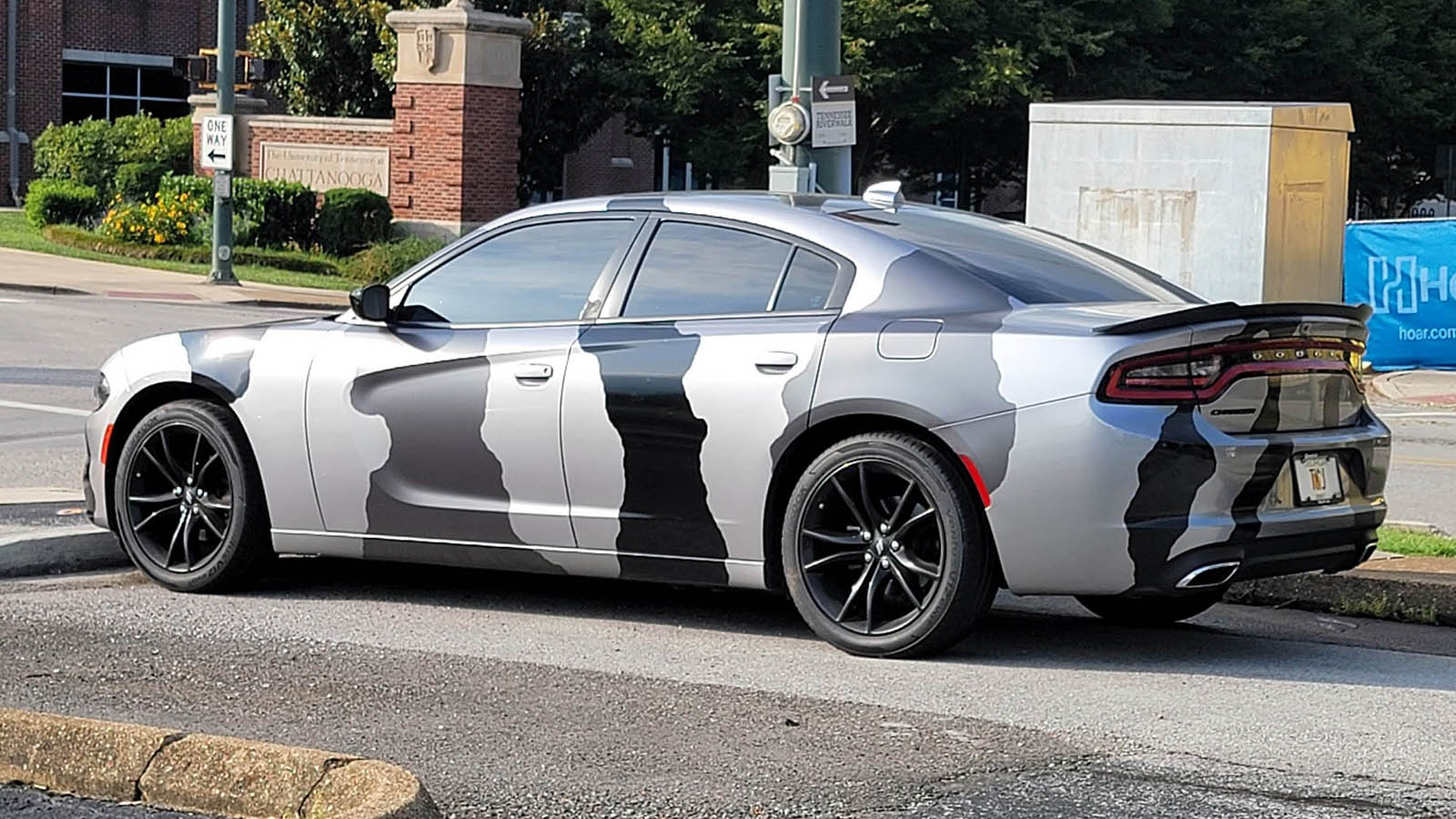
We all love our vehicles, but sometimes our favorite ride can become a little too familiar. Maybe you want to give yours a fresh new look.
Good news: You don’t need a new car to get a new car feeling.
Vinyl wrapping can give your vehicle a dramatic makeover without the commitment of a permanent repaint. You can go bold, keep it classic, wrap the whole vehicle, or just change the hood and mirrors. And when you’re ready for something different? If applied properly, the wrap can be removed to reveal the factory-sound paint underneath.
Think of it as a wardrobe change for your vehicle — same ride, completely different look.
What Is Car Vinyl Wrap?
Car wraps are vinyl films with adhesive backing that you can safely apply to a vehicle’s surface. Unlike a traditional paint job, car wraps can serve as a temporary change. When you’re ready, you can remove the car wrap and return the vehicle to its original finish or try something new.
Providers offer wraps in a variety of finishes. Choices include matte, chrome, gloss metallic, and satin. Wraps are available in many different colors. You may wrap the entire vehicle or choose specific areas, such as the hood, trunk lid, or roof.
Vehicle wrapping is not a quick fix for damaged paint. A peeling clear coat, deep scratches, dents, rust, or poorly adhered paint should be addressed before wrapping. The smoother the surface underneath, the better the finished wrap will perform and look.
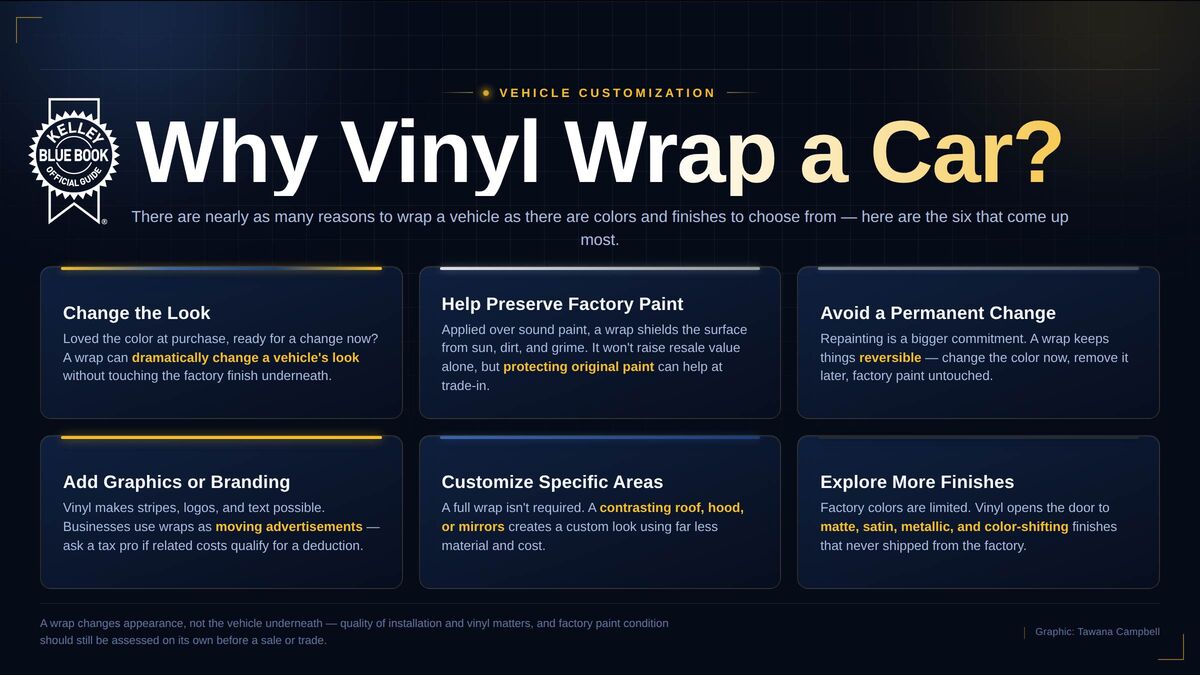
Why Vinyl Wrap a Car?
What Are the Different Types of Vinyl Wraps?
Vinyl film is of two basic types: calendered and cast. In recent years, calendared vinyl has improved significantly and can work for fine or flat panels, partial wraps, or short-term graphics. But for a full vehicle wrap with the creases and curves found on virtually every car, cast is still the better choice, as it conforms more easily and holds up longer.
Cast film is easier to work with and adapts well to the various surfaces found on vehicles. You can easily remove cast film without damaging a car’s factory finish. Make sure to weigh your options before deciding which vinyl wrap will work best for you.
Beyond those two basic vinyl-film categories, providers typically separate wraps into finishes. Depending on the provider, those finishes may be as few as four or as many as a dozen variations. Here are the most likely finish types you’ll encounter.
- Gloss: Essentially a shiny finish, many manufacturers offer different forms of this finish, such as high-gloss, metallic-gloss, and chrome, to name a few.
- Matte: Think of matte as the opposite of gloss. It’s a flat finish that serves to emphasize a vehicle’s shape and contours.
- Satin: This finish is what you might get if you crossed matte with gloss. It’s a matte-like finish with a bit of shine.
- Carbon fiber: Real carbon fiber infuses your car’s appearance with a sense of performance while adding less weight than the metal pieces it replaces. Carbon fiber wraps usually have some texture to enhance their carbon fiber appearance.
- Color-shift: Designed to appear to change color when viewed from different angles and under varying levels of light, color-shift wraps are more of the glossy variety.
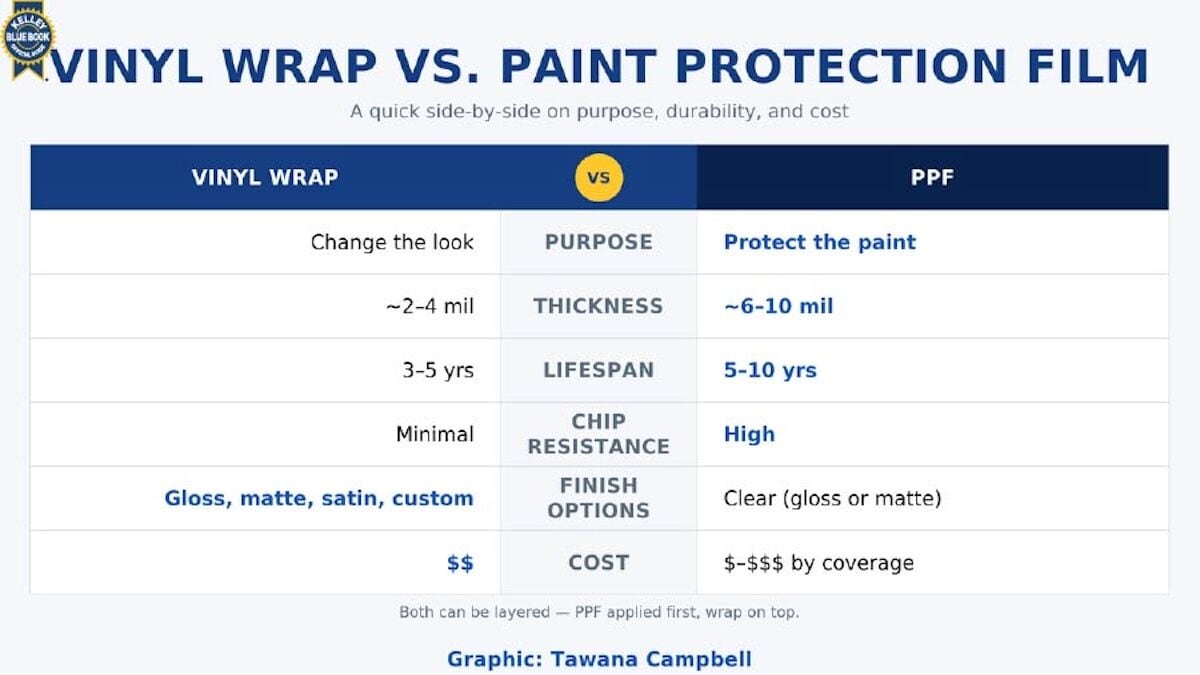
How Does Vinyl Wrap Differ From Paint Protection Film?
Available colors: Vinyl wraps come in hundreds of colors and finishes; you can go classic, bold, matte, glossy, or even color-shifting.
How Much Does Wrapping a Car Cost?
There are so many considerations when wrapping a vehicle that providing an accurate average price is nearly impossible. Here’s what will influence the ultimate cost:
- Manufacturer: Several manufacturers produce vinyl wraps. For example, 3M, Orafol, Avery Dennison Films, and several more companies manufacture wraps at various price points.
- Color and Finish: Some colors and finishes cost more than others. These differences vary from manufacturer to manufacturer.
- Vehicle Size: It costs more to wrap a Chevy Tahoe than it does a Chevy Spark. The difference comes from the amount of wrap needed and the amount of time required to apply the wrap.
- Amount of Coverage: How much of the vehicle do you want to wrap — all of it or only the hood?
Let’s say you want to wrap your entire 2021 Nissan Altima. You will need roughly 130 square feet of the wrap. You could spend between $600 and $2,000 or more, depending on the brand, color, and finish. Professionally applying it will set you back another $1,000-$2,500, depending on the type of film. Larger vehicles can cost as much as $5,000 to be professionally wrapped. Exotics will cost even more.
How Long Will a Vinyl Car Wrap Last?
Any mistakes you or a professional make in putting down the wrap will come back to haunt you and reduce the wrap’s life. A good rule of thumb is that anything that adds wear to your car’s exterior finish will also affect a vinyl car wrap.
Other factors affecting a vinyl wrap’s life expectancy:
Wrap quality: A quality vinyl wrap will outlast a bargain-basement one. If your budget doesn’t allow for investing in a quality wrap, you will waste your time and money on an inferior brand.
Keeping it clean: Whether it’s a paint or vinyl finish, it requires weekly washing to maintain the properties of its finish. The same things will destroy a vinyl wrap as well as ruin paint. You must clean bird droppings, tree sap, bug splatters, and the other usual suspects from the surface immediately. Hand washing with a mild pH-balanced soap is preferred, but you can get away with an occasional touchless carwash.
Storage: Keeping your vehicle under a roof overnight will add to the wrap’s lifespan. Furthermore, not parking it under trees that drop sap, like maples and elms, will help you avoid some of nature’s damage.
Weather: Vinyl isn’t immune to the effects of weather. Coastal salt air, bright sunlight, and very hot temperatures can damage the vinyl. If you live in the Snowbelt, salt from the roads, if left on the vinyl, can damage your wrap.
MORE: For tips on caring for all aspects of your car, check out our Car Maintenance Information Center.
Tips for Maintaining Vinyl Car Wraps
Keep your wrap looking new
A handful of habits determine whether a wrap lasts three years or eight. Tap each tip to check it off as you go.
Small issues are cheap to fix early and expensive to ignore. A quick check-in with your installer usually solves it.

Should You Wrap Your Car?
If you have the room in your budget and want to renew your car’s exterior, vinyl wrap is a solid solution. Whether to cover worn paint, protect healthy paint, or just switch things up a bit, wrapping is an affordable way to accomplish all these needs.
Read Related Stories:
- Car Trade-in Tips: How Can I Maximize My Car’s Value?
- 7 Things to Know About Car Window Tinting
- Hellcat: Dodge Challenger and Charger Specs, Prices, Speed