

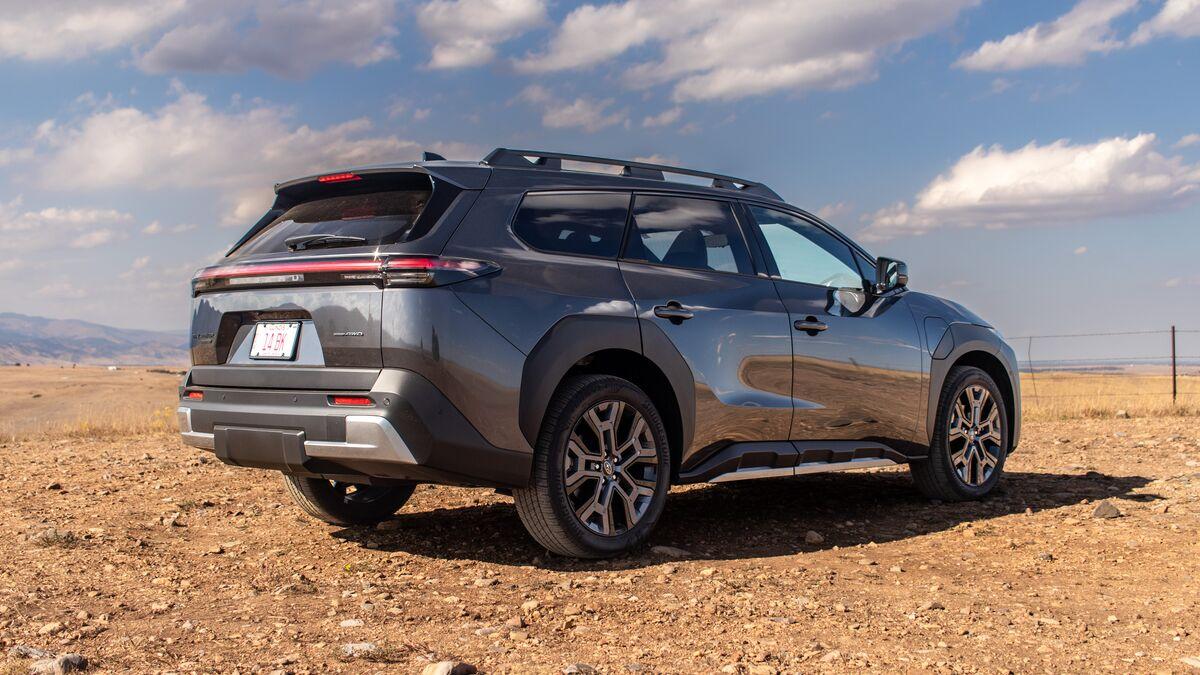
When I first saw the unveiling of the new Subaru Trailseeker, I jokingly called it an “electric Outback.” Little did I know that in every other market outside North America, it is literally badged as the E-Outback.
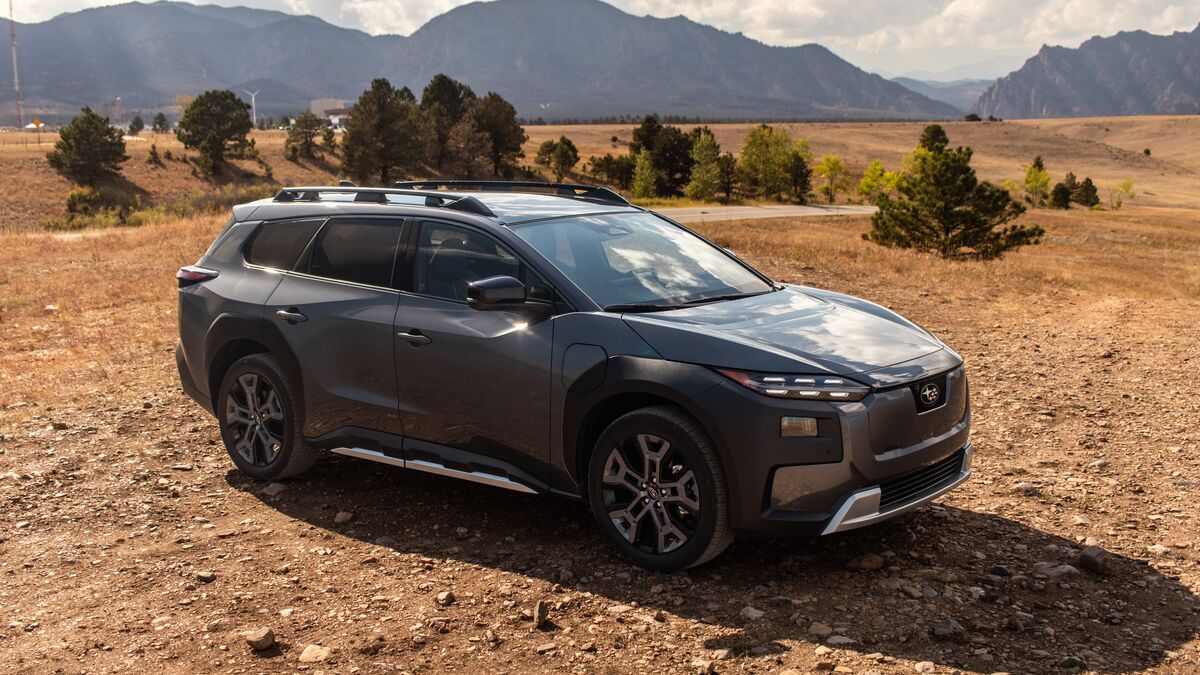
Here in the United States, Subaru chose a unique name to differentiate this EV from the traditional gas Outback. That isn’t hard to do, considering the newest generation Outback now looks more like a traditional SUV than ever before. Ironically, the Trailseeker carries the true torch of the wagon. With its sleek, elongated roofline and rugged cladding, it stylistically echoes the classic Outback design.
But while its impressive power is enabled by electrification, the Trailseeker is held back by a few technical shortcomings that keep it from being a top-tier EV.
The Quickest Production Subaru Ever
With 375 horsepower and nearly 400 lb-ft of torque, this is the quickest production Subaru ever made. It is incredibly fast off the line, boasting an official zero-to-60 mph time of 4.4 seconds (though independent testing has clocked it as low as 4.1 seconds).
Because of its borderline excessive power, you can actually drive it in “Eco” mode to maximize range while still having plenty of usable everyday power. There is a bit of a delay in its throttle response, but otherwise the Trailseeker provides an engaging driving experience in any mode. I hope the STI treatment makes it to a Subaru EV someday, to essentially “turn it up to 11.”

Where It Falls Short as an EV
While it’s a great car, the Trailseeker doesn’t quite excel as an electric vehicle. First, there is no one-pedal driving, and the brake pedal feels quite touchy. Even more frustrating, your regenerative braking (adjusted via steering-wheel paddles) and auto-hold settings disappear with every drive cycle.
In terms of specs, the Touring trim tested here gets 274 miles of range, with other trims topping out at 281 miles. Those figures aren’t amazing, but are absolutely usable. Especially around town, and especially if you can charge at home. It peaks at 150 kW for public fast charging, getting you from 10% to 80% in just under 30 minutes. However, because the battery is slightly smaller for a vehicle of this size, you aren’t replenishing a massive amount of actual range in that time. Thankfully, it features a NACS port, meaning you can easily road trip using Tesla Superchargers and other NACS-enabled stations without adapters. You just have to be prepared to make more frequent stops than many other EVs on the road.
And sadly, there is no front trunk. These days, a lack of a frunk is a big miss compared to the competition. And it would’ve been a mic-drop moment in tandem with the functional wagon storage capacity, which offers 31.3 cubic feet of storage in the back and expands to 74 cubic feet with the second row stowed.
The Toyota DNA: Tech and Interior
The Trailseeker was co-developed with Toyota (sibling to the bZ Woodland), and that partnership is very apparent inside the cabin.
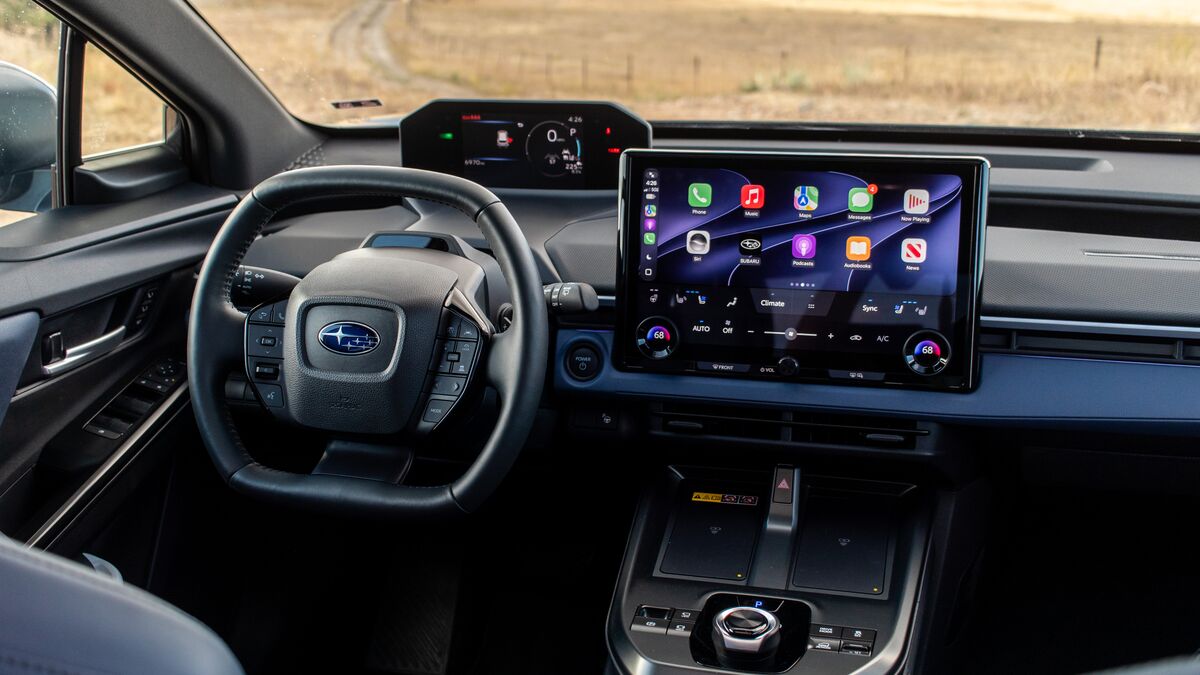
The driver display on the dash above and in front of the steering wheel feels like it belongs in the last decade, with low-resolution graphics and unintuitive controls for adjusting the displayed information. The center touchscreen helps modernize things, and Apple CarPlay looks great on it, but the underlying Toyota software has additional EV limitations.
Most notably, there is currently no EV route planning baked into the native infotainment system. (Rumor has it a new system is coming, but it’s not yet known if it will be backward compatible). You also have to deal with a constant symphony of typical Toyota warning sounds; expect loads of beeps and bongs throughout a normal drive cycle. That said, there are many menus of settings to dial them in to your liking, or in my case, turn them off.
Though Subaru leans into the dog-owner aesthetic, there is no climate-keep function like you would find in Tesla, Rivian, or Lucid. As such, it’s not an ideal place for your pet to relax while you run inside for an errand, and it lacks the camping modes you might expect in a car built to seek out trails, where I do most of my camping.
The cabin space itself is ample. However, the materials leave a bit to be desired. It feels more rugged than premium, leaning heavily on hard plastics, notably right where your legs hit the driver’s door and the rather wide center console. While there are splashes of tasteful blue leather, the interior feels like a step down compared to the new gas Outback. The wireless phone chargers don’t hold your phone securely, the shifter is strange but adaptable, and the steering wheel is a rounded square of sorts rather than the standard circular steering wheel found on its Toyota bZ Woodland counterpart. As much as I typically prefer round wheels, it was helpful to see the driver display above the flattened steering wheel.
The Silver Linings
It’s not all compromises inside. Subaru nailed the climate comfort. The radiant leg warmers are fantastic, especially if you live in a cold climate. The ventilated seats are also remarkably strong.
I also love the sizable glass roof. It lets beautiful natural light into the cabin, but thankfully features a motorized shade for full control. Subaru also kept physical defrost buttons and two physical climate knobs, though I do wish the volume knob were bigger.
And while EVs don’t strictly need power buttons, this one has one. Paired with the manual climate vents and the lack of one-pedal driving, the Trailseeker will feel incredibly familiar to anyone switching from a gas vehicle for the first time. But it has yet to take full advantage of the many benefits offered by modern EVs.

The Verdict
Priced anywhere from the low to upper $40,000 range ($48,305 as tested), the Trailseeker comes standard with all-wheel drive (AWD) and an adventure-ready 8.5 inches of ground clearance. If you live close enough to the mountains, even the below-average range will allow plenty of adventures within your home-tethered range.
Ultimately, I think it looks fantastic. The plastic cladding on these Subaru/Toyota EV platforms really suits the Subaru outdoorsy vibe. I find it looks mildly better here than on the bZ Woodland, and I think it even looks better than the new gas Outback. Though, looks are subjective.
I just wish it had the modern Subaru software, adaptive suspension, and driver assistance systems. Maybe the Trailseeker will catch up in those areas one day. But until then, the gas Outback will never catch up to this on the proverbial drag strip.