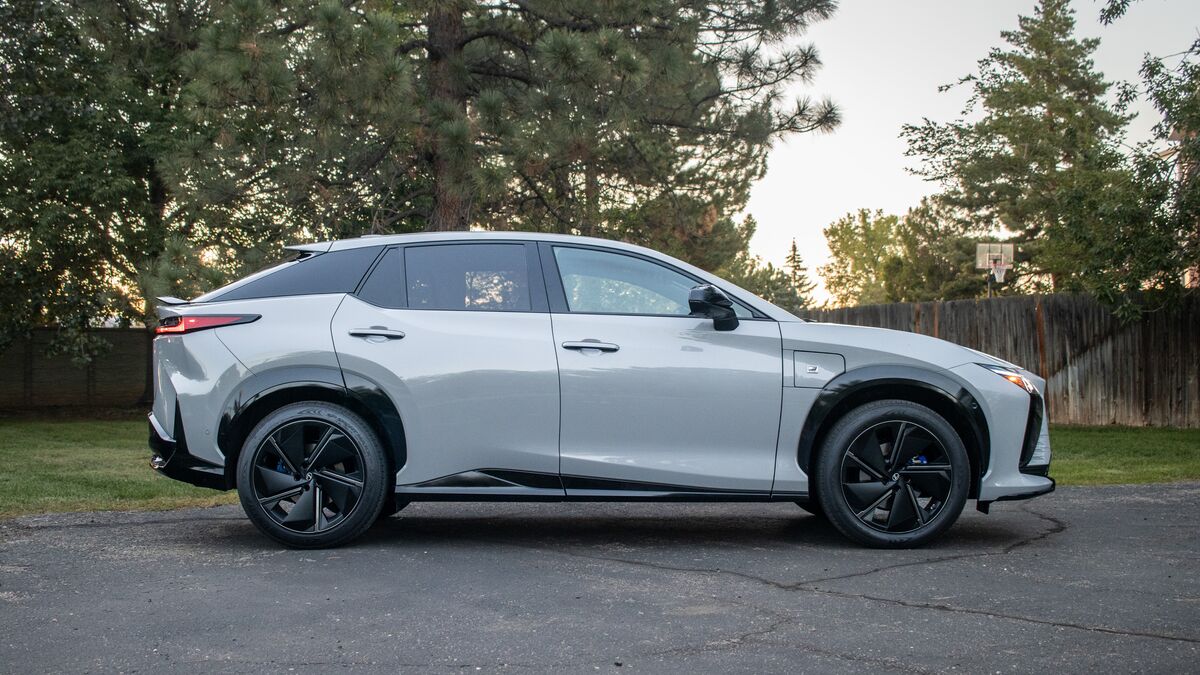

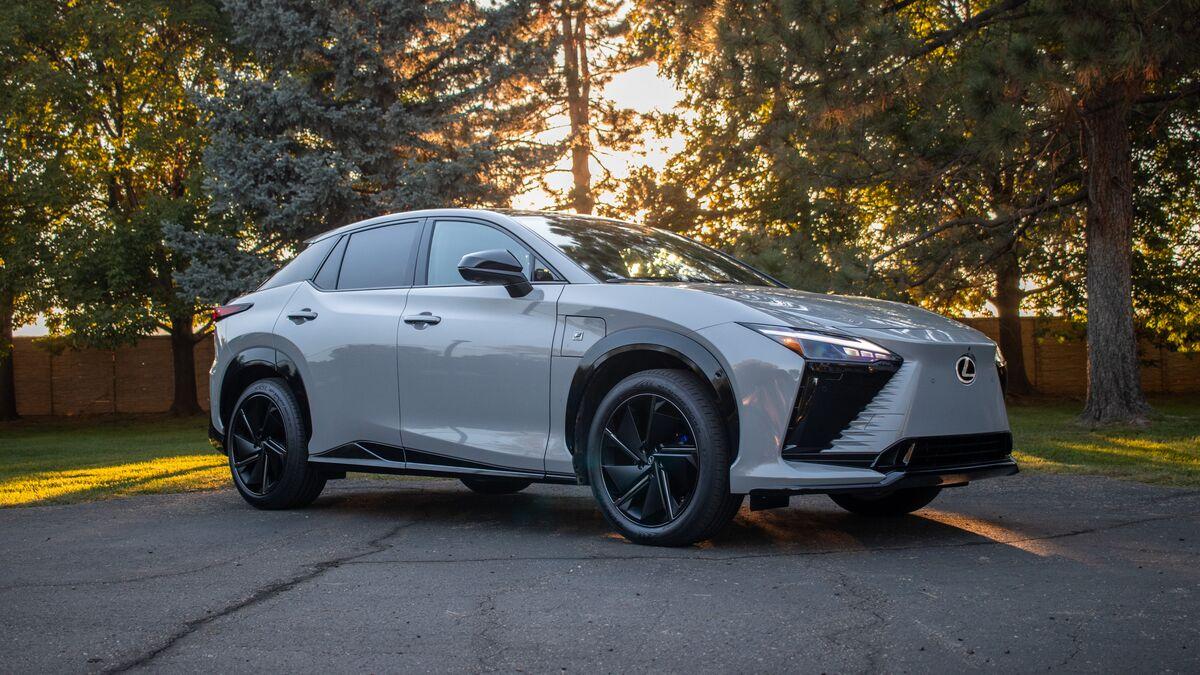
If you view the 2026 Lexus RZ strictly through the lens of an EV spec sheet, it leaves a bit to be desired. But those specifics don’t carry the same importance for every owner. Having just over 200 miles of range and below-average charging speeds simply makes this a city car. But at $61,495 as tested, it’s a steep ask given some of the omissions.
Statistics show that the average American drives less than 40 miles per day, and the vast majority of charging happens overnight at home. For that specific and increasingly common use case, this crossover solves daily driving needs in a remarkably comfortable, composed way. For current RX, UX, or NX owners looking to make the electric jump, the RZ provides a highly familiar Lexus environment elevated by the inherent smoothness of pure electrification. It proves that a niche still exists for a vehicle that prioritizes traditional luxury over cutting-edge efficiency.
Chiseled by F Sport
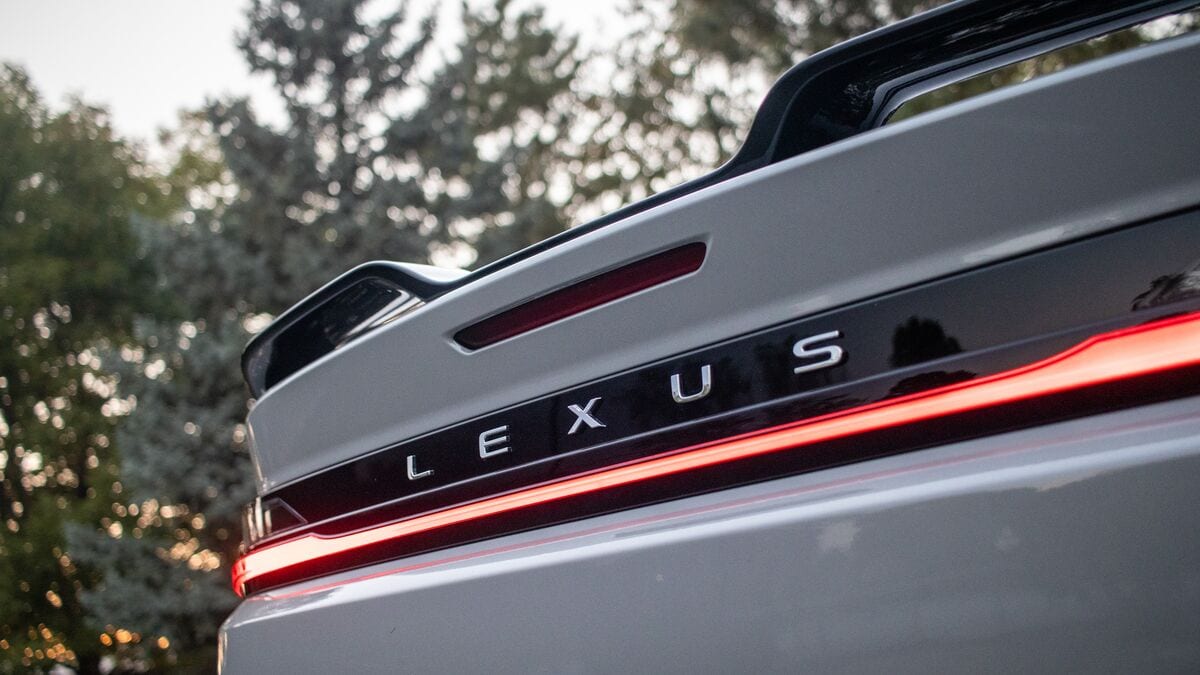
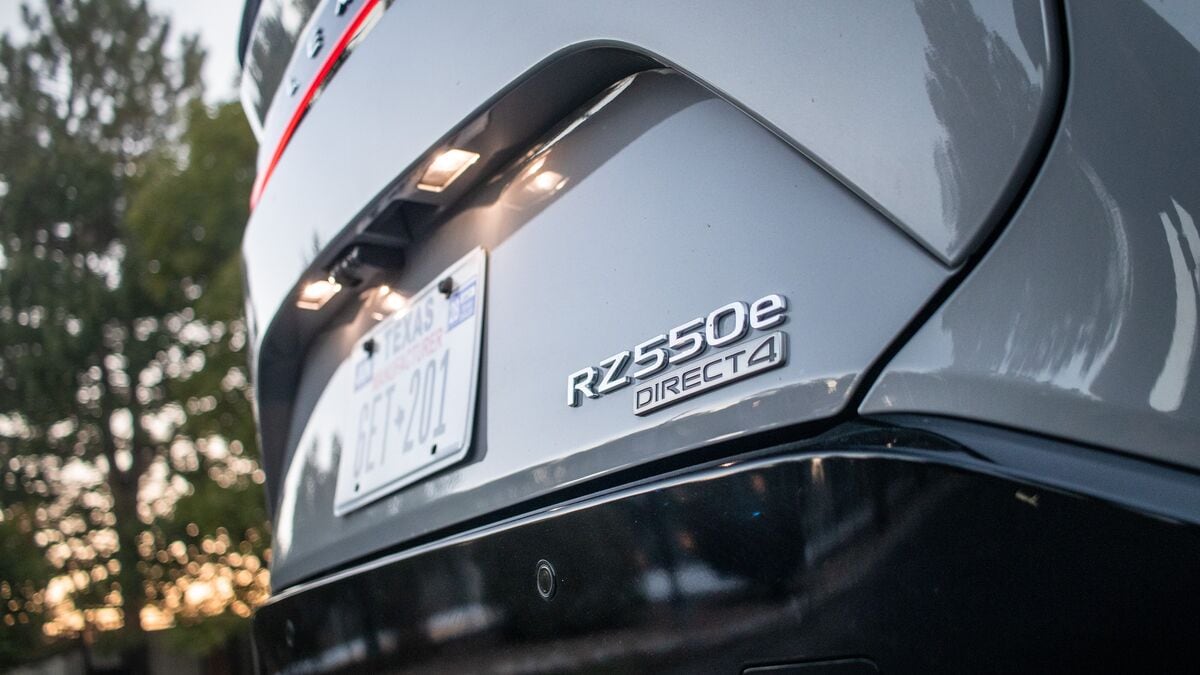
Styling is always subjective, but the Lexus RZ 550e F Sport takes the unassuming RZ shape and adds F-Sport styling and black accents throughout. The front end isn’t my absolute favorite design on the road, replacing the quintessential Lexus grille with a void of similar shape. But walk around to the back, and you are looking at arguably one of the best rear ends on any EV crossover today. The aesthetic is quintessentially Lexus. If you are a fan of the brand’s sharp angles and familiar design language, you will feel right at home adding this to your driveway.

New 2026 Lexus RZ Prices
|
Retail Price
|
Fair Purchase Price (92620)
|
|||
|---|---|---|---|---|
$47,295 |
TBD |
|||
$49,495 |
$47,200 |
|||
$50,795 |
$47,400 |
|||
$52,995 |
$50,200 |
|||
$58,295 |
$54,400 |
|||
$58,295 |
$54,400 |
Quick on the Draw
Underneath the polarizing sheet metal, this crossover is properly quick. Lexus officially claims a zero-to-60 mph time of 4.1 seconds thanks to a 402-horsepower dual-motor setup, but from the driver’s seat, it feels debatably quicker. However, you will notice a delay when you completely mat the throttle pedal. Even in Sport mode, it takes a noticeable moment for the computer to deliver the requested power, meaning you have to account for that slight hesitation when jumping into fast-moving traffic.
The ride comfort, however, is exceptional. The F Sport treatment dials in just a hair more stiffness, or sportiness, but it remains heavily prioritized for refined, comfortable daily driving. It delivers that signature isolated, whisper-quiet Lexus cabin experience, made even better by an EV powertrain rather than added measures to mask a combustion engine.
There is a distinct lack of one-pedal driving, somewhat made up for by paddles that adjust the level of regenerative braking. But most would prefer at least the option to let it come to a complete stop. The delayed throttle response, auto-hold in place of one-pedal, and adjustable regenerative braking make for clumsy low-speed maneuvering in parking lots. To make matters slightly more frustrating, your adjustable settings for auto-hold and regen level are forgotten with every drive cycle.
A (Mostly) Lux Interior
Inside, the materials are undeniably premium. A standout in dim environments is the interior accent lighting, which casts intricate patterns onto the quilted cloth door cards. It’s a neat, unique touch that garnered plenty of positive comments during my week of testing. The large center screen feels modern and perfectly portrays Apple CarPlay and Android Auto. But the driver display feels at least a decade older, with cumbersome menus and pixelated vehicle info. A Toyota Corolla at half this price unfortunately has a much more impressive screen behind the steering wheel.
Lexus took a puzzling approach to its options sheet. Despite the EV powertrain offering arguably the most premium driving feel in the entire lineup, you cannot option Lexus’s top-tier luxury features here. Massaging front seats, ventilated and reclining rear seats, and the most advanced driver display tech are entirely left off the features list and are reserved strictly for the gas-powered models or the ES BEV. The wireless phone charger lacks Qi2 charging speeds and fails to actually hold your phone in place around corners, and the interior as a whole leaves a few luxury expectations unmet.
Legacy Meets Electrification
If you are a hardcore EV enthusiast, the RZ 550e will test your patience. You’re met with a complete reset of many crucial driving preferences with every single drive cycle. Your auto-hold and regenerative braking settings vanish the moment you turn the car off. All of this could be alleviated if Lexus simply offered true one-pedal driving, but the corporate brass in Japan seems to maintain a stubborn chokehold on the feature. Mitsubishi, Nissan, and Subaru all share similar sentiments.
Maneuvering in tight spaces is also an auditory experience, thanks to a constant reverse chime that rings inside the cabin and simply cannot be disabled. Many other driver aids were overly sensitive by default, though adjustable in the various settings menus. Combine all of those “bings and bongs” with a peak charging speed of just 150 kW, a modest 230 miles of range (for the 550e F Sport), and a native navigation system completely devoid of EV route-planning, and it becomes clear that this is not the ideal machine for long-distance road trips or tech-forward enthusiasts. It’s for the Lexus customer who loved their RX and wants to leave gas behind.