
- Waymo driverless cars crashed at a rate of 68% lower than human drivers.
- The percentage of driverless crashes is likely lower because up to half of human driver crashes are unreported.
- The study analyzed 50 million miles of Waymo driveless operation.
Machines are safer drivers than humans.
That’s the conclusion of an in-depth study of Waymo driverless cars published today by the Insurance Institute for Highway Safety (IIHS).
The comprehensive and first-of-its-kind study found that Waymo driverless cars crashed 68% less often than human drivers. The crash rate is likely even lower for driverless cars because the companies operating driverless cars have to report every bump and scrape, including hitting a curb.
Human drivers are far less likely to report such crashes. Most states require a driver to report to police a crash that involves an injury or at least $1,000 in property damage, on average.
It is estimated that half of all human driver crashes involving property damage are unreported. For physical injury, the IIHS estimates that one-third of crashes are unreported.
The rules for driverless car crash reporting were amended in 2025 to align more closely with rules governing the reporting of human driver crashes. The IIHS study analyzed crash rates of driverless cars from 2021 to 2024, which is when Waymo expanded its driverless ride-share vehicles from Phoenix to San Francisco, Los Angeles, and Austin, Texas, most recently.
Regardless, driverless car companies are “still more likely than regular people to report all qualifying crashes due to the business risks of failing to comply with the regulation,” the IIHS researchers found.
The sample size of 50 million vehicle miles is significant, but much less than the 222 billion miles of human drivers logged during the same period. All things equal, the data show that driverless cars are safer. It reveals another human shortcoming, however.
“The results show that, on a limited scale, these driverless cars are safer than human drivers — who can be impaired or drowsy or suffer lapses in attention,” IIHS President David Harkey said in a statement. “However, the present data collection system isn’t good enough to allow continuous monitoring of a large-scale expansion.”
What Is a Driverless Car and How Is It Safer?
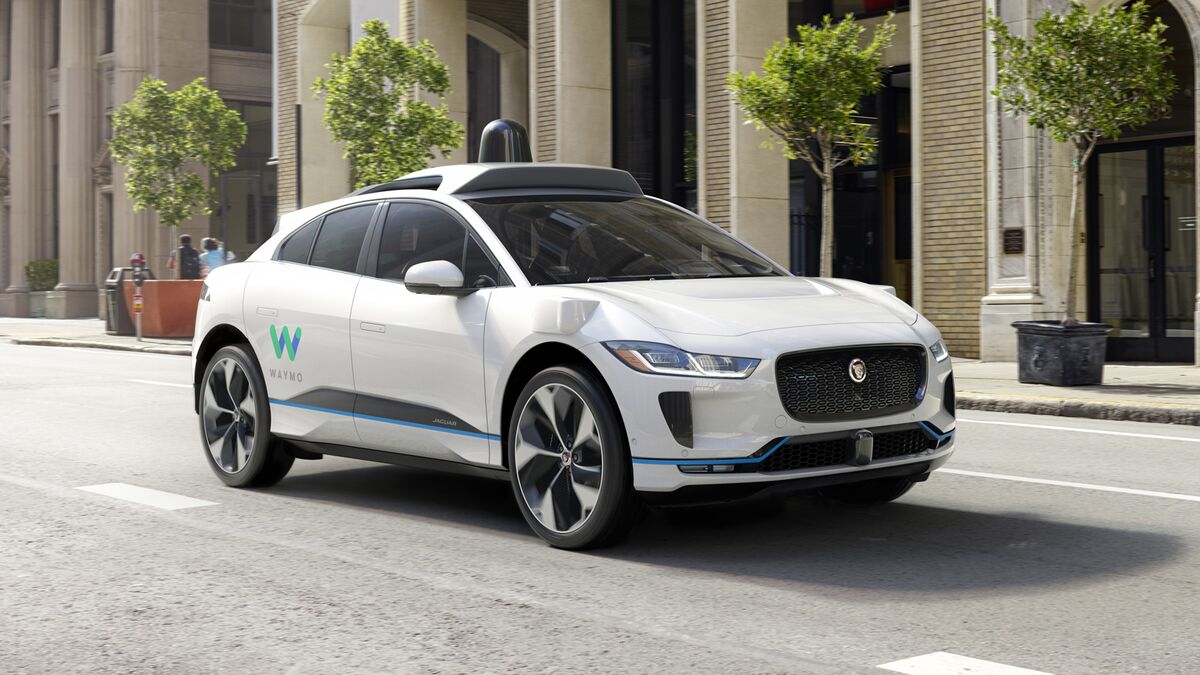
Waymo, which started in 2009 as a Google self-driving car project, operates as a ride-share service in the four cities mentioned above. It mostly uses Jaguar I-Pace electric vehicles fitted with LiDAR, radar, and cameras so it can operate without a human driver. This is considered a Level 4 system of autonomy, as defined by the SAE, based on the six levels of self-driving. Level 4 is the second-highest ranking of autonomous systems with Level 0 being the lowest.
While there are no vehicles that currently reach the top Level 5, basic cruise control is considered a Level 1 system. Limited hands-free systems such as GM’s Super Cruise, Ford’s BlueCruise, and Tesla’s Full Self-Driving (Supervised) are considered Level 2, though some people argue that Tesla’s is Level 3, which means that the system can operate fully on its own from point A to point B, but a human still needs to be in the driver’s seat to intervene if necessary. For more on this, check out our Self-Driving Car Guide.
Waymo vehicles have no human driver. It can be unsettling for some passengers. Late in 2024 in San Francisco, I rode in my first Waymo with three friends who had never tested any hands-free driving systems. They were spooked, initially. The Waymo followed the speed limit and road lines to the letter of the law. On the way home, we took a human-operated Uber that was distracted by their phone’s directions. We unanimously and overwhelmingly felt safer in the Waymo.
How Did the IIHS Determine That Waymos Are Safer?
Waymo was not the only driverless car company included in the study’s findings. Crash rates from GM’s now-defunct Cruise as well as Zoox and others were factored in using data reported to the National Highway Traffic Safety Administration (NHTSA). The IIHS excluded those other companies in its findings because only Waymo voluntarily reported vehicle miles traveled. Waymo is the largest of the companies with the most real-world experience.
The IIHS researchers removed from its comparison those crashes reported when the automation had a human operator present. Then they assessed the remaining collisions to determine if a person would have reported a similar crash.
“The researchers made this determination based on the nature of the impact and property damage, the types of injuries that were reported and other factors,” the study reported. If an airbag deployed in a driverless car, it was recorded. If it were a fender bender with no reported damage and no injury, it was excluded.
The IIHS determined there were 64 Waymo crashes that would’ve been reported to the police over the 50 million Waymo vehicle miles traveled (VMT).
“Waymo vehicles were involved in 85% fewer single-vehicle crashes and 81% fewer injury crashes per VMT than human drivers,” the study found.
The 68% fewer overall crashes were due to multiple-vehicle crashes, which are harder to assign fault.
“Those are encouraging signs for the future of driverless vehicles,” said Eric Teoh, IIHS director of statistical services and lead author of the study.
There’s still a ways to go on standardizing how crash data is collected and recorded, however.