


Seeking an alternative to Tesla’s Supercharger EV charging network? IONNA has an answer. A recent road trip test across the Midwest proved that IONNA’s growing DC fast charging network has been worth the wait, mostly.
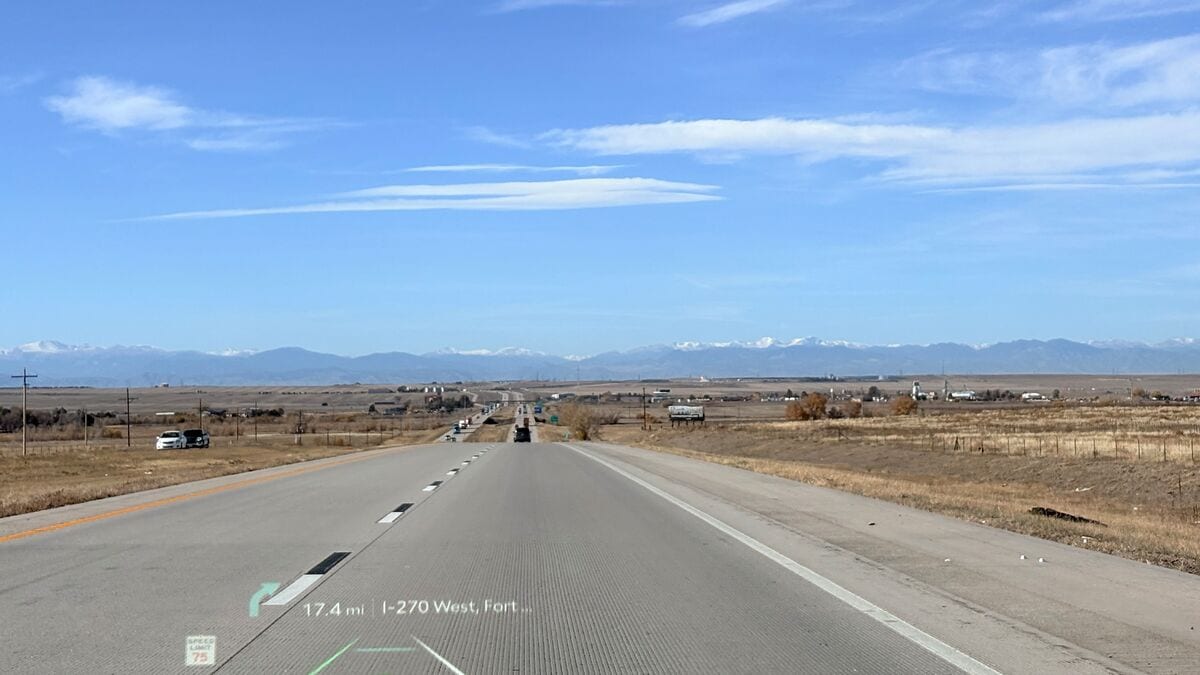
This week, I drove and rode along in a 2026 Kia EV6 GT-Line from the Chicago suburbs to Denver, covering 1,250 miles, and fueled by nine IONNA Rechargery stations. A Rechargery is one of four types of Ionna DC fast charging locations, all with a max output of 400 kW.
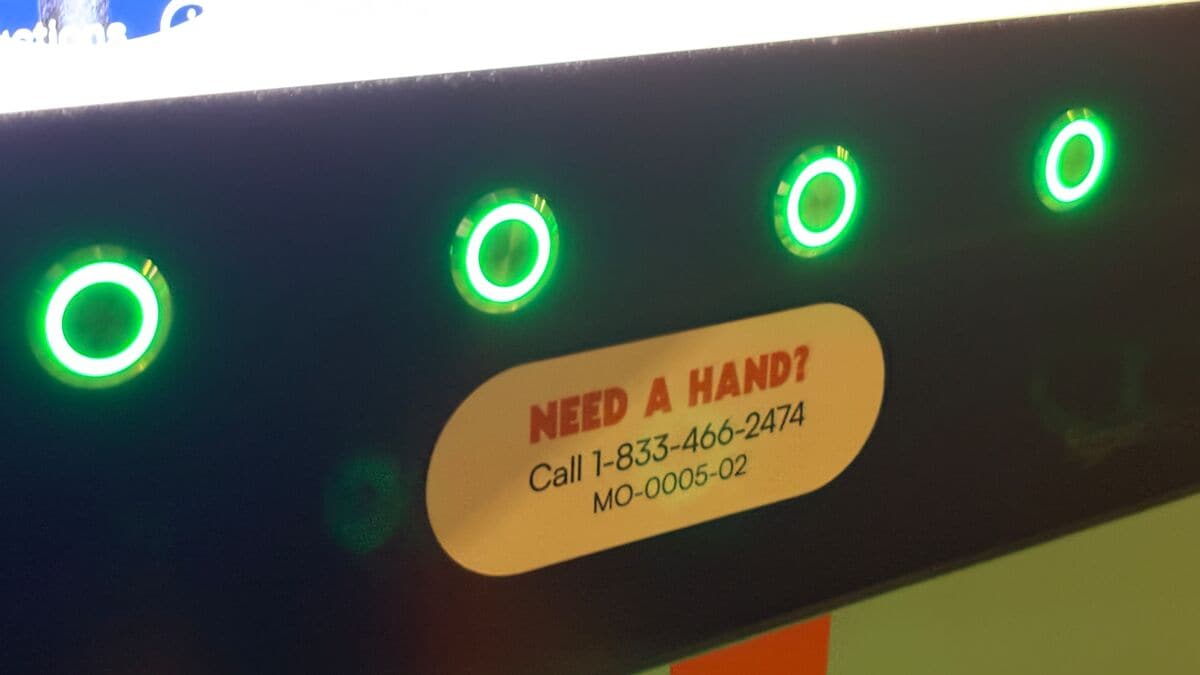
First impressions: The IONNA network is well-lit, well-marked, convenient to roadside services, easy to use, and stress- and hassle-free. Four buttons are the main interface on the charging cabinets instead of a touchscreen. A test call to the 24/7 help line listed on the charge cabinet connected me with a human at 8 p.m.
There are other perks.
What IONNA Users Are Saying
“It’s been better than Electrify America,” said Laun Bui, 34, of Denver, who flew to Buffalo, New York, to pick up his newly purchased 2024 BMW i4 M50 before driving it back to Denver. “The other reason I chose IONNA is BMW gives me 10% off and it’s already cheaper [than Superchargers] at $.39 [per kWh].”
Unlike Tesla, IONNA’s rates are national and locked in at a low $.39/kWh right now before automaker incentives. Tesla’s rate varies by region and plan, so it’s harder to calculate a national average. The most detailed breakdown we saw for a Supercharger was $.43/kWh in October, according to NeoCharge, a residential charger provider.
Instead of using an IONNA app, users either employ the automaker’s native app with Plug and Charge capability, or they use a credit card, Apple Pay, or Google Pay. They can scan the QR code on the charge cabinet to open a convenient Driver’s Dashboard that shows real-time charging stats.
A couple on their first EV road trip within the first week of owning their first EV had encountered nothing but problems before finding the IONNA Rechargery Relay in Springfield, Illinois.
“Came here, perfect, no issues,” said William Newsome, 57, of O’Fallon, Missouri.
He and his wife, Palecia Lambert Newsome, had encountered broken universal chargers and unreliable Electrify America chargers during a road trip from the suburbs of St. Louis to the suburbs of Chicago.
It took over 12 hours, in part because of Palencia’s new-to-her Mini Cooper SE and its suboptimal 114-mile range.
Why did they take the SE instead of their BMW X2 despite her husband’s concerns about the 4-hour road trip to the Chicago suburbs? Because “I didn’t listen,” Palencia said.
But most of the time wasted were charging pains. Like most EV owners, they learned a lot from their first EV trip.
“This is the best one, it’s simple,” Palencia said of IONNA, as long they could find them.
IONNA Growing Pains
The growing pains are minor: The bathrooms in the Rechargery at Limon, Colorado, weren’t lockable from the outside, as promised. You could lock it from the inside like normal.
The safety redundancies are a work in progress. To gain entrance to that Rechargery, anyone can scan the QR code on the door, regardless of if they have an EV or are charging.
“It’s open access for anyone who wants to use the facility,” Katherina Rankin, head of communications for IONNA, said in a phone interview.
This makes sense for locations with stand-alone services, such as the Amazon walkout technology that turns the Garner, North Carolina, location into a kind of humanless convenience store.
IONNA is analyzing feedback and locations on a case-by-case basis.
“The intention in the next few updates is to streamline access through the dashboard so that you would only have access if you were in a charging session,” Rankin explained. “We want to make sure of the comings and goings of all people on our properties.
There was a lack of big signage on the interstate and off it at some locations. But route mapping through native navigation, Google Maps, or the automakers’ apps resolves that problem.

Is It Better Than Tesla’s Supercharger Network?
No, due to sheer volume. But it could be.
Launched in 2012, Tesla’s Supercharger network consists of 3,318 locations and 40,612 charge ports, which accounts for more than half of all DC charging ports in the country, according to the U.S. Department of Energy’s Alternative Fuels Data Center.
IONNA started rolling out its network last year. It has 221 locations and 1,818 ports. By 2030, IONNA plans for more than 1,000 Rechargeries and 30,000 charge ports.
During our two-night trip, the number of Rechargeries nudged up to 223.
What Is a Rechargery?
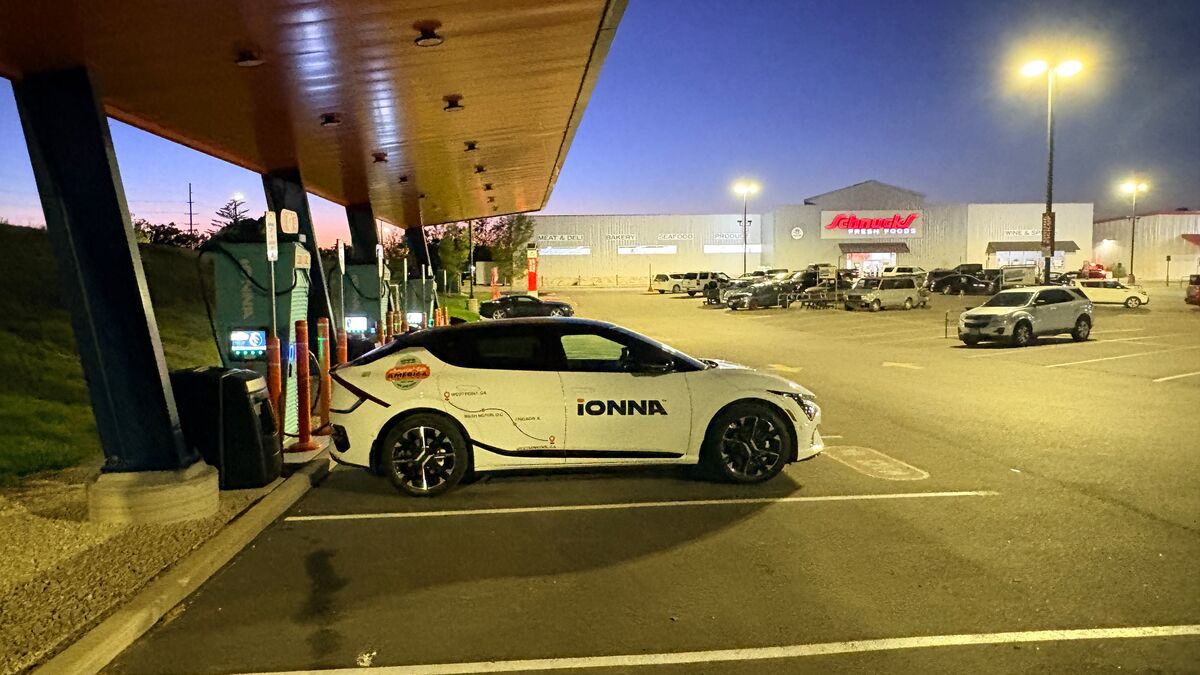
It’s IONNA for a charging location. Typically, five to eight charging cabinets with two ports per cabinet occupy each location. Each cabinet outputs up to 400 kW, which exceeds all but Supercharger V4 cabinets. A Rechargery has both CCS ports and NACS ports, usually 60% CCS and 40% NACS. No adapters needed.
They’re open 24/7, and accept Plug and Charge from automakers apps, as well as credit cards, Apple Pay, and Google Pay. Tesla drivers can use Autocharge as well, through the Presto app.
Also unlike Tesla’s Superchargers, an IONNA Rechargery can be one of four types:
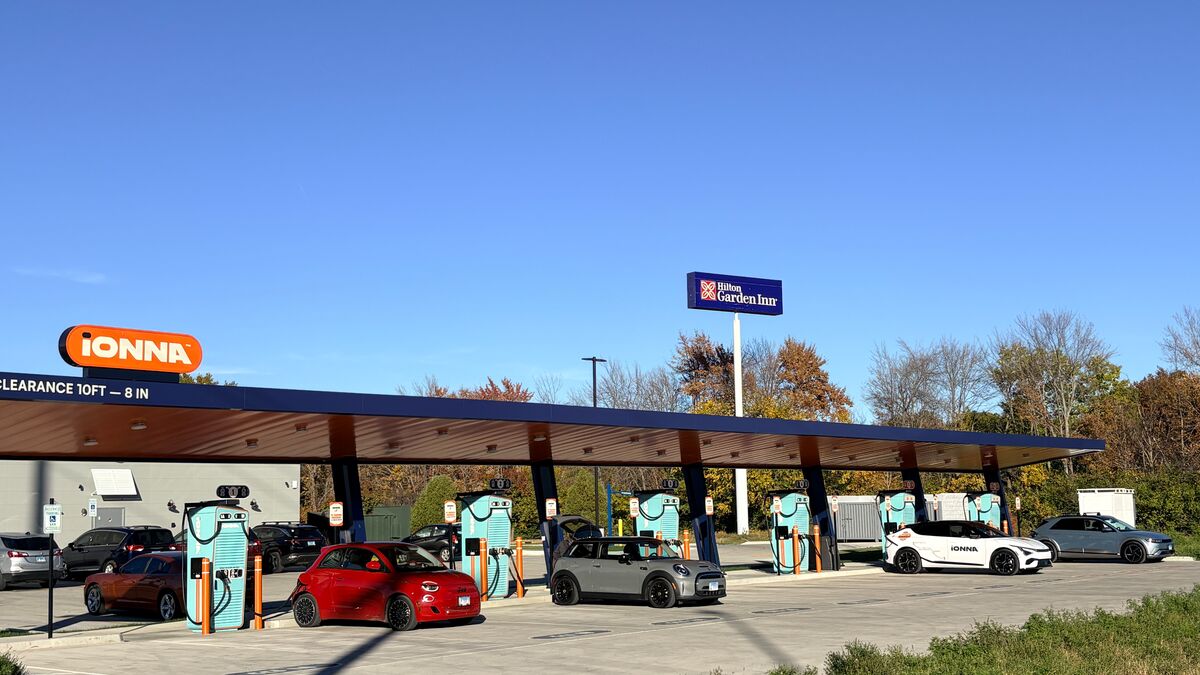
- Rechargery Relay: The most basic Rechargery and the type we encountered at six of our nine stops. All six had well-lit canopies with trash cans and squeegees to clean your windshields. They’re mostly right off the Interstate, no more than a mile. One was in a Schnucks grocery store lot. Another was by a bar and restaurant. Another by a mini mall with a Dunkin’ donut shop. They’re underwhelming, like Superchargers, but located with easy access to food and restrooms, as long as the businesses are open.
- Rechargery @: As in “at” an established travel center like a Wally’s, Circle K, Casey’s, Wawa or other facility with washrooms, restaurants, and, in the case of Wally’s, chopped brisket sandwiches.
- Rechargery: The namesake standalone Ionna facility accessible by a QR code. It has tables and chairs, possibly a couch, more charging bays than average, and locking washrooms. The one we stopped at in Limon, Colorado, had a vending machine and filtered water fountains.
- Rechargery Beacon: The first one opens in Westminster, California, outside of L.A. in advance of the Los Angeles Auto Show. It has everything of a full Rechargery but with additional amenities operated by Ionna, like a dog park.
What Is IONNA?
IONNA, as in ion + “nah,” launched in 2023 as a rare collaboration between eight major automakers to address the lack of reliable EV charging infrastructure not owned by Tesla in “nah” or North America. IONNA is exclusive to the U.S. for now, but plans for Canadian expansion are underway.
BMW Group, General Motors, Honda, Hyundai, Kia, Mercedes-Benz Group, Toyota, and Stellantis (parent company of Chrysler, Dodge, Jeep, and others) have a structurally similar arrangement in Europe, where it’s called Ionity.
IONNA is its own company, but the eight founding automaker partners each hold a seat on the board.
Automakers can play well together, it appears.
“This moment reflects years of commitment by the dynamic IONNA team and our dedicated OEM partners to reimagine and reinvent what a U.S. network should deliver — high-speed charging convenience at safe and attractive locations,” Kia spokesperson James Bell told me via email. “And in many cases, use of an IONNA-branded Rechargery provides an experience that far exceeds what today’s drivers often contend with at an average gasoline station.”
By the Numbers: Road Trip
Total miles: 1,250
Total miles per kWh: 2.83 miles/kWh
Total charge stops: 9
Total charging cost: $172 at $.39/kW
Total kWh recharged: 441.1 kWh
By the Numbers: IONNA
221 Rechargery stations opened on Nov. 9, 2026; 223 by the time our trip concluded on Nov. 11.
1,818 charging ports
$.39/kWh: National rate at IONNA charges; automaker discount incentives could lower the price
400 kW max charging speed, split between the two ports on each cabinet; so if no other car is charging at your cabinet, your car can accept up to 400 kW. If another car is charging, then the max would be 200 kW.
Open 24/7 for charging, with real human support via phone (833-466-2474) if there’s an issue. Support hotline is stickered on each charging cabinet.
Four types of Rechargery: Rechargery Relay; Rechargery @; Rechargery; Rechargery Beacon
Eight founding automakers include BMW, General Motors, Honda, Hyundai, Kia, Mercedes-Benz, Stellantis (December availability), and Toyota. Rivian, Ford, Porsche, Volvo, and Tesla owners can charge via CCS or NACS connectors at IONNA.