

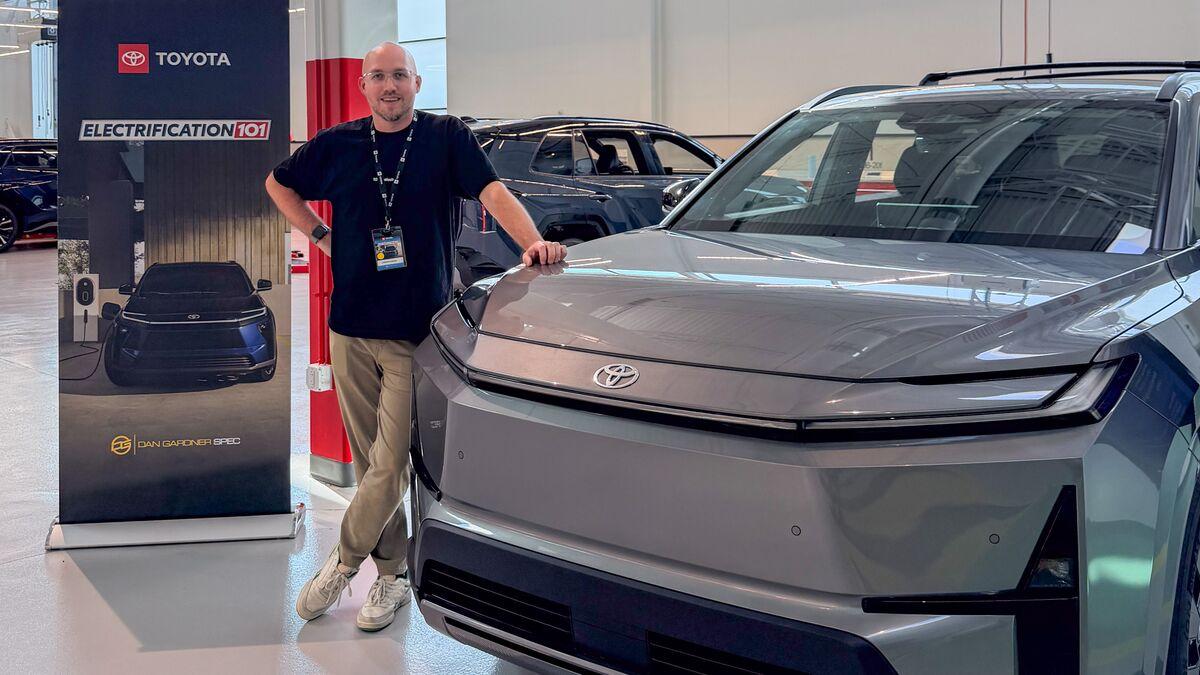
When Toyota invites automotive journalists to its North American headquarters, you might expect a vehicle reveal, a preview drive, or perhaps a look behind the curtain of product development.
Instead, Toyota invited a small group of us to sit in on a class.
The course, called Electrification 101, is a half-day program available to employees across the company. Participants spend time in a classroom learning about everything from hybrid systems and battery technology to charging infrastructure and hydrogen fuel cells before moving into hands-on activities designed to make those concepts easier to understand. For an outsider to get a peek inside is rare, so we jumped at the opportunity to not only observe the class but also participate in the activities.
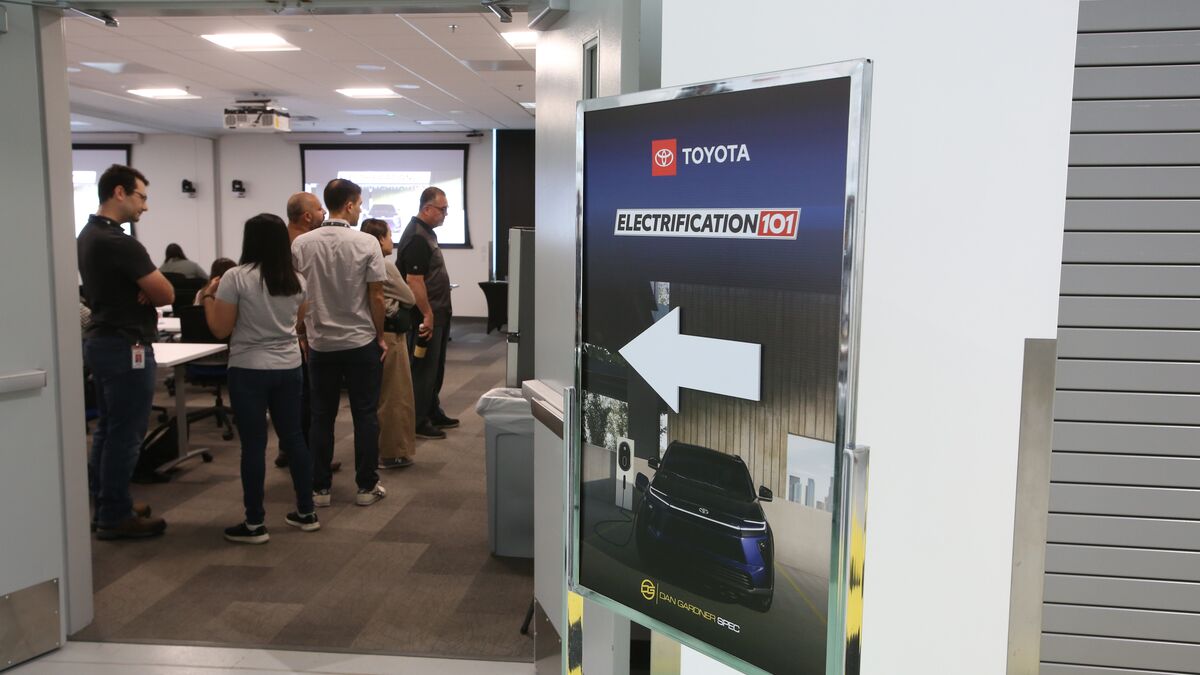
A Different Kind of Toyota Invitation
The invitation itself reflects a Toyota principle known as Genchi Genbutsu, often translated as “go and see for yourself.” Rather than simply explaining the program in a press release, Toyota wanted us to experience it firsthand.
Toyota’s Plano, Texas, headquarters is home to thousands of employees. While enthusiasts sometimes assume everyone who works for an automaker can recite horsepower figures from memory or explain the differences between powertrains, the reality is far more varied.
What I expected was a typical corporate training session. What I found was something far more interesting. This wasn’t a room full of junior engineers. It wasn’t a gathering of product planners, test drivers, or powertrain specialists. It was a cross-section of Toyota employees from across the organization — from human resources to finance to operations — many of whom signed up simply to better understand technologies that continue to shape the automotive industry and, increasingly, their personal lives. And judging by the waitlist, they’re far from alone.
MORE: Electric Cars 101: What You Need to Know About EVs
Why Is Toyota Teaching Toyota?
Electrification has become one of the most important topics shaping today’s automotive landscape, but it also involves a vast, sometimes confusing web of topics, terms, and tidbits. And this is true not only internally at Toyota but also far, far beyond. Hybrids, plug-in hybrids, battery electric vehicles, fuel cells, charging standards, adapters, degradation, regenerative braking, and public charging infrastructure each have their own learning curves.
Toyota launched Electrification 101 earlier this year, and demand was immediate. This session marked only the program’s second run, yet interest had already exceeded capacity. Approximately 300 employees can participate during the current round of classes, while a waitlist has reportedly grown to roughly 700 people.
Toyota’s response has already been to refine and expand the program. That’s a remarkable level of interest for what is essentially a voluntary educational course.
As automotive journalists, we often spend our time around engineers, executives, and enthusiasts. Electrification 101 was a grounding reminder that Toyota employees are often just as diverse as the customers who buy the company’s vehicles. Some arrived already somewhat familiar with battery technology and charging networks. Others were starting from square one.
How Toyota Explains Electrification
Because this was Toyota’s class, the company’s electrification strategy naturally played a major role in the curriculum.
Instructors began by discussing Toyota’s Environmental Challenge 2050 initiative and the company’s broader goal of carbon neutrality. The conversation repeatedly returned to Toyota’s “multipathway” approach, which focuses on a mix of technologies rather than solely on battery-electric vehicles.
Those pathways include traditional internal combustion engines, hybrids, plug-in hybrids, battery electric vehicles, and hydrogen fuel-cell vehicles.
The rationale, according to Toyota, is that no single solution works equally well in every market. Regulatory requirements differ across states, countries, and regions. Infrastructure availability varies dramatically. Consumer needs vary just as much.
Whether readers agree with Toyota’s strategy or not, the class offered a useful glimpse into how the company explains that strategy internally.
They continued the narrative by discussing Toyota’s “1:6:90” concept, which illustrates how a fixed battery supply could theoretically be allocated among one long-range battery-electric vehicle (one 100 kWh battery), several plug-in hybrids (six 16 kWh batteries), or dozens of conventional hybrids (90 1.1 kWh batteries). Toyota uses the example to explain why it believes multiple forms of electrification can contribute to emissions reductions on a massive scale.
The session also highlighted that 55.7% of Toyota and Lexus sales are now electrified vehicles, a statistic that helps explain why so many employees are eager to better understand the technology. Some have the option to take advantage of Toyota’s employee lease incentives, while others have family or close friends actively in the market.
Tapping Into Science Class Nostalgia
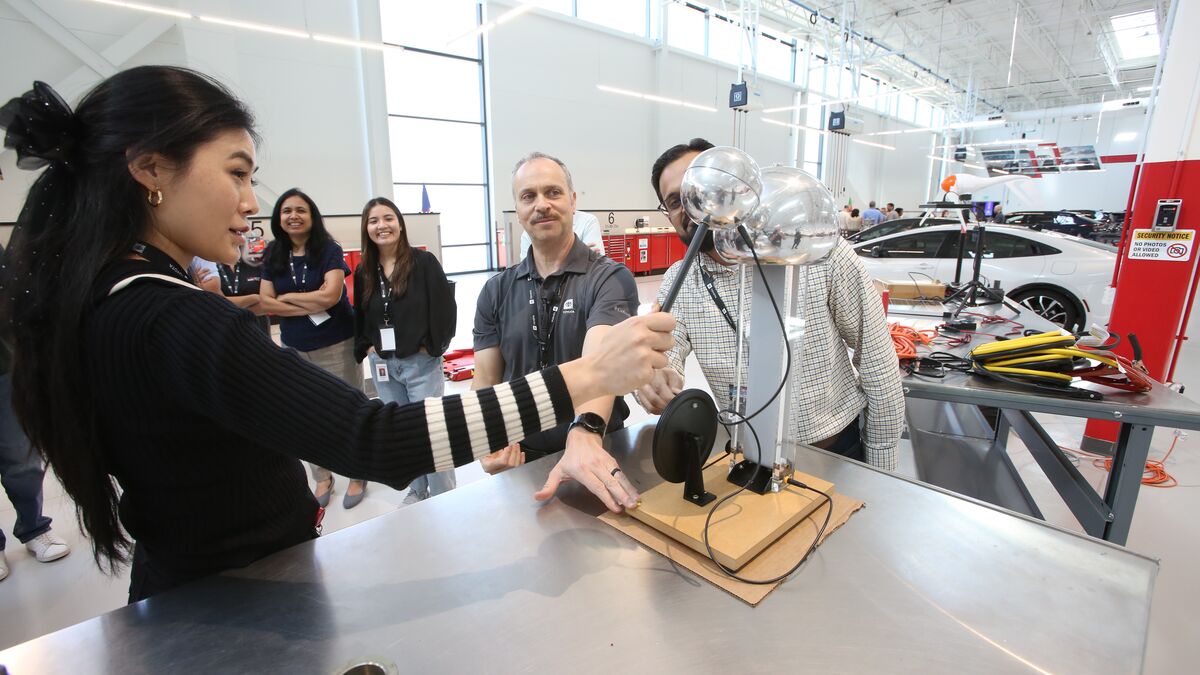
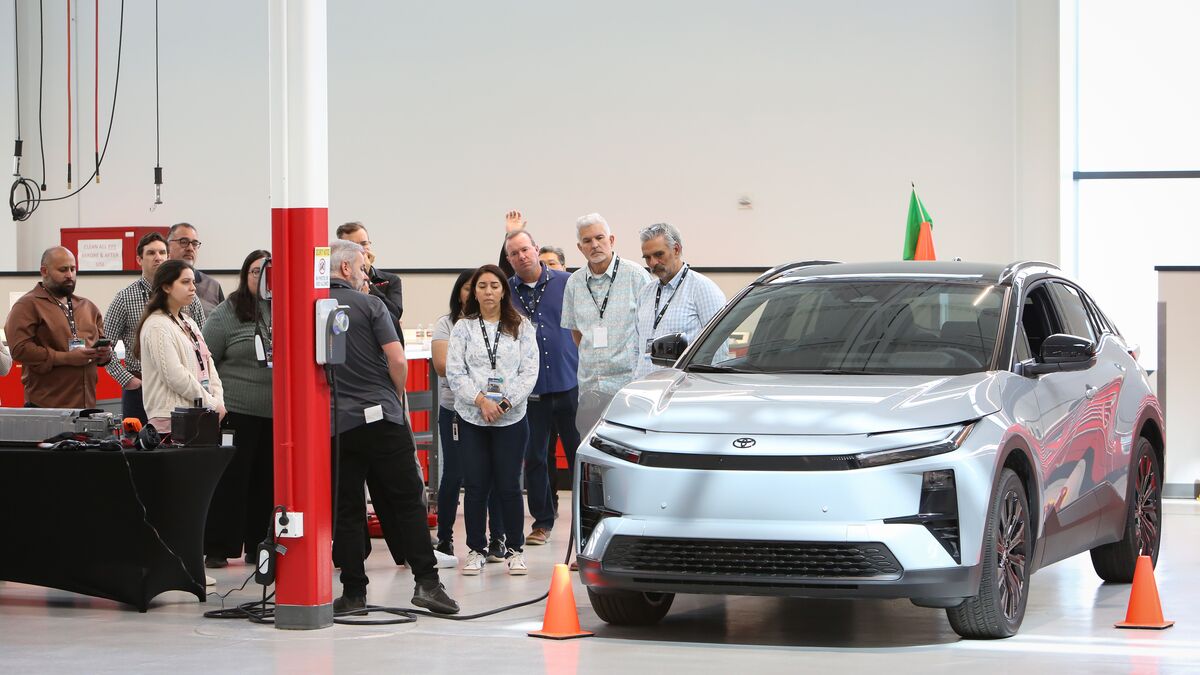
The biggest surprise of the day was how much of the afternoon took place in Toyota’s testing garage. I had fully expected several consecutive hours of PowerPoint presentations supplemented by enough coffee to keep everyone awake.
Instead, we finished a slide deck about halfway through the allotted class time and stepped into the immaculate testing garage beyond the classroom doors.
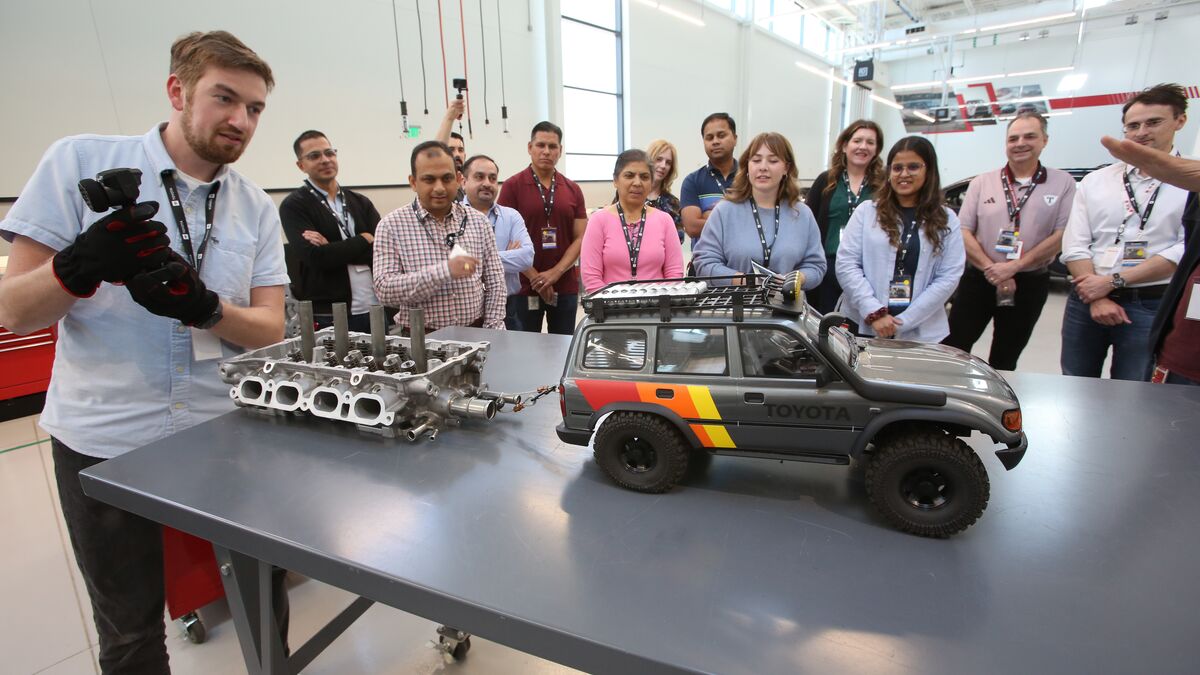
One exercise involved a radio-controlled car towing part of an engine block to demonstrate the instant torque characteristics of electric motors. Perhaps there was also a bit of symbolism in watching part of an internal combustion engine get dragged along by electrification. Or maybe I was reading too much into it.
Another had participants build a rudimentary electric motor from basic components: a magnet, a screw for rotation, and a AA battery. The exercise showcased the motor’s basic simplicity.

There was a potato battery experiment, measuring voltage through, yes, a potato. Other demonstartions involved solar and wind power, a hand-crank electricity generator, and opportunities to plug in electrified vehicles and identify high-voltage components under the hood.
The experience felt surprisingly nostalgic. At times, it reminded me of grade-school science experiments designed to make abstract concepts tangible. That appears to be exactly the point.
Toyota was taking potentially intimidating subjects and making them approachable, even enjoyable. Judging by employee participation, the formula seems to be working.
Curiosity Over Conviction
Some of the day’s best moments came during audience Q&A sessions, held at the end of each topical section.
One attendee asked about EV route planning, an area where Toyota’s native software has historically lagged some competitors. Instructors acknowledged the limitation and noted that improvements are coming with the next-generation system. They pointed to Apple CarPlay’s built-in route planning as a current solution, though I’d characterize it as a crutch, not a system fully optimized for the car’s performance.
Another attendee asked about extended-range electric vehicles, or E-REVs, a technology gaining traction elsewhere in the industry. Toyota’s instructors were noticeably less enthusiastic, describing the format as one of the least efficient approaches to electrification.
Questions about charging infrastructure surfaced repeatedly. Concerns about charging remain among the most common barriers for shoppers considering an EV.
Toyota noted the significant difference between America’s gasoline infrastructure and its public fast-charging network, highlighting roughly 1.2 million gas pumps compared with about 210,000 DC fast-charging stalls.
Charging standards, adapters, and network compatibility were all discussed, reinforcing just how complex the transition can feel for newcomers.
If there was a common theme behind the questions, it was uncertainty. Not opposition or resistance. Just people trying to understand how electrification could fit into their lives.
The mood throughout the day felt curious, if a little reserved at first. Some attendees were clearly enthusiastic. Others seemed to approach the topic with a healthy amount of skepticism. Many simply wanted answers, especially about how this new knowledge could apply to them.
Importantly, and perhaps refreshingly, the questions being asked weren’t ideological. Nobody appeared interested in winning an EV debate or bringing politics to the table.
Instead, participants were asking the same kinds of questions everyday consumers have about EVs:
- How long does charging really take?
- How much does range matter?
- What happens on road trips? Or in cold weather?
- Could a plug-in hybrid work better than a fully electric vehicle for certain lifestyles?
Some attendees seemed to be actively evaluating whether a plug-in electrified vehicle could fit into their own lives. Others simply wanted to better understand the industry’s direction.
Most of these employees, like many consumers, aren’t antiEV or antihybrid. They’re simply looking for information that helps them make sense of a rapidly changing marketplace.
What I Took Away
Electrification 101 was quite different from what I expected going in — and much more impactful.
The most memorable part of the experience wasn’t a statistic, a presentation slide, or even one of the hands-on demonstrations. It was watching employees voluntarily spend an afternoon asking thoughtful questions about a topic they wanted to better understand.
In an era when discussions surrounding EVs, hybrids, charging infrastructure, and alternative fuels can quickly become political, polarizing, and even heated, the atmosphere in the room felt refreshingly different. People were learning, fueled by curiosity, and finding value beyond even their own expectations.
For an industry often consumed by debates over what buyers should purchase, the experience served as a reminder that many consumers are still focused on a simpler goal: understanding the options available to them.
The success of Electrification 101 suggests Toyota may continue expanding the program. With hundreds of employees already waiting for a seat, demand clearly exists.
It also raises a larger question. If so many people within one of the world’s largest automakers are eager for this type of education, how much demand exists outside its walls?
Perhaps future iterations will take the form of additional internal classes. Perhaps automakers will become more proactive in creating educational content for consumers. Companies like Lucid have already experimented with in-depth, public-facing content explaining EV technology, and there is no shortage of buyers looking for answers.
For now, Electrification 101 serves as a reminder that understanding often comes before adoption. I’m eager to see the dominoes continue to fall.