

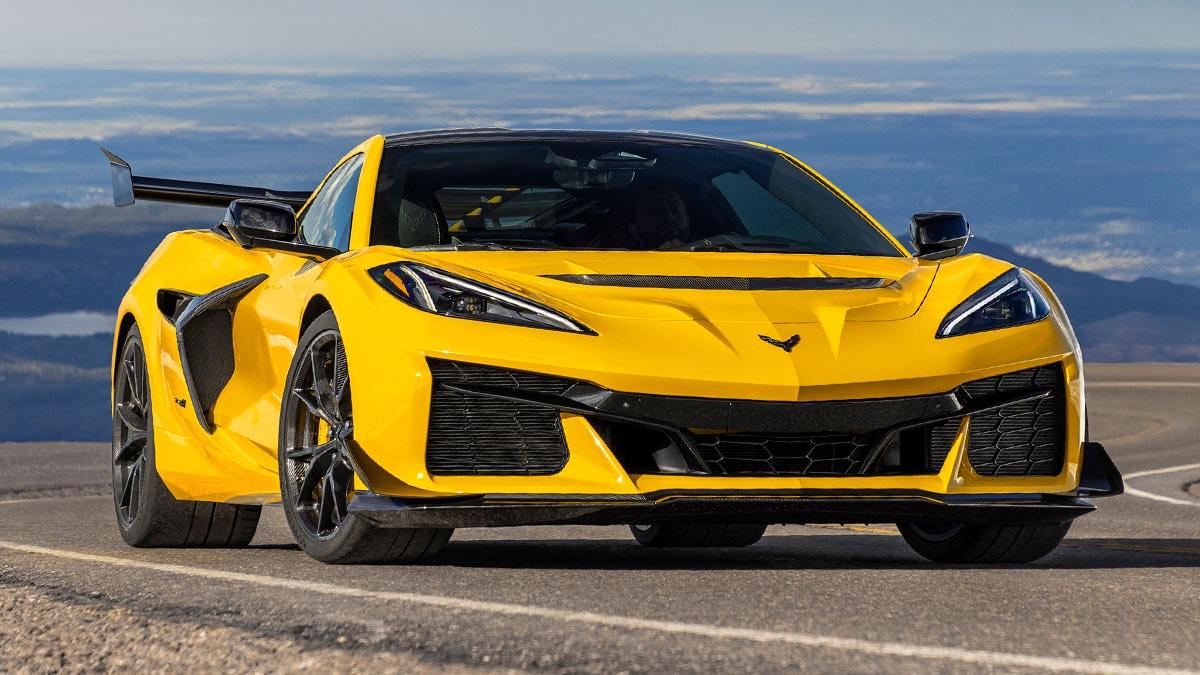
Quick Facts About the Gas Guzzler Tax
- The tax applies to new cars with an unadjusted combined fuel-economy rating below 22.5 mpg.
- The federal tax ranges from $1,000 to $7,700 and doesn’t apply to SUVs, pickups, or minivans.
- Automakers must display the tax amount on the new car’s window sticker.
The Gas Guzzler Tax (GGT) is a federal tax on new cars that fall below a specific fuel-economy standard. Congress created it in 1978 after the oil crises, and the tax amounts haven’t changed since 1991.
The government charges automakers the tax, which they typically pass along to buyers. Depending on the car, it can add $1,000 to $7,700 to the purchase price. The amount appears on the vehicle’s window sticker.
Here’s how the tax works, which cars it affects, and what shoppers should know.
How Does the Gas Guzzler Tax Work?
The GGT is a federal tax on new passenger cars with an unadjusted combined fuel-economy rating below 22.5 mpg. It’s a progressive tax, which increases as fuel economy decreases.
The table below shows the 12 tax levels that have been in place since 1991, including no tax for ratings of 22.5 mpg or higher.
These ratings differ from the combined mpg estimates displayed on window stickers.
| UNADJUSTED FUEL ECONOMY | TAX |
| at least 22.5 mpg | No tax |
| at least 21.5, but less than 22.5 mpg | $1,000 |
| at least 20.5, but less than 21.5 mpg | $1,300 |
| at least 19.5, but less than 20.5 mpg | $1,700 |
| at least 18.5, but less than 19.5 mpg | $2,100 |
| at least 17.5, but less than 18.5 mpg | $2,600 |
| at least 16.5, but less than 17.5 mpg | $3,000 |
| at least 15.5, but less than 16.5 mpg | $3,700 |
| at least 14.5, but less than 15.5 mpg | $4,500 |
| at least 13.5, but less than 14.5 mpg | $5,400 |
| at least 12.5, but less than 13.5 mpg | $6,400 |
| less than 12.5 mpg | $7,700 |
Source: EPA Gas Guzzler Tax Program Overview
Which Cars Have the Gas Guzzler Tax?
The tax primarily affects high-performance sports cars and luxury sedans. SUVs, pickup trucks, and minivans are exempt, regardless of their fuel economy.
You can check whether a particular vehicle is taxed in the EPA’s 2026 Fuel Economy Guide. Look for “Tax” in the Notes column.
Why Do Some Low-MPG Cars Avoid the Tax?
Some models delivering less than 22.5 mpg aren’t taxed. For example, the Audi S8, the base Chevrolet Corvette, and the Nissan Z with a manual transmission have combined fuel-economy estimates below the threshold but aren’t subject to the tax. Why not?
The EPA uses different calculations for the tax and the window sticker. The tax relies on unadjusted fuel-economy test results, while window-sticker estimates account for additional conditions, such as higher speeds, air conditioning, and cold weather.
In other words, a car rated at 20 mpg on its window sticker might not owe the tax because its unadjusted fuel-economy rating is higher.
RELATED: Do I Need a V8? Or Is a V6 Good Enough?
Examples of Cars With a Gas Guzzler Tax
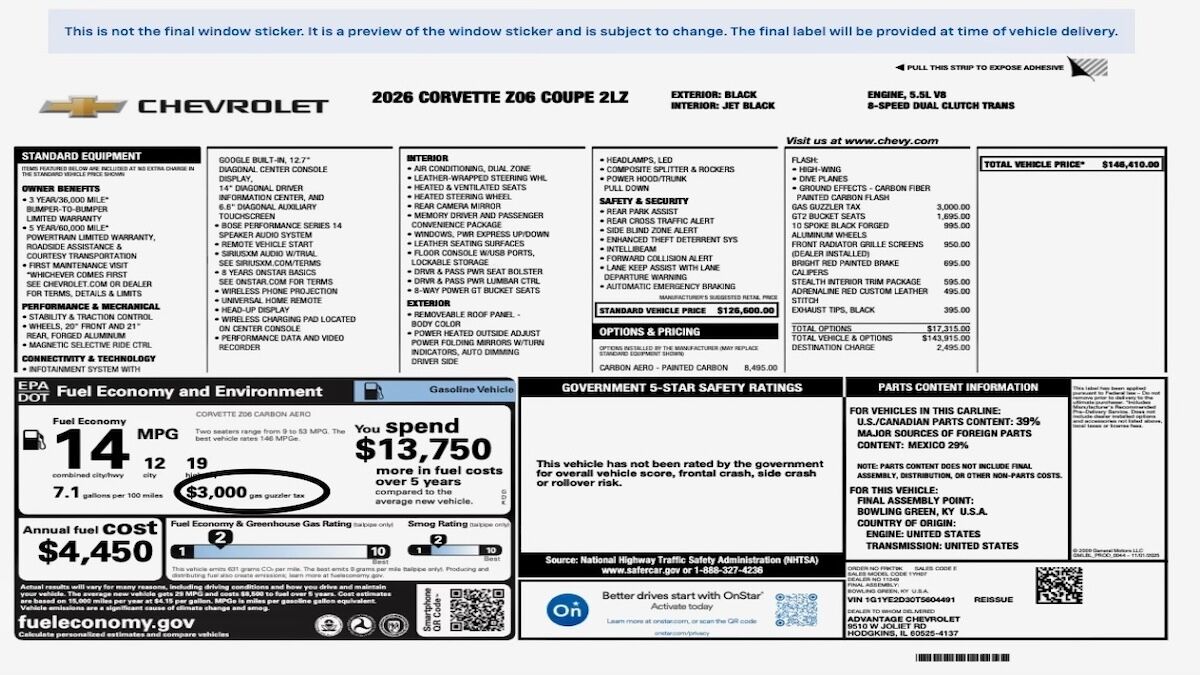
For the exact amount, check the vehicle’s window sticker or ask the dealer for a copy before buying.
RELATED: Average Miles Driven Per Year: Why It Is Important
Does the Gas Guzzler Tax Apply to Used Cars?
No. The tax applies when the manufacturer sells a qualifying new car. It isn’t charged again when the car is resold.
The tax also isn’t a dealer-imposed fee that can be waived. However, buyers can still negotiate the vehicle’s overall purchase price.
Editor’s Note: We have updated this article since its initial publication.