

Quick Facts
- Performance driving schools teach skills that can improve everyday driving, including emergency braking, vision, steering, and skid control.
- Proper seating position and smooth control inputs can make it easier to react quickly and maintain control.
- Understanding how tires, braking, and weight transfer affect grip can help drivers recognize their vehicle’s limits.
Performance driving schools attract enthusiasts who want to drive fast, but everyday drivers can benefit from the experience in unexpected ways — some of which can greatly enhance their confidence and safety every time they’re behind the wheel.
My everyday car is a 2022 Chrysler Pacifica minivan, hardly the kind of vehicle a performance driver would covet. Still, I gladly accepted Michelin’s invitation to participate as its guest for a day of performance-driving instruction at the AMG Experience event at Road Atlanta. I drove Mercedes-AMG vehicles equipped with Michelin tires. Professional instructors put us through a wet skid pad, emergency braking, a slalom, and lead-follow laps around the racetrack.
AMG’s program demonstrates vehicle dynamics and teaches obstacle avoidance, skid control, vision, and cornering skills, with classroom instruction followed by hands-on exercises.
This track training translates directly to everyday driving. Follow along to see what I picked up in an AMG to take home in my Pacifica.
Start With the Right Seating Position
One of the first lessons happened before the cars even moved.
Instructors explained that racing teams can spend hours adjusting a driver’s seating position to optimize the driver’s range of motion. Everyday drivers do not need that level of precision, but the principle is the same.
Sit close enough to press the brake pedal firmly while keeping a moderate bend in your knee. Position the seatback so you can reach the steering wheel without pulling your shoulders away from the seat. Keep the seat belt snug.
A good seating position can make steering and braking inputs easier and more controlled, especially when you need to react quickly.
Hold the Steering Wheel at 9 and 3
AMG instructors recommend keeping both hands on the steering wheel at roughly the 9- and 3-o’clock positions. The goal is control without a white-knuckle grip.
Hold the wheel lightly enough to make smooth movements but firmly enough to react if the car suddenly changes direction.
Avoid resting one hand on top of the wheel while steering. That position can also put your arm in the path of a deploying airbag, which could cause injury.
A 9-and-3 grip gives you better control and prepares you for an emergency maneuver.
EXPLORE: 100 Years of Automotive Steering Wheels
Look Farther Ahead
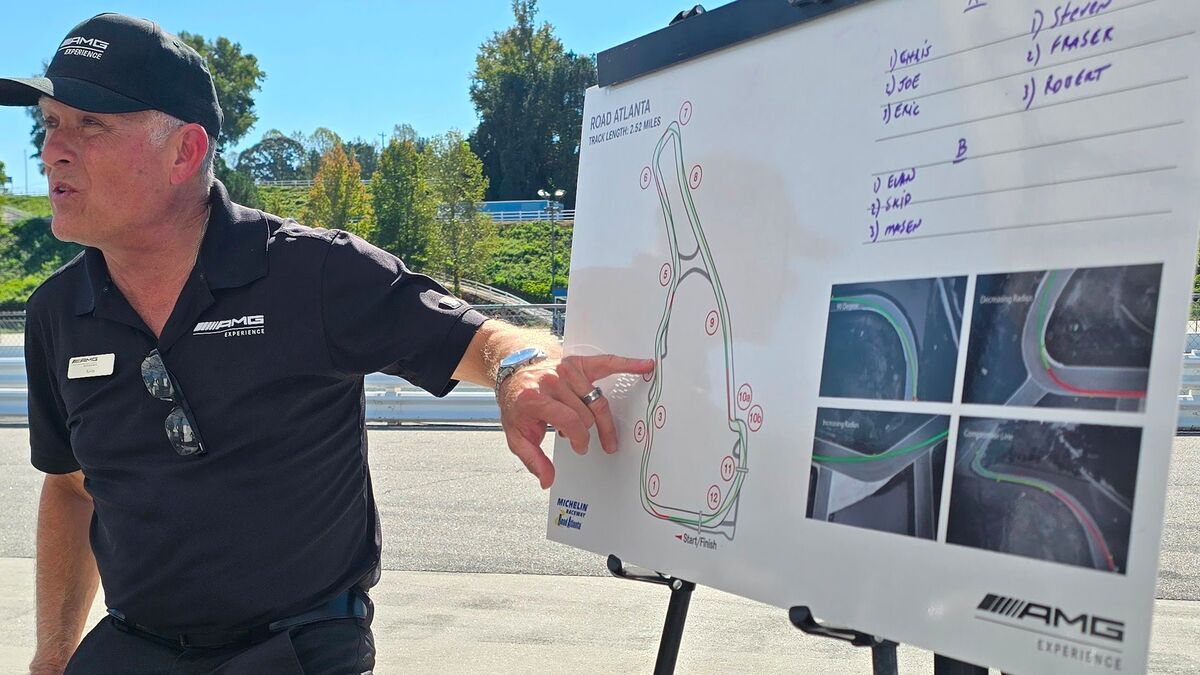
One instruction came up throughout the day: Look where you want the car to go.
AMG calls proper “eye work” a fundamental driving skill. Looking ahead helps determine steering inputs, car placement, and how early you recognize a mistake or developing hazard.
On a racetrack, that means looking through a corner rather than at the pavement immediately in front of the hood.
On the street, it means looking beyond the car directly ahead and scanning for brake lights, merging traffic, road debris, pedestrians, and possible escape routes.
It also means resisting the urge to stare at the hazard you are trying to avoid.
The effect of staring became obvious on the wet skid pad. When the rear of the car started sliding, I found myself looking at the cones marking the route instead of where I wanted to go. The instructors kept reminding us to look toward the escape path. Following these instructions helped keep my car on its intended path, saving the lives of many innocent cones.
Know How Hard Your Car Can Brake
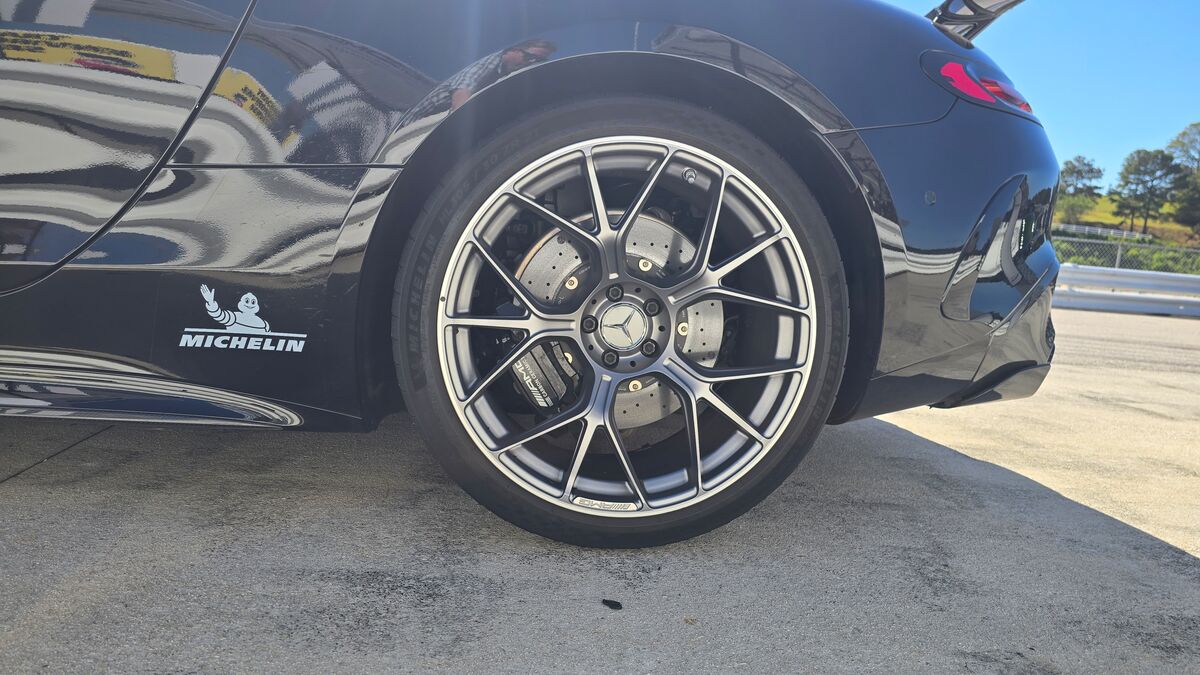
Most drivers rarely use their vehicle’s full braking capacity.
One AMG exercise combined hard acceleration, emergency braking, and a lane change. The goal was to practice reaction time, heavy brake application, and looking toward the intended path while the car’s anti-lock braking system (ABS) worked.
Modern ABS is designed to let drivers press the brake pedal hard without locking the wheels, which can lead to a loss of traction and control. AMG’s handbook advises applying firm pressure and not pumping the brakes.
Actually doing that can feel unnatural if you have never practiced it.
During lead-follow laps, an instructor repeatedly reminded us over the radio: “If the car I’m driving can do this, so can the one you’re driving.”
That assertion was reassuring (in theory).
In practice, braking from roughly 130 mph to about 50, diving into a sharp left-hand turn, then getting back on the throttle to set up for a sharp right to approach the start/finish line required more commitment than anything I normally do in my minivan.
The everyday lesson is simpler: When you need to stop, stop. Hesitation only gets you closer to whatever you are trying to avoid.
Learn What Losing Grip Feels Like
A wet skid pad gives drivers a chance to experience a loss of traction in a controlled environment.
The AMG exercise covered understeer, oversteer, slide correction, and where to look when the vehicle begins to skid.
Most drivers never deliberately practice those situations. Their first serious skid may happen on a rain-soaked highway, icy road, or other place where they have little room for error.
The value of a performance or defensive driving school is becoming familiar with how a car feels as traction begins to disappear — before it happens unexpectedly on the street.
Understand What Your Tires Are Doing
Performance driving also makes clear how much every maneuver depends on the tires.
The AMG handbook describes tires as the vehicle’s only connection with the road. Four relatively small contact patches have to handle braking, acceleration, and cornering. Tire pressure also affects the tire’s ability to stop and turn effectively.
That lesson was especially relevant at a Michelin-hosted event where the AMG vehicles were fitted with Michelin tires.
The principle applies to every car, regardless of tire fitment.
Acceleration shifts load toward the rear tires. Braking moves it forward. Cornering transfers load toward the tires on the outside of the turn.
Those changes affect how much grip is available. That is why instructors emphasize smooth steering, braking, and acceleration. Abrupt inputs can upset your car’s balance and demand more from the tires.
MORE: Car Tires Guide: Everything You Need to Know
Confidence Matters — So Does Restraint
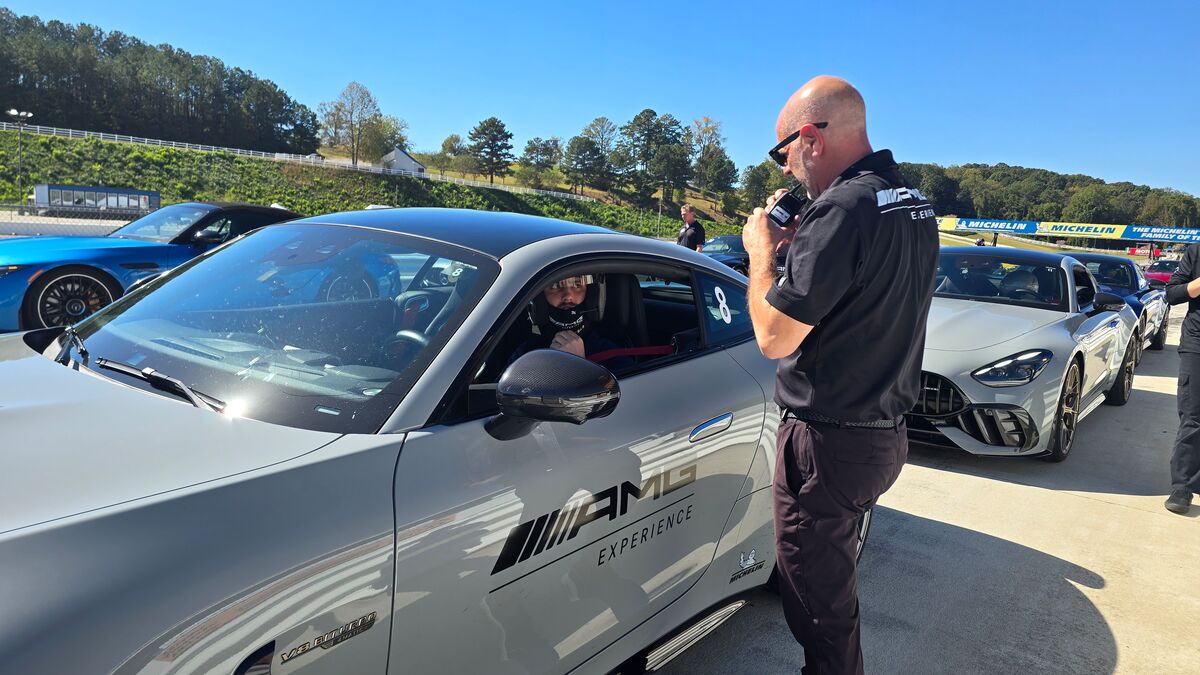
One instructor, who also coaches racing drivers, talked about how much of his job involves building confidence.
Too little confidence keeps a driver from performing to their ability. Too much confidence leads to mistakes.
The AMG instructors worked the same way with us. They pushed us beyond our comfort levels, but not beyond our abilities.
That lesson transfers well to public roads.
An overly hesitant driver can create problems by braking unpredictably, merging too slowly, or freezing when a quick decision is necessary. An overconfident driver may follow too closely, enter a curve too fast, or expect the car’s technology to overcome poor judgment.
Good driving requires enough confidence to act decisively and enough restraint to recognize the limits.
The Bottom Line
Performance driving schools teach techniques intended for a racetrack, but many of the fundamentals are useful anywhere.
Nobody needs to find the racing line on the way to work. But a day at Road Atlanta reinforced habits that matter every day: Sit correctly. Hold the wheel lightly at 9 and 3. Look farther ahead. Brake decisively when necessary. Make smooth inputs. Know what your tires and brakes can do.
Those are useful skills whether the speedometer reads 130 mph or 30 mph.
LEARN: For in-depth resources on how to drive more safely, visit our Car Safety Information Center.