

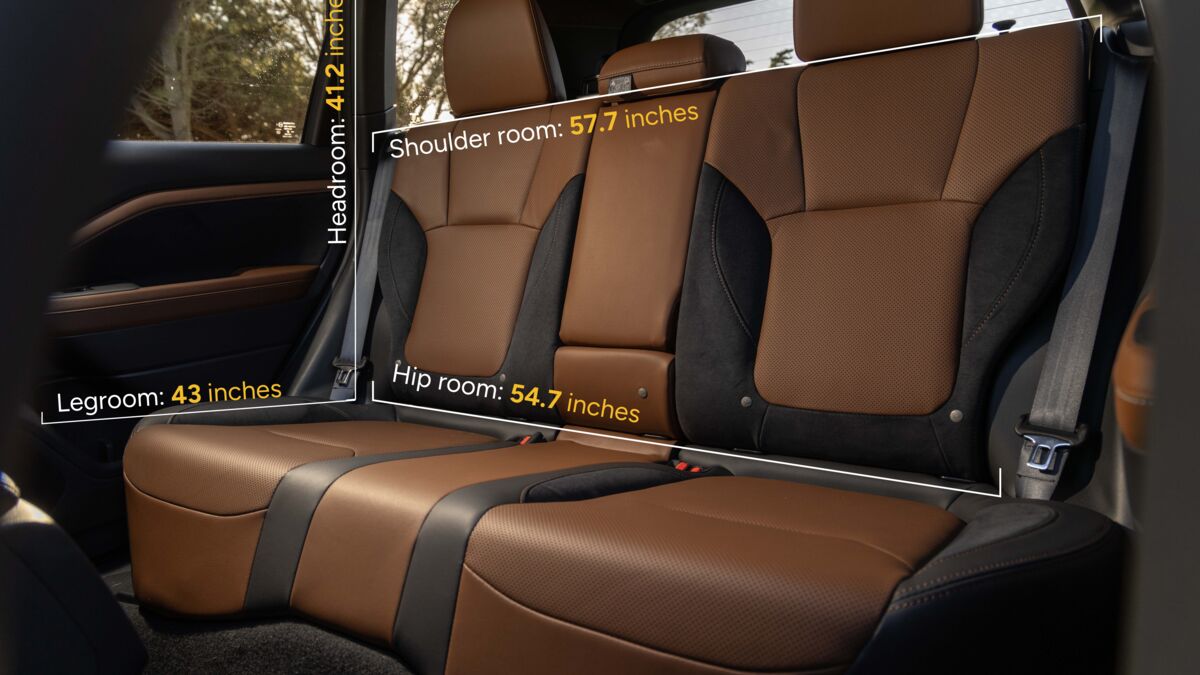
Young drivers might not think about interior headroom and legroom when they’re shopping for a car, but parents probably do. Rear-seat dimensions can have a big impact on parents’ ability to install and use car seats, even before they have to lift a squirming child into the vehicle. If you’re expecting a child or have questions about how to read interior dimensions to find the best vehicle for carrying your children, we’re here to help. This quick guide covers the effects that rear-seat dimensions can have on car seat installation and use. Let’s get started.
Legroom
Rear legroom measurements typically include the distance between the rear seatback and the back of the front seat. Children don’t need as much legroom as adults, but large car seats can significantly complicate the measurement in some vehicles. Rear-facing car seats should not touch the back of the front seats, and children in forward-facing seats need room for their feet and legs, in addition to the space taken up by the car seat itself. Legroom can become even more of an issue for a taller person sitting in the front seat, so it’s important to factor in your other passengers when taking your measurements.
MORE: How to Read IIHS Safety Rankings for Family-Friendly Cars
Headroom
Headroom is usually measured from the seat cushion surface to the headliner. While your child’s head is unlikely to extend beyond the top of a properly fitted car seat, headroom can make the difference between an easy car seat installation and a real hassle. Headroom dimensions are a good starting point, but it’s also a good idea to consider the roofline’s shape, as many models feature sloping lines that give the back seat an awkward shape and complicate car seat installation.
Hip Room and Other Factors
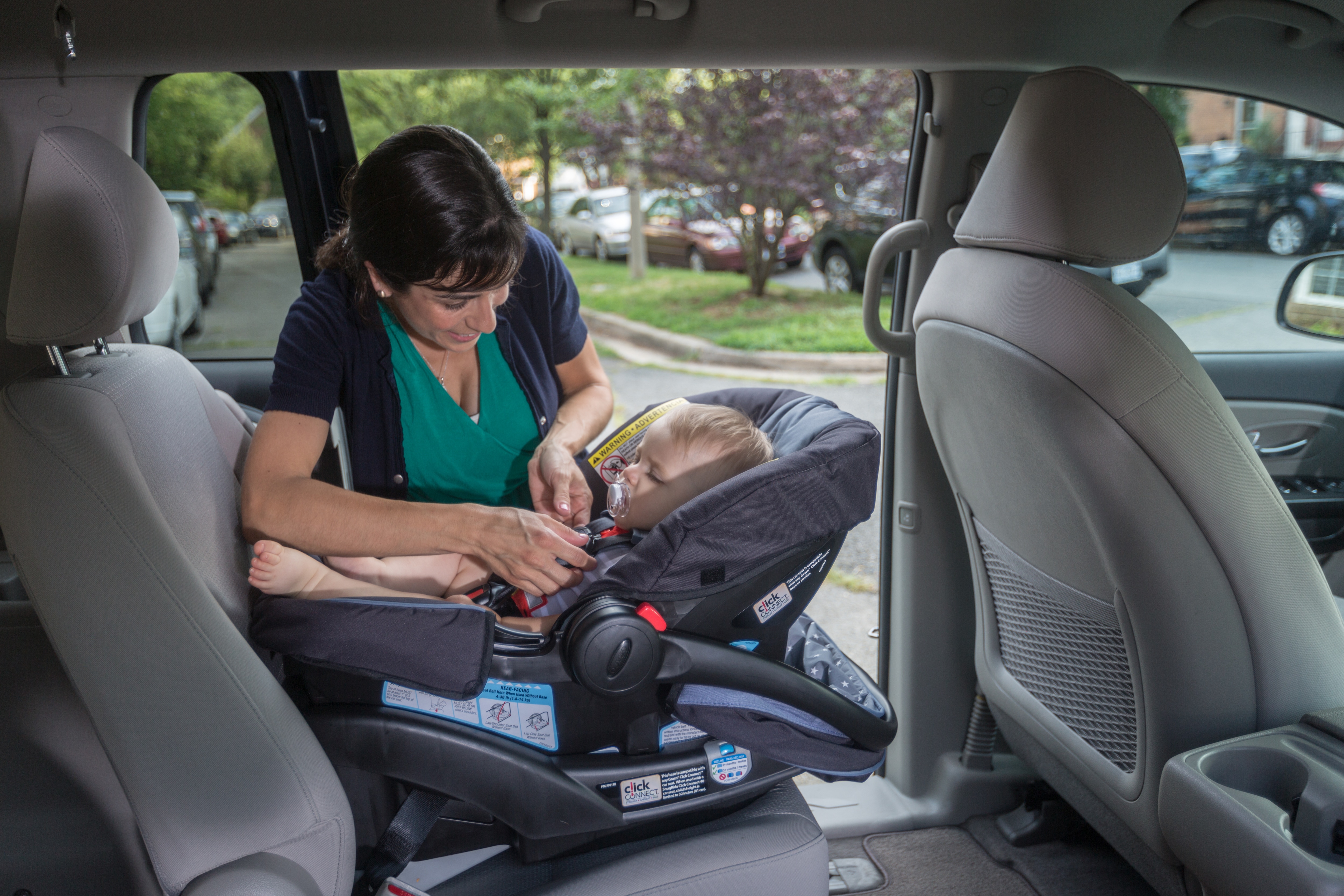
Hip room is a measurement of the lateral width of the rear seat cushion. It is most important for people who have more than one car seat or need to carry additional rear-seat passengers, but a car’s hip room can also complicate installation. Narrower vehicles sometimes make it difficult to level and secure car seats, especially models with larger bases.
However, you can run into challenges even with ample hip room. You’ll need to consider the rear armrest or center console if your car has one. It’s also important to consider the seat shape, as some vehicles have curvier rear benches that complicate car seat installation.
There are a few other things to consider beyond the basic dimensions. The size and shape of a car’s rear-door opening are make-or-break characteristics for car seat installation and loading and unloading children. Automakers publish interior dimensions, but they don’t give much (if any) detail on the rear doors, so you’ll need to test for car seat fit. Pay attention to the roof overhang and the shape of the door opening. Oddly shaped rear doors and a roofline that hangs down over the door opening can make it almost impossible to fit some larger car seats.
You will also need to consider how you’ll install the car seat. The youngest children require rear-facing seats, which take up more interior space than most people expect. Rear-facing seats can clash with the shape of many vehicle interiors, making them difficult to fit, even in cars that appear to have plenty of legroom.
Upgrading Your Car Isn’t Always Necessary
Buying a different car isn’t practical for everyone, especially with all of the other new-baby expenses that can arise. The good news is that you may have a few options for making your current vehicle more car seat-friendly.
Make the seat fit first
Before assuming you need a bigger vehicle, try the fit changes that usually save the most room for a rear-facing seat.
Use the right recline
Older rear-facing kids can often ride more upright than newborns if the seat manual allows it. That can free meaningful front-seat space.
Try every spot
Center, passenger-side, and driver-side positions can all fit differently. Test more than one before blaming the vehicle.
Tune the front row
A more upright front seat, height adjustment, or steering-wheel reach adjustment can make the cabin work without changing cars.
Visit our car Safety hub page for curated articles and guidance to help you drive with confidence.