
Quick Facts About Wrapping a Car
- To fully wrap a car, expect to pay from around $2,000 to $10,000 or more.
- Matte, satin, and carbon fiber are among the most common finishes for car wraps.
- Car wraps protect paint and provide a driver hundreds of options, but they don’t always hide dents, dings, or deep scratches.
If you need to gloss over a worn paint job because you need to sell or trade in your car, protect that new car finish, or perhaps just want to change things up, vinyl wrapping your car, truck, or SUV is a relatively affordable solution. We say “relatively” because when compared to buying a new vehicle or getting a quality paint job, wrapping is less expensive by far. What’s more, without close inspection and knowing what to look for, no one will be the wiser that it’s a car wrap and not a newly painted or factory finish.
However, although wrapping is much more affordable than buying new or painting, it isn’t free — not by a long shot. But just how much does it cost? Let’s find out.
- How Much Does It Cost to Wrap a Car?
- Cost to Wrap a Car By Segment
- Pros and Cons of Wrapping a Car
- 5 Tips for Helping Prolong a Car Wrap’s Life
- Is There a More Affordable Alternative to Vinyl Wrap?
- Our Take: Is Vinyl Car Wrap Worth It?
How Much Does It Cost to Wrap a Car?
Estimating the cost of fully wrapping a vehicle depends on the vehicle and the type of wrap finish. Generally, you can expect the cost to fully wrap a car to range from around $2,000 to as much as $10,000 or more. Yes, that’s quite a spread. But keep in mind that vehicle size, the complexity of installation, and the type of wrap all affect the total price.
PRO TIP: You can check out more details of car wrapping and its benefits in our article Car Wraps: Improve the Exterior of Your Car Affordably.
Car Wrap Finishes
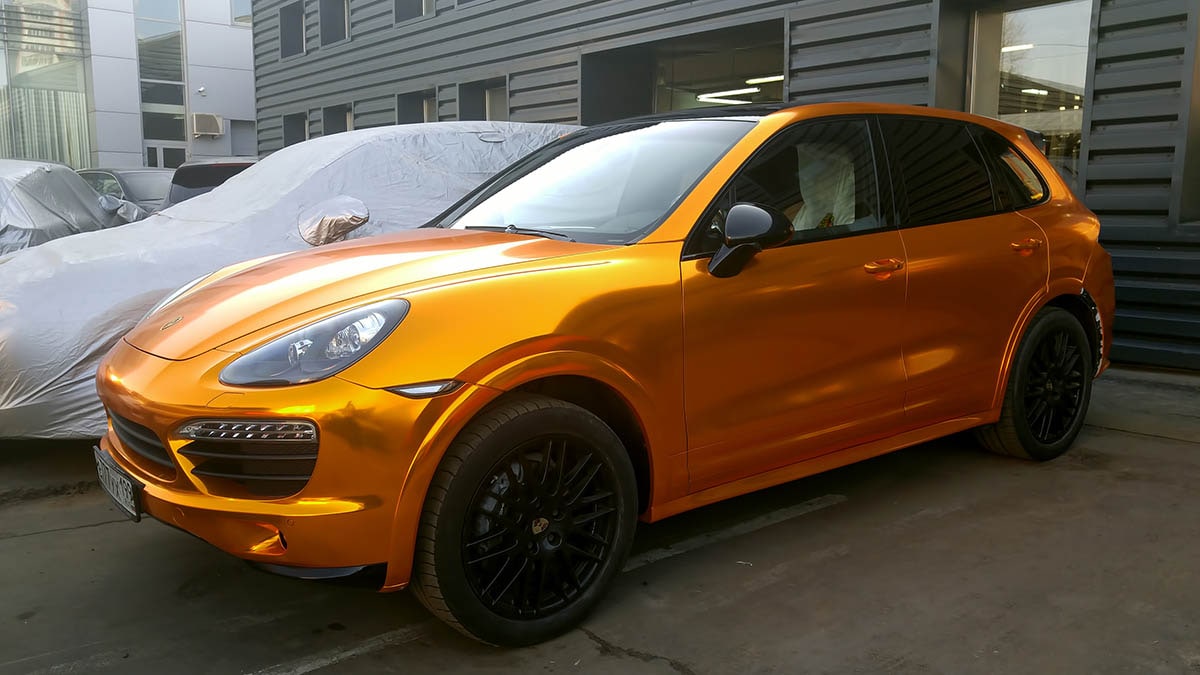
Car wrap manufacturers separate wraps into finishes. The finish you pick can affect the cost of the vinyl. For example, 3M 2080 wrap films are sold in 60-inch rolls, usually by the linear foot. Standard colors often run roughly $11-$15 per linear foot retail. Specialty films like chrome cost more.
Although some vinyl wrap makers divide certain finishes into subcategories, here are the most common vinyl finishes from which you can pick.
- Gloss: The closest finish to most factory paints is gloss, which is shiny. Subcategories include metallic gloss and high gloss.
- Matte: Emphasizing a vehicle’s contours and styling cues, a matte finish is flat rather than glossy.
- Satin: This finish falls somewhere in between gloss and matte. It still shows off a vehicle’s contours, but with a bit of shine and sparkle.
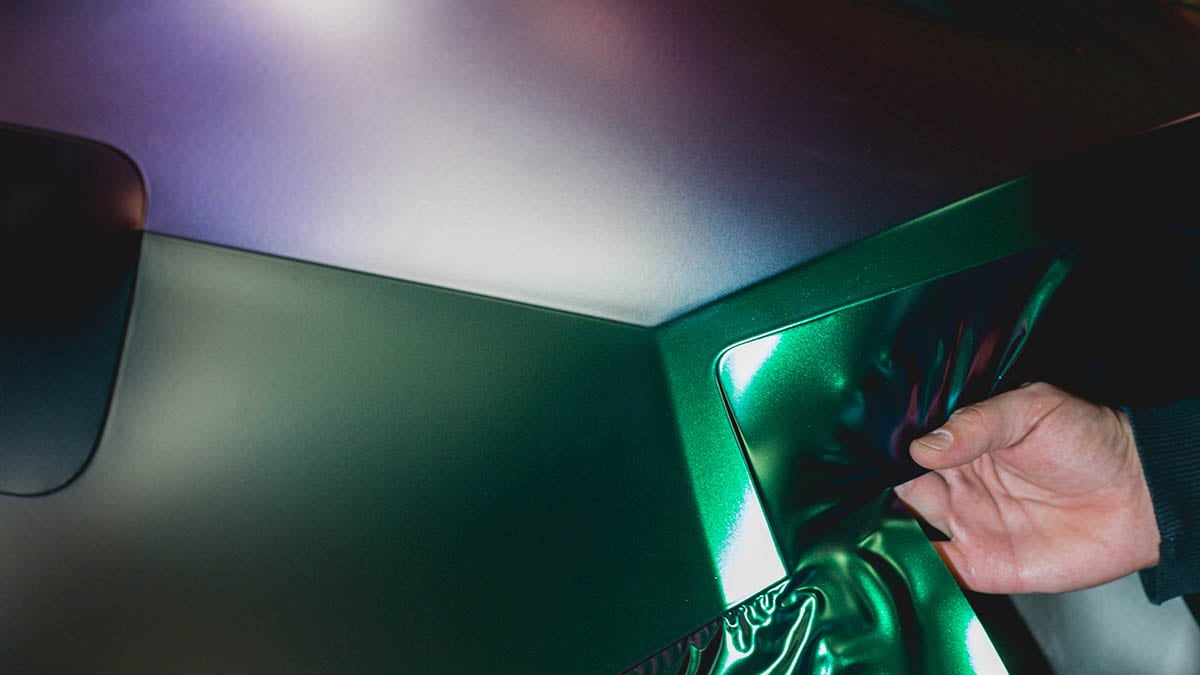
- Color-Shift: Basically falling under the gloss umbrella, color-shift wraps appear to change colors when viewed from different angles.
- Carbon Fiber: Real carbon fiber adds a bit of texture to a vehicle’s typically smooth finish while weighing less than the sheet metal it replaces. A carbon fiber wrap provides the illusion of those performance pieces at a fraction of the cost of the real thing, but without any structural benefit.
MORE: Matte Car Paint: Is the Look Worth the Hassle?
Custom Wrap Design
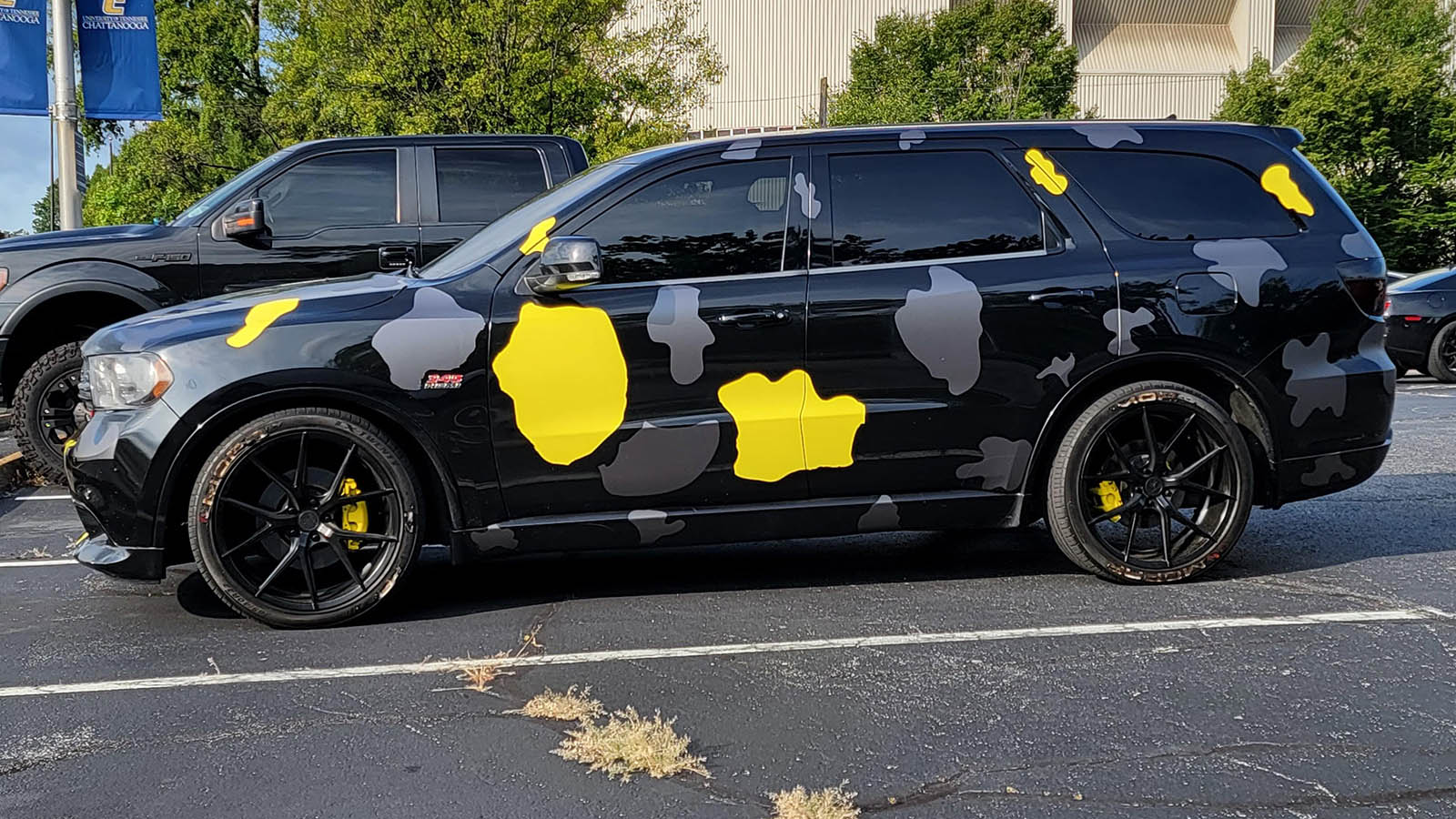
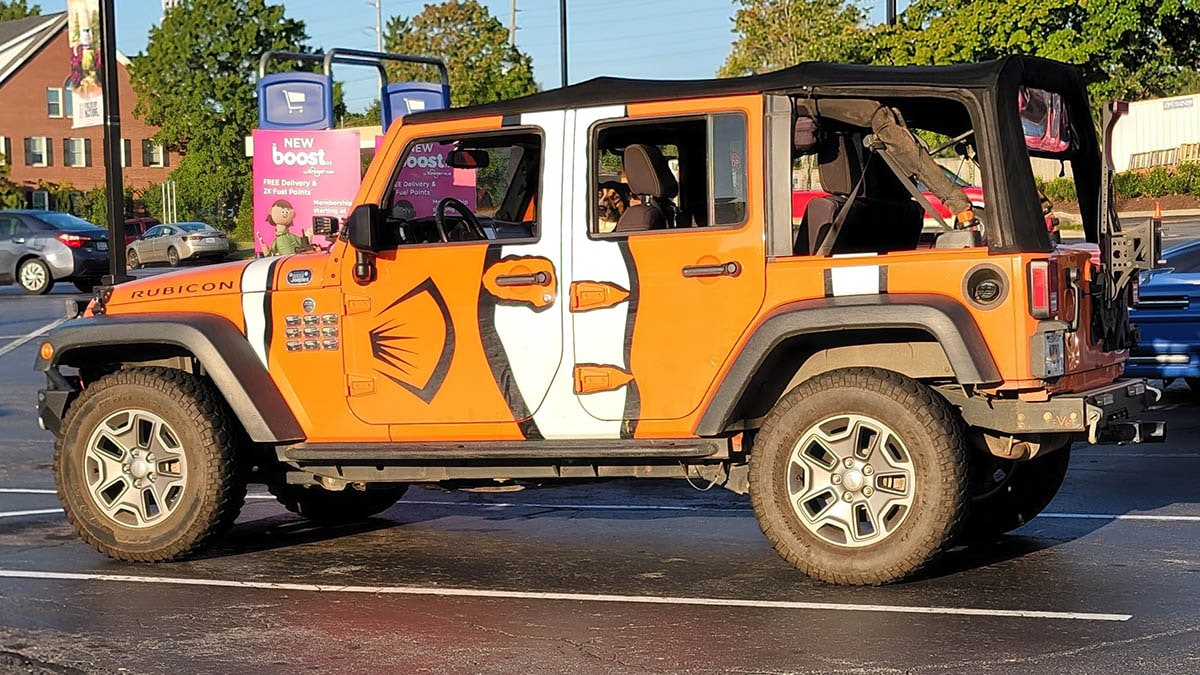
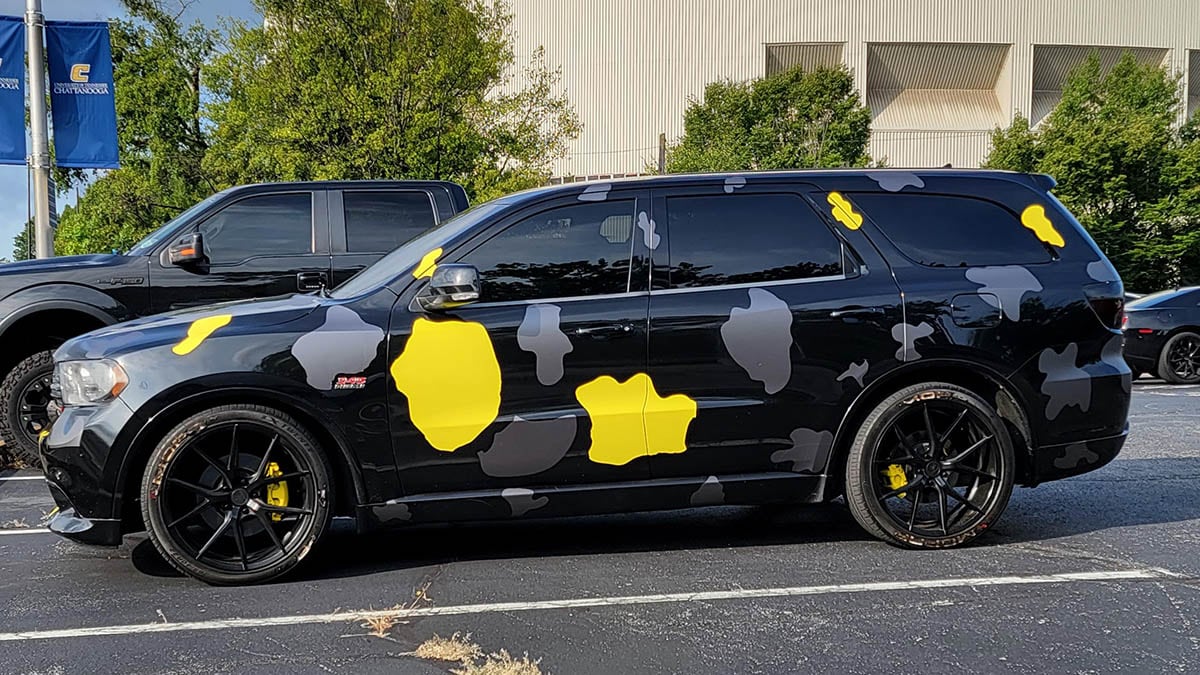
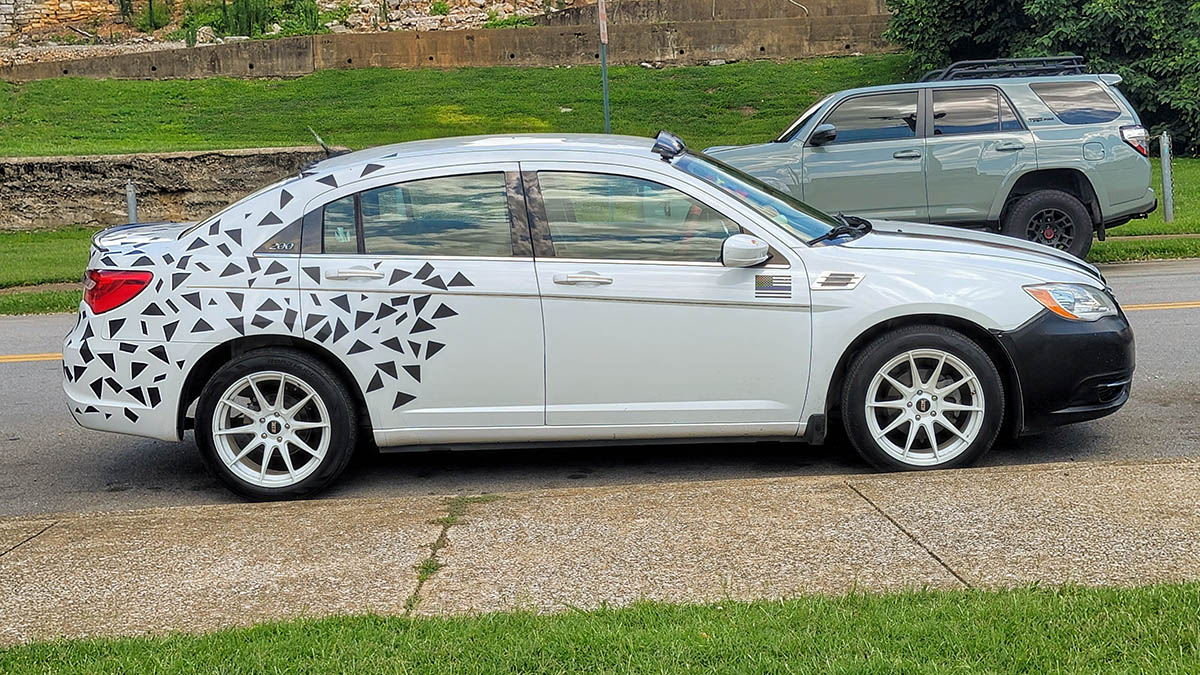
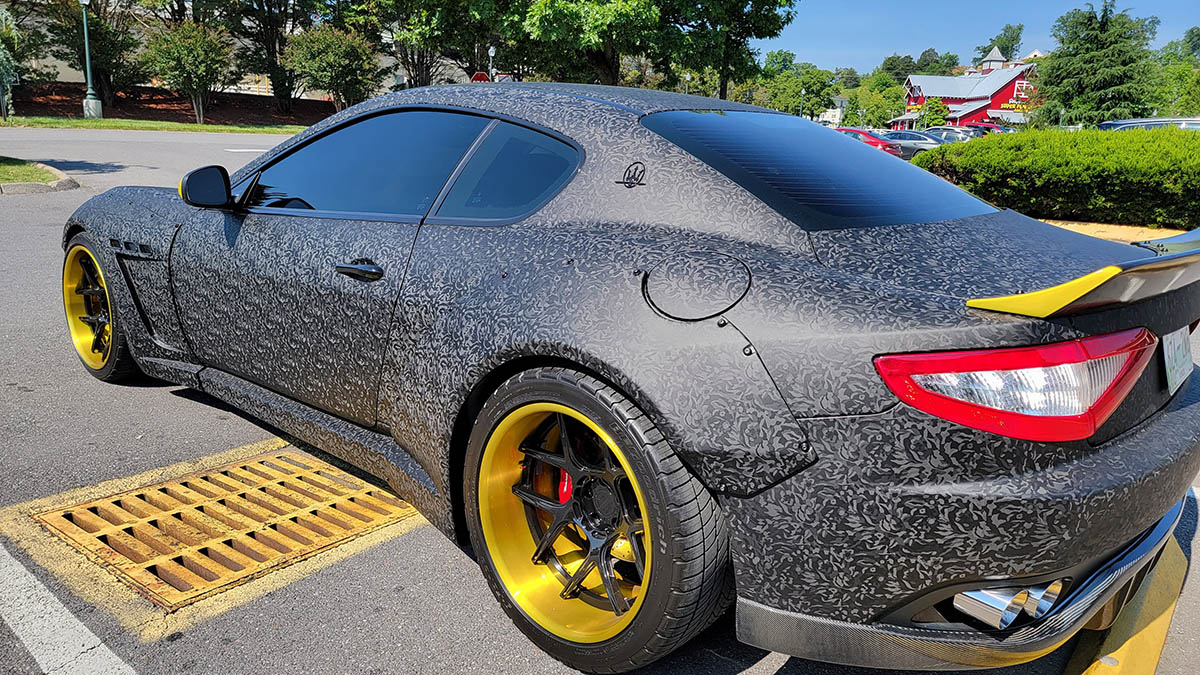
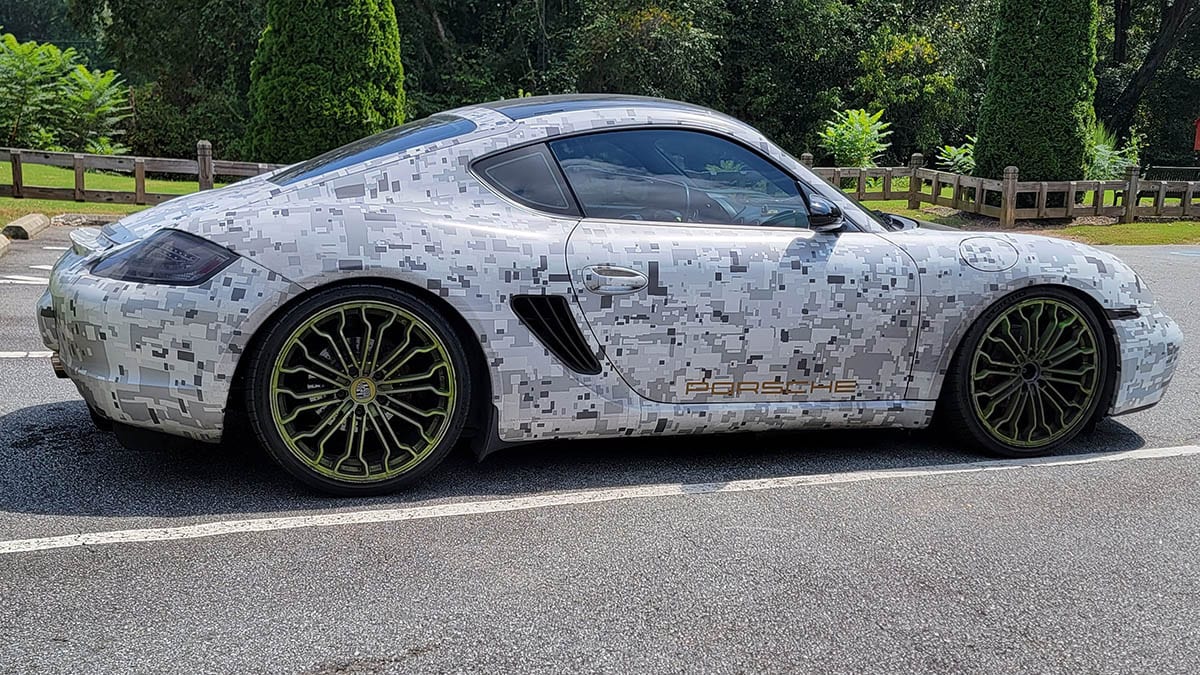
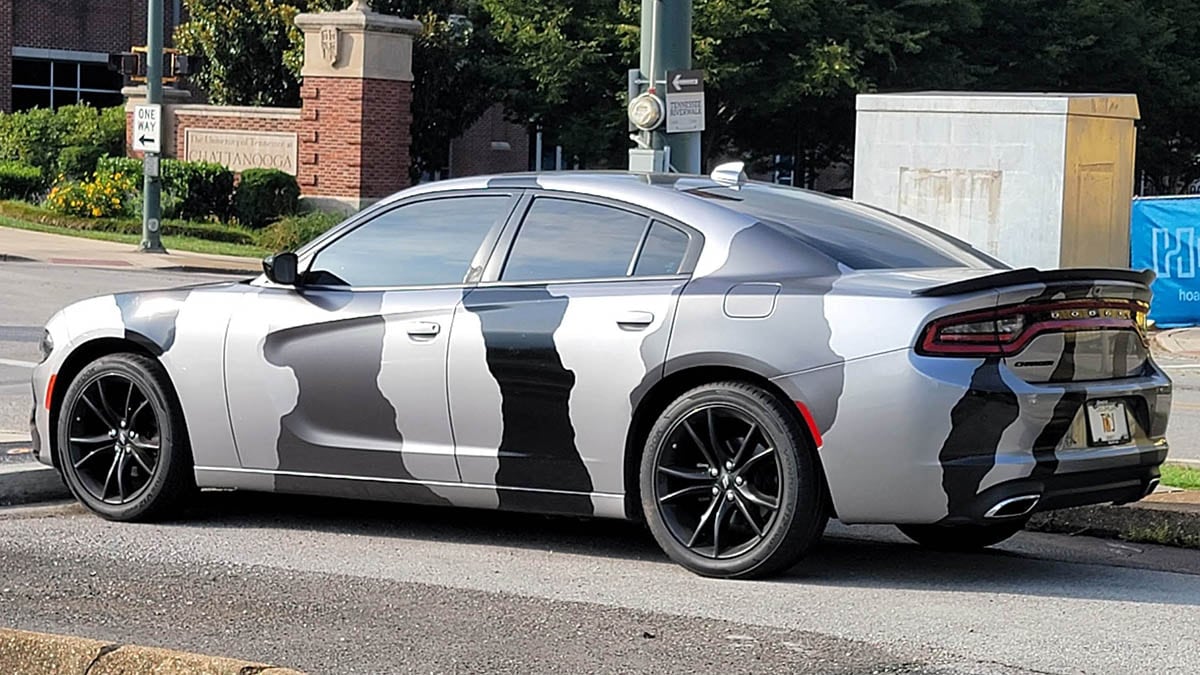
Many, if not most, car wrap shops can apply a wrap printed with your custom design. For businesses, that means your company name, logo, and product illustrations. For individuals, a custom wrap is a canvas for artistic expression.
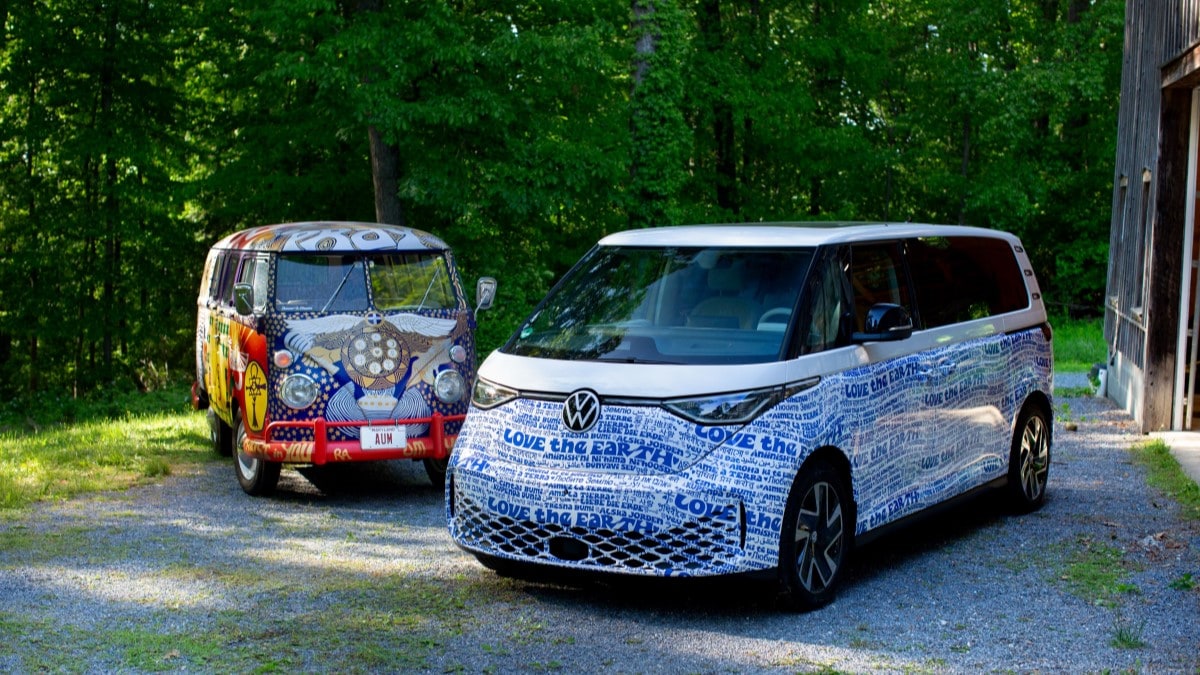
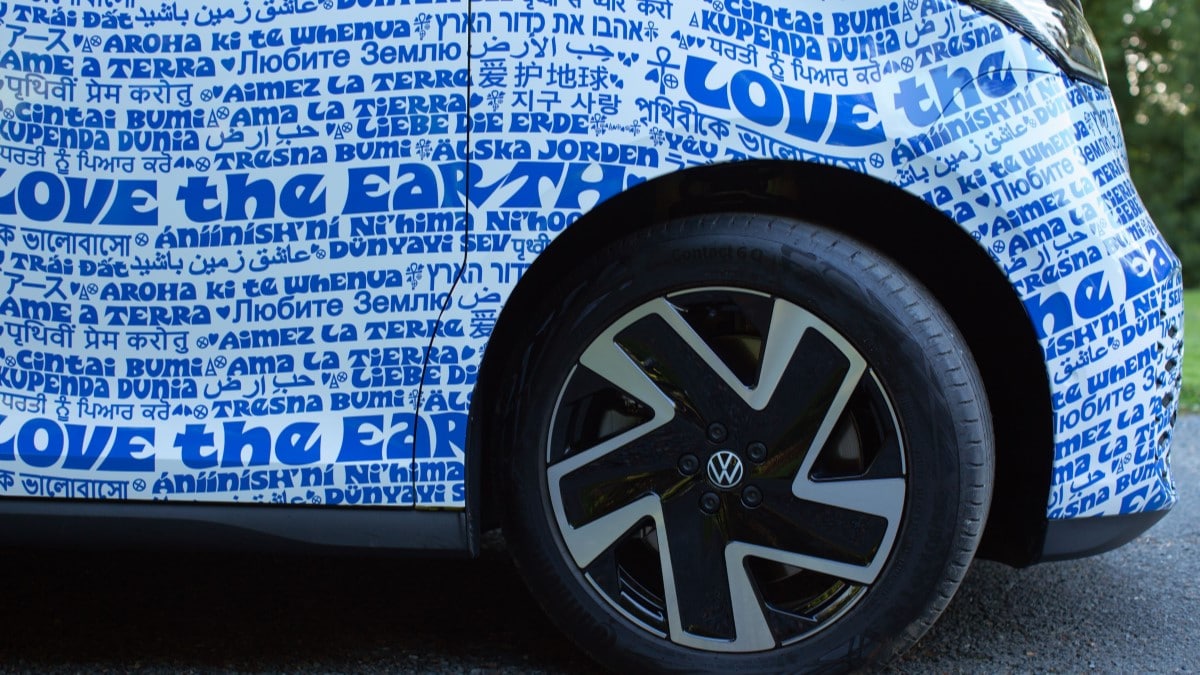
Volkswagen is helping some drivers get their custom design with their new 2025 VW ID. Buzz delivery. The automaker announced a custom graphics program that lets buyers design an exterior wrap when buying a new electric “love bus.” Technicians will apply your creation as a vinyl wrap before you pick up the car. VW has not revealed pricing.
Cost to Wrap a Car By Segment
We did the basic research for you and found a strong consensus in the estimates for wrapping general classes of cars using a quality vinyl wrap. For example, Metro Restyling is a national distributor of different brands of car wrap, including 3M, Avery, and ORACAL, as well as its own Metro Wrap. Its general estimates of wrapping certain classes of vehicles are consistent with the ballpark estimates of other experts.
| Vehicle Segment | Estimated Cost |
| Small car | $1,800-$2,500 |
| Hatchback | $2,800-$3,500 |
| Convertible | $2,800-$4,000 |
| Sedan | $3,000-$4,500 |
| Small SUV | $3,200-$4,500 |
| Large SUV/Sedan | $3,500-$5,000 |
| Pickup Truck | $3,200-$5,000 |
| Small Van | $3,000-$4,500 |
| Large Van | $3,200-$4,500 |
| Luxury Vehicle | $5,500-$10,000 |
What Impacts Car Wrap Cost?
There are some significant differences within the range of each car class that impact price because the cost to wrap your specific vehicle depends on the vehicle and the choices you make. In other words, multiple factors impact the cost of wrapping a specific vehicle.
- Make and model vehicle: The vehicle you are wrapping affects not only the amount of wrap required but also the installation cost. The Installation cost for wrapping a smooth-sided Tesla will be less than the more stylized Aston Martin Vantage.
- Labor cost: Where regional variations in the cost of wrapping a car exist, those variations are likely due to the regional costs of labor. It makes sense that in areas with a higher cost of living, like San Francisco, labor will cost more than in regions with a lower cost of living, like Columbia, South Carolina. However, wrap installation is often charged by the square foot, rather than by the hour. Installers may price labor at $3-$4 a square foot. An all-in rate for labor and materials might be $12-$16 per square foot, varying by region and film.
- Car wrap coverage: The extent of the wrap coverage impacts cost. You can decide to wrap the entire car or just areas of the car. For example, you may decide to only wrap the hood with carbon fiber vinyl. When wrapping the entire car, you can add the wheels and even the brake calipers, which will increase the cost.
MORE: How To Prevent Hail Damage and Protect Your Car
Pros & Cons of Wrapping a Car
There are plenty of reasons to pick wrapping a car over painting one. However, car wraps aren’t all lollipops and unicorns. There are some downsides, too.
Pros of Car Wrapping
- More affordable than painting
- Protects your car’s paint
- No waxing
- Hundreds of color choices
- Easy to remove
Cons of Car Wrapping
- Usually, a wrap’s life expectancy is no more than seven years
- Can’t hide dents, dings, or deep scratches
- Not inexpensive
- It’s not a do-it-yourself task
- A car’s surface must be pristinely clean before wrap application
5 Tips for Helping Prolong Car Wrap Life
So, you’ve shelled out several thousand dollars wrapping your ride, and you can expect 5-7 years of use, even if well-maintained. What can you do to coax the longest life possible to maximize your investment?
- Ceramic coating: Yes, it could add another $1,500 or more to the cost of the wrap. However, professional ceramic coating provides a layer of protection for your wrap against hazards like bird droppings, bugs, tree sap, and fading from the sun’s ultraviolet (UV) rays. It also adds a bit of protection against scratches and dings. Oh, and it keeps the finish fresh and shiny without waxing.
- Keep up with cleaning: Don’t allow bug guts, tree sap, bird poop, and other toxic matter to go unattended. Such chemical matter will eat away at the vinyl wrap just as it does a car’s paint finish.
- PH-neutral car shampoo: Hand washing using a gentle pH-neutral car cleaning soap is best for your regular washing regimen.
- Do not wax: Many car waxes contain abrasives that can damage vinyl car wraps. They are best avoided.
- Minimize intense sunlight exposure: Vinyl wrap can’t be waxed; consequently, constant exposure to intense direct sunlight will cause fading.
RELATED: DIY Car Cleaning Hacks With 20 Household Items
Is There a More Affordable Alternative to Vinyl Wrap?
When the goal is simply protecting the paint finish, a more affordable, effective alternative to vinyl wraps is a partial paint protective film (PPF) application. It offers the UV protection and scratch resistance of vinyl wrap but at a lower cost if applied to high-impact areas (hood, front fascia, side mirror backs, and so forth) with a ceramic coating.
Where vinyl wraps start around $2,000 and go up from there, the average cost of a partial or front-end PPF and ceramic coating can be under $2,500, while full-car coverage typically costs around $4,000-$7,000. Although the more popular protective film is clear, PPF in a matte finish is also available.
[EDITOR’S NOTE: I took the partial paint protective film application and total ceramic coating route with my new car two-and-a-half years ago. Granted, it is a subcompact SUV, but the total cost was $1,800. Thirty months later, it looks great. After more than 22,000 miles, the paint finish shines, and there’s not a scratch or chip mark on it.]
MORE: Car Window Tinting: 7 Things You Need to Know
Our Take: Is Vinyl Car Wrap Worth It?
We think vinyl car wrap is a fine idea for anyone who wants to change a car’s color, as well as those wishing to hide fading or damaged paint. Also, protecting your car helps you maintain its value. Although vinyl wrap won’t outlast a good paint job, the cost savings are significant. If your goal is to simply protect your car’s finish, we’d choose an aftermarket, professionally applied ceramic coating, paint protection film, or a combination of a partial PPF and ceramic coating.
Editor’s Note: This article has been updated since its initial publication.