
The best way to prevent hail damage to your car is to park in a garage, carport, parking deck, or another covered location before the storm arrives. If covered parking is not available, you can reduce potential damage by covering the roof, hood, trunk, and windshield with moving blankets, a hail blanket, or another padded barrier.
No method is guaranteed unless the vehicle is protected from direct hail impact. Still, a few minutes of preparation can help limit dents, chipped paint, cracked glass, and expensive repair bills.
Car Hail Damage Quick Facts
- Small hailstones can fall at 25 mph and may dent a vehicle’s roof, hood, or trunk.
- The best protection from hail is covered parking, such as a garage, carport, gas station canopy, or parking deck.
- If covered parking is not available, moving blankets, a hail blanket, floor mats, or even cardboard can help reduce direct impact.
- Hail damage may be covered if your auto insurance policy includes comprehensive coverage.
- Before filing a claim, compare the estimated repair cost with your insurance deductible.
Destructive hailstorms cause billions of dollars in property damage annually, including to automobiles. But you can help protect your ride from dents caused by falling hail, which can lead to expensive vehicle repair bills and car insurance headaches.
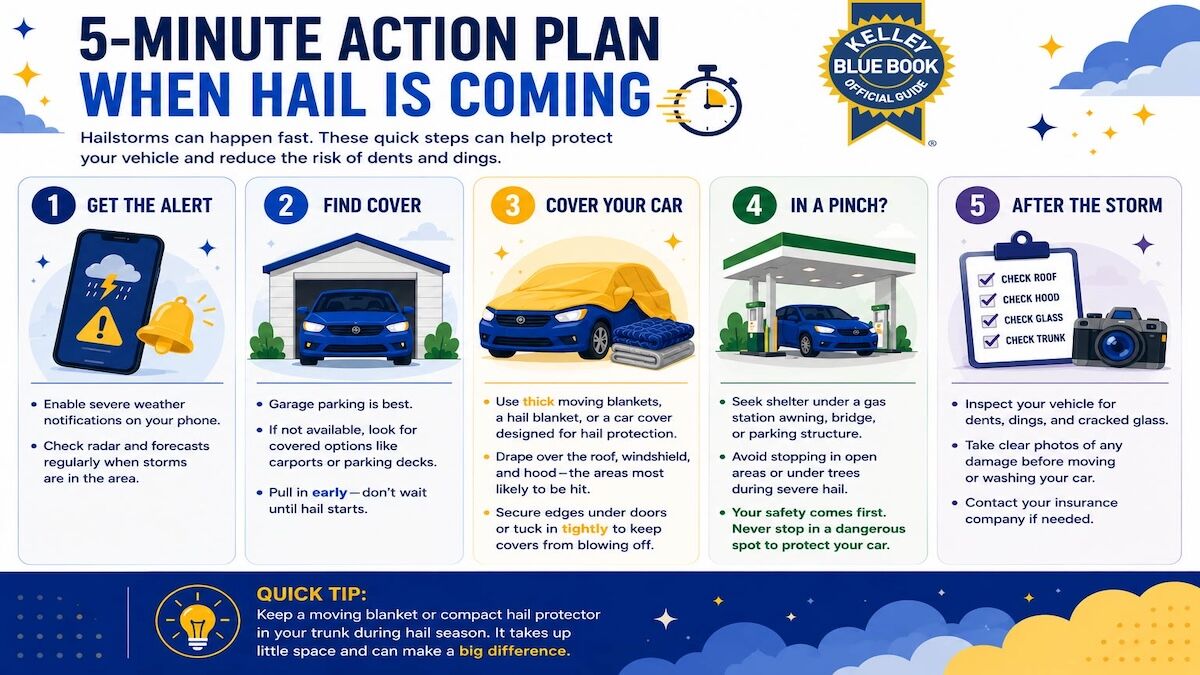
5-Minute Action Plan When Hail Is Coming
If hail is in the forecast, act quickly. The goal is simple: Get the vehicle under cover or create as much padding as possible before the storm reaches you.
How to Help Prevent Hail Damage to Your Car
There’s only one reliable way to keep your car safe from hail: Avoid exposure to the ice balls thrown from severe thunderstorms. However, not every driver parks inside a garage or under a covered carport. Plus, hail-producing storms aren’t always predictable. They may arrive with little warning while you’re driving and cause significant damage within minutes.
Still, you can take steps to protect your car and minimize dents and dings. Above all, remember that your personal safety during severe weather is most important.
Find Covered Parking
Parking inside your garage at home is ideal, but hail can fall during your commute or while you’re running errands. When a hailstorm is approaching, look for safe covered parking, such as a parking deck, gas station canopy, or another sturdy overhead structure.
Do not stop in traffic lanes or under overpasses where you could create a crash risk. If precipitation is falling at an angle, parking close to a building on the side opposite the hail may provide some shelter.
Parking under a tree may reduce some hail impact, but it can also expose the vehicle to falling branches in high winds. Use this only as a last resort.
Add Padding
While it isn’t foolproof, draping moving blankets or a comforter over the roof, windshield, hood, and trunk can soften the impact of hailstones. You can also use floor mats to shield vulnerable areas. Even collapsed cardboard boxes may provide minimal relief by preventing direct impact on the car’s surface.
Consider a Portable Hail Cover
Car owners in hail-prone locations might buy an inflatable car cover, a hail blanket, or a mobile car tent. Keeping a portable hail-protection system in your trunk can be a good investment, even if your residence offers covered parking.
Sign Up for Weather Alerts
Subscribe to weather service alerts and hyperlocal weather apps for severe thunderstorm warnings. Hailstorms can develop quickly, and early notice may give you enough time to move or cover your vehicle.
What Size Hail Will Damage a Car?
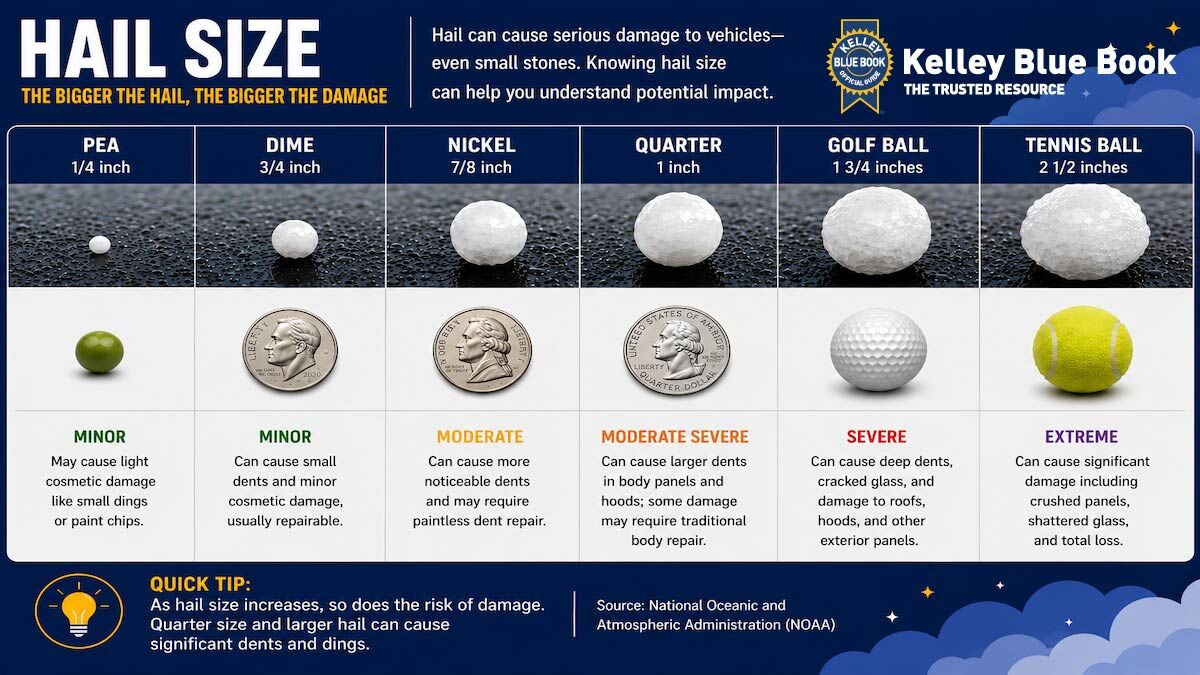
There isn’t a clear threshold for hail size and vehicle damage. Too many variables come into play, including hail size, wind direction, storm intensity, vehicle speed, and the angle of impact.
Researchers at the National Severe Storms Laboratory, part of the National Oceanic and Atmospheric Administration (NOAA), estimate that small hailstones less than 1 inch in diameter can reach the ground at speeds between 9 and 25 mph. Larger hailstones might reach 25 to 40 mph, and the largest hailstones, more than 2 inches in diameter, can reach speeds of up to 72 mph.
Almost anything traveling at those speeds can ding your car. Pea-sized hail could leave minor marks, while quarter-sized hail and larger can create dents, dimples, chipped paint, and cracked glass.
Vehicle materials matter, too. Aluminum body panels, common on many EVs, are more prone to denting. Panoramic glass roofs are especially vulnerable and expensive to replace.
What Does Hail Damage Look Like on a Car?

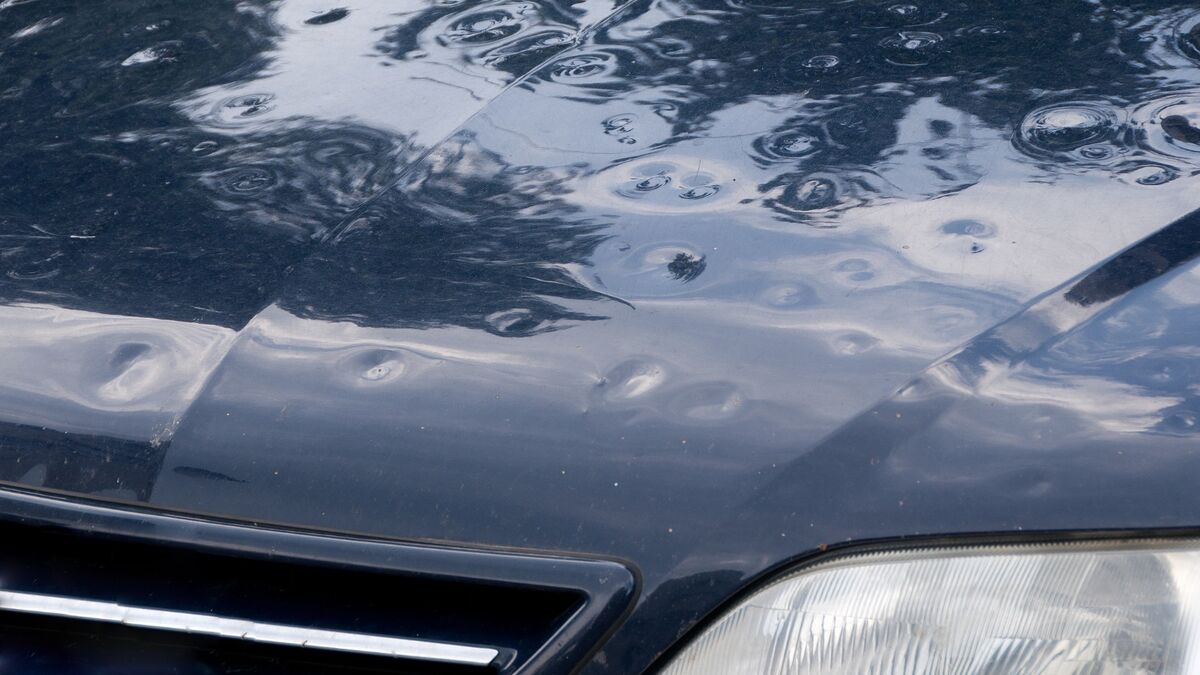
Hail damage usually appears as random dents, dings, dimples, chipped paint, or cracked glass. The roof, hood, trunk lid, windshield, and other horizontal surfaces are often the most exposed. Damage can be minor and cosmetic, or severe enough to crack glass, bend body panels, or total the vehicle.
What to Do If Your Car Has Hail Damage
After the storm passes, inspect the vehicle in daylight. Look for dents, chipped paint, cracked glass, and damage to trim or lights. Take photos from multiple angles before starting repairs.
Minor dents without chipped paint may be repairable with paintless dent repair, or PDR. Chipped paint needs attention because exposed metal can rust. Major damage may require panel or glass replacement.
Avoid DIY dent repair unless the damage is very minor. Pulling dents yourself can damage the paint and make repairs more expensive.
Does Car Insurance Cover Hail Damage?
Hail damage is typically covered if your auto policy includes comprehensive coverage. A standard liability policy does not cover storm damage.
Before filing a claim, compare the repair estimate with your deductible. A few minor dings may cost less to fix out of pocket than a $1,000 deductible.
If you file a claim, contact your insurer promptly. Hailstorms often damage many vehicles at once, and repair shop appointments can fill quickly.
Editor’s Note: We have updated this article since its initial publication.