

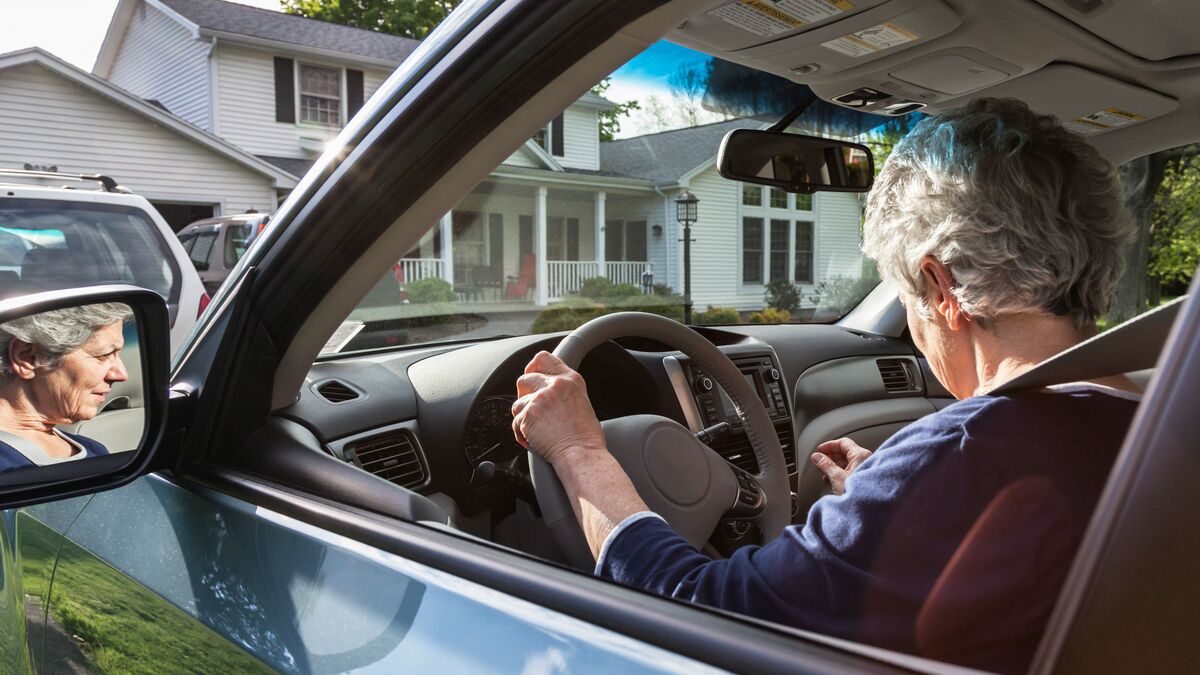
Finding the right vehicle for an aging parent isn’t about buying “an older person’s car.” It’s about choosing one that helps them stay comfortable, confident, and independent while matching their current and future needs.
My background in rehabilitation taught me how important independence is for older adults. I’ve seen firsthand how the right vehicle can support confidence, comfort, and daily mobility.
The best choice depends on several factors, including mobility, vision, reaction time, and how the vehicle will be used. A few thoughtful features today can make driving easier for years to come.
How They’ll Use the Vehicle
Consider daily life before comparing makes and models.
Ask these questions :
- Is the vehicle mainly for short trips around town?
- Will they frequently drive on highways?
- Do they transport grandchildren or pets?
- Will a caregiver sometimes be driving?
- Are they planning to keep this vehicle for several years?
These answers help narrow down the right vehicle size and type before considering specific features.
Prioritize Easy Entry and Exit
One of the most overlooked considerations is simply getting in and out comfortably.
A vehicle that’s too low may require bending and pushing up from the seat. One that’s too tall can make climbing inside difficult.
Look for vehicles with:
- Seats positioned at a comfortable hip height
- Wide door openings
- Large door handles
- Supportive seats
- Plenty of headroom
During a test drive, have your parent get in and out several times — not just once — to see how it feels.
Prioritize Visibility
Good visibility can help reduce stress behind the wheel while improving confidence and safety. Once your parent is seated comfortably, ask if they can see over the hood, around the vehicle, and through the rear windows. Make sure they adjust the seat before deciding if visibility is good.
Features to consider include:
- Blind-spot monitoring
- Power-adjustable seating
- Power-adjustable mirrors
- Surround-view and rearview camera systems
- Large windows and narrow pillars
Technology should supplement good visibility, not replace it.
Choose Safety Features That Add Confidence
Many newer vehicles include driver-assistance technologies designed to help reduce fatigue and increase awareness.
Helpful features may include:
- Automatic emergency braking
- Collision warning
- Lane-departure warning
- Lane-keeping assistance
- Blind-spot monitoring
- Adaptive cruise control
- Parking assistance sensors
Spend time learning which technologies feel helpful rather than distracting.
Make Sure to Focus on Comfort
Comfort affects how long someone can drive safely. Pay attention to how the seat supports your parent, whether the ride feels smooth or bumpy, and whether the controls are easy to access. Comfort features can make routine errands much more enjoyable.
Consider:
- Adjustable seats with lumbar support
- Heated seats for joint stiffness
- Easy-to-use climate controls
- Low cabin noise
- Smooth ride quality
- Steering wheel adjustments
A comfortable driver is often a less fatigued driver.
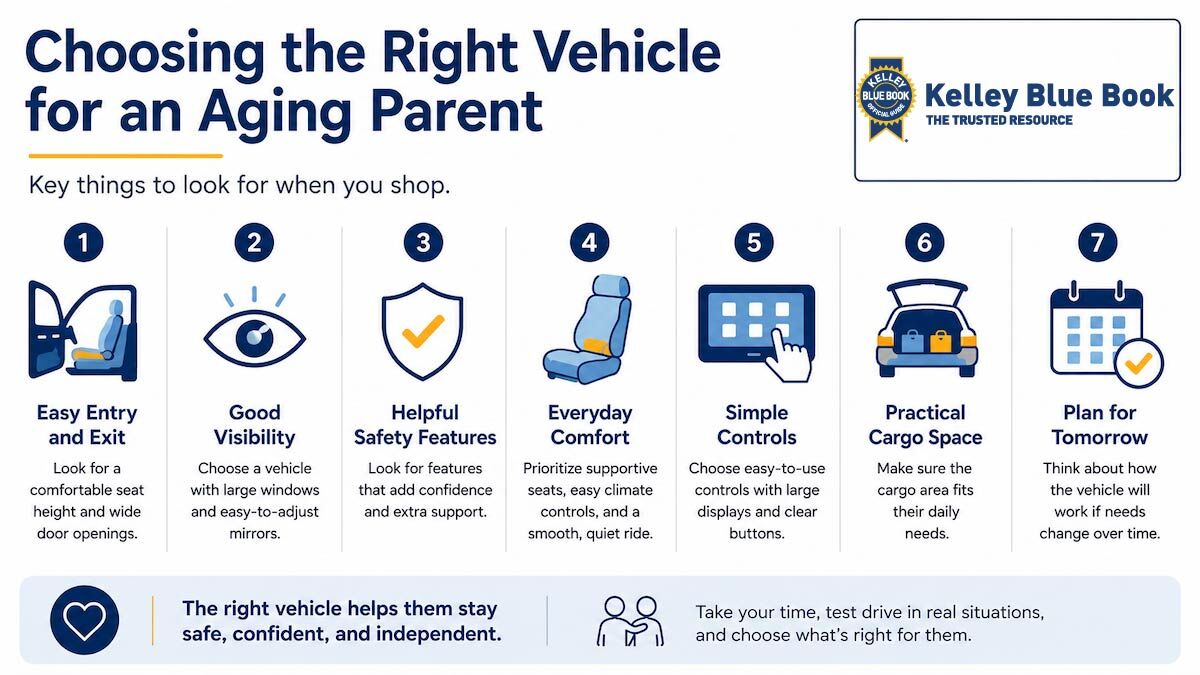
Keep the Controls Simple
A vehicle can have impressive technology but still be frustrating to use. Look for controls that feel intuitive and easy to use before making a decision. Have your parent adjust the mirrors, climate settings, audio controls, and navigation on their own. If they can do that confidently, the vehicle is likely a good fit.
Look for:
- Large, easy-to-read displays
- Physical knobs for frequently used functions
- Clearly labeled buttons
- Voice controls for navigation or phone calls
- Simple infotainment menus
If your parent struggles to adjust the radio or climate controls during the test drive, it may not be the right fit.
Prioritize Cargo Space and Practicality.
The cargo area should match how the vehicle will be used. Think about items your parent utilizes most often. Whether it’s groceries, a folding walker, gardening supplies, or luggage for a weekend trip, the cargo space should be easy to access and practical.
Consider what will regularly be stored:
- Walkers or mobility aids
- Groceries
- Luggage
- Gardening supplies
- Medical equipment
A low cargo floor and power liftgate can make loading and unloading easier.
Plan for Tomorrow, Not Just Today
Mobility needs can change over time.
Choosing a vehicle that remains comfortable as those needs evolve may help delay the need to purchase another vehicle.
Questions to ask yourself:
- Will this vehicle still work if mobility decreases?
- Can the vehicle fit mobility equipment?
- Could a caregiver comfortably drive it?
- Will advanced safety technology remain useful in a few years?
Thinking ahead doesn’t mean expecting the worst. It simply helps future-proof the purchase.
Take an Extended Test Drive
A quick trip around the block never tells the full story. The test drive is an opportunity to evaluate how the vehicle performs in real-world situations. Instead of taking a quick loop around the dealership, drive in places that reflect your parents’ everyday routine.
Spend time evaluating:
- Entering and exiting the vehicle
- Visibility in parking lots
- Maneuvering into and out of parking spaces
- Turning radius
- Seat comfort after 20 to 30 minutes
- Ease of using controls
- Highway merging
Encourage your parent to drive in the situations they encounter most often.
When shopping for a new vehicle for your aging parent, focus more on ease of use than on getting the newest or most expensive vehicle. You want a vehicle that supports their independence while giving you peace of mind. Focusing on comfort, visibility, ease of use, safety, and how they use the vehicle every day can help you choose a vehicle that fits their needs now and continues to serve them well in the future.
Visit our Car Safety Information Center for clear, reliable guidance to help you drive with confidence.