

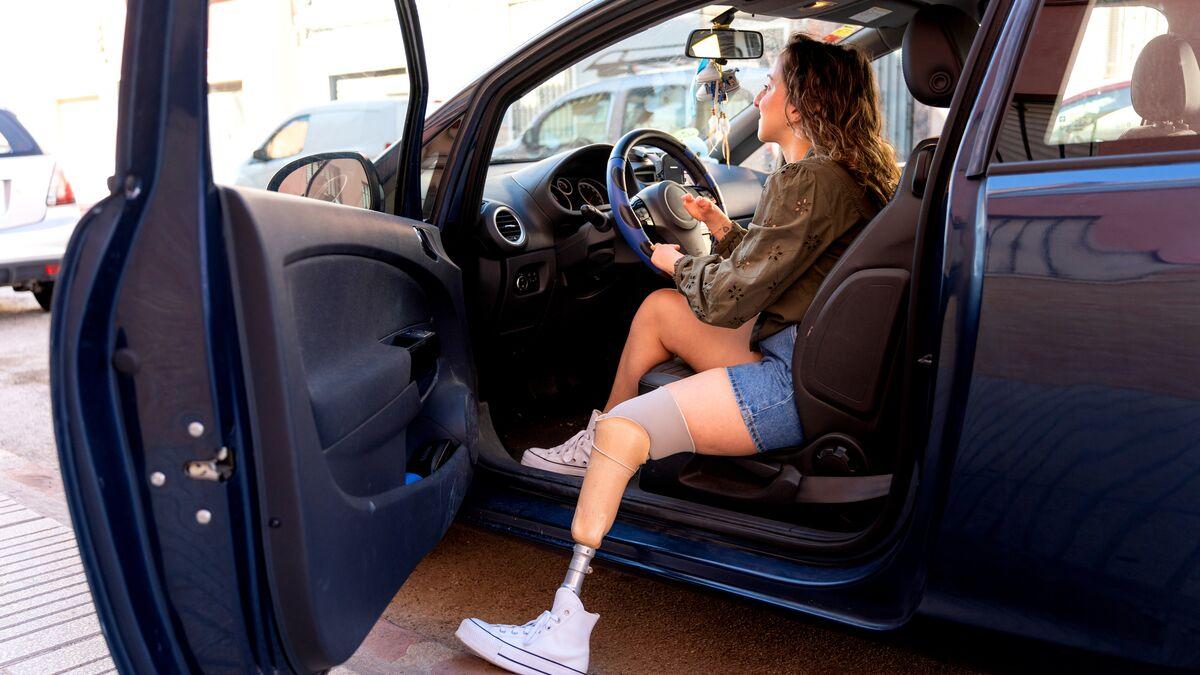
An advanced driver assistance system (ADAS) isn’t one specific feature, but rather a group of technologies that helps drivers operate vehicles more safely. ADAS uses sensors, cameras, and automation to alert the driver to road hazards, detect driver errors, and assist with maneuvering the car in various ways.
ADAS benefits all drivers by increasing awareness and safety, but for drivers with disabilities, it can be especially helpful when adapted to compensate for physical or sensory limitations. It offers more independence to drivers, reduces stress while on the road, and increases confidence when operating vehicles.
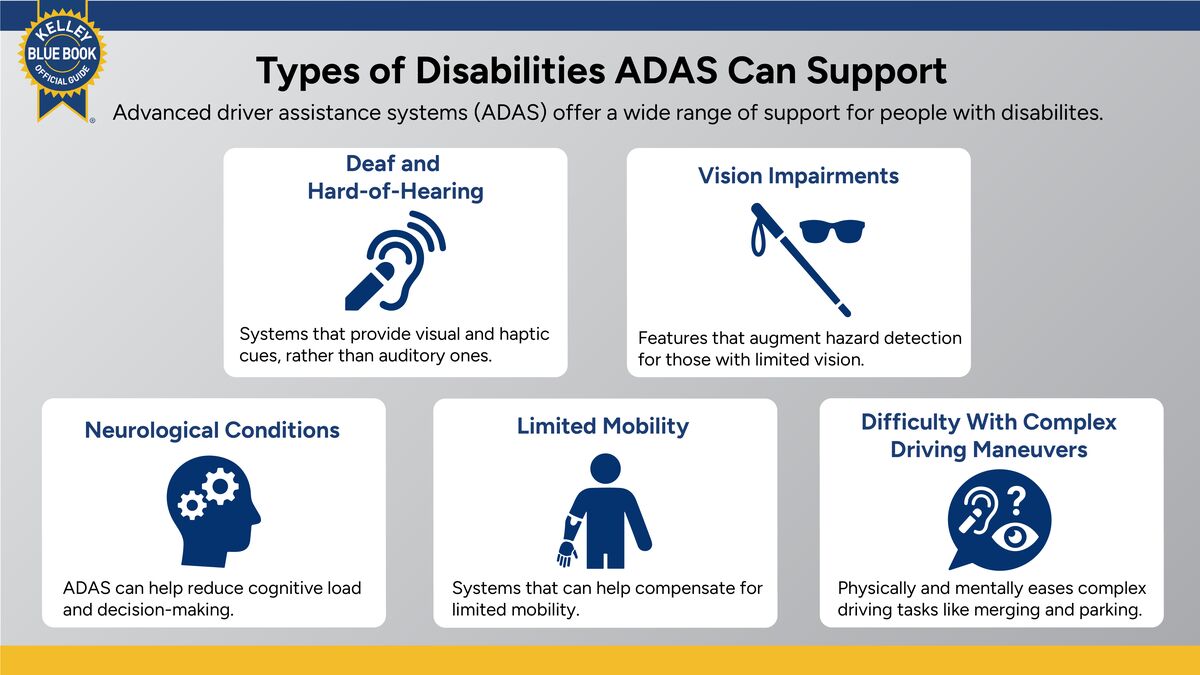
- Supporting the Deaf and Hard-of-Hearing
- Assisting With Limited Mobility
- Supporting Drivers With Vision Impairments
- Reducing Cognitive Load for Those With Neurological Conditions
- Simplifying Complex Driving Tasks
- ADAS Improves Safety for All
Supporting the Deaf and Hard-of-Hearing
It’s critical that drivers with hearing impairments can still be alerted to external auditory cues. These can include horns, sirens, or collision risk indicators. ADAS provides many different visual alerts and warnings, many of which can be customized or configured to suit individual needs and preferences, including:
- Lane departure warnings: This alert can be visual or haptic if your vehicle begins to drift out of its lane without an active turn signal.
- Collision detection: A visual alert can flash if there is a hazard ahead or the car in front of you suddenly brakes.
- Visual alerts and indicator lights: Indicator lights don’t rely on sound; for example, you can see that your turn signal is on with a blinking light rather than having to rely on hearing it.
- Rearview cameras and parking sensors: These tools help detect people or objects that could be in the way, and they don’t rely on hearing someone shout or a horn honking.
- Steering wheel controls: It’s critical that all drivers keep their eyes on the road, and being able to adjust vehicle settings using the steering wheel controls helps reduce the distraction of fiddling with dials or screens.
Another element of ADAS that can be especially useful is haptic alerts. These are physical vibrations that indicate a driver’s attention is needed. These can include steering-wheel vibrations, seat vibrations, haptic lane-keeping alerts, or vibrational feedback while parking.
MORE: Vehicle Features That Support the Deaf and Hard-of-Hearing
Assisting With Limited Mobility
Drivers who have a reduced range of motion or other mobility limitations can benefit from ADAS because it lessens the need for physical input while driving. Some features that are especially helpful include:
- Adaptive cruise control: Helps reduce foot and leg movements by automatically maintaining speed and distance from other cars.
- Automatic emergency braking: Applies the brakes if the driver cannot react quickly enough.
- Automated parking assist: Helps handle steering while parking.
- Lane-keeping assist: Helps gently steer the vehicle to stay in its lane.
- Voice-controlled navigation and controls: Allows hands-free operation of certain features.
These features can help reduce the amount of manual dexterity required and the general physical effort of operating the car.
Supporting Drivers With Vision Impairments
Drivers with vision loss or impairment can use ADAS to help augment their vision. ADAS uses cameras, sensors, and alerts to help detect hazards like pedestrians, debris in the road, and vehicles in blind spots. These features add another layer of awareness for all drivers:
- Blind-spot detection: Gives warnings for pedestrians, obstacles, or other vehicles that may be difficult to see otherwise.
- Traffic sign recognition: Uses cameras to detect road signs and alert the driver to important information, such as stop signs, speed limits, or upcoming curves.
- Forward collision warning: If the car in front of you slams on the brakes or an obstacle ahead on the road is detected, this feature will alert you.
- Pedestrian detection: Identifies and alerts the driver to people (or chickens) crossing the road.
- Night vision or enhanced vision systems: Offer improved visibility in low-light scenarios.
Knowing that you have these added layers of protection while driving can help you feel more confident in avoiding unexpected obstacles on the road.
MORE: Car Safety Features 101: Everything You Need To Know
Reducing Cognitive Load for Those With Neurological Conditions
Driving requires unflinching focus, careful attention, and constant decision-making. ADAS can help ease that workload by taking on some of the cognitive tasks of driving.
For example, ADAS can help drivers better determine when to brake or change lanes. It can provide advanced warning in unexpected or complex situations. It can also alert drivers to important events, such as traffic or road hazards. This helps keep focus on the road rather than being pulled in many different directions.
Features can often be very customizable as well, so if sound alerts are too overstimulating, you can use visual cues, or vice versa.
Simplifying Complex Driving Tasks
Certain driving maneuvers can be especially challenging for disabled drivers, and ADAS can make a big difference.
- Parking: Surround-view cameras, automated parking assist, rear cross-traffic alert, parking distance warnings, and remote park assist are all features that ease the stress of parking.
- Navigating intersections: cross-traffic warnings, traffic sign recognition, and automatic emergency braking are all examples of features that can help make navigating busy or complex intersections a breeze.
- Merging into traffic: Lane change assist, blind-spot monitoring, and cross-traffic alerts all help make merging smooth and stress free.
Reducing anxiety and physically easing complex driving tasks can make a world of difference.
ADAS Improves Safety for All
Whether able-bodied or disabled, every driver can benefit from ADAS. These features provide added layers of safety for all drivers. For drivers with disabilities, it can help adapt the vehicle to specific needs. It helps drivers compensate for limitations so that disabilities do not prevent drivers from staying independent. If you are shopping for a car, look for one with safety features that will best support your specific needs so that you can hit the road in confidence.
Visit our Car Features Information Center to explore the bells and whistles available in vehicles today.