
The Chevrolet Bolt has always been easy to recommend. It boasted the range, practicality, and affordability that made it one of the most sensible EVs on the market. But charging was never its strongest selling point. Road trips required patience, and public charging often felt like the price of admission for driving electric.
The 2027 Chevrolet Bolt fully rewrites that story. While the new Bolt benefits from updated technology throughout, charging is where Chevrolet made some of its biggest improvements. It now feels better aligned to assimilate into people’s lives, whether they’re taking a road trip, relying on public charging, or simply plugging into a wall outlet overnight.
A Simpler Way to Charge
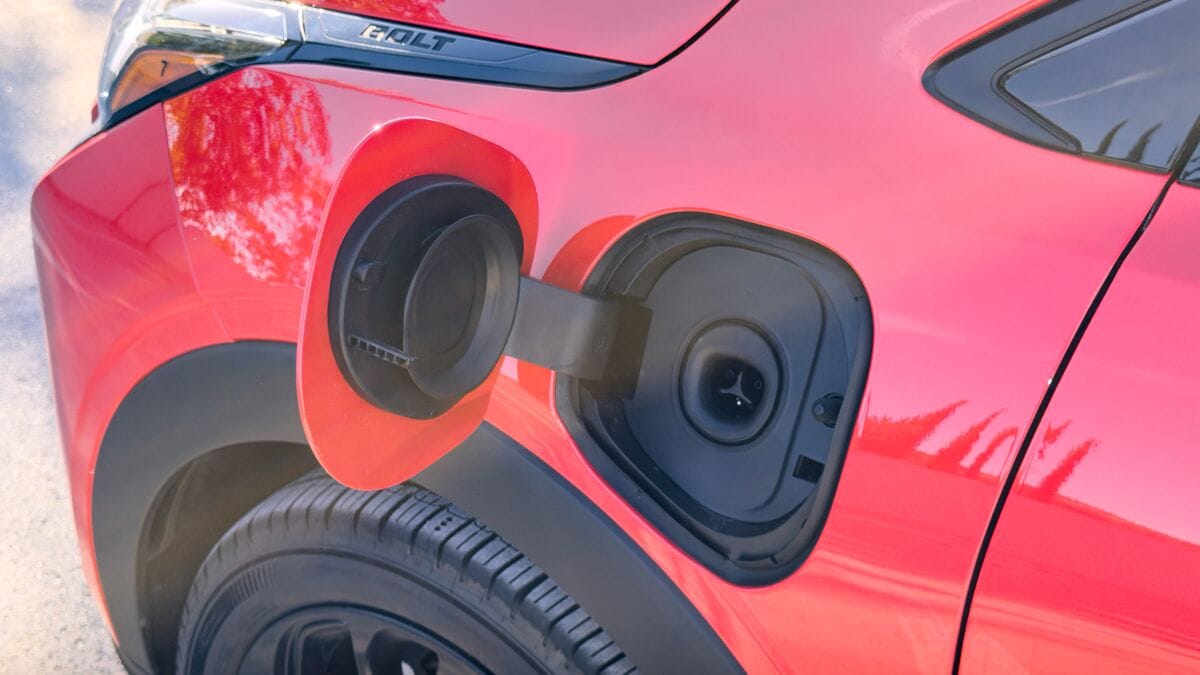
A notable upgrade is visible the moment you open the charge door. The 2027 Bolt comes with a native NACS (North American Charging System) port, the same connector used by Tesla’s Supercharger network. That means Bolt owners can plug directly into compatible Tesla Superchargers without carrying a separate adapter. Chevrolet is also rolling out Plug & Charge capability, allowing the vehicle to automatically handle authentication and payment at compatible charging stations. For many drivers, that’s a significant improvement in daily life.
Charging anxiety isn’t usually about battery range. It’s about complexity. Different apps, different charging networks, and different connectors have historically made public charging feel more intimidating than filling up a gas tank. The Bolt’s native NACS port removes one crucial piece of that friction while providing access to one of North America’s most extensive fast-charging networks.
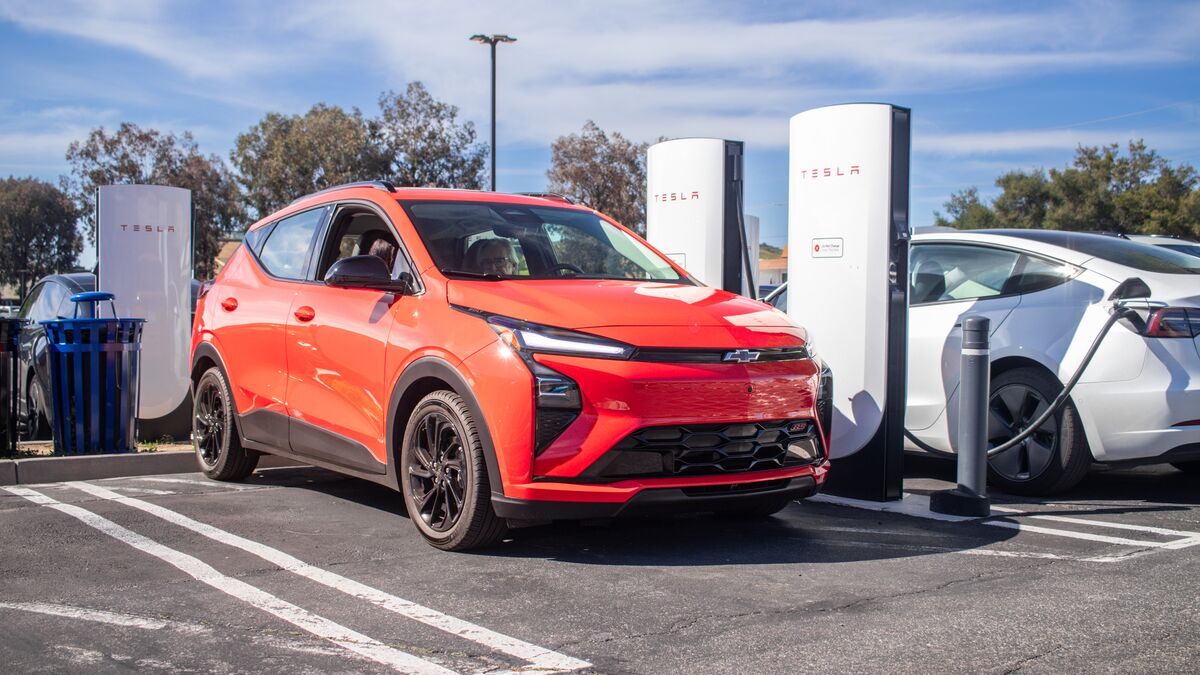
There is one small catch. The Bolt’s charge port remains on the driver’s side front fender, which is convenient when walking up to the vehicle, but isn’t ideal for the many existing Tesla V3 Supercharger stalls designed around Tesla’s rear driver-side charge-port location. Depending on the station, drivers may need to park creatively. Fortunately, Tesla’s newest Supercharger installations (recognizable by the all-white cabinets shown in the image above) use longer cables and layouts designed to accommodate a wider range of EVs, making the issue less significant going forward.
Unlocking Road Trip Potential
The original Bolt’s biggest weakness was never how far it could go — the new iteration offering an EPA-estimated 262 miles of range — but instead how long it took to recharge.
Previous-generation Bolts peaked at roughly 55 kW on a DC fast charger. The new model boosts that figure to 150 kW, nearly tripling its charging capability. A 10% to 80% charge takes about 25 minutes, providing a very respectable amount of range in a short time. Beyond looking good on the spec sheet, it completely changes the ownership experience.
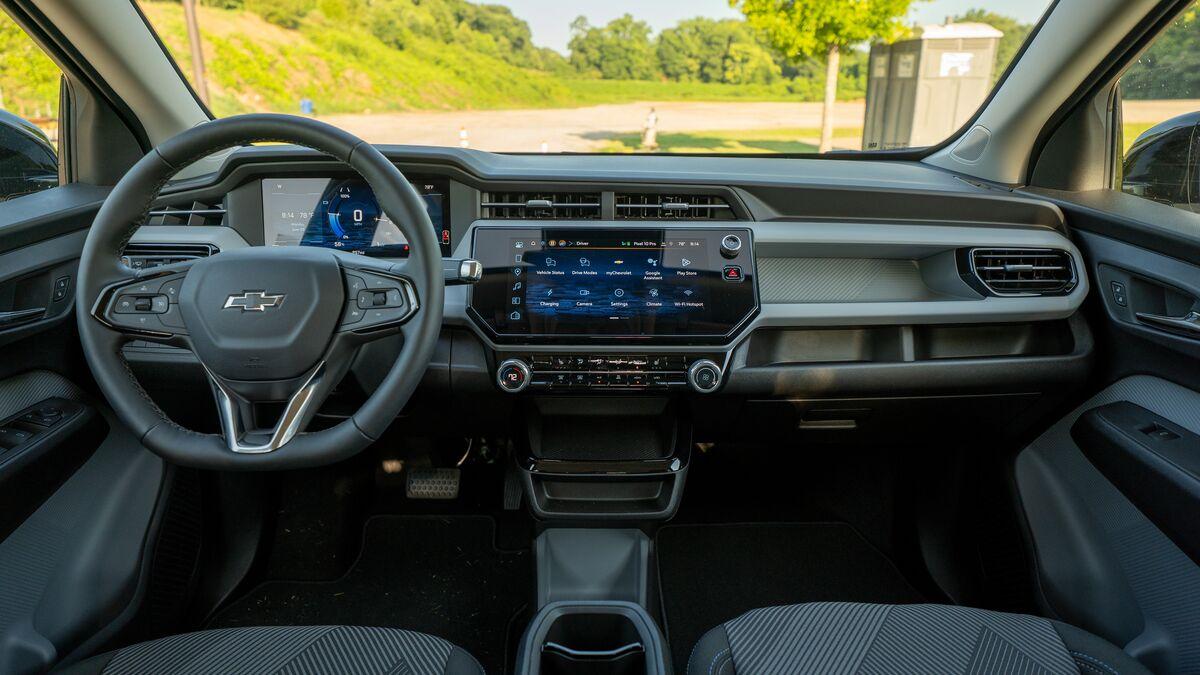
Grab a coffee, answer a few emails, and stretch your legs, and the Bolt is often ready to continue its journey. For the first time, the Bolt feels genuinely road-trip-worthy. While parked, you can even tune into YouTube, Hulu, Disney+, and more on the car’s newly updated technology suite.
The faster charging also benefits drivers who don’t have home charging. Apartment residents and those without dedicated parking often rely on public chargers the same way gasoline drivers rely on fuel stations. Instead of setting aside a large block of time every week, many owners can now stop for a quick recharge while running errands and be back on the road much sooner.
The LFP Advantage: Use the Whole Battery
The 2027 Bolt also introduces a new lithium iron phosphate (LFP) battery, making it GM’s first EV to use the chemistry.
For owners, the biggest advantage here is simplicity. Many EVs with traditional batteries recommend limiting daily charging to around 80% to help preserve long-term battery health. LFP batteries are much more comfortable spending time at higher states of charge, which means owners can routinely charge the Bolt to 100% and enjoy the vehicle’s full EPA-estimated range. That’s one less rule to remember and one less compromise associated with EV ownership. That roughly 60 miles of extra range can be extremely useful on a weekly basis for those who don’t have the luxury of charging at home.
Even a Wall Outlet Can Work
Despite all the attention paid to fast charging, one of the Bolt’s most underrated strengths remains its efficiency.
A standard 120-volt household outlet typically delivers about 1 kW of charging power. Plug the Bolt in for a 12-hour overnight session, and you’ll add roughly 12 kWh of energy back into the battery. Assuming about 4 miles per kWh of efficiency, that translates to roughly 48 miles of range added overnight. Weather conditions and the environment can affect this number, but the U.S. average daily commute of less than 40 miles can be pumped back into the battery with just a regular outlet.
For plenty of Americans, that’s enough to cover daily driving without installing any specialized charging equipment at all. While a Level 2 home charger remains the ideal solution, the Bolt’s efficiency means even Level 1 charging can be surprisingly practical, crucial for those who don’t have the capability to install quicker but more expensive charging equipment.
The EV Lifestyle, Improved
The most important improvement to the 2027 Chevrolet Bolt isn’t its updated styling, improved interior technology, or even its highly usable range.
It’s the fact that charging no longer feels like a barrier to entry. A native NACS port, competitive charging speeds, and an LFP battery that encourages regular 100% charging all combine to make the new Bolt easier to live with than ever before. The original Bolt proved that an affordable EV could work. The 2027 Bolt makes a strong case that it can be effortless, too.