
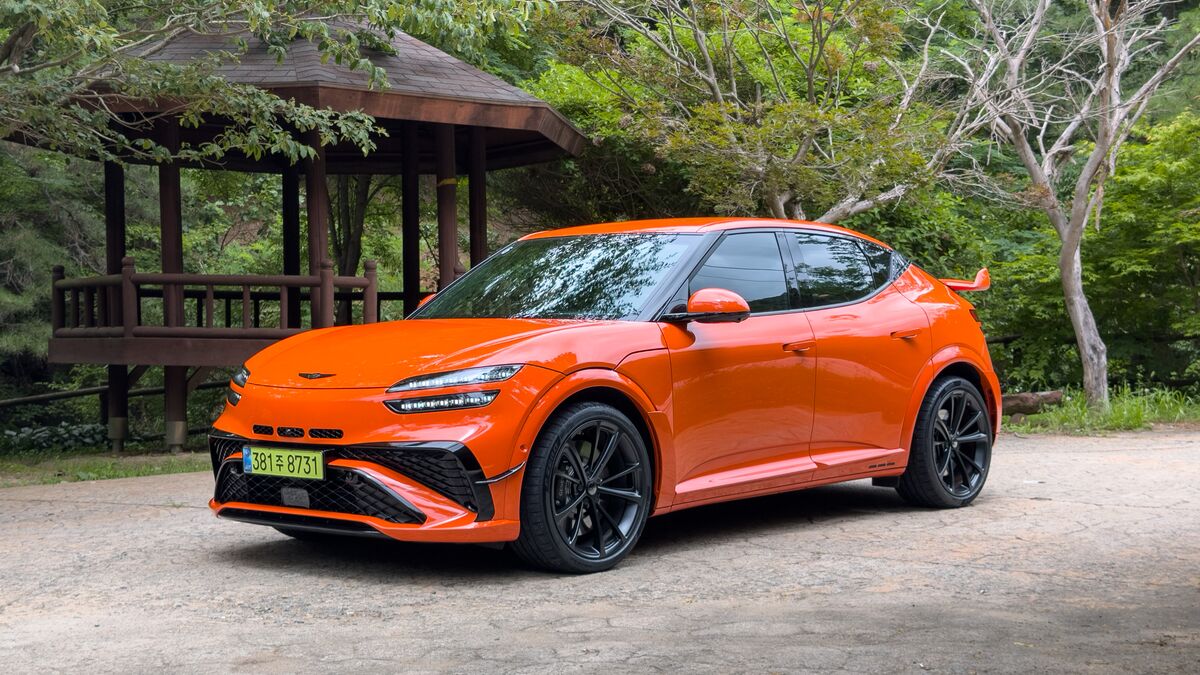
Imagine driving a sporty, aggressive hatchback with a high-strung V6 that revs all the way to 9,000 rpm. And that’s the point: It’s imaginative. That performant creativity is part of the all-electric 2027 Genesis GV60 Magma’s identity, built for drivers who care about more than sterile performance numbers. It appends impressive metrics with pure entertainment. Oh, and luxury. It’s Genesis, after all.
Genesis brought a group of automotive journalists to South Korea to experience the brand’s ethos, from cultural heritage to Hanok design inspiration. From exclusive Genesis spaces to the factory where they’re built. The experience culminated in a first drive of the GV60 Magma. The Magma program is the brand’s foray into a performance sub-brand, including participation in motorsports such as the 24 Hours of Le Mans, the World Endurance Championship, and, starting in the 2027 season, the International Motor Sports Association.
The GV60 Magma was a concept car unveiled as part of the introduction of the new high-performance sub-brand, and it will be the first Magma model to reach public driveways. If you’re familiar with the Hyundai Ioniq 5 N, much of this will sound familiar, albeit a class above.
Experience: Magma
To bridge the gap between silent electric propulsion and visceral emotion, Genesis equipped the GV60 Magma with an updated e-ASD+ (Electronic Active Sound Design-plus) system. It pumps a surprisingly convincing fake engine rumble into the cabin and broadcasts it to the outside world with two exterior speakers. Rolling through a parking lot, the acoustic illusion is genuinely effective.
But the real party trick is Virtual Gear Shift (VGS), which I mapped to a custom steering-wheel button. This simulated dual-clutch transmission (DCT) lets you bang through eight virtual gears. The system mimics everything with eerie perfection, including sharp torque hits on upshifts, rev drops, and even subtle engine lugging if you short-shift. The abrupt changes in momentum itself are even more convincing than the simulated combustion sounds. It almost made us forget that EVs don’t have traditional transmissions.
You are objectively faster if you just let the electric motors do their seamless EV thing. But being the fastest isn’t always the point. The GV60 Magma is built to make you part of the experience. Bouncing off a simulated 9,000 rpm rev-limiter in a luxury EV is, if nothing else, hilarious. For the record, the actual redline of these electric motors is a dizzying 20,920 rpm.
Familiarity Hidden Within
Underneath the GV60 Magma’s bright orange skin is the familiar E-GMP (Electric Global Modular Platform) architecture shared with its Hyundai and Kia cousins. However, the hardware has been turned all the way up, copying the Hyundai Ioniq 5 N’s homework.
The GV60 Magma pushes out a standard 601 horsepower, which jumps to 641 hp when you hit the Boost button on the steering wheel, a feature that lasts for a generous 15 seconds. It blasts from zero to 60 mph in just 3.4 seconds.
Juicing the dual motors is an 84 kWh battery pack. Despite the credible capacity, the driving range sits at a modest 230 miles. This may be small on paper, but provided you can charge at home, it’s ample for most daily commuting. And when you’re on a road trip or need a top-up on the go, the high-voltage architecture delivers blazing-fast charging, rocketing from 10% to 80% in just 18 minutes. It also features HPBC (High Performance Battery Control) to pre-chill the cells specifically for heavy-duty track use. I would love to know the track-day take rate, but knowing it has the capability is confidence-inspiring, even for the heaviest street use.
Overcoming Physics
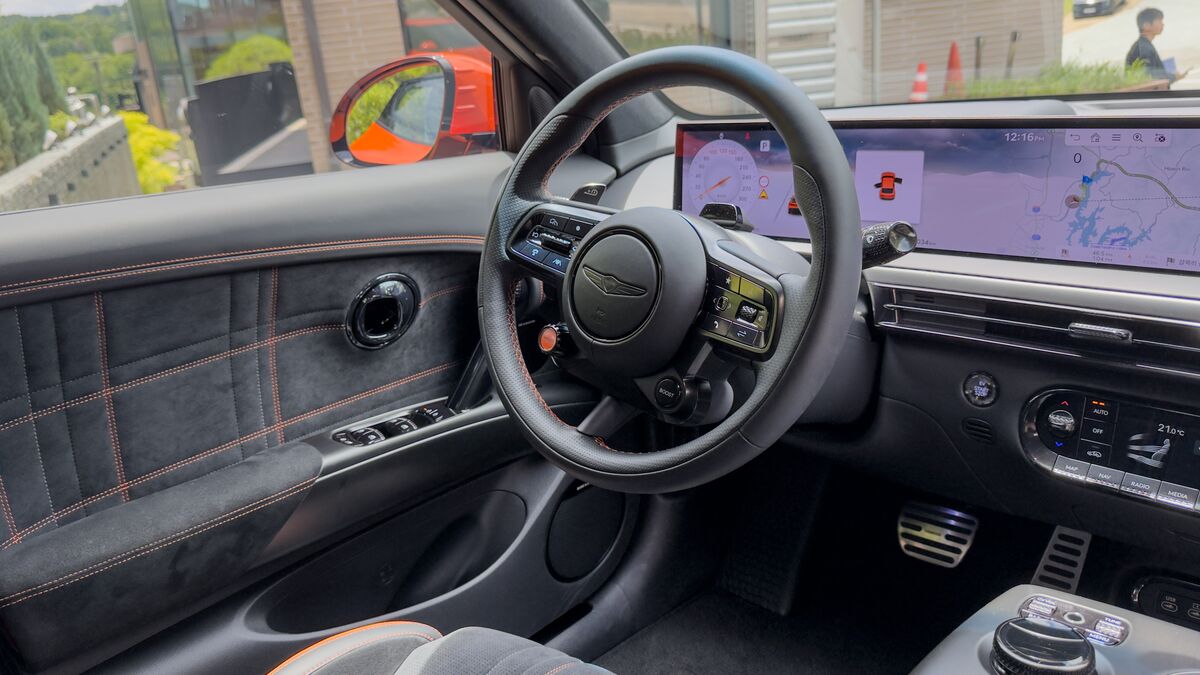
Managing the car’s personality requires navigating an absolute alphabet soup of drive modes. Pressing the dedicated Magma button unlocks two exclusive profiles: GT Mode (a perfect daily default for long, sporty cruising) and Sprint Mode (which unlocks maximal performance, triggering full Boost power simply by matting the accelerator). Another click gives you “My Mode,” which is highly customizable to your liking. Rotating the knob cycles through the traditional Range, Comfort, and Sport profiles.
The drive modes work in tandem with a highly sophisticated handling package designed to mask the Magma’s hefty 4,938-pound curb weight. To keep it planted, a rear electronic limited-slip differential (e-LSD) works alongside a trick torque-vectoring system. The setup balances power between the front and rear motors while using the brakes to pin the nose into corners. Drivers can manually adjust the power split, routing 35% to 65% of the torque to either axle. There is even a dedicated Drift Mode designed to allow natural, sustained oversteer, though I took their word for it rather than testing on foreign roads.
Crucially, the mechanical changes aren’t just software. New suspension geometry increases cornering force by 18%, allowing this heavy hatchback to sit remarkably flat and composed when you throw it into a bend. Wider 275 cross-section Pirelli P Zero tires improve cornering. It feels impossibly fun.
High-Speed Serenity
Despite the aggressive styling, this is still a Genesis, meaning NVH (Noise, Vibration, and Harshness) control remains paramount. The GV60 Magma features significantly more sound-absorbing materials, laminated acoustic glass, and an active noise-cancellation system running through the speakers. Genesis engineers even implemented new forms of noise reduction for the electric motors and inverters.
The goal is a high-speed pace without the typical performance car fatigue. Special aerodynamic efforts suppress wind noise at speeds exceeding 125 mph. While that might not mean much on local highways, it makes the GV60 Magma an effortless, serene cruiser right up to its 165 mph top speed. It is a dual-threat EV: a raucous, 9,000-rpm-mimicking sport hatch when you want to play, and an ultra-quiet luxury tourer when you just want to get home. I might’ve tried to drive it home if there hadn’t been a Pacific Ocean blocking my heist plans.
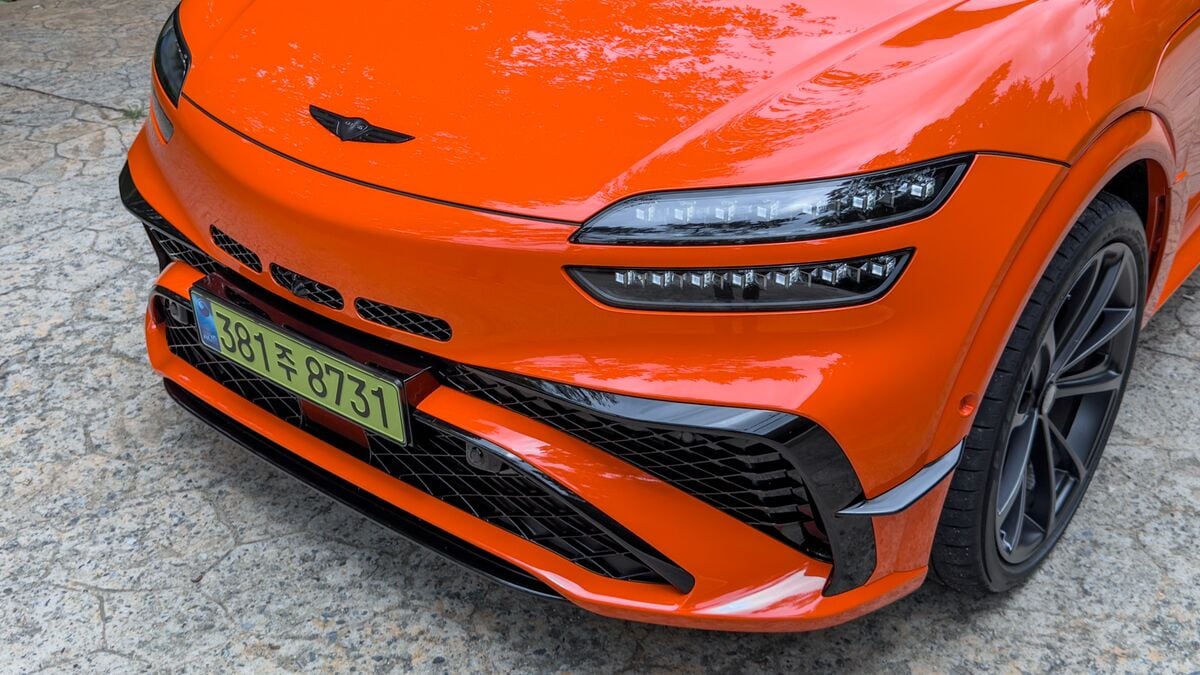
Bold Play, Genesis.
One observation I made while driving all around South Korea was the lack of variety in car colors. We often make comedic commentary on the grayscale of the U.S. automotive landscape, but it holds no candle to South Korea. We noted roughly 95% of cars were white, black, or gray. So the GV60 Magma launching in this vibrant orange is a choice. But it stands out in a fun yet aggressive way. Those wanting the safe non-color route will be pleased to find black, white, and gray still on the menu.
Time will tell how well it will sell and whether the potential of Genesis’ racing programs will have rippling effects, but the GV60 Magma will sit proudly as a more upscale version of the highly acclaimed Ioniq 5 N, boasting the same strengths and solving some of the 5 N’s weaknesses. All of this while being priced under the Porsche Macan EV, an inevitable competitor. Though we don’t know how much less, as pricing has yet to be announced as of the writing of this piece. Another rival that comes to mind is the Cadillac Optiq-V, with a similar claimed zero-to-60-mph time and a starting price just under $70K.
The 2027 Genesis GV60 Magma is expected to go on sale later this summer.
Magma’s fortunes against Cadillac’s V-Series and Porsche remain to be seen both on the track and in the marketplace, but based on our first impressions, we can’t wait to drive what it brings to market next.