
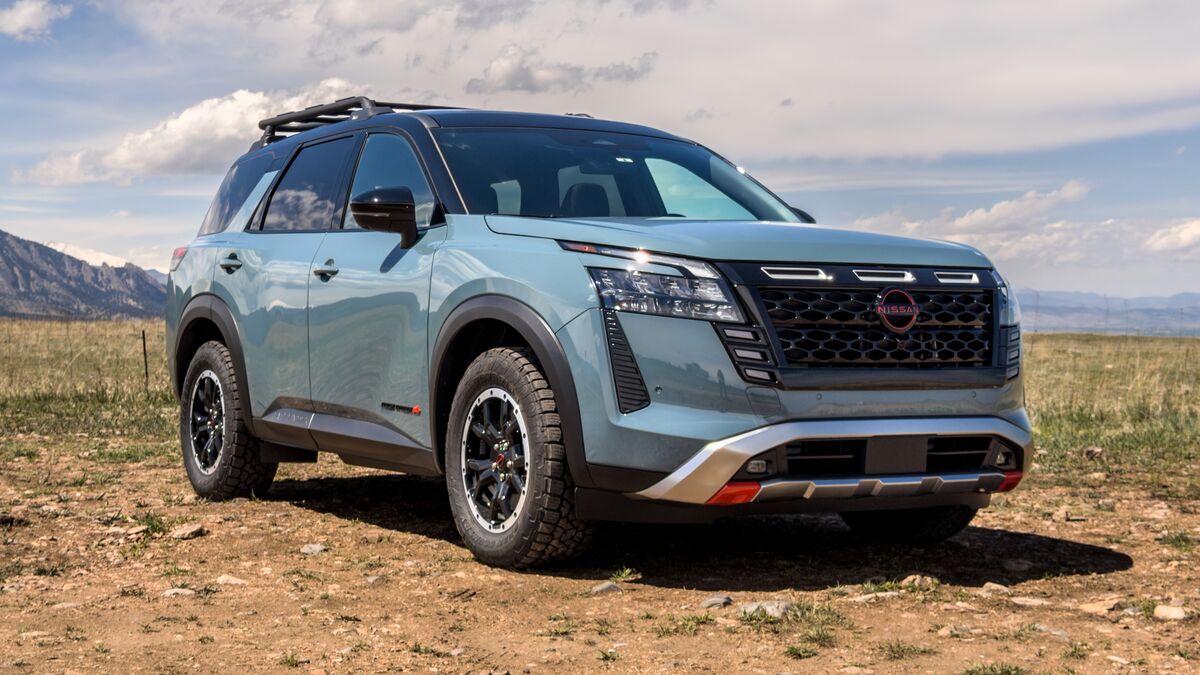
The 2026 Nissan Pathfinder Rock Creek strikes the right balance of premium and rugged touches for most people. Since there is no PRO-4X off-road variant for Pathfinder, the Rock Creek trim becomes the practical upper-middle ground, retaining some upscale features while offering enough capability for rocky dirt roads and the weekend campsite.
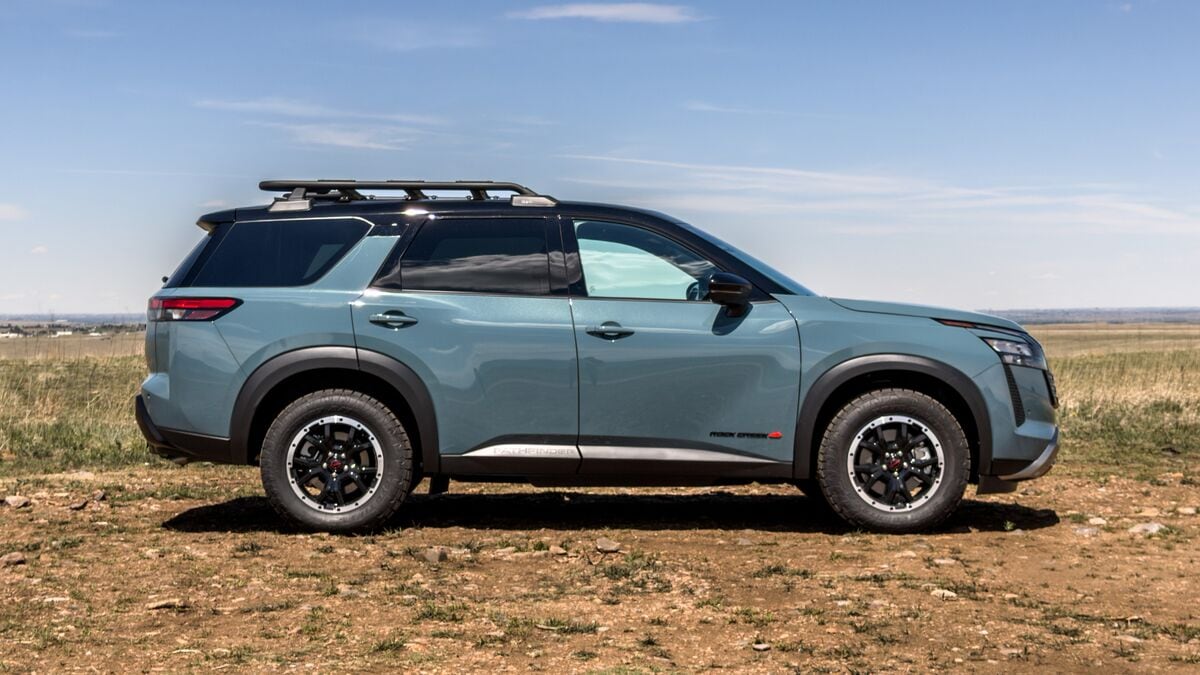
The Rock Creek Trim
This is the Rock Creek, the outdoorsy Pathfinder sitting near the top of the trim lineup, just below Platinum. It includes water-repellent seating, Lava Red contrast stitching, standard 4WD, all-terrain tires, and rugged visual touches that help it stand apart.
My tester included the Premium Package with Captain’s Chairs, bringing it to just above $50,000. This felt reasonable given how much comes standard. The pro tip is to add this Premium Package. It brings the panoramic moonroof with a power shade, second-row climate controls, a heated steering wheel, and the fantastic Qi2 wireless phone charger.
New 2026 Nissan Pathfinder Prices
|
Retail Price
|
Fair Purchase Price (92506)
|
|||
|---|---|---|---|---|
$39,045 |
$39,000 |
Actually Useful Wireless Charging
As a tech enthusiast, I was more excited about the Qi2 wireless phone charger than I’d like to admit.
Wireless charging has existed in cars for over a dozen years, and most versions have been a mixed bag: slow charging, overheating, or a surface that lets the phone slide around, causing charging to stop. Nissan was the first to bring the Qi2 technology to U.S. market vehicles, using magnetic alignment that keeps the phone in place, improves efficiency, and avoids the small-dashboard-oven problem.
It sounds minor until you use it daily. Then you wonder why more cars haven’t yet jumped on board. Fortunately, the dominoes are falling, as Nissan, Infiniti, and Rivian are actively implementing Qi2 and MagSafe.

Tried-and-True Powertrain
Power comes from Nissan’s familiar 3.5-liter naturally aspirated V6, making 295 hp and 270 lb-ft of torque. The Rock Creek trim specifically calls for premium fuel, unlocking a bit more power and torque than the rest of the lineup’s engine tunes. At my mile-high elevation, power felt just adequate enough. At sea level, I’m sure it feels even better.
There were moments where I wanted more power, but there is something tried-and-true about a naturally aspirated V6 vs. a turbocharged 4-cylinder. It is also becoming a dying breed, which gives the Pathfinder a little old-school charm and a unique leg up for traditional shoppers.
The 9-speed automatic transmission is a great departure from past Nissan continuously variable transmissions (CVTs). It feels more natural and better suited to a family SUV that may occasionally tow, climb, or escape a muddy trailhead parking lot.
Ride quality is comfortable, maybe just a hair floaty, but still composed. The smaller off-road wheels and larger tire sidewalls improve comfort over broken pavement and dirt roads. The tradeoff is more road noise and a little tire squirm when cornering. But the overall experience feels premium, perhaps even punching above its weight, unless you’re climbing aggressive highway grades where you long for a turbo.
Ample Comfort, Decent Technology
The seats are quite comfortable, which is not surprising, given Nissan’s reputation for its Zero Gravity seats. The second row is decently comfortable too, while the third row is usable but not massive. Cargo room is competitive, even if not class-leading, offering around 80, 45, and 16 cubic feet behind the first, second, and third rows, respectively.
The steering wheel feels premium, and the buttons are refreshingly tactile. I just wish the controls below the screen followed suit. Instead, many are finished in piano black, which looks nice for approximately 15 minutes before beginning its second career as a fingerprint archive.
The real gauges deserve an honorable mention as the runner-up to my favorite feature. Digital gauge clusters are everywhere in today’s automotive world, but this Pathfinder uses a small digital screen between two physical gauges. It feels both premium and analog, rather than overwhelmingly digital.
The larger 12.3-inch center screen, now standard, looks impressively clear and has half-decent software. The implementation of Apple CarPlay and Android Auto is especially strong and likely the default experience for many drivers. Even the cameras have improved, especially compared with the Frontier of the same model year. The sound system is decent, but again, this is not the highest trim. Rock Creek would benefit from having Bose at least as an option.
The sliding moonroof is nice, and the motorized shade is appreciated on hot summer days. Unfortunately, the shiny console trim can reflect sunlight into your face, which quickly removes any “premium ambiance”.
Driver Assistance Needs Assistance
The ProPilot driver-assist system is perhaps the biggest frustration. It works well enough on extremely clear and straight roads, but on curves, even clearly marked ones, it starts to struggle. There is a lot of overcorrecting, and it even triggered the lane-departure warning. Which is funny because it is the one that put itself there in the first place.
The other limitation is material execution. The piano-black center controls and shiny console trim attract fingerprints, glare, dust, and reflections. It stands out because the steering-wheel controls are excellent. Nissan clearly knows how to make buttons feel premium. I just wish more of that material choice had made it to the center stack.
Who Is the Target Customer?
The Pathfinder Rock Creek makes sense for the buyer who wants a comfortable 3-row SUV with personality and light off-road confidence. It is not a hardcore trail machine. It is an on-road family SUV with enough extra capability for most weekend plans in the mountains.
The Premium Package feels like the important checkbox here, mostly because it adds features that make the Rock Creek a better daily driver. Driver assistance still needs refinement, and some interior materials are not my favorite, but the Pathfinder Rock Creek lands in a likable middle ground that many will find appealing.