
The average new car buyer in America in May paid $49,220. For $2,375 less than that, I’m sitting on heated and ventilated Nappa leather seats with an adjustable knee bolster, gripping a heated steering wheel, listening to a 12-speaker premium Harman Kardon sound system, and enjoying the security of all-wheel-drive (AWD) grip.
I don’t have any rear-seat passengers at the moment. But, if I did, they would be enjoying heated seats in the second row, too (in the outboard positions).
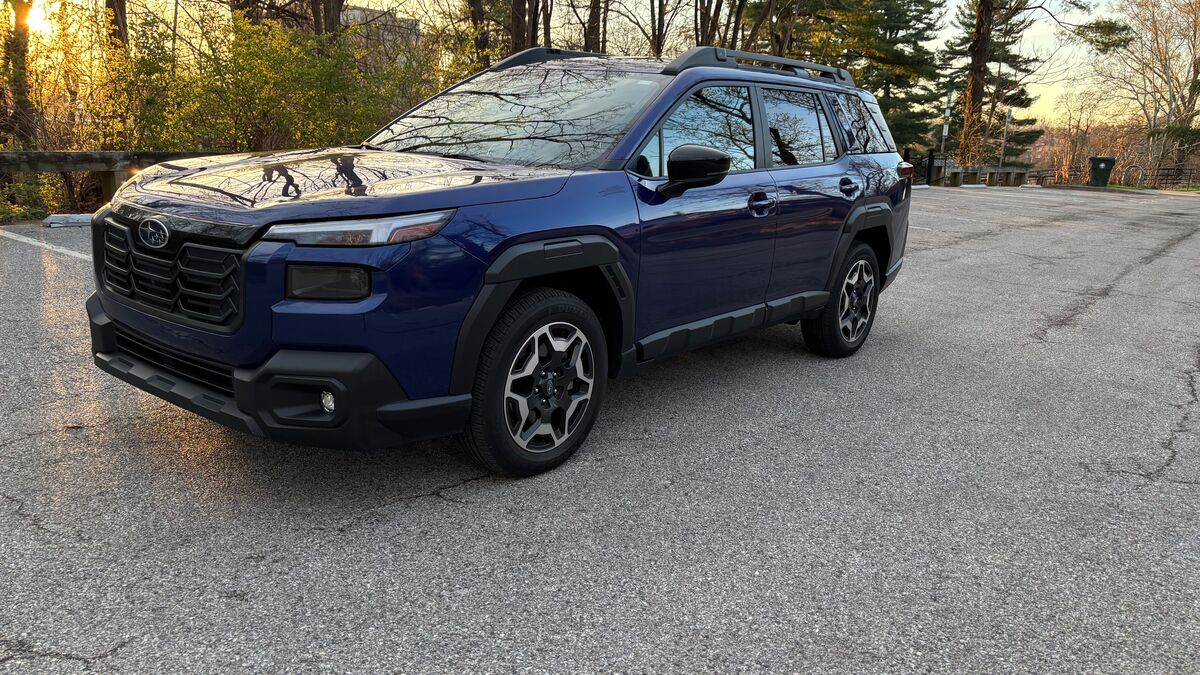
The 2026 Subaru Outback looks radically different than every Outback that came before it. Its radical makeover from a tall wagon into a more traditional SUV you might expect to find on another automaker’s lot has dominated media coverage of the new Outback.
But I think we can all be over that now. A few months into its run, I got to test the Outback extensively over a week of suburban and urban driving, and I’m here to report that the story has changed.
This isn’t just a car with a dramatic makeover. In the inflated car market of 2026, it’s a dramatic value.
Subaru makes the 2026 Outback in six trim levels. Three — the Premium. Limited and Touring models — use a 180-horsepower 4-cylinder engine. Three — Wilderness, Limited XT, and Touring XT — use a more powerful 260-hp turbocharged engine. Subaru loaned me the Touring model, which has most of the creature comforts but a less powerful engine.
Which Trim Level
New 2026 Subaru Outback Prices
|
Retail Price
|
Fair Purchase Price (31201)
|
|||
|---|---|---|---|---|
$36,445 |
$34,100 |
|||
$43,165 |
$40,200 |
|||
$45,815 |
$42,600 |
|||
$46,445 |
$43,000 |
|||
$46,845 |
$43,900 |
|||
$49,405 |
$45,900 |
Favorite Feature
We’ve always rated the Outback well and understood its cult following. But Subaru’s distinct identity in the marketplace comes, in part, from changing very slowly. When the brand finds something that works, it sticks with it.
But when the automotive industry comes up with a better idea, Subaru sometimes sticks with the old one. Several years ago, virtually every automotive designer concluded that screens should sit up high, letting drivers peek at what song is playing or consult the map without looking down from the roadway.
Subaru, until now, resisted. It kept its screens mounted low and portrait-style. With the 2026 Outback, the company has finally moved the central touchscreen to a high-up, landscape orientation. It’s a huge improvement and contributes to safer driving.
What It’s Like to Drive
That tendency to stick with what works means the new Outback isn’t entirely new. The 180-hp 4-cylinder boxer engine and continuously variable automatic transmission (CVT) of the Outback Touring are essentially unchanged from the previous model you may be familiar with.
That’s fine. They do what they need to do. But with many competitors now over 200 hp, the CVT can make the Outback feel slightly sluggish. It’s not unsafe. It just accelerates with a little less gusto than some rivals. If that bothers you, consider the turbo models.
It didn’t bother me, so I’d likely save the money.
What is new? A tighter chassis makes everything feel smoother, and additional sound- and vibration-damping makes it feel more refined.
I didn’t take the Outback off-road, but previous experience with Subaru’s excellent symmetrical AWD system and X-Mode terrain mode system suggests it should be very capable there.
Off-road-centered Wilderness models get 17-inch wheels. XT trims get 19-inch wheels. My Touring model came with 18-inchers, splitting the difference. Some think larger wheels look more elegant, but they can mean a harsher ride. The additional sidewall of smaller wheels means a more pliant ride and off-road flexibility. Splitting the difference with the midsize tires works out well.
Interior Comfort and Technology
Many people trade in an old Subaru for a new one. If you’re one of those, this cabin will surprise you. The high-mounted, landscape-style screen is a big change from many years of Subaru design, and it’s a good one.
Subaru still mounts the driver’s information screen and central touchscreen separately, which is a positive in my eyes — the steering wheel never blocks your view of anything you need to see. Designers have been kind enough to keep HVAC controls below the screen and in the form of real buttons. That makes for a well-balanced set of controls that you can use without much of a learning curve.
My tester came with Nappa leather — softer hides than on other trim levels — in a baseball-glove brown against black plastics. It’s a handsome look.
Second-row accommodations measure out to near class averages, but the Touring model gives you heated outboard seats.
Subaru designers, however, still design a very functional cargo area better than most affordable carmakers. The Outback’s cargo hold gets useful hooks and tie-down points along the walls, a sturdy all-weather mat, and rear seats that fold easily without even requiring you to lean into the cabin.
Limitations
The 2026 Outback’s base engine feels behind the times. It gives you all the power you need, but if you test drive it against nearly any of its midsize SUV competition, you’ll notice it. The boxer engine’s low center of gravity contributes to delightful handling, but if I were looking at this and lived in higher elevations, I’d give strong consideration to the turbocharged option.
Key Considerations
Subaru still doesn’t offer a hybrid at this size. They’ve introduced one for the smaller Forester, so we wouldn’t be surprised to find out an Outback Hybrid is planned. But, to date, they haven’t confirmed plans for one.
Still, it’s hard to argue with the value the 2026 Outback provides. For less than the price of the average new car, it proves a comfortable and unusually capable family car.