
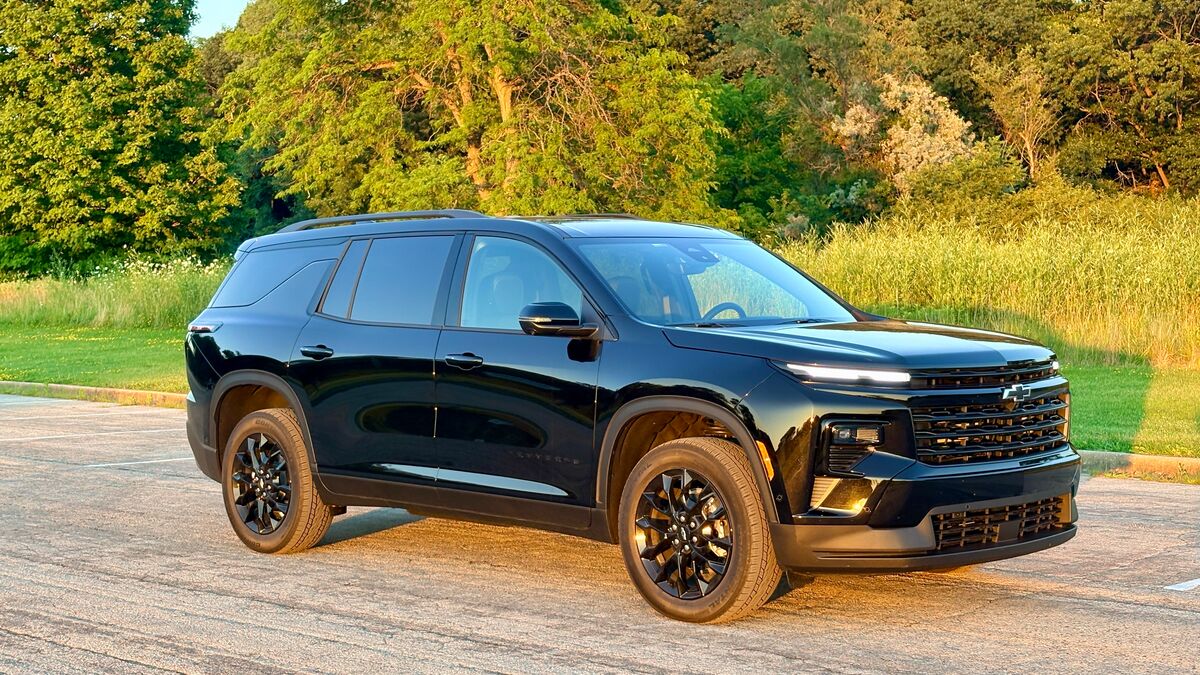
The 2026 Chevrolet Traverse flies under the radar of edgier — and boxier — 3-row SUVs, yet it stands out where it matters most to many shoppers of family vehicles: It’s one of the largest, roomiest midsize SUVs available.
Its understated attributes don’t end there. It offers some of the most seamless and intuitive infotainment systems, yet it still retains climate control buttons and dials. At $42,795, it costs less than the near-$50,000 average transaction prices paid by new car shoppers, and a wealth of standard features, as well as options such as GM’s Super Cruise hands-free driving system, make it a relative value.
Some shoppers might pause at the Traverse’s lone available drivetrain: a 328-horsepower turbocharged 4-cylinder engine. But the age of replacement for displacement rings true for this potent engine, even if it gets loud under heavy throttle.
Here’s a look at our favorite things that make the Traverse worth closer examination.
Intuitive Infotainment
Since way back in the OnStar days, GM has excelled at telematics and in-car technology. The Traverse evolves that past into a crisply displayed, intuitive infotainment system. A 17.7-inch touchscreen blends into an 11-inch digital instrument cluster under a single pane of glass angled toward the driver. It’s standard, too, and sharp graphics, bright controls, a smart layout, and large icons serve up great responsiveness thanks to its Google built-in operating system. Yes, the climate controls existing in the lowest bar of the touchscreen, but Chevy duplicates them below with actual climate buttons and temperature knobs. You don’t have to choose. We wish more automakers would either employ this redundancy or just stick with buttons and knobs.
Spacious Interior
Last redesigned in 2024, the Traverse seems to be dwarfed by the SUV trend of bigger is better, most notably by the larger Kia Telluride redesigned for 2027. Yet the Traverse is still bigger, extending nearly a half-foot longer and with the longest wheelbase in the class. This translates to the most cargo room behind the third row and enough legroom in the second and third rows to sit six adults comfortably. The extra cargo room should spare families on the go the need for a rooftop carrier or rack to tow stuff.
The latches on the top of the second-row captain’s chairs require more dexterity than the push-button seats on rivals such as the Honda Pilot, but most kids could still get them to tilt and slide forward without help.
Here’s a snapshot of how the Traverse stacks up against its rivals.
| Vehicle | Length | Wheelbase | 2nd/3rd-Row Legroom | Cargo Volume (Behind 2nd/3rd Row) | Seats |
| 2026 Chevy Traverse | 204.5 in | 121.0 in | 41.5/32.1 in | 56.6/22.9 cu ft | 7 or 8 |
| 2026 Honda Pilot | 200.1 in | 113.8 in | 40.8/32.5 in | 48.5/18.6 cu ft | 7 or 8 |
| 2027 Kia Telluride | 199.2 in | 116.9 in | 43/32.1 in | 48.7/22.3 cu ft | 7 or 8 |
| 2026 Ford Explorer | 198.7 in | 119.1 in | 37.5/31.8 in | 46/16.3 cu ft | 6 or 7 |
Relative Value
It’s a sign of the times that a base SUV costing $42,795, including a $1,995 destination fee, is a relative value, but that’s where we’re at. All-wheel drive (AWD) adds $2,000 on LT, RS, and High Country trims, as it did on our Traverse LT with the Midnight Edition package. The 2027 Kia Telluride and 2026 Hyundai Palisade are two midsize SUVs that cost less, at the start, but Chevy equips the base Traverse LT with wireless Android Auto and Apple CarPlay, a wireless device charger, a hands-free liftgate, heated front seats, and a heated steering wheel. Then there are all the driver-assist systems.
No other 3-row midsize SUV has those features as standard for that price. The Z71 off-road model costs $50,895, and the RS and High Country grades near $60,000. We’d stick with the base LT and probably add the $3,935 Enhanced Driving Package, which includes Super Cruise and a 12-speaker Bose sound system.
Read More on the 2026 Chevy Traverse
Read our full review of the Chevrolet Traverse find this week’s Fair Purchase Price, or see Traverse models for sale near you.