2026 Honda Prologue



View All Media
2026 Honda Prologue Review

Updated May 13, 2026
Pros
- Clean exterior design
- Comfortable driving dynamics
- Spacious rear seats
Cons
- Subpar driver assistance tech
- Below-average DC fast charging speeds
- No frunk (front trunk)
What's New?
- Final model year
- Price cuts
The Honda Prologue is comfortable and handsome, but its subpar driver assistance tech and charging speeds keep it out of the top of its class. Pricing starts at $48,895.
The 2026 Honda Prologue arrives with an asterisk. Honda’s first modern electric SUV, and currently its only EV sold in the U.S, is also nearing the end of the road. Production is expected to conclude after the 2026 model year as Honda pivots away from short-term EV expansion in favor of hybrids and longer-term electrification plans.
Built on GM’s Ultium platform and closely related to the Chevrolet Blazer EV, Cadillac Lyriq, and now-canceled Acura ZDX, the Prologue blends proven GM EV hardware with Honda branding and tuning. It may be short-lived, but it isn’t half-baked. Here’s the Prologue’s…epilogue, if you will.
We’ve spent hundreds of hours driving and evaluating this generation of electric SUVs, including the Honda Prologue.
2026 Honda Prologue Pricing
The 2026 Honda Prologue has a starting sticker price of $48,895, with the range-topping Prologue Elite kicking off at $59,395. But Kelley Blue Book Fair Purchase Pricing currently suggests paying $1,195 to $3,495 less than MSRP, depending on trim and equipment. These prices are updated weekly.
MSRP | KBB Fair Purchase Price (national avg.) | |||
|---|---|---|---|---|
$48,895 | $47,700 | |||
$53,195 | $50,600 | |||
$59,395 | $55,900 |
At face value, pricing has been one of the Prologue’s biggest hurdles. At MSRP, it’s slightly expensive relative to what it offers, especially given its straightforward tech and driver-assistance limitations. But given recent price cuts to help alleviate the now-missing federal EV incentives, there is a case to be made for fans of its design and practicality. Many previous discounts are already filtering into the used market, turning the Prologue into a more compelling value play than ever in both used and new capacity.
Before buying a Prologue, check the Kelley Blue Book Fair Purchase Price to know what you should really pay. Honda Prologue resale value is about average for the segment. Recouping more money when selling a vehicle can mean a bigger down payment and lower monthly payments on the next one.
Driving the Honda Prologue
From behind the wheel, the Prologue is immediately unintimidating. Power delivery is quick off the line thanks to instant electric torque, making it feel responsive around town. As speeds climb, that urgency fades. Highway passing performance is perfectly fine, but not particularly exciting, something buyers coming from higher-output EVs may notice.
That’s less of an issue in daily driving, where smoothness and predictability matter more. Regenerative braking can be aggressive, but it can also be adjusted. It rides well, with soft, compliant suspension tuning that does a good job absorbing rough pavement. It settles into highway cruising comfortably, making it a decent companion for longer commutes.
Driver assistance is where the Prologue falls furthest behind the segment, and why we only consider those longer commutes “decent.” Adaptive cruise control is present, but the absence of lane centering assistance is immediately noticeable, especially on the highway, where it would be most useful. Also, despite having so much in common with the Chevy Blazer EV, GM’s excellent Super Cruise hands-free driving system is not available on the Prologue. In an EV landscape that increasingly emphasizes forward-thinking tech, this feels like a genuine miss and a significant competitive disadvantage.
Powertrain
| Trim | Powertrain | Horsepower/Torque | Max Range | Max Efficiency |
| EX, Touring | Single-motor, FWD | 220 hp/243 lb-ft | 308 miles | 113 city/94 hwy/104 combined MPGe |
| EX, Touring, Elite | Dual-motor, AWD | 300 hp/355 lb-ft | 294 miles | 108 city/90 hwy/99 combined MPGe |
Charging performance is one of the Prologue’s weakest points compared to the competition. DC fast-charging times hover around 40 minutes from 10% to 80%. Some rivals, particularly the Hyundai Ioniq 5 and Kia EV6, can replenish the same amount of charge in around half that time.
Interior Comfort
The Prologue’s interior continues the theme of blended DNA. Material quality feels like a mix of Honda and GM, though it leans more toward GM, something longtime Honda owners will likely notice. Everything is solidly assembled, but the cabin never fully escapes its platform origins. Cover the steering wheel badge, and you may think you’ve been teleported into a Chevy.
Front-seat comfort is decent with higher trims showcasing a more premium edge, while rear-seat space is genuinely excellent. Adults fit comfortably with 39.4 inches of legroom thanks to the long wheelbase that’s somewhere between compact and midsize, and longer trips won’t feel like a punishment. That’s more backseat space than the Ford Mustang Mach-E and Volkswagen ID.4, and about the same as the Hyundai Ioniq 5 and Chevy Blazer EV. For buyers coming from a CR‑V or Passport, the Prologue’s interior space will feel familiar and reassuring, and even improved for rear occupants.
Infotainment is built on Google Built‑In, and the Prologue is one of the only ways to get Apple CarPlay and Android Auto on a GM-based EV. It’s a strong system overall, with Google Maps well integrated into EV route planning. The surround-view camera is exclusive to the top trim, which works well, though it’s frustrating that this feature isn’t available on lower configurations. The mid-tier Touring trim still adds more premium touches, including a 12-speaker Bose system, and is arguably worth its value given the price cuts.
Cargo space is competitive but not class-leading. Expect roughly 23 cubic feet behind the rear seats and around 57 cubic feet with them folded down. There’s no frunk (front trunk), which is disappointing but unsurprising given its GM underpinnings.
Favorite Features
Handsome design
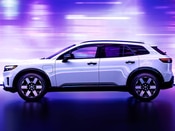
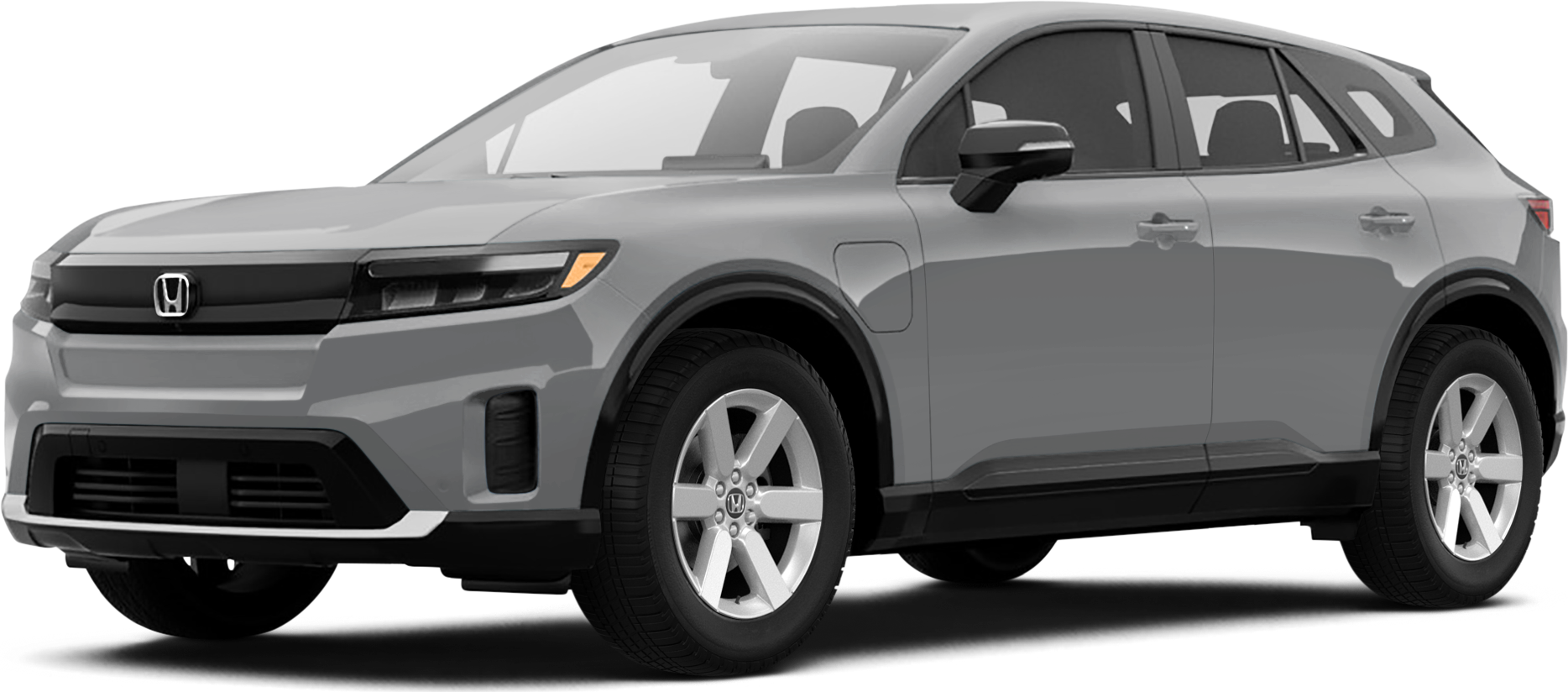
Design is a strong suit of the Honda Prologue. The styling is restrained, well-proportioned, and quietly upscale, avoiding the visual bulk and aggression of some of its siblings. In brighter colors, particularly North Shore Pearl, it’s popular with onlookers, drawing attention amidst a sea of otherwise grayscale crossovers.
308-mile range
We always like to see a maximum range rating above the 300-mile mark, and the front-wheel drive (FWD) version of the Prologue gets there with a 308-mile maximum range rating. This reassurance eases range anxiety, especially for drivers in snowy climates.
Supercharger accessibility
An adapter is required, but if you have that adapter, it unlocks access to the vast Tesla Supercharger network of fast charging stations. This capability greatly expands the Prologue’s charging options, whether you’re on a long road trip or just topping off at the grocery store.
Cars You May Like
We’ve Rounded Up Cars That Could Be Your Perfect Match.
2026 Honda Prologue Deals and Incentives
0.99% APR | 60 months
Get 0.99% APR 24-60 MOS. for well-qualified buyers on a new 2026 Prologue.
$279 /mo | 36 months | Due at Signing
Closed end lease for a new 2026 Prologue AWD Touring for $279 a month for 36 months with $5099 due at signing for well-qualified lessees.
2026 Honda Prologue
KBB.com Consumer Reviews
Trending Topics in KBB.com Consumer Reviews
2026 Honda Prologue Styles
Calculate Your Budget With These KBB.com Tools
Specifications
Dimensions, Weights & Capacities
Curb Weight | 4932 lbs. | ||
|---|---|---|---|
EPA Passenger | 111.7 cu.ft. | ||
Front Head Room | 39.6 inches | ||
Front Leg Room | 41.4 inches | ||
Max Seating Capacity | 5 | ||
Minimum Ground Clearance | 7.9 inches | ||
Overall Length | 192.0 inches | ||
Front Shoulder Room | 59.4 inches | ||
Towing Capacity, Maximum | 1500 lbs. | ||
Trunk or Cargo Capacity | 57.7 cu.ft. | ||
Turning Diameter | 39.6 feet | ||
Wheel Base | 121.8 inches | ||
Width with mirrors | 78.3 inches |
Exterior
Alloy Wheels | Available | ||
|---|---|---|---|
Number of Doors | 4 doors | ||
Privacy Glass | Available | ||
LED Headlights | Available |
Fuel Economy
City | 113 MPGe | ||
|---|---|---|---|
Combined | 104 MPGe | ||
Highway | 94 MPGe |
Mechanical
Drivetrain | 2WD | ||
|---|---|---|---|
1 speed | Available | ||
Parking Assist System | Available |
Performance
Horsepower | 220 hp | ||
|---|---|---|---|
Torque | 243 foot pounds | ||
Engine | Electric Motor | ||
Estimated Electric Range | 308 miles | ||
Charge Time (240V) | 9.5 hours | ||
Battery Capacity | 85.00 kwh |
Warranty
Basic | 3 years / 36000 miles | ||
|---|---|---|---|
Powertrain | 5 years / 60000 miles | ||
Corrosion | 5 years / Unlimited miles |
Comfort & Convenience
Entertainment
Interior
Seating
Security
Technology
2026 Honda Prologue Safety
Safety Features & Technology
Crash Test Rating
Compare to Similar Vehicles
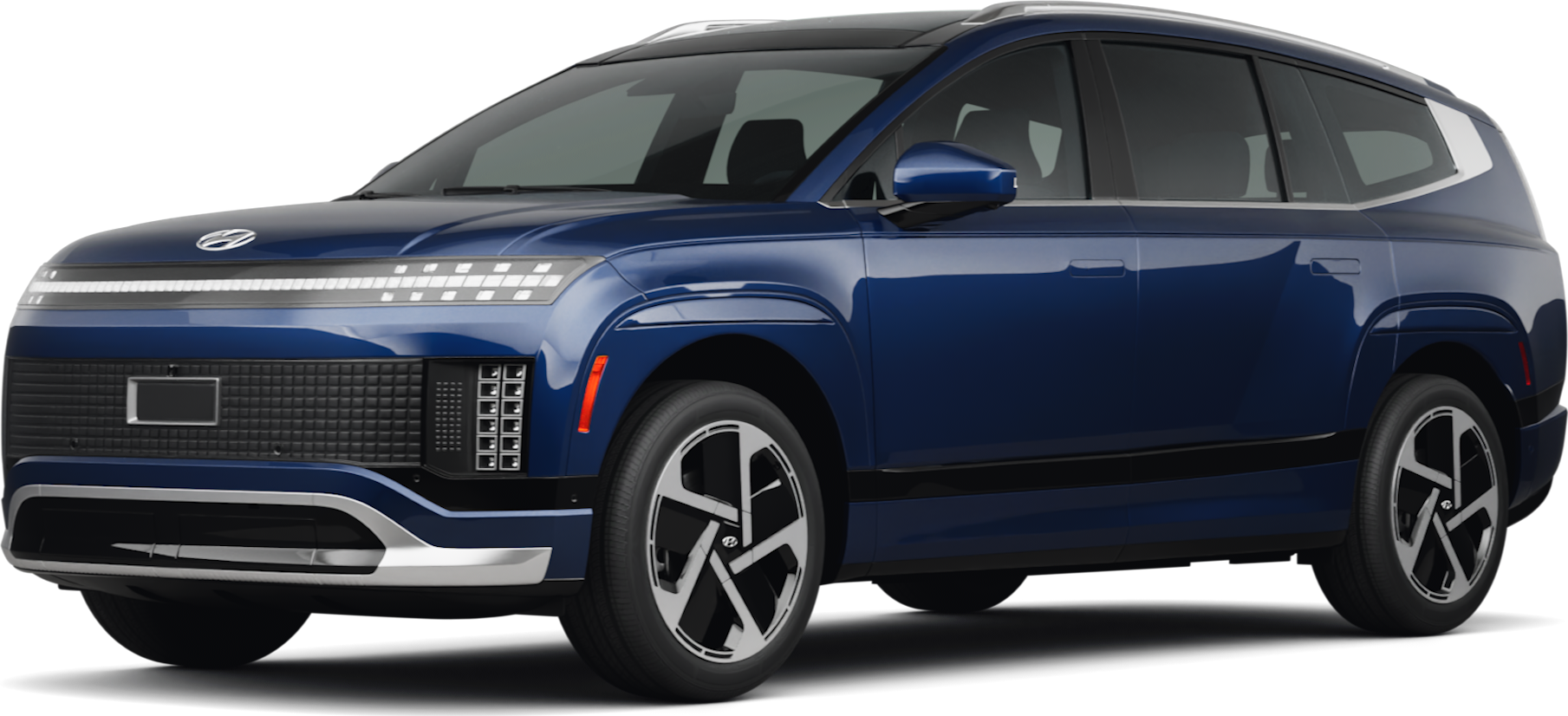
 New 2026 Honda Prologue |  New 2026 Hyundai IONIQ 9 |  New 2026 Hyundai IONIQ 5 | 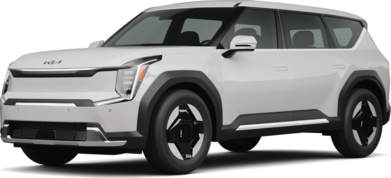 New 2026 Kia EV9 | ||
|---|---|---|---|---|---|
| Price | $48,895 | $60,555 | $46,675 | $56,545 | |
| KBB.com Rating | 4.2 | 4.8 | 4.7 | 4.7 | |
| Consumer Rating | 4.0 | 5.0 | 4.1 | 3.7 | |
| Fuel Economy | City 113/Hwy 94/Comb 104 MPGe | City 103/Hwy 81/Comb 92 MPGe | City 129/Hwy 100/Comb 114 MPGe | City 101/Hwy 76/Comb 88 MPGe | |
| Fuel Type | Electric | N/A | N/A | N/A | |
| Estimated EV Range | 308 miles | 335 miles | 318 miles | 230 miles | |
| Safety Rating | 5.0 | N/A | N/A | 5.0 | |
| Seating Capacity | 5 | 7 | 5 | 7 | |
| Basic Warranty | 3 years or 36000 miles | 5 years or 60000 miles | 5 years or 60000 miles | 5 years or 60000 miles | |
| 0-60 | N/A | N/A | N/A | 7.7 seconds | |
| Horsepower | 220 HP | N/A | 225 HP | 215 @ 4400 RPM | |
| Engine | Electric Motor | Electric Motor | Electric Motor | AC Electric Motor | |
| Drivetrain | 2WD | RWD | RWD | RWD |
Best EVs



More Honda Prologue News & Information
The Honda Prologue EV will be discontinued at the end of 2026.
Honda announces it is dropping the price by $7,500 for the 2026 Prologue across all trim levels.
Honda and Acura EV owners can now use Tesla’s Supercharger charging network. They’ll need an adapter to do so.
FAQs
Is the 2026 Honda Prologue a good buy?
The 2026 Honda Prologue is a good buy for most Electric Vehicle shoppers. It gets strong ratings from our experts and most buyers are paying less than sticker price.
How much should a 2026 Honda Prologue cost?
A 2026 Honda Prologue should cost between $47,700 and $55,900 according to Kelley Blue Book Fair Purchase Pricing.
What's the cheapest Honda Prologue?
The cheapest 2026 Honda Prologue is the EX, with a starting sticker price of $48,895 and a Kelley Blue Book Fair Purchase Price of $47,700.
Is the 2026 Honda Prologue reliable?
The 2026 Honda Prologue is part of the 1st-generation Prologue, which our owners give an above-average reliability rating of 5 out of 5.