
- Some automakers have dialed back plans for electric cars. A Hyundai executive tells KBB the company sees continuing to develop new electric vehicles (EVs) as the right strategy.
“I don’t think we view it as a risk.”
Some automakers have dialed back their electric vehicle (EV) plans after the federal government ended a $7,500 tax incentive for EV buyers. But Hyundai Motor North America Senior Vice President of Product Planning and Mobility Strategy Olabisi Boyle tells me the company is proceeding with its long-planned EV strategy even as rivals like Honda back out of the EV market.
We were sitting backstage at the New York International Auto Show after Hyundai unveiled a radically styled body-on-frame SUV, the Boulder Concept, that could preview the styling of a future midsize truck.
I asked her whether Hyundai was taking a risk by sticking with EVs even after a dramatic drop in EV sales that coincided with the end of the tax credit. She pushed back on how I characterized the decision.
“Strategies can depend on policy cycles that flip-flop,” she noted, “but technology and infrastructure and consumer adoption – those are decades. Your product strategy has to follow that.”
Diversity of Powertrains, With a Long-Term Move to Electric
- The company sometimes offers four powertrains in just one market segment.
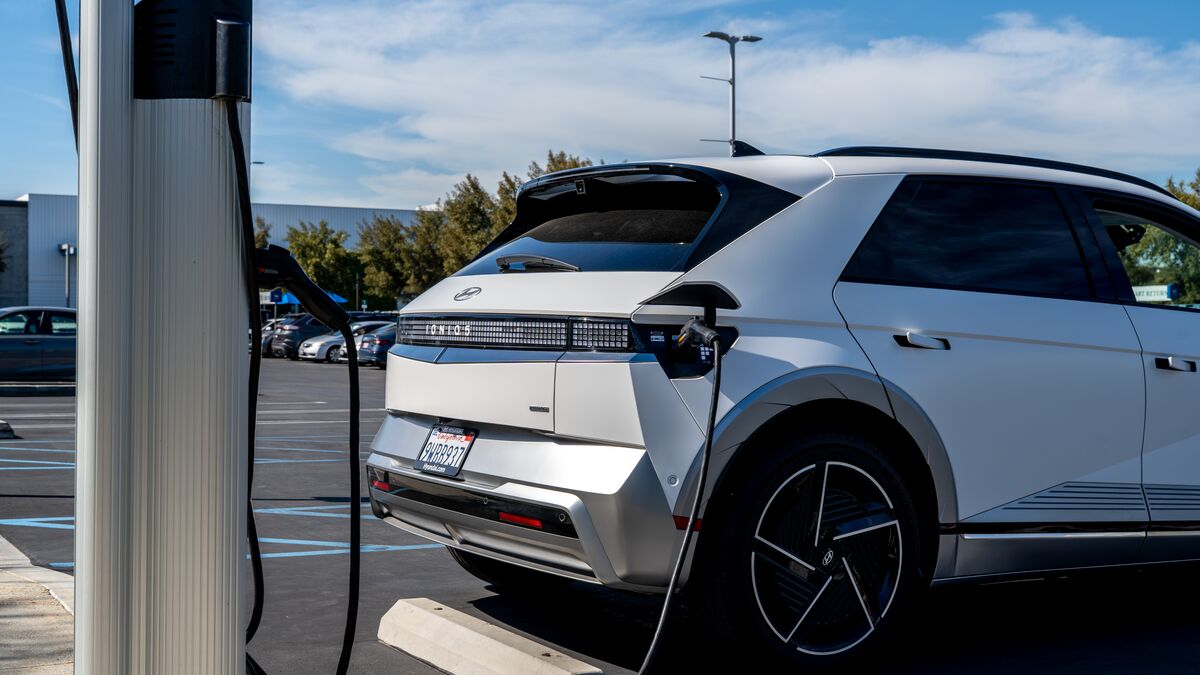
Hyundai, she emphasized, now offers gas-powered models, hybrids, and plug-in hybrids (PHEVs), often building the same model with all three powertrain options, as with the Tucson compact SUV. It also sells a compact electric SUV, the Ioniq 5.
“We have a diversity of powertrains such that people who were HEV [hybrid electric vehicle]-ready could have those, people who still want ICE (internal combustion engine) can have those, and people who are ready for EVs can have those.”
“We think the long-term track will be that we’ll move toward increased EV penetration,” she added.
Hyundai doesn’t plan to slow EV development, she said, because building EVs today keeps them ready for a day when most shoppers come looking for one.
“If you start whipsawing your product development cycle, then you won’t have batteries that are cheap enough, you won’t have batteries that are dense enough, you won’t have reduced your cost structures to where affordability matters to this next set of customers,” she explained.
Bringing EV Costs Down Could Help Bring New Car Prices Down
- Drivers, and even car dealers, increasingly see affordability as a major problem.
- Hyundai believes that continuing to develop EVs could help solve that.
Boyle sees EV development as one part of solving the affordability problem increasingly plaguing drivers.
The average new car now sells for nearly $50,000. That’s partly consumer choice – Americans are choosing more luxurious vehicles than they used to, pushing the average transaction price higher.
But it’s partly due to an automotive industry trend.
In 2017, automakers built 61 models priced at $60,000 or more. By the end of 2025, they built 114.
In 2017, they built 36 models priced at $25,000 or under. Today? Just four.
That has even dealers raising alarms. They spent their largest annual gathering this winter pressing automakers to build them more affordable cars to sell.
Boyle thinks electrification could help Hyundai do that.
“That’s why you have to bring your costs down and all those other things – battery costs, battery density, charging speeds and time,” she said. Continuing to build EVs today will help the company achieve economies of scale that make it easier to produce low-priced electric models as consumer demand for EVs grows.
“Plus, globally, competition is very strong, especially from competitors in China, and you have to be ready for that,” she added.