
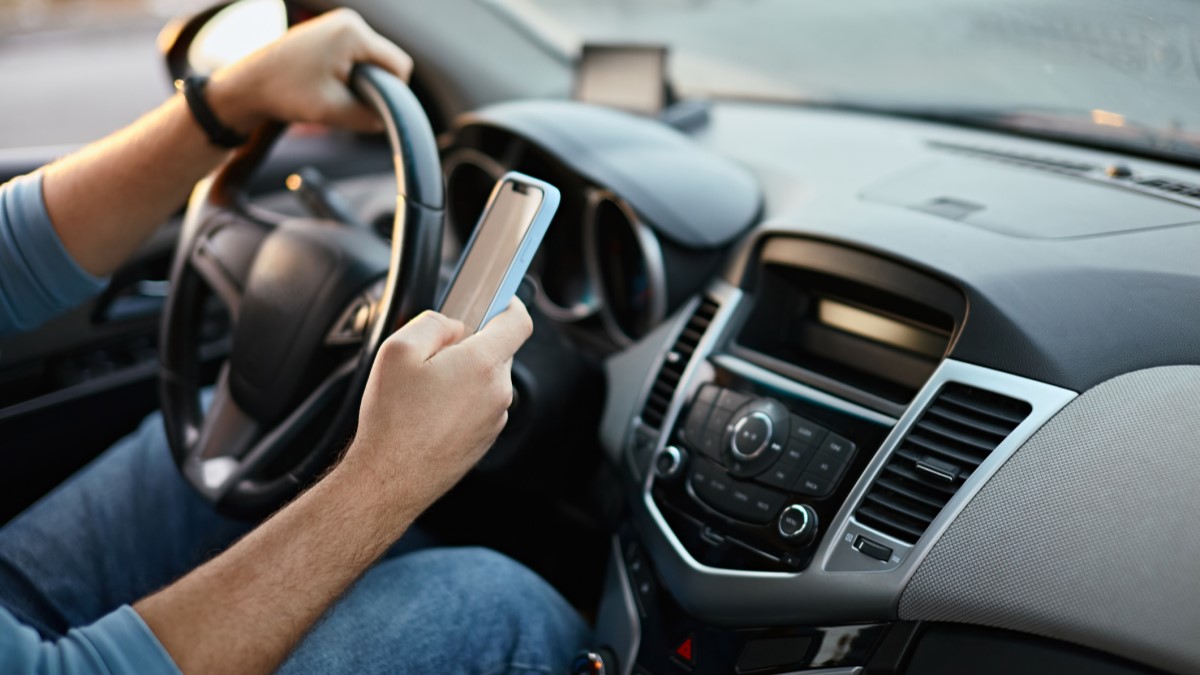
- Drivers use their cellphones more while they’re speeding, according to a new study by the IIHS.
- Speeding and cellphone use occurred most often on roads with higher speed limits, such as highways.
- Both dangerous driving behaviors increase the risks of a crash.
You’ve seen it before. A car on the highway driving erratically, ping-ponging between the lane markers, slowing traffic, then accelerating abruptly. Such vexing and dangerous driving behavior at high speeds could be attributable to the tendency for drivers to use their phone more often while speeding, according to a new study released this week from the Insurance Institute for Highway Safety (IIHS).
“Until now, safety experts believed drivers used their cellphones most at slower speeds,” IIHS President David Harkey said in a statement. “But data from insurance companies’ safe-driving apps show that, in free-flowing traffic, the opposite is true.”
The study examined 600,000 trips over the course of four months in 2024 throughout select regions of the U.S. The data was compiled from the telematics systems, or “safe-driving apps” used by many auto insurance companies to pass on insurance savings to safe drivers. The data found that drivers were more likely to handle their phone on limited-access highways with higher average speed limits. Moreover, speeding drivers were more likely to be handling their phone while speeding on these roads.
For every 5 mph over the speed limit on such freeways, the speeding driver spent 12% more time handling their phone, the study found. On roads with a 70 mph speed limit, there was a 9% increase in phone usage for every 5 mph over the speed limit versus that on roads with a 55 mph speed limit. On other roads, such as between towns, every 5 mph over the speed limit resulted in a 3% increase in phone handling.
The study excluded time spent using the phone while stopped at a light or a railroad crossing.
The telematics system employed by Cambridge Mobile Telematics (CMT) use a beacon in the car that pairs with a user’s cellphone. To determine if a driver was using their phone, CMT measures the phone’s gyroscope while the screen is unlocked.
‘Alarming’ Results
The IIHS called the results “alarming,” since both speeding and distracted driving are the top causes of crashes in the U.S.
“Speeding and distracted driving together are especially dangerous,” Harkey said. “This research shows the risk is greater than we once thought, but it also points to an opportunity to address both problems at the same time.”
The IIHS suggests law enforcement target both behaviors simultaneously.
The phenomenon could be explained by three key reasons. Speeders are more likely to be risk-takers, and risk-takers in general might be more likely to use their phones while driving. Secondly, speeders might be harried, stressed drivers, rushing to get to and fro. Other research showed that “phone use spikes during rush hour and school drop-off, and those same situations may also lead people to speed,” according to the IIHS.
The third reason stems from the nature of the roadway. Higher speed roads typically lack stoplights, stop signs, roundabouts, pedestrians, cyclists, and other slower road users.
A reason unstated in the study but promoted by the IIHS is the proliferation of driver-assist systems that make many drivers complacent or reliant on technology such as lane-keeping assist or automatic emergency braking to keep drivers alert. The efficacy of these systems influence the IIHS’ Top Safety Pick safety ratings that are coveted by the automotive industry.