
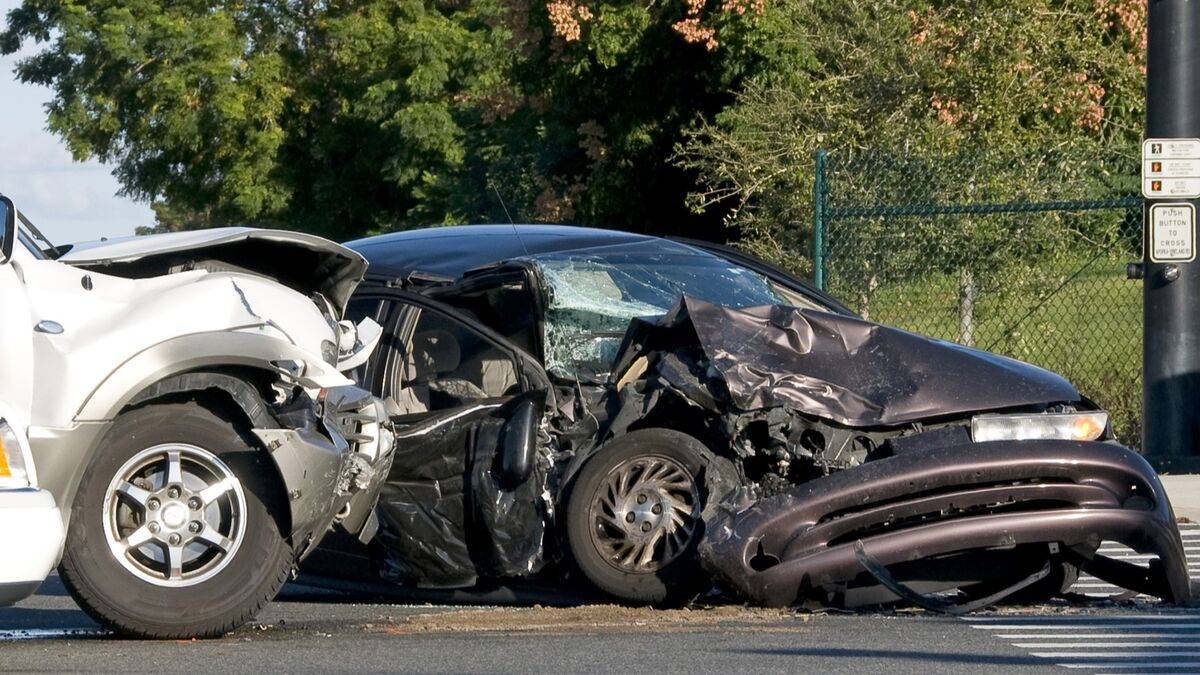
- Small cars have the highest death rate, according to a triennial report from the Insurance Institute for Highway Safety.
- Luxury SUVs have the lowest driver death rate.
- Large SUVs and trucks cause the most driver deaths in vehicle crashes.
Size matters, especially when it comes to vehicle safety. Small cars and sports cars have the highest death rates, according to a triennial report issued today from the Insurance Institute for Highway Safety (IIHS).
At the same time, taller, heavier SUVs and trucks cause the most deaths for other drivers, the institute found. That also applies to the spike in pedestrian deaths, based on a separate report from The New York Times last month.
Luxury SUVs in particular have the lowest rate of driver deaths, but SUVs as a whole have a lower-than-average driver death rate, the extensive IIHS study found.
How such vehicle types are driven and by whom factors into crash statistics as much as vehicle mass, however.
“Size and power matter, as do vehicle crashworthiness and effective crash avoidance systems,” IIHS President David Harkey said in a news release. “But these results are also a reminder that a big part of how safe you are behind the wheel depends on how safely you drive.”
How Driver Death Rates Are Measured
Since 1989, the IIHS has issued a report every three years to assess driver death rates for models with at least 1 million registration years. This year’s study focused on vehicular fatalities that occurred between 2021 and 2024, based on vehicles between the 2020 and 2023 model years. If the vehicle was redesigned in that period, then the IIHS used data from the most recent model year.
A model had to have at least 100,000 registered vehicle years of exposure between 2021 and 2024, which explains why you won’t see low-volume vehicles like a Rolls-Royce Cullinan or Mazda MX-5 Miata on the lists.
This year marks the second time the IIHS calculated the “other-driver death rate,” which is the number of drivers killed in other vehicles with the listed model. In short, these are the vehicles most dangerous to other drivers. Heavy-duty trucks topped this list, likely because of their imposing vertical design and their mass.
The average driver death rate was 37 drivers per million registration years. Several SUVs, including 3-row models such as the Audi Q7, BMW X7, and Chevrolet Tahoe, had zero driver deaths, according to IIHS. Moreover, 18 of the 20 models with the lowest death rates were SUVs. On the other hand, the subcompact Kia Rio (discontinued in 2023) topped the deadliest list with 170 driver deaths per million registered years.
The average “other-driver death” rate was 53, which is more than 40% higher than the average driver death rate. The IIHS attributes this to the relative age of the other vehicles hit in a crash.
Muscle cars such as the Chevrolet Camaro and Dodge Charger were among the models with the highest death rates and the highest other-driver death rate.
Beyond the Death Rate Numbers
It’s important to note that size alone does not determine crash death rates. In the case of sports cars and muscle cars, those drivers of high horsepower vehicles tend to be more aggressive drivers with riskier driving habits.
Conversely, the luxury SUVs that had zero deaths typically have older, safer drivers behind the wheel. Those vehicles often come with more driver-assist safety features as well. Newer and inexperienced drivers typically buy cheaper, smaller budget cars.
The IIHS noted that “men are involved in more crashes than women and older drivers are more likely to be killed in a given crash than young ones.”
The data seem to conclude that how you drive is as important, if not more so, than what you drive.
Nonetheless, certain vehicle types carry higher risks.
Top 10 Deadliest Cars
Deaths per million registered vehicle years, 2023 and equivalent earlier models, 2021-24
| Vehicle name | Vehicle type | Death rate |
|---|---|---|
| Kia Rio | Minicar | 170 |
| Nissan Versa | Small car | 164 |
| Chrysler 300 2WD | Large car | 132 |
| Dodge Charger HEMI 2WD | Large car | 127 |
| Dodge Challenger 2WD | Large car | 125 |
| Kia Forte | Small car | 120 |
| Chevrolet Malibu | Midsize car | 116 |
| Hyundai Venue | Small SUV | 113 |
| Nissan Altima | Midsize car | 105 |
| Nissan Maxima | Midsize car | 105 |
Top 10 Least Deadliest Cars
Deaths per million registered vehicle years, 2023 and equivalent earlier models, 2021-24
| Vehicle name | Vehicle type | Death rate |
|---|---|---|
| Audi Q7 4WD | Large luxury SUV | 0 |
| BMW X7 4WD | Large luxury SUV | 0 |
| Chevrolet Tahoe 4WD | Large SUV | 0 |
| Mercedes-Benz GLB-Class 4WD | Small luxury SUV | 0 |
| Mercedes-Benz GLE-Class 2WD | Midsize luxury SUV | 0 |
| Toyota Tundra CrewMax 4WD | Large pickup | 0 |
| Porsche Macan 4WD | Midsize luxury SUV | 4 |
| BMW X5 4WD | Midsize luxury SUV | 5 |
| Toyota RAV4 Prime 4WD | Small SUV | 5 |
| Volkswagen Atlas 2WD | Midsize SUV | 5 |
Top 10 Deadliest Cars for Other Vehicles
Deaths per million registered vehicle years, 2023 and equivalent earlier models, 2021-24
| Vehicle name | Vehicle type | Death rate |
|---|---|---|
| Ram 3500 crew cab long bed 4WD | Very large pickup | 204 |
| Dodge Charger HEMI 2WD | Large car | 161 |
| Dodge Charger 2WD | Large car | 136 |
| Chevrolet Silverado 3500 crew cab 4WD | Very large pickup | 126 |
| Ram 1500 Classic crew cab short bed 4WD | Large pickup | 124 |
| Ram 1500 Quad 2WD | Large pickup | 113 |
| Ram 2500 crew cab short bed 4WD | Very large pickup | 113 |
| Chevrolet Silverado 2500 crew cab 4WD | Very large pickup | 111 |
| Ram 2500 crew cab long bed 4WD | Very large pickup | 102 |
| Cadillac XT5 2WD | Midsize luxury SUV | 100 |