

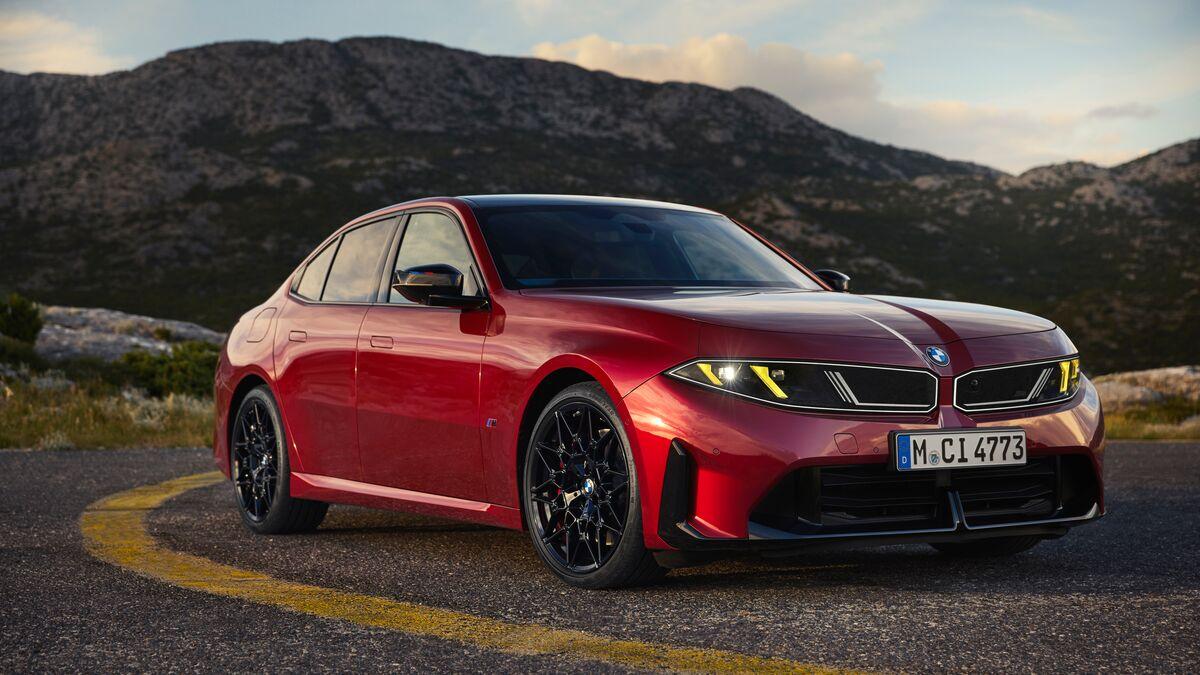
- 2027 BMW M350 uses a 437-horsepower inline-6 to top the performance end of the line.
- The i3 50 xDrive electric variant has an estimated range of up to 468 miles.
- Pricing starts at $51,250 and climbs to $67,250, with destination fees.
BMW has pulled the covers off the redesigned 2027 3 Series and, in so doing, showed off the next era of EVs with the second iteration of the i3.
In a marked turnaround from the globular hatchback that ushered in BMW’s electric era back in 2013, the new i3 is nearly indistinguishable from the redesigned 3 Series, which is the brand’s global bestseller.
The new i3 is mostly a powertrain choice at this point, albeit one with up to 468 miles of range and a zero-to-60-mph time of 4.5 seconds.
Not to be outdone, the eighth-generation 3 Series arrives alongside the i3 early in 2027 with a potent 437-horsepower M350 variant powered by a renowned turbocharged inline-6 engine.
Gas wins on the sprint to 60 mph, with the 2027 M350 xDrive clocked at 3.9 seconds.
The redesigned 3 Series follows the 2027 BMW X5 and iX5 as well as the X3 and iX3 SUVs in embracing the brand’s Neue Klasse design language and multi-energy powertrain systems based on electrification.
In essence, BMW no longer expects customers to have to choose between two distinct models when shopping for a luxury compact sedan. You only need to choose your preferred source of propulsion.
“Each generation of the BMW 3 Series has been the definitive car of its time,” Jochen Goller, Member of the Board of Management of BMW AG, Customer, Brands, Sales, said in a statement. “The new BMW 3 Series continues this tradition with a technological leap forward into a new era, a single design spanning all drive system variants.”
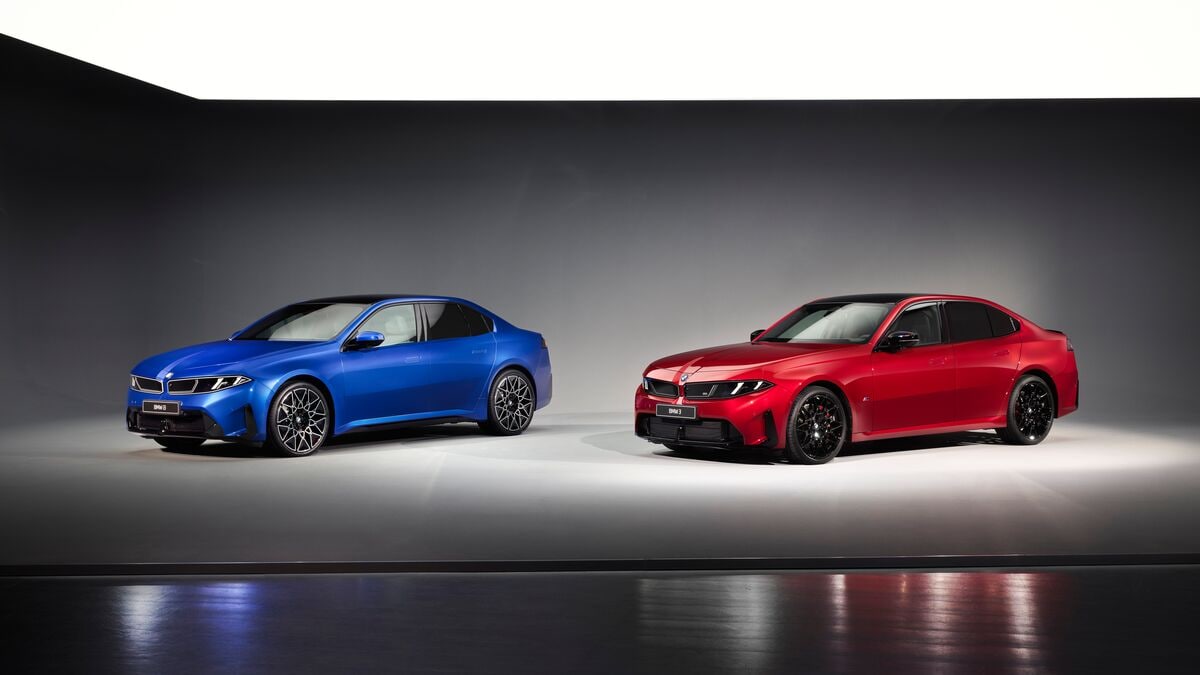
2027 BMW 3 Series and i3 Design
Strip away the different wheel and color choices, and erase the badging, and the two sedans appear related. The new 3 Series is 1.3 inches longer, a half-inch taller yet a half-inch narrower than its predecessor. At 112.6 inches, the wheelbase gains 0.4 inch. That should make it roomier inside, though rear-seat specs weren’t finalized at press time. The 3 Series retains that iconic rear-drive profile with a long nose and a short rear overhang. Its total length is 187.2 inches, up from 185.9 of the 2026 model.
The i3 appears slightly beefier. It’s only a tad longer (187.4 inches) but has a wheelbase of 114.1 inches, which should provide a more open cabin than the gas-powered 3. It’s nearly an inch wider than the 2027 3 Series, and it’s an inch taller, yet at 5.5 inches, it’s closer to the ground (5.8 inches in the standard 3 Series).
At the front, a muted kidney grille once again stretches horizontally to the corners and incorporates sharp LED light bands. It is an about-face from the garish iron butterfly on the i4 and a welcome return to form, though some enthusiasts might beg for quad circular headlights.
A sculpted hood that seems to bulge outward from the BMW roundel marks the straight character lines that run down the sides under familiar icons such as the Hofmeister kink in the rear windows. Flush door handles that protrude on walk-up give away some of its electric origins.
The interior reveals much more, highlighted by an angled 17.9-inch touchscreen and a recessed digital instrument cluster that curves around the base of the windshield from door to door. BMW calls it Panoramic Vision, and it’s intended to keep your eyes up near the road to avoid distraction. Wireless Apple CarPlay and Android Auto are standard.
The siblings are more fraternal than identical. The i3 will be made in Munich, Germany, alongside other EVs, while the new 3 Series returns to Dingolfing, alongside combustion variants of the 5 Series and 7 Series.
2027 BMW 3 Series Engine Options
To start the year, the 3 Series will be offered in three grades: the 330 rear-wheel drive (RWD); the 330 xDrive (AWD); and the M350 xDrive.
The 330 models use a turbocharged 2.0-liter 4-cylinder engine rated at 255 hp and 295 lb-ft of torque. It’s paired with an 8-speed automatic transmission and hits 60 mph in 5.9 seconds, down from 5.6 seconds in the 2026 330, which is also nearly 200 pounds lighter (3,644 versus 3,827 pounds).
The turbocharged engine has been made new with modified intake and exhaust valving that promise to improve efficiency, but BMW has not finalized the estimated mpg.
Both 4- and 6-cylinder engines are supported by 48-volt mild-hybrid technology that operates as a starter generator to boost power off the line and let the 3 coast in quiet. But in the new M350 powertrain, it’s mounted at the crankshaft within the transmission, which promises to make it more responsive under heavier acceleration.
A new twin-scroll turbocharger (not a twin turbo) on the M350 boosts output to 437 hp from 386 hp on the 2026 BMW M340i xDrive, which boosts the zero-to-60-mph time from 4.1 to 3.9 seconds.
AWD is standard, and when equipped with optional sport tires, the top speed is limited to 155 mph (it’s electronically limited to 130 mph in either model without summer tires).
BMW says that the new 3 has an upgraded body structure with an integrated hardware and software system to manage vehicle dynamics. The wider front and rear tracks and longer wheelbase promise to keep the vehicle more planted, and the revised independent suspension with stiffer mounts promises to offset the weight gain. An adaptive suspension is optional.
Wheel sizes range from 19 to 20 inches, and they come with staggered tire sizes, with 245 millimeters (mm) up front and 255 mm at the back. Optional 20-inch tires wrapped in 275-mm tires enhance the upgrade package.
The M350 comes standard with an adaptive suspension, variable sport steering, an electronically limited rear-slip differential, and sport brakes. It also has a standard integrated rear spoiler and reinforced front struts for more lateral and vertical rigidity. It’ll be a firmer ride while cruising, and a more planted one while carving.

2027 BMW i3 Performance and Charging
The i3 50 xDrive employs two motors, one powering each axle for standard AWD. The larger motor at the rear is the main drive unit, but combined the two motors are rated at 463 hp and 476 lb-ft of torque.
BMW quoted a range of 446 to 468 miles, which even at the low end would be exceptional for an AWD EV.
Like other Neue Klasse (noy-uh klah-suh) EVs, the i3 uses an 800-volt architecture that enables rapid DC charging. Pumping out electrons at a rate of 400 kW, which is nearly impossible to find in the U.S. right now, the i3 would add up to 208 miles of range in 10 minutes in optimal charging scenarios.
BMW says the 108.7-kwh battery pack can double as an energy-storage device with available bidirectional charging.
AC charging maxes out at 15.4 kW.
Performance enthusiasts might be concerned by the power-to-weight ratio in a vehicle designed to fit a battery pack and a motor at each axle. At 4,960 pounds, the i3 50 is nearly 800 pounds heavier than the M350 xDrive (4,169 pounds).
Expect more performance to be wrought from the i3; an i3 M60 will arrive in North America later in 2027.
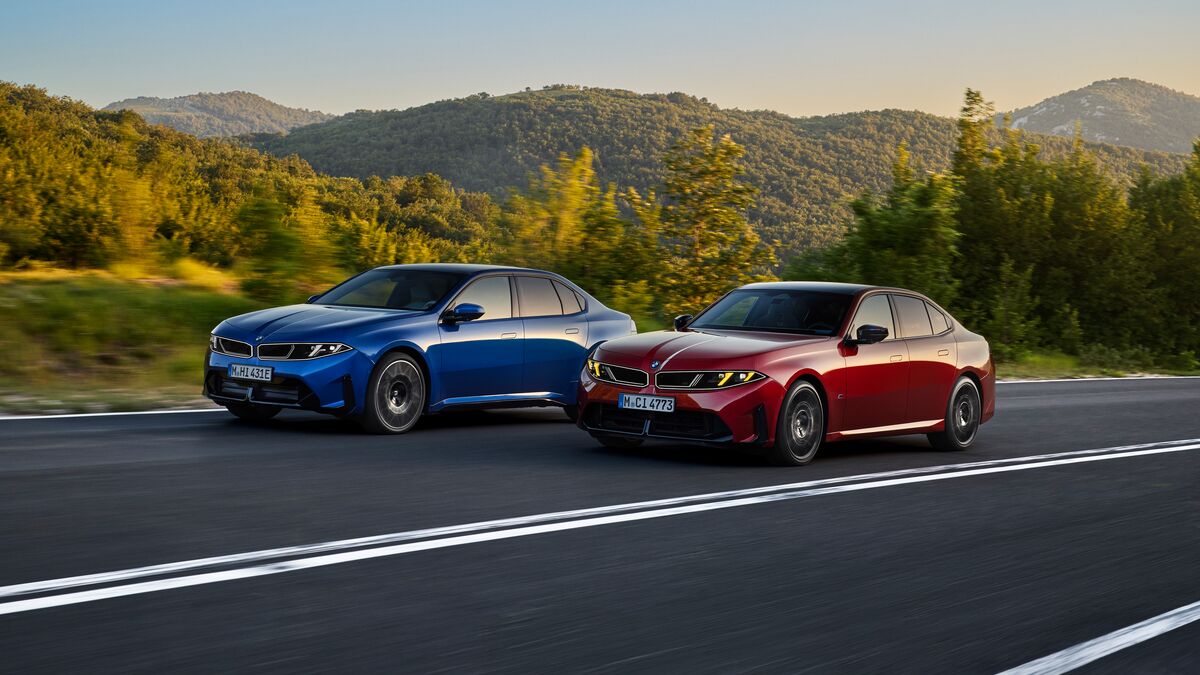
2027 BMW 3 Series and i3 Pricing
All four models go on sale in the first quarter of 2027. The 2027 M350 tops the list at $67,250, with destination fee. The i3 50 xDrive costs $62,850, while the base 2027 BMW 330 costs $1,950 more than the 2026 3 Series at $51,250.
| Model | Price (including $1,350 destination fee) |
| 2027 BMW 330 | $51,250 |
| 2027 BMW 330 xDrive | $53,250 |
| 2027 BMW i3 50 xDrive | $62,850 |
| 2027 BMW M350 xDrive | $67,250 |