
- Fifth-generation BMW X5 offers multiple powertrain variants, including a BMW-first all-electric iX5.
- The iX5 shares much with the iX3, and has an estimated 435-mile range.
- The redesigned X5 40 xDrive goes on sale this October for $73,550; the iX5 follows early in 2027 for $81,250.
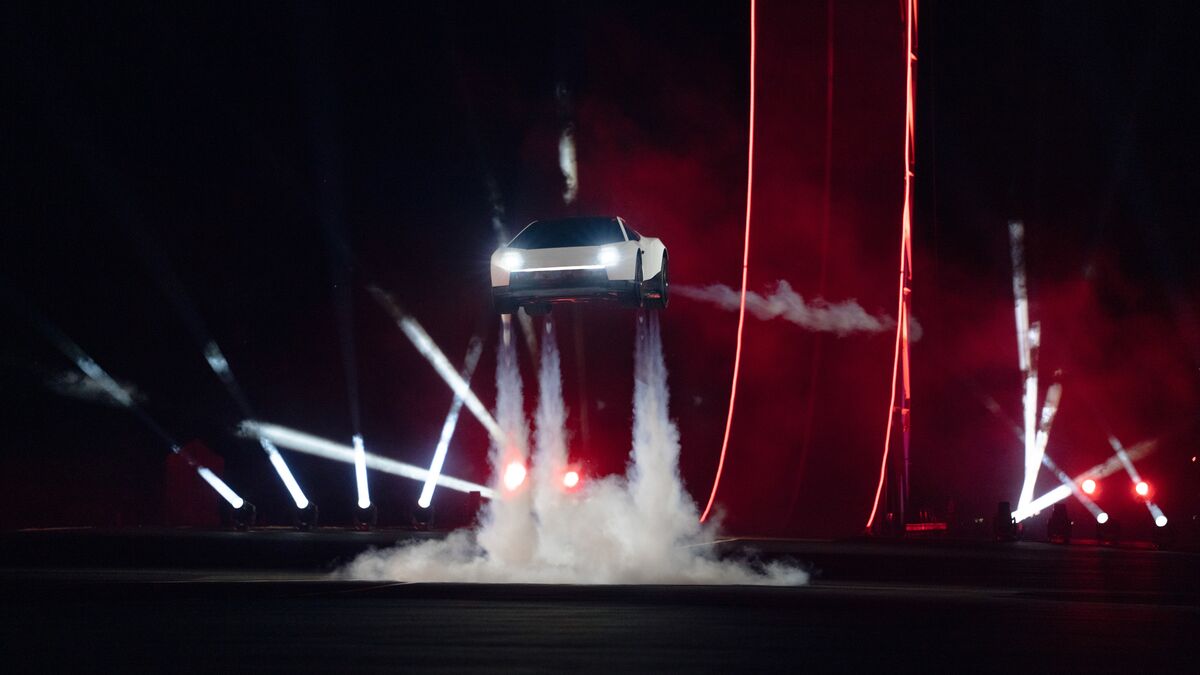
BMW unveiled the redesigned X5 midsize SUV and its all-new electric variant, the iX5, in Spartanburg, South Carolina, today. The fifth generation of BMW’s best-selling SUV leans into its numeric designation, with five powertrain options offered globally. That includes the new iX5 and its 435-mile range, as well as a plug-in hybrid (PHEV), a diesel, and a hydrogen fuel-cell EV.
For now, the North American market will get gas, electric, and PHEV models, as well as a forthcoming V8-powered M performance variant later in 2027. Aside from subtle styling differences, all variants will share the same body and interior. Spartanburg, which manufactures all of BMW’s SUVs from the X3 through the X7, will ship all X5 variants to global markets, starting in October with the 2027 X5 40 xDrive.
| Variant | Price (including $1,450 destination fee) | Availability |
| 2027 BMW X5 40 (RWD) | $71,250 | Early 2027 |
| 2027 BMW X5 40 xDrive | $73,550 | October |
| 2027 BMW X5 50e xDrive (PHEV) | $78,950 | First quarter 2027 |
| 2027 BMW iX5 60 xDrive (EV) | $81,250 | First quarter 2027 |
| BMW X5 M line | TBA | Later in 2027 |
Sculpted Exterior
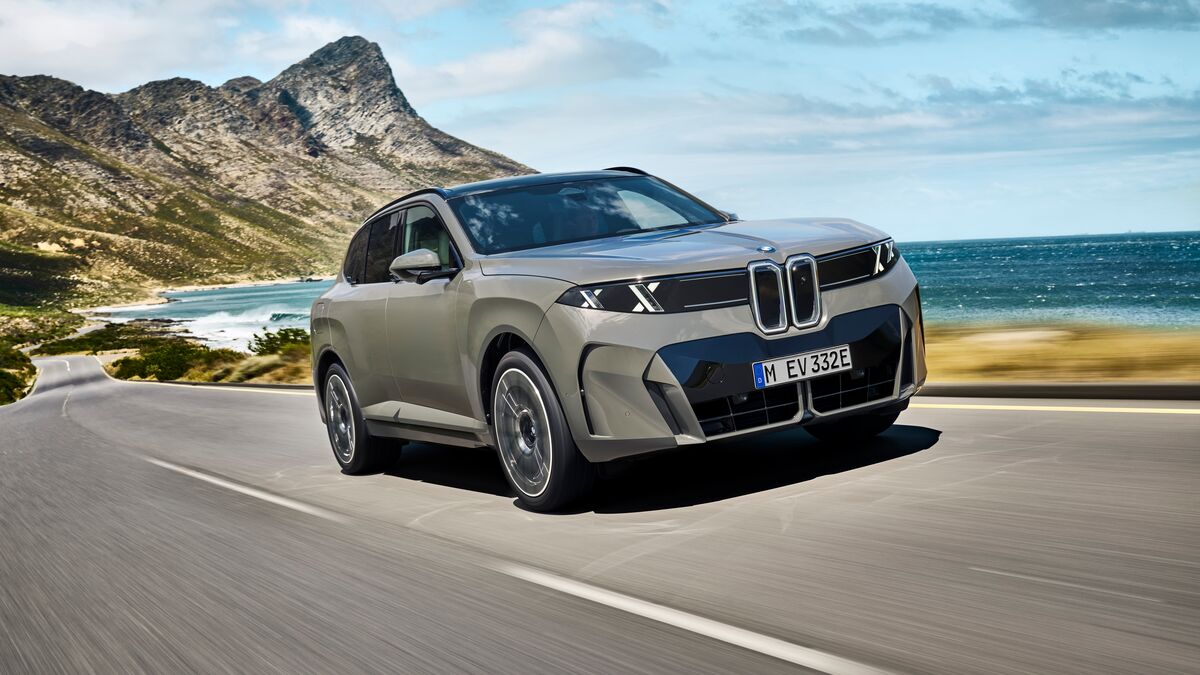
It will be hard to tell the powertrain differences from the outside, except for subtle tweaks to the front. And the lack of tailpipes at the rear for the iX5. The long nose sports a sculpted hood that tapers into a V-shape at the BMW roundel. The more vertical face features LED headlights, daytime running lights, and indicators integrated into a single housing, punctuated with twin X-shaped lighting icons. The lights extend like wings from the illuminated kidney grille, which is slimmer and taller, and more subtle than recent iterations of BMW’s iconic design face.
The lower grille varies based on powertrain type, with the X5 getting side air intakes that are solid on the iX5. Both models have open lower grilles for cooling. The single light housing and smooth body sides embody the uninterrupted design language of BMW’s Neue Klasse that debuted last year with the BMW iX3.
Muscular fender arches kick out to the rear and house staggered tire sizes on both the X5 and iX5. Wheel sizes range from a standard 21-inch setup to 23 inches, which is a first for the X5. The rear tires are wider for a greater contact patch. That’s good for performance, but not so good for efficiency.
Of course you’ll still find the Hofmeister kink tucking in the rear windows, but what you won’t see are traditional door handles. Instead of retractable handles, BMW smoothes the aerodynamics of its broad-shouldered X5 by employing winglets, or little flanges where window meets door, not unlike the Ford Mustang Mach-E. But you won’t even have to pull these; press your palm against it and it automatically opens, enhanced by all the welcome lighting that’s come to define the luxury space.

Inside the New X5
Those automatic powered doors take a page from Rolls-Royce, but they’re standard across the X5 line. Emergency mechanical handles hide under the armrests of each door, just in case. Otherwise, they can be controlled through the 17.9-inch touchscreen that still has the shape of a slanted parallelogram but is no longer married to the digital instrument cluster.
That has set off on its own as BMW Panoramic iDrive, which curves along where the front windshield meets the dash. It’s not as tall as a similar display found in the Lincoln Nautilus and Navigator, but the graphics are crisp and you can use the touchscreen to drag and drop up to six widgets to display vehicle info. A Silent mode dims all but the section beyond the squircle steering wheel, to isolate speed, range, and other key info.
Climate control buttons migrate to the touchscreen, and an available 14.6-inch passenger screen enables all the streaming all the time, or at least for four years before it shifts to a subscription basis.
The overall effect mirrors the outside, with a smooth, uncluttered layout, though with more rectangular cuts. It lets BMW showcase its new Slate surface, which has the granularity of wood trim but with a cool, gray, rock-like feel. The display model we saw also had Merino leather upholstery with padded headrests and suede-like Alcantara dash and door materials. The soft and hard surfaces, the contrast of cool and warm, entices the hands.
The fifth-gen X5 is larger, but at press time BMW only shared that the wheelbase stretched out 2.4 inches longer than its predecessor. The interior is roomier, with nearly three inches more second row legroom, but BMW won’t be offering a third row in this X5. A third row is exclusively for the terrain of the larger X7.
A split power tailgate is no longer offered.
2027 BMW iX5 Powertrain and Range
The iX5 is not only larger than the iX3, it’s also quicker and more powerful, and has a larger battery pack. Mechanically, the dual-motor all-wheel-drive setup is similar. The rear motor is the main drive motor, and it differs from the permanent magnet synchronous motors (PMSM) used by Tesla, Hyundai, Kia, and others. BMW’s electrically excited synchronous motor (EESM) at the rear uses copper coils instead of magnets for its rotational force, and it doesn’t rely on the rare-earth materials needed for magnets. They’re somewhat cheaper and safer, but typically not as efficient.
To counter efficiency concerns, BMW employs an asynchronous motor (ASM) at the front. It’s more compact and together, more efficient since it shuts off under no load so the rear axle alone can power the iX5.
There’s much more to it but what this all adds up to is the most potent version of the 2027 X5 range, for now: The two motors generate 570 horsepower (hp) and 593 lb-ft of torque. BMW quotes a 0-to-60-mph time of 4.4 seconds.
BMW also split from its own convention with its battery pack construction. Like the iX3 but unlike prior BMW battery design, the large battery pack uses cylindrical cells with greater energy density and easier cooling than the prismatic cells that filled the packs of past BMW EVs.
The iX5’s pack is larger because the cells are taller, rated at 144 kWh of usable capacity versus 112.2 kWh in the iX3. The bigger pack makes up for the extra size, presumably, because the range is nearly the same at an estimated 435 miles.
The 800-volt architecture enables DC fast charging from 10% to 80% in 22 minutes, but that’s at a rate of 460 kW, which would be exceptionally hard to find in the U.S. right now. It comes with a North American Charging Standard (NACS) port, but the latest iterations of Tesla’s Supercharger network don’t pump out that much juice.
At home on a Level 2 charge, the iX5 can charge at up to 15.4 kW. BMW did not provide a charging time estimate, but the iX5 will have bidirectional charging to power other devices or appliances from the SUV.
The 2027 BMW iX5 arrives in the first quarter of 2027 with a starting price of $81,250, including the $1,450 destination fee. That’s $7,700 more than the 2027 X5 40 xDrive.
2027 BMW X5 40 xDrive Specs
The X5 carries a revised turbocharged 3.0-liter inline 6-cylinder engine under its sculpted hood. The new turbocharger boosts the B58 engine’s output to 394 hp and 428 lb-ft of torque, which are increases of 19 hp and 45 lb-ft. That shaves a tenth of a second off its sprint to 60 mph, to 5.1 seconds.
It has a 48-volt mild-hybrid system with a starter generator motor integrated into the 8-speed automatic transmission. Full specs have not been released, but it seems unlikely that it will match the 25 mpg combined of the 2026 X5 xDrive40i.
The X5 40 xDrive arrives first, this October, priced at $73,550. If you want to wait for the cheapest X5, hold off for the rear-wheel-drive (RWD) variant arriving early in 2027.
The $78,950 BMW X5 50e xDrive (PHEV) is expected to arrive at the same time, followed later in the year by an M-lite V8 version of the X5. Expect more details on those models later this year.
An adaptive suspension comes standard across the X5 line, and BMW boasts a near 50:50 weight distribution that should offset the size of the new X5. A two-axle air suspension is optional for even greater variance in ride height and ride quality.
The iX5 EV and 50e xDrive PHEV can be had with an optional motorized anti-sway bar at each axle. It promises to offset body roll in corners and lighten the heavier feet of the electrified versions of the X5. It’ll also make for a softer, comfier, highway cruise. There’s much, much more, but we’ll hold off for now and report back after we drive the many variants of the fifth-gen BMW X5.