

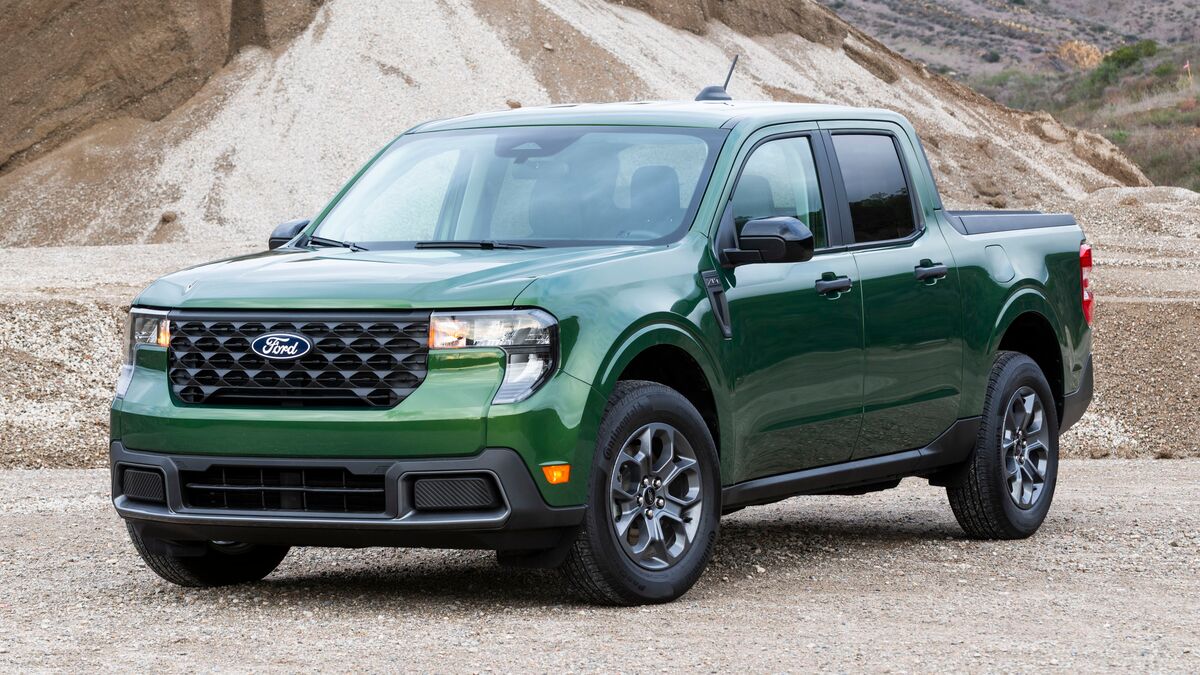
- Porsche and Ford buyers experience the fewest problems with their new cars, according to J.D. Power’s annual Initial Quality Study.
- Industry-wide quality improved dramatically from last year’s results.
Porsche and Ford make the cars with the fewest problems right out of the box, according to a new study.
J.D. Power’s Initial Quality Study asks drivers to cite the problems they experience in the first 90 days of owning a new car. It’s less useful in your shopping process than the company’s dependability study, which looks at three years of data.
But it can help car shoppers spot early trends, and this year, there are two notable ones. The quality of most new cars has improved. And Ford, plagued with quality problems so severe that last year it nearly doubled the previous record for recalls, may be turning a corner.
Overall Quality Improving
- The average car shows better initial quality this year than last
Last year, the study revealed an average of 192 problems in the first 90 days. This year, the industry average was just 175. J.D. Power researchers called it “the fourth-best performance in the 40-year history” of the study.
Luxury brands typically perform poorly in the study because of simple math: Their vehicles have more features, so owners are more likely to encounter a confusing or broken one. This year, however, luxury brands outperformed mainstream brands, with just 169 problems per 100 vehicles, compared with 177 for more affordable cars.
Touchscreens Continue to Prompt Complaints
- Automakers keep eliminating buttons in favor of touchscreens, which can introduce problems.
- Some features prompt complaints even when they work as advertised simply because they’re confusing.
The rise of touchscreen technology has changed automotive design, and not always for the better.
Buttons are disappearing. That’s troubling enough that European law now mandates buttons for some essential functions.
Meanwhile, drivers find touchscreens frustrating and error-prone.
Researchers examine 10 categories of features. Nine improved in 2026. Infotainment systems alone scored worse this year than last. Phone projection systems like Apple CarPlay and Android Auto, which mirror your phone’s screen on a car’s touchscreen, were “the largest single contributor to the year-over-year decline in infotainment quality.”
Screens also lead to distraction. “Among owners who detailed a distracted driving-related problem with their vehicle, 46% said the source of the distraction was from the infotainment or touchscreen, while 18% were distracted by driver assistance alerts,” the researchers wrote.
Cupholders, a source of many complaints last year, were actually the biggest single contributor to this year’s quality improvement. J.D. Power credited better placement and a greater ability to hold cups and water bottles of different sizes. The study also found significant improvements in driver-assistance alerts, EV range, road noise, and body panel fit and finish.
The Rankings:
| Brand | Problems Per 100 Vehicles |
| Porsche | 138 |
| Genesis | 151 |
| Ford | 152 |
| Lexus | 156 |
| Nissan | 156 |
| Buick | 162 |
| Hyundai | 165 |
| Subaru | 170 |
| Chevrolet | 171 |
| Land Rover | 173 |
| Kia | 175 |
| Study Average | 175 |
| BMW | 178 |
| Honda | 179 |
| Lincoln | 179 |
| Toyota | 181 |
| Mercedes-Benz | 182 |
| GMC | 183 |
| Mini | 183 |
| Acura | 18 |
| Mazda | 210 |
| Volvo | 221 |
| Ram | 222 |
| Audi | 225 |
| Cadillac | 229 |
| Volkswagen | 233 |
| Infiniti | 235 |
| *Jaguar | 146 |
| *Tesla | 149 |
| *Dodge | 168 |
| *Mitsubishi | 183 |
| *Chrysler | 229 |
| *Rivian | 246 |
*The study did not rank these brands. This year, J.D. Power explained only that each brand “does not meet study award criteria.” In past years, researchers have said the companies “do not grant J.D. Power permission to survey its owners in states where authorization is required. Nonetheless, a score was calculated based on a sample of surveys from owners in the other states.”