

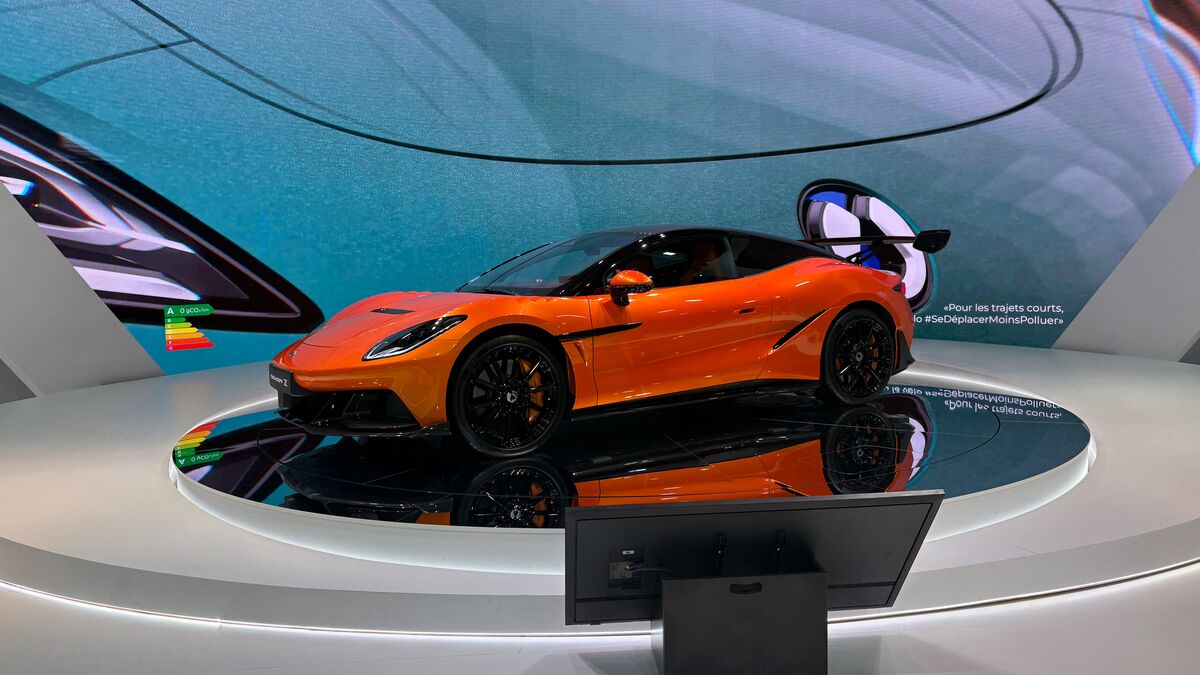
- Chinese automakers put on a dramatic show at the biennial Paris Motor Show, demonstrating how quickly they can ascend in the market.
- American automakers and policymakers are concerned and debating ways to keep China’s growing dominance from the U.S. market.
At Europe’s largest auto show, the Europeans look nearly subordinate. China’s automakers are on the rise.
The 2026 Paris Motor Show illustrated why America’s automakers, and some legislators, are engaged in a push to ensure China’s automakers can’t sell cars in the U.S.
Sixty-three automakers, ranging from the largest in the world to new startups with lineups that are mostly theoretical, displayed vehicles at this year’s show. The largest contingent, unsurprisingly, was made up of traditional European companies, with 27 brands represented.
The second, nearly as large, was China’s delegation. Twenty-three Chinese brands displayed cars at the show, up from just nine the last time the show took place.
The rest of the world combined had just 13, with only Ford, Tesla, and some traditionally American branches of global giant Stellantis representing the U.S.
China now builds, buys, and exports more cars than any other country.
The numbers, as impressive as they are, don’t tell the full story. Walking the show floor, it seemed all the momentum was with China’s brands.
Nostalgia vs. Future Focus
- Traditional European brands leaned on retro design and evoking memories to generate energy.
- Chinese brands showed a focus on future technology.
Automotive executives tend to stick to scripted speeches at big showcase events. But the moment that set the scene in Paris seemed unscripted.
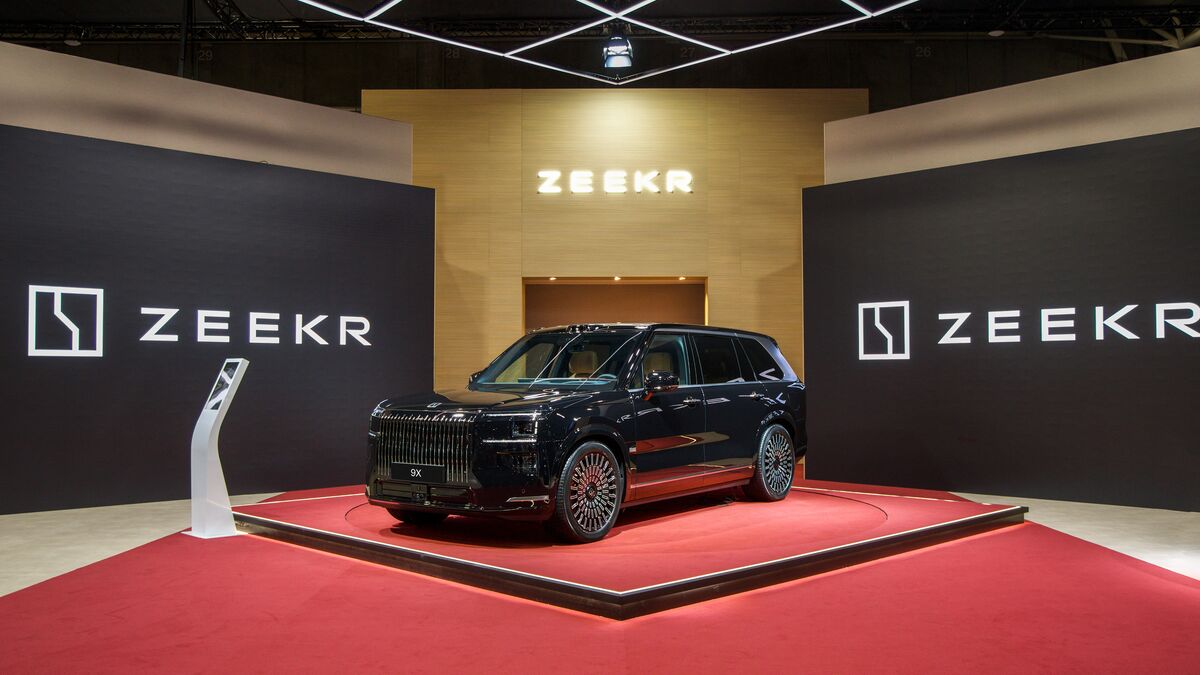
Lothar Schupet, CEO of Zeekr Europe, a subsidiary of China’s Geely, stood in front of his brand’s newest model and looked across the show floor at the Mercedes-Benz display. “One hundred thirty-seven years,” he said softly, referring to the age of Europe’s first automaker. “I have to respect that. Many luxury brands are defined by their history. We have five years. Zeekr has to be defined by its vision of the future.”
Europe’s traditional brands, indeed, leaned on nostalgia to convey a sense of purpose.
Retro Euro Concepts
France’s Citroën caused a stir with a reborn 2CV. Once the iconic French car, the original 2CV helped rebuild France’s auto industry after World War II with its roll-top fabric roof and straked hood. The new version, which looks nearly production-ready, copies those details in an electric vehicle (EV).
Rival Renault unveiled its own retro car. The E-Space Concept updates the classic 1980s Euro minivan as an EV, with a boxy tail that caricatures the original.
French sports car brand Alpine updated its own early 1980s icon, the A310, with a sleek tribute for the EV era.
Alfa Romeo was the lone European brand to cause a stir with a car not tied to an era more than 40 years in the past. Its Cuorerosso Concept echoed the more recent 8C supercar.
China’s Future Tech
China’s brands, as Schupet intimated, don’t have that history to lean on. So they embraced the future with impressive new technologies.
Lynk & Co, a premium, performance-oriented branch of China’s Geely, highlighted its unique feedback system. Owners can tap a button in the car to send the company a message about which features they like, dislike, or want to see.
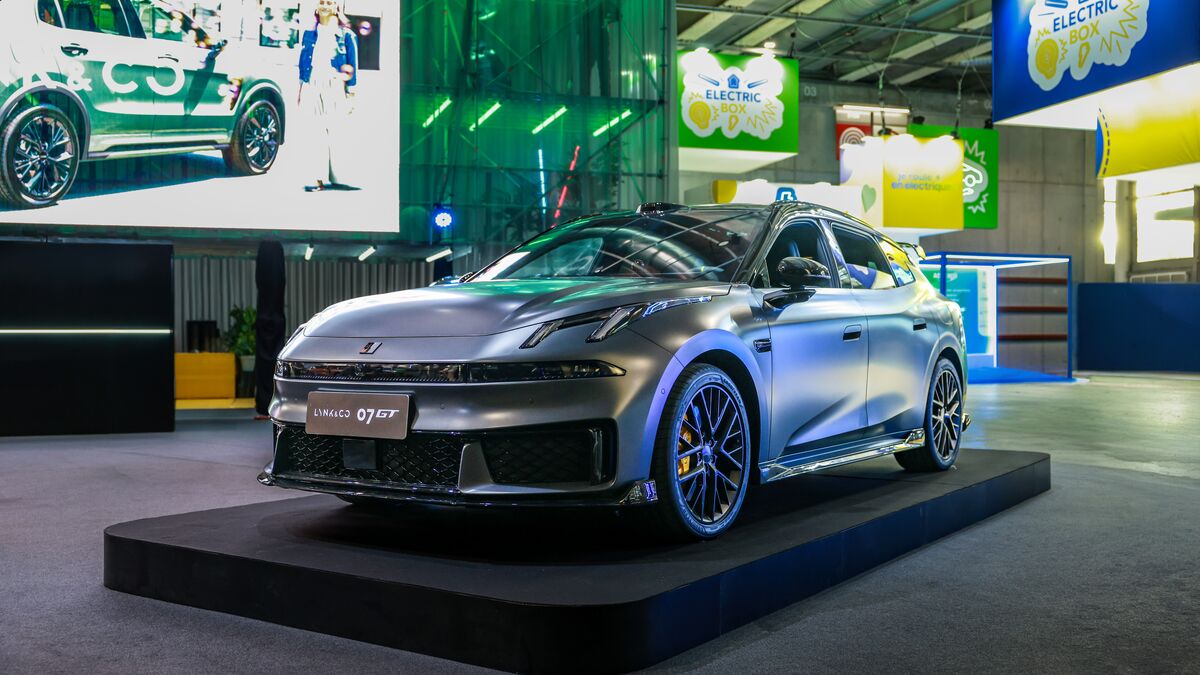
David Green, Lynk & Co vice president of strategy and product, told Kelley Blue Book that the company’s product team meets weekly to sort through customer suggestions and identify ideas they want to embrace. They frequently send out software updates to improve cars based on customer suggestions.
Zeekr showed off its ultra-luxury 9X SUV, with a yacht-inspired design, 4D seats that vibrate with music, and a fold-down theater screen in the ceiling that can slide back and forth to provide the best view to second- or third-row passengers.
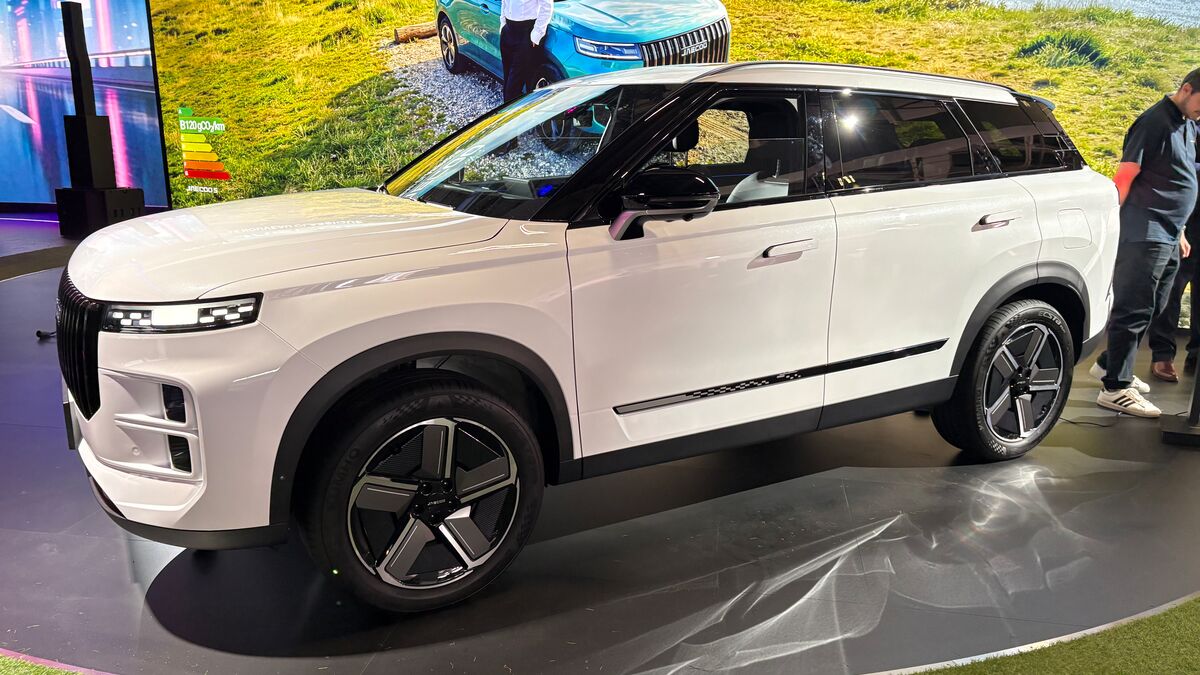
Geely, parent company of both brands, showed off a plug-in hybrid (PHEV) SUV called the Monjaro that looked tailor-made for the American market, and its new Project K011 off-roader — a type of vehicle more traditionally successful in the American market than in Europe.
Denza, a luxury division of Chinese giant BYD, showed off a sumptuously-appointed version of its D9 minivan with perhaps the most comfortable automotive seats I’ve encountered in 25 years as a journalist. Massaging, heated, and cooled, they adjust like a massage chair. Denza’s beautiful new Z supercar, in both coupe and convertible form, appeared alongside ads featuring James Bond actor Daniel Craig.
AVATR, a luxury venture backed by auto giant Changan, and Leapmotor both emphasized self-driving technology, embracing a Mercedes effort to use teal exterior lighting to tell police when a self-driving system is engaged.
Chinese Automaker Jaecoo, however, may have had the most impressive boast. The company brought its J7, a Range Rover-like compact SUV, and noted that, in September, the J7 was the best-selling vehicle in the U.K.
As is normal with auto shows, the companies also brought wild futuristic concepts like Xpeng’s Aridge Land Aircraft Carrier — a quadcopter flying car and the 6-wheeled vehicle that carries it. Other oddities included a multi-level roof tent from Chinese off-road brand 212.
The Status of Chinese Brands in America
- A hodgepodge of efforts keeps Chinese cars from the U.S. now, but there are signs Chinese automakers still hope to enter the market.
Chinese cars are blocked from American markets today by a patchwork of policies. Tariffs of 100% erase the price advantage Chinese brands enjoy in other markets.
A ban on Chinese-derived software, ostensibly for national security reasons, is another barrier. It recently led the Trump administration to block future sales from Polestar, a Geely brand.
But that effort has been inconsistent. Geely also owns Volvo, which won the right to continue selling cars stateside, in a move that confused observers who see little difference between Volvo and Polestar cars.
That may provide a back door for Geely. The company announced at the Paris show that Volvo dealerships will soon be “exclusive distributors” for Lynk & Co products in Europe. It’s not clear whether such an arrangement might allow Geely to sell its other brands badged as Volvo cars in the U.S., and Geely leaders declined to speculate.
Kelley Blue Book’s Eric Brandt, testing a Lynk & Co. vehicle, found “U.S. English” as a language option in the brand’s cars. Executives declined to comment.
A bill currently before Congress would lead to an outright ban on Chinese ownership of automakers selling in America. Its prospects are uncertain, as even President Trump has recently mused that he might allow Chinese companies into the U.S. market if they agreed to build cars in America.
American automakers, through industry organizations that represent their interests, such as the Alliance for Automotive Innovation, have endorsed the legislation.