


When automotive adoption first took off, a family-friendly vehicle simply meant a car with enough seats for parents and kids. If everyone could get from point A to point B, drivers were content with basic reliability. But as cars transformed from luxuries to daily necessities, our expectations shifted dramatically as well. Cars today have evolved into a secondary home for many, complete with safety, entertainment, and connectivity features.
As family priorities changed over the decades, automakers responded through technology changes and design choices. To celebrate Kelley Blue Book’s 100th anniversary, we’re looking back at the innovations that turned the automobile into another member of the family.
Basic Travel and Entertainment (1920s to 1950s)
In the early days of driving, getting to your destination in one piece was a victory. There were hardly any safety regulations for automobiles, nor any safety features built into cars. Automakers prioritized comfort over safety.
Touring cars with open roofs were extremely popular until the 1930s. These open-style cars often had foldable canvas tops rather than fixed metal roofs. During the 1920s, closed-style cars became more affordable, leading to a growth in their popularity. The enclosed cabin protected passengers from the weather, and as roofs became more structural, they also enhanced safety in the event of a rollover.
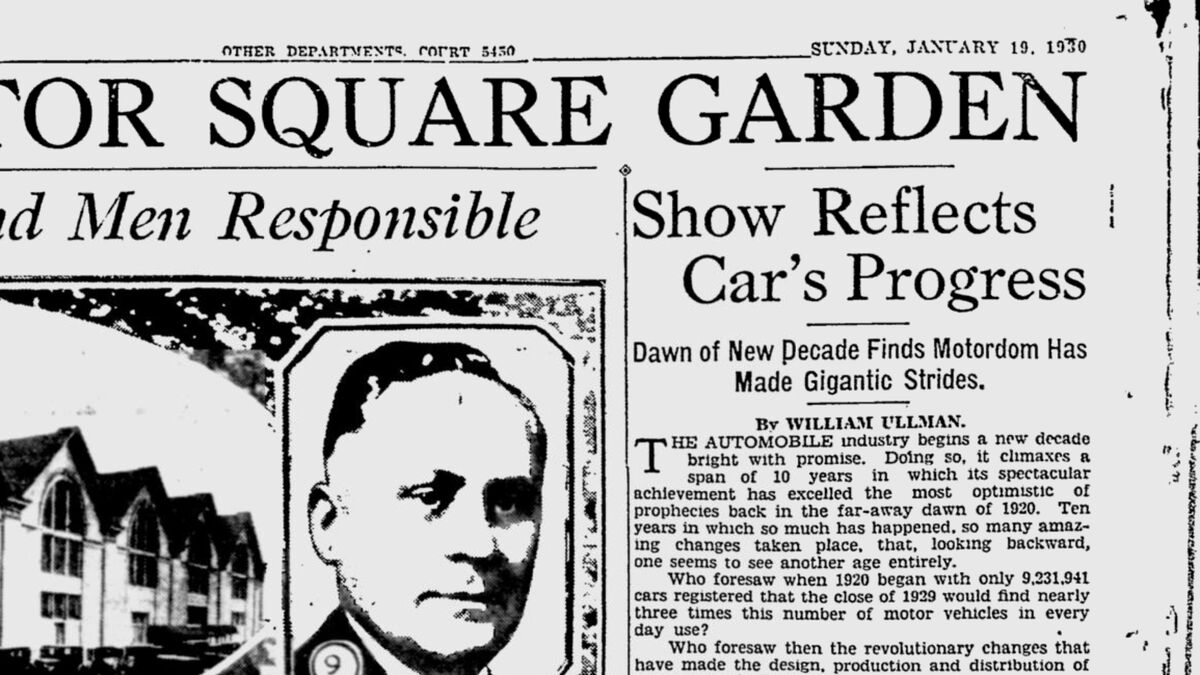
“For the first time in history a closed model, the coach, was sold at a price lower than the five-passenger open car. . . Interest was centered in the development of low-priced closed models in every automobile factory in the country and the rapid decline of the open car was apparent on both sides.” From The Pittsburgh Press, Jan. 19, 1930.
The switch to enclosed cabins meant families could travel year-round without worrying about spring storms or winter snow. While the vehicle’s exterior structure changed, vehicles of this time still kept the standard bench seat. This allowed families to pile into a singular vehicle to ride together.
It was during this time that the first in-car radios became available. The Galvin brothers, founders of Motorola, worked with William P. Lear, who owned a radio parts company, to create a small portable radio that could be installed in automobiles. This radio provided the very first form of family entertainment in cars.
MORE: Top Automotive Innovations of the Past 100 Years — 1920s: Closed Bodies
Safety Awareness and the Early Family Car (1960s to 1970s)
Following the end of World War II, the automobile became a central part of family life. Growing suburbs and expanding highways led to a demand for larger vehicles capable of carrying not just passengers but also groceries, luggage, and other everyday items.
Before SUVS and minivans dominated suburban driveways, the station wagon solved these issues and rose to the top as the preferred family vehicle. With spacious interiors and fold-down seats, these vehicles were perfect for maximizing cargo space to accommodate growing families. Many station wagons of this time also featured a rear-facing third row, which allowed children to look at trailing traffic as parents drove ahead.
Although safety standards were much less stringent than those we have today, there was an increasing concern about occupant protection. In 1959, a Volvo engineer patented the 3-point seat belt, the ancestor of the ones we use in cars today. Lap belt installation was made mandatory in the U.S. in 1968, but it wasn’t until 1974 that 3-point seat belts were required in vehicles. States began enacting seat belt use laws in 1984. Although the public pushed back on mandatory seat belt use, this decision made driving much safer for families. To put it into perspective, the NHSTA found that nearly 50% of occupants killed during car crashes in 2024 were not wearing seat belts. The agency also estimates that seat belts saved 15,000 lives just in 2017.
MORE: 100 Years of Crash Safety: From Lap Belts to Driver Monitoring
The Minivan Era (1980s to 2000s)
The 1980s introduced a vehicle built entirely around the needs of families and kids: the minivan. Unlike traditional station wagons, minivans were designed around comfort and accessibility.
The boxy shape maximized cabin space and allowed seven people to fit safely in a vehicle. Foldable and removable seats allowed parents to customize the vehicle to increase passenger space or cargo space. The sliding side doors in minivans meant that parents no longer had to worry about creating parking-lot door dings from children swinging the doors open. There was also more space to load and unload kids, groceries, sports equipment, and other common family cargo.
The minivan offered parents a rare combination of comfort, versatility, affordability, and practicality that few other vehicle types could match, cementing its role as an ideal family vehicle.
Further enhancing safety for families, manufacturers introduced Lower Anchors and Tethers for Children (LATCH) connectors in 1999. This standardized system allowed parents to secure child seats in the vehicle without using seat belts. Around the same time, some manufacturers offered optional built-in video players with seatback and ceiling-mounted screens to address passenger boredom. Passenger headphones soon followed to combat driver annoyance at repeated viewings of “The Little Mermaid.”
SUVs and Technology (1990s to Present Day)
Just as the station wagon was replaced with the minivan, the minivan was later replaced with SUVs for many drivers. SUVs provided a more stylish ride, along with a nice balance of utility and comfort. This combination appealed to buyers who wanted not only a vehicle to care for their family, but also for their weekend trips and getaways. As crossover SUVs entered the market, they blended the practicality of a family vehicle with the efficiency and driving characteristics of a passenger car. Even though minivans have many family-friendly advantages over SUVs — more space, easier access to the third row, sliding side doors, a lower rear load floor, better fuel economy — the marketplace spoke, and minivans weren’t as cool as SUVs. The SUV market boomed, and minivans retreated to a niche market.
In the 1990s, automotive technology blossomed. The introduction of rearview cameras and sensors has helped keep children playing in driveways safe. Systems like Honda’s CabinTalk allowed parents to speak to kids in the third row without shouting. Power liftgates and sliding side doors made it easier for parents to unload their vehicles while tending to their children.
Another increasingly common feature is the rear-seat occupant reminder system. These systems were designed to prevent children or pets from being accidentally left behind and provide alerts when rear doors have been opened before a trip.
MORE: Top Automotive Innovations of the Past 100 Years — 2010s: Advanced Driver Assistance Systems
What Family Features Are Next?
The future of family transportation will likely build upon many of the trends already shaping today’s market. Aside from general technological advances such as advanced driver assistance systems (ADAS) and increasing sensor capabilities, manufacturers are exploring enhanced child-safety features.
These include improved occupant-monitoring systems and smarter car-seat integrations. Flexible cabin designs may become more adaptable, allowing passengers to customize seating arrangements based on specific needs.