


Maybe you looked up your car’s value because you were curious. Maybe your vehicle is getting older, your needs have changed, or you’re simply wondering whether it’s time for something different.
Before comparing makes and models, figure out what your current vehicle is worth, what you can comfortably afford, whether a new, used, or certified pre-owned vehicle makes the most sense, and how you’ll pay for it.
Here’s how to get started.
Quick Tips About Buying Your Next Car
- Start with the vehicle you already own. Know its value and, if you have a loan, how much you still owe.
- Set a budget based on the full cost of owning a vehicle, not just its purchase price or monthly payment.
- Compare new, used, and certified pre-owned vehicles before narrowing your search.
- If you plan to finance, consider getting preapproved before you start shopping.
- Research first, test-drive next, then negotiate the price, trade-in, and financing before signing the paperwork.
Start With the Car You Have
Before deciding what to buy next, understand what you have now.
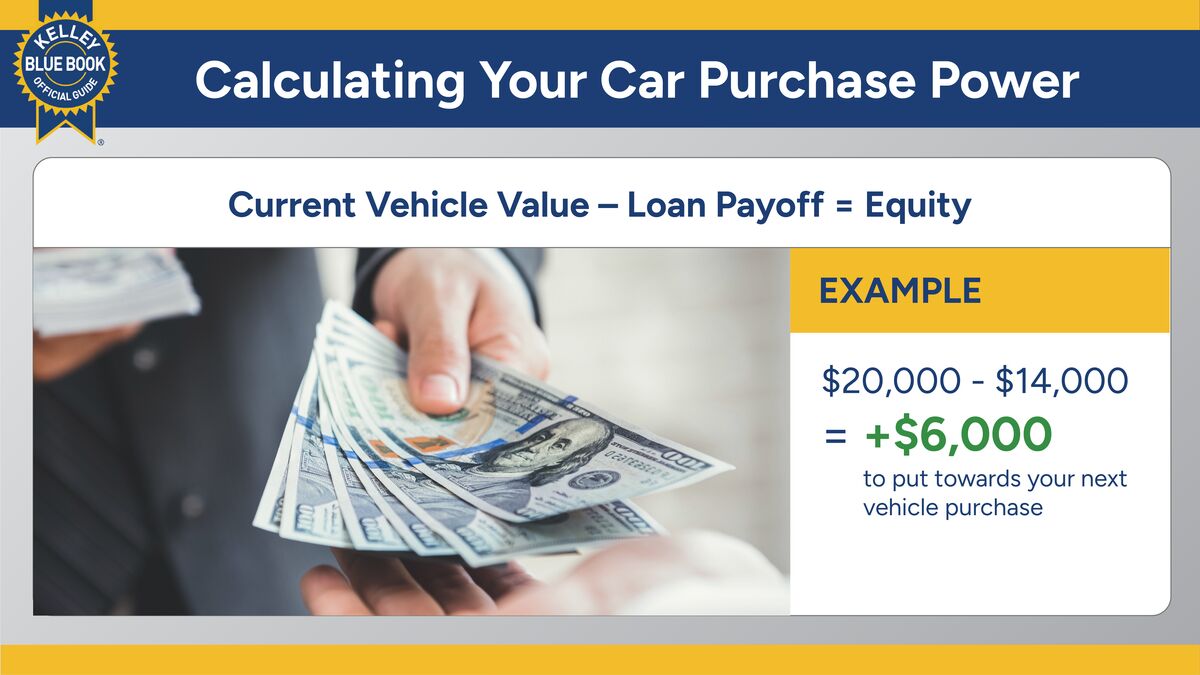
First, find your vehicle’s current market value. If you still have a loan, contact your lender to find out the payoff amount. The difference between those two numbers tells you whether you have positive or negative equity.
The basic calculation is:
Vehicle value – loan payoff = equity
If your car is worth $20,000 and you owe $14,000, for example, you have about $6,000 in positive equity. That money can help fund your next purchase, either through a trade-in or by selling the vehicle.
Negative equity means you owe more than the vehicle is worth. If you’re upside down on your loan, your options can include keeping the vehicle longer, paying the difference yourself, or rolling the remaining balance into your next loan. Rolling negative equity into another loan makes the next vehicle more expensive because you’re financing debt from the old car along with the new purchase.
You’ll also need to decide whether to trade the vehicle or sell it yourself. A private sale can sometimes bring more money, while trading it to a dealer is typically simpler. Either way, knowing the vehicle’s value gives you a starting point before you shop.
Figure Out What You Can Really Afford
Knowing how much a dealer will finance isn’t the same as knowing how much car you should buy.
Start with your household budget and decide what you can comfortably spend without stretching other financial priorities. Then look beyond the sticker price.
The average transaction price for a new vehicle was $50,089 in August, according to Cox Automotive, while the average used vehicle listing price was $27,239 that same month.
Those figures give useful context for your shopping, but you must understand that the price you pay is only one part of what a vehicle costs.
Consider related expenses such as:
- Insurance
- Fuel or electricity
- Maintenance and repairs
- Registration and taxes
- Loan interest
- Depreciation
Kelley Blue Book estimates the average 5-year cost to own among new vehicles at about $80,000. That includes depreciation as well as expenses such as fuel, insurance, financing, fees, maintenance, and repairs.
Depreciation is especially important because vehicles do not lose value at the same rate. Some makes and models retain their value much better than others, which can significantly affect what a vehicle ultimately costs to own.
Your actual costs will vary depending on the vehicle and how you use it. Still, the estimate illustrates why the purchase price or monthly payment tells only part of the affordability story.
A $550 payment could represent a very different financial commitment depending on whether the loan lasts 48 months or 84 months. A longer term may make the monthly number look more comfortable while increasing the total amount of interest you pay.
Think first about what you can afford overall. Then determine which vehicles fit that budget.
LEARN: Explore all of our financial resources in our Car Affordability Information Center.
Should You Buy New, Used, or Certified Pre-Owned?
Once you have a price range, one of your first decisions is whether to shop for a new, used, or certified pre-owned vehicle.
None is automatically the best choice. Each involves trade-offs.
| New | Used | Certified Pre-Owned | |
|---|---|---|---|
| Price | Typically highest | Typically lowest | Usually more than a similar non-CPO used vehicle |
| Warranty | Full factory warranty | Remaining coverage varies | Manufacturer-backed CPO coverage |
| Financing | Often eligible for lower or promotional rates | Rates are typically higher | Special CPO financing may be available |
| Depreciation | Usually greatest in the first years | Previous owner absorbed some early depreciation | Similar depreciation advantage to other used vehicles |
| Selection | Current models, features, and options | Wide range of ages and prices | Limited to vehicles meeting the manufacturer’s program requirements |
A new vehicle gives you the latest features, a full factory warranty, and no previous-owner history to investigate. Automakers may also offer discounted financing on selected new models. The trade-offs are typically a higher purchase price and greater early depreciation.
A used vehicle generally costs less to buy, and someone else has already absorbed some of the initial depreciation. However, condition, maintenance history, remaining warranty coverage, and financing costs can vary widely.
A certified pre-owned vehicle, or CPO, occupies a middle ground. These are qualifying used vehicles inspected and sold through manufacturer-backed programs. They typically include additional warranty coverage and other benefits, but usually cost more than comparable noncertified used vehicles.
Your budget, how long you plan to keep the vehicle, warranty preferences, and tolerance for potential repairs can help determine which category makes sense.
Decide How You’ll Pay
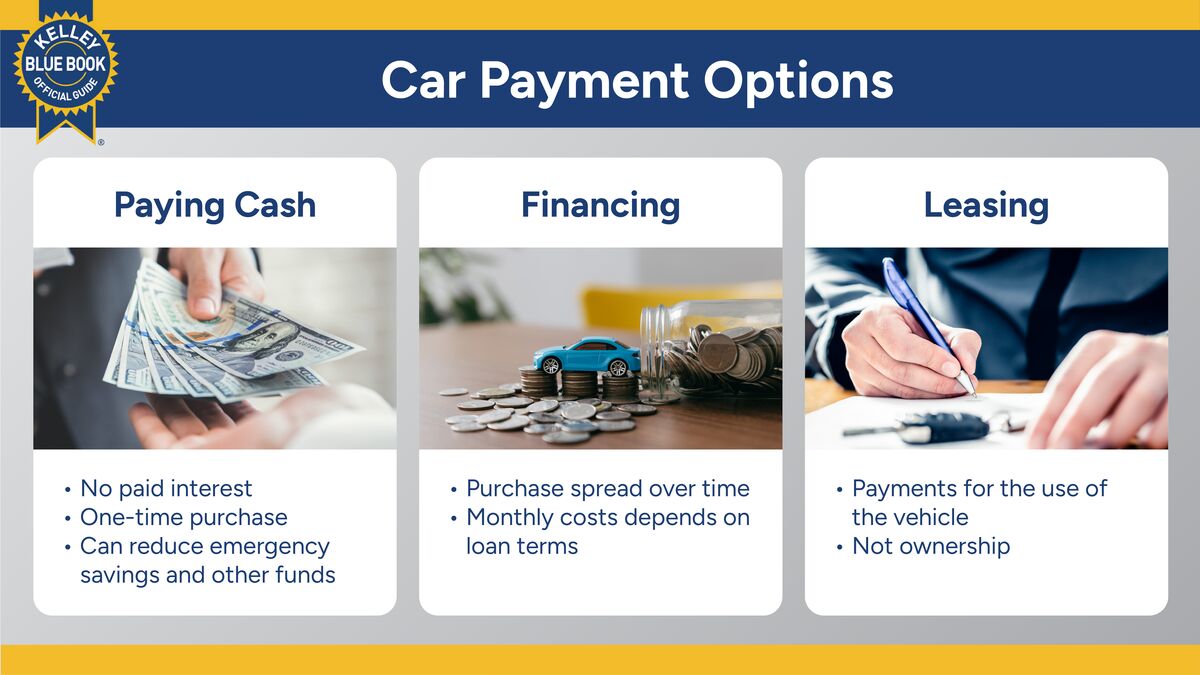
The three basic options are cash, financing, and leasing.
Paying cash eliminates loan interest and monthly car payments. But buying a vehicle outright may not make sense if doing so would significantly reduce emergency savings or money needed for other priorities.
Financing lets you spread the purchase over a set period. Your cost depends on how much you borrow, your annual percentage rate, or APR, and the length of the loan.
According to Experian, average interest rates in the second quarter of this year were 6.35% for new-vehicle loans and 11.19% for used-vehicle loans. Average monthly payments were $765 for new vehicles and $542 for used vehicles.
Your actual rate and payment will depend on factors including your credit history, down payment, amount financed, lender, and loan term.
Leasing is different from purchasing. You generally make payments for the use of a vehicle over a specified term and return it at the end unless the contract gives you an option to buy it. Leases typically include mileage limits and may include charges for excess wear.
Get Preapproved Before You Shop
If you expect to finance the purchase, consider seeking preapproval from a bank, credit union, or other lender before visiting the dealership.
Preapproval can tell you approximately how much you can borrow and what rate you qualify for. More importantly, it gives you something to compare the dealer’s financing offer against.
You aren’t necessarily committed to using the preapproved loan. A dealer may be able to offer a better interest rate or manufacturer-backed promotional financing.
Compare loan terms carefully. A 72- or 84-month loan can lower the monthly payment compared with a 60-month loan, but you’ll generally pay interest for longer and may remain upside down on the vehicle for more of the loan term. Lower payments may be attractive, but it’s usually a better financial move to choose the shortest loan term you can afford.
When manufacturers offer incentives, you may also have to choose between a discounted APR and a cash rebate. Compare the total cost of both offers rather than assuming one is automatically better.
MORE: Does Checking Your Credit at a Car Dealership Impact Your Score?
Now Figure Out What Kind of Vehicle You Need
Only after establishing your budget and understanding your financing options do you need to start thinking seriously about specific vehicles.
Begin with how you actually use a car. Be realistic. Buy the vehicle you’ll use 50 weeks a year and rent the vehicle you might need for two weeks out of a year.
Ask yourself:
- How many people do I regularly carry?
- How much cargo room do I need?
- How long is my commute?
- Is most of my driving around town or on highways?
- Do I need all-wheel drive (AWD)?
- Will I tow anything?
- Do I need a third row?
- Would a gas, hybrid, plug-in hybrid, or electric vehicle work for me?
- How long do I expect to keep the vehicle?
Separate must-haves from nice-to-haves.
A third row might be essential for a family that regularly carries six people. A panoramic roof probably isn’t. Making those distinctions before looking at vehicles can keep attractive features from pushing you toward a vehicle that costs more than you planned to spend.
This is also a good time to compare vehicle classes rather than individual models. You may discover that a compact SUV provides all the room you need, for example, without paying for a larger vehicle.
Research Before You Buy
Once you know what kind of vehicle fits your needs and budget, start narrowing your choices.
Compare prices, safety information, fuel economy or EV range, reliability information, warranties, and expected ownership costs. Reading expert reviews can help you understand differences that aren’t obvious from a specifications sheet.
For a used vehicle, take additional precautions.
Obtain a vehicle history report, which can provide information about previous ownership, reported accidents, title issues, and service history. Check for open recalls.
A history report is useful, but it doesn’t tell you everything about a car’s current condition. Consider having a used vehicle inspected by an independent mechanic before purchasing it, particularly if it isn’t covered by a manufacturer’s certified pre-owned program.
Research fair prices before you start negotiating. Knowing what comparable vehicles are selling for gives you a better foundation than walking into the dealership and negotiating from the window sticker alone.
The Basic Car-Buying Process
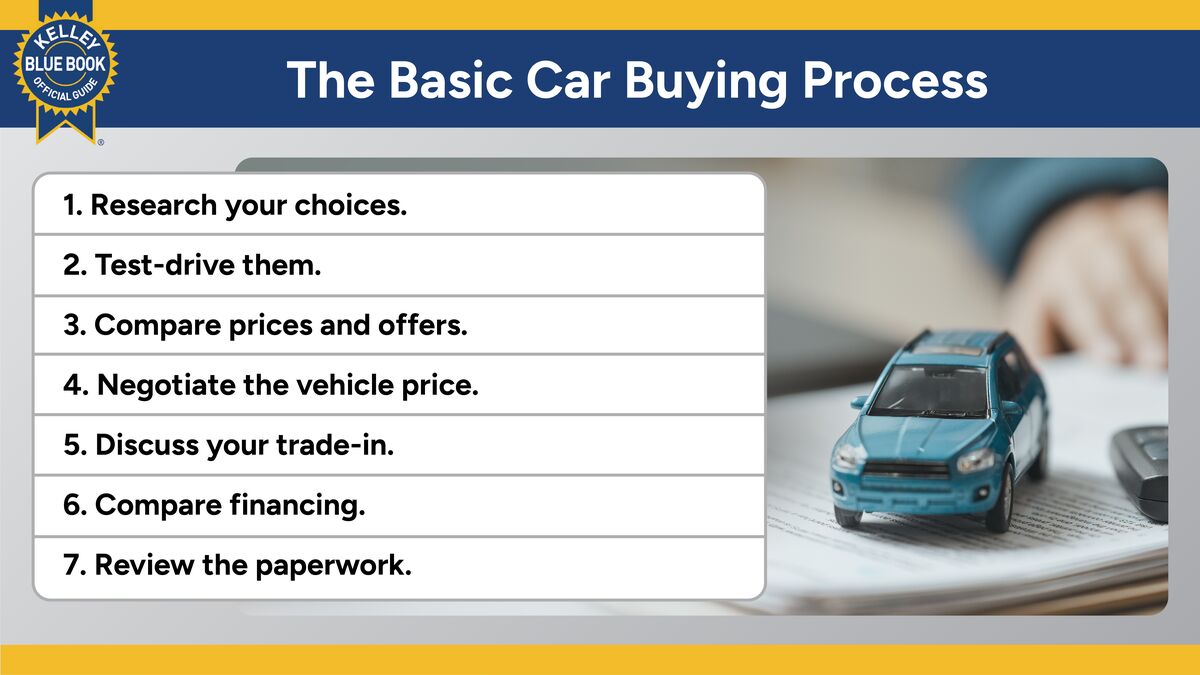
By this point, you should know approximately what you can spend, how you’ll pay, and what type of vehicle you need.
The actual buying process can then be relatively straightforward.
- Research your choices. Narrow your list to a few vehicles that fit your needs and budget.
- Test-drive them. Pay attention to comfort, visibility, controls, passenger space, cargo room, and how the vehicle behaves on roads similar to those you drive every day.
- Compare prices and offers. Look at several vehicles or dealerships when possible rather than assuming the first offer is the best available.
- Negotiate the vehicle price. Focus on the price of the vehicle rather than negotiating around a monthly payment.
- Discuss your trade-in. Knowing your current vehicle’s value before you arrive makes it easier to evaluate the dealer’s offer.
- Compare financing. Put the dealer’s loan offer alongside any preapproval you obtained and compare the APR, loan term, amount financed, and total cost.
- Review the paperwork. Before signing, make sure the purchase price, trade-in value, financing terms, fees, and optional products match what you agreed to.
The deeper details of negotiating, financing, test-driving, and completing paperwork deserve guides of their own. At this stage, the important thing is knowing the order and understanding what decisions you’ll be asked to make.
MORE: How to Buy a New Car in 10 Steps
Frequently Asked Questions
Getting preapproved by a bank or credit union can give you an estimated interest rate and borrowing limit before you shop. It also provides a financing offer to compare with the dealer’s. You can still choose dealer financing if the dealership offers better terms.
Longer loans can make an expensive vehicle look more affordable by lowering the monthly payment. However, you’ll generally pay interest for longer and may build equity more slowly. Compare the total cost of the loan, not just the payment.
It depends on your finances and available loan terms. Paying cash avoids interest, but using a large portion of your savings for a car may not be right for everyone. Compare the cost of borrowing with your other financial needs before deciding.
Each can make sense. New vehicles offer full warranties and may have attractive financing. Used vehicles generally cost less and have already experienced some depreciation. CPO vehicles combine many used-car price advantages with manufacturer-backed inspection and warranty programs.
Online estimates may not include sales tax, registration, dealer fees, optional products, your actual interest rate, or negative equity from a trade-in. Compare the vehicle’s out-the-door price, amount financed, APR, and loan term rather than evaluating a deal only by its monthly payment.
Bottom Line
Looking up the value of your current vehicle doesn’t mean you need to pick its replacement today.
First, understand what your car is worth and what you owe. Establish a realistic budget based on the full cost of ownership, learn the differences among new, used, and certified pre-owned vehicles, and determine how you’ll pay.
Once those fundamentals are in place, you can move on to researching specific vehicles — with a much better idea of what you’re looking for and what you can afford.