

Quick Tips for Charging an EV in Cold Weather
- Cold temperatures can slow electric vehicle charging, especially when the battery has been sitting in freezing weather.
- DC fast charging can take significantly longer in extreme cold.
- Preconditioning the battery before charging can reduce delays.
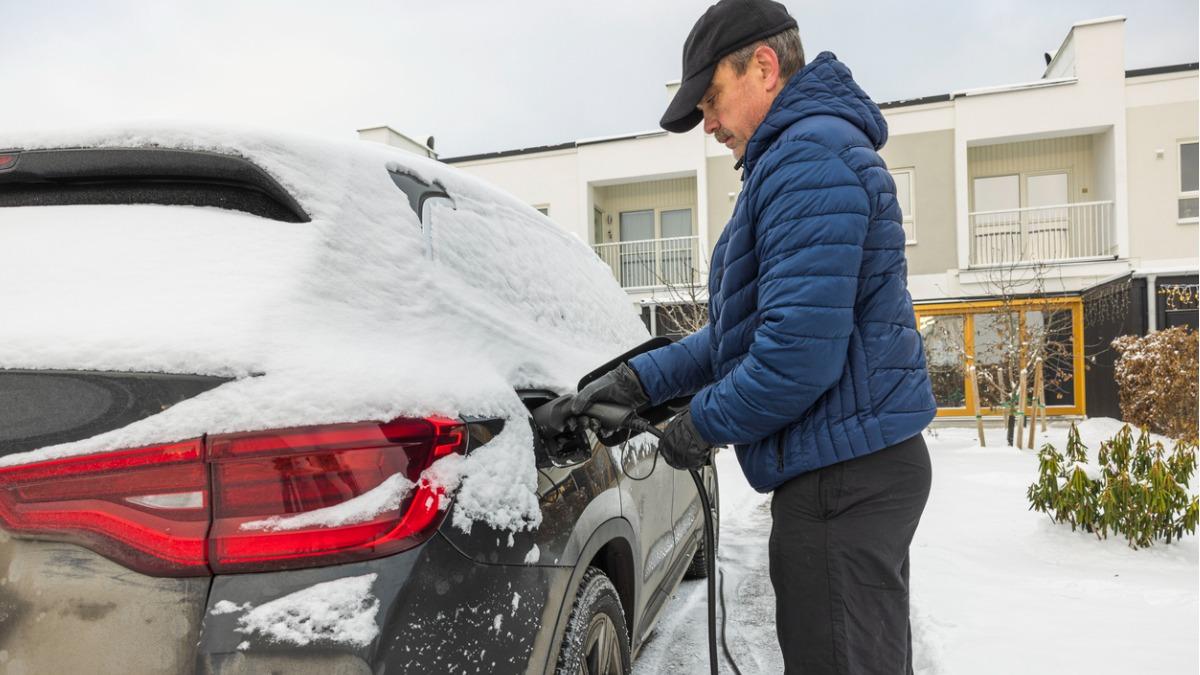
Charging an electric vehicle (EV) can take longer in winter. Freezing temperatures reduce the battery’s ability to accept a charge, and some energy may go toward warming the battery instead of adding range. Here’s how cold weather affects EV charging and what you can do to minimize delays.
Why Does EV Charging Take Longer in Cold Weather?
Cold temperatures slow the chemical reactions inside an EV battery. To protect the battery, the vehicle may limit charging power until it warms up. That’s why an EV that’s been parked outside overnight may charge more slowly than one that’s been driven recently.
Charging times depend on battery temperature, charger type, and whether the vehicle has been preconditioned.
Winter EV Charging Times
Cold weather affects the three charging levels differently.
- Level 1: A standard 120-volt household outlet provides limited power. In extreme cold, much of that energy may go toward warming the battery, making Level 1 charging impractical for some drivers.
- Level 2: A 240-volt charger generally provides enough power for daily charging, although charging may start slowly when the battery is cold. Speeds typically improve as it warms.
- DC Fast Charging (Level 3): DC fast chargers provide the quickest charging, but a cold battery can significantly slow the process. Some newer EVs can charge from 20% to 80% in 20 to 30 minutes under favorable conditions. In extreme cold, charging may take twice as long in some circumstances.
How Battery Preconditioning Helps
Many newer EVs can precondition the battery, warming it to a suitable temperature before charging. This can substantially reduce charging delays, particularly at DC fast chargers.
Some vehicles automatically precondition when you select a charging station in the built-in navigation system. Others let you activate the feature manually. Check your owner’s manual for instructions.
RELATED: Electric Cars 101: What You Need to Know About EVs
Tips for Winter EV Charging and Driving
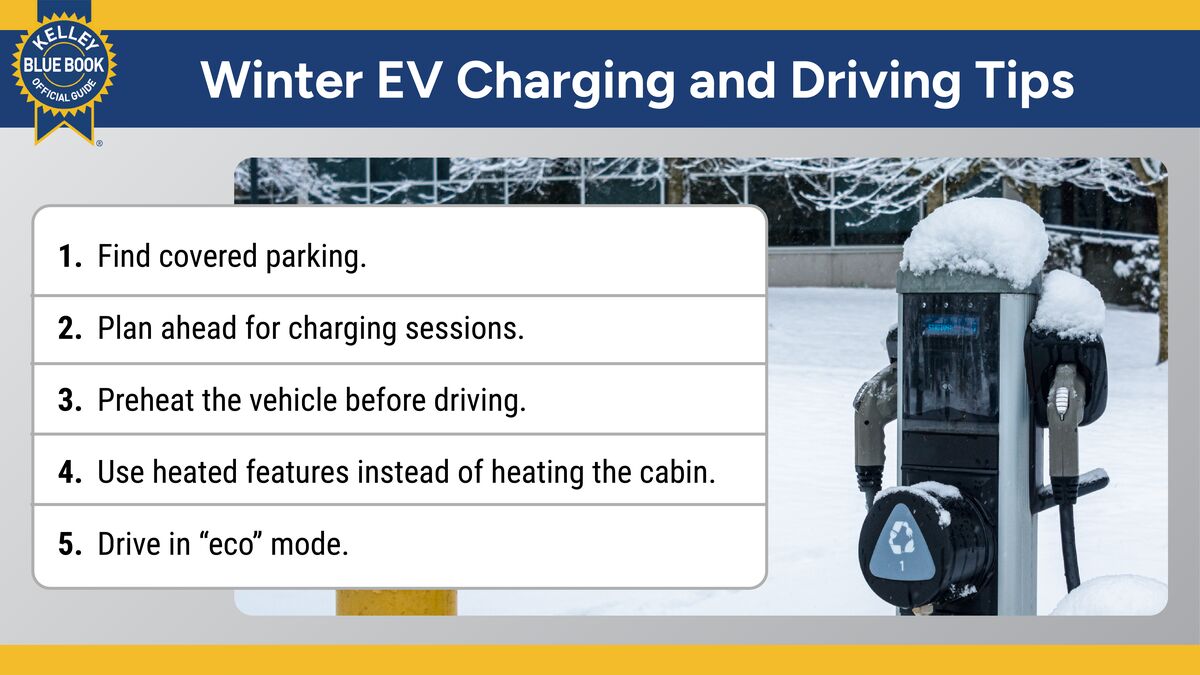
- Park Indoors: Electrify America recommends parking in a garage during winter. An enclosed garage can help keep the battery warmer than parking outside.
- Plan Ahead: Schedule charging and battery preconditioning when your vehicle supports these features. Many EVs let you manage them through a mobile app.
- Preheat the Cabin: Warm the interior while the vehicle is plugged in to preserve battery power for driving.
- Use Heated Seats: Heated seats and steering wheels generally consume less energy than heating the entire cabin. Use the defroster as needed for visibility.
- Select Eco Mode: If available, this setting can reduce energy consumption and help preserve driving range.
How Cold Weather Affects EV Range
An EV’s range is the distance it can travel on a full charge. Cold weather reduces that distance because the battery operates less efficiently and the vehicle uses energy to heat the battery and cabin.
In temperatures below 20 degrees Fahrenheit, some EVs can lose more than 30% of their range compared with mild-weather driving. Actual losses vary by model and conditions. Plan for shorter distances between charges during winter road trips.
MORE: Electric Car Range: Everything You Need to Know
Cold weather doesn’t have to complicate EV ownership. Allow extra charging time, precondition the battery when possible, and account for reduced range when planning trips.
Visit Kelley Blue Book’s Safety Hub page to learn more about vehicle safety features.
Editor’s Note: This article has been updated since its initial publication.