

For 100 years, car buyers and sellers have trusted Kelley Blue Book to help them determine the value of their vehicles. What started as a physical book listing used-car values is now online, and car buyers and sellers continue to rely on Kelley Blue Book values when buying, selling, or trading automobiles.
Here’s an overview of what goes into calculating Kelley Blue Book values, the different types of values available, how to obtain them, and how Kelley Blue Book came to be, one century ago.
What Factors Go Into Determining a KBB Value?
Kelley Blue Book uses a range of factors and vehicle information to arrive at a value. These include:
- Age: The age of the vehicle has a significant impact on depreciation. New cars depreciate more quickly, and the rate typically slows as the car ages.
- Mileage: With age, mileage is a major factor in a car’s value, as it indicates usage. Two cars can be the same age, but one that’s been used as a rideshare vehicle could have 200,000 miles, while another that sits parked most of the time could have 20,000 miles.
- Body Style and Trim Level: The body style and trim level also affect value. There can be a big difference between a base model sedan and full-size pickup truck with all the bells and whistles.
- Vehicle Mechanics: Engine size and transmission type can affect a vehicle’s value.
- Condition: Some wear and tear is expected on a used vehicle, and Kelley Blue Book considers everything from minor dents and dings to major mechanical issues in its calculations.
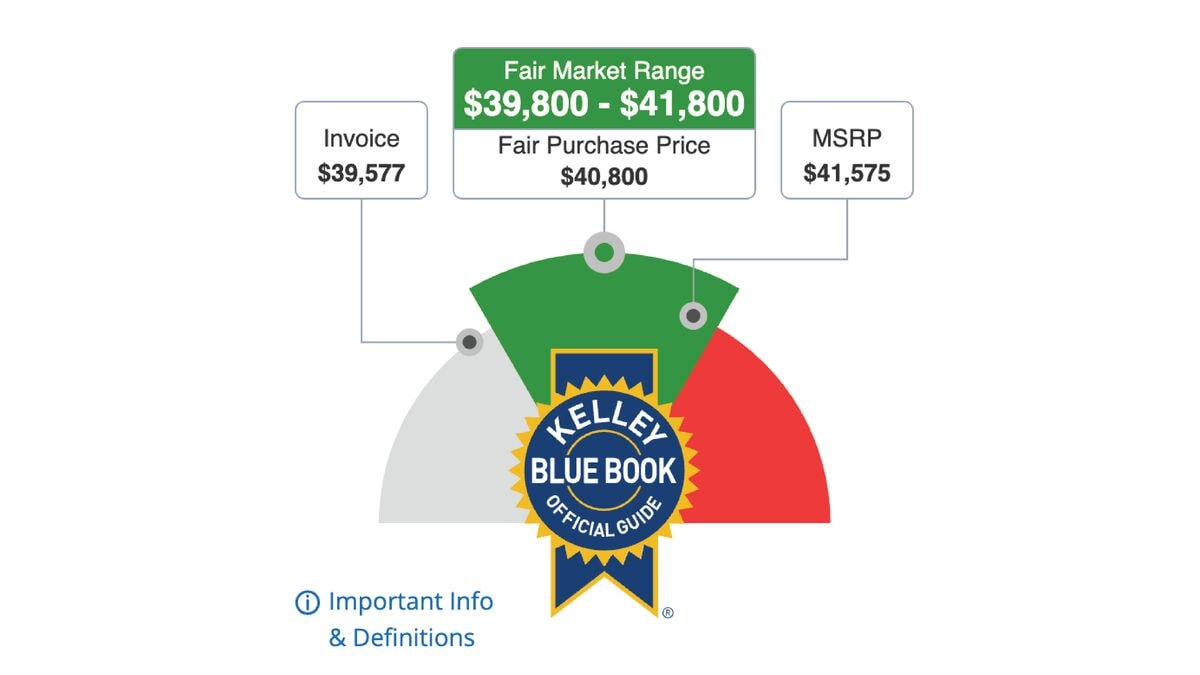
Kelley Blue Book uses its extensive repository of automotive data to calculate vehicle values. “We’ve been in this market for a long time,” said AJ Schoonover, AVP of Product Management and Operations at Kelley Blue Book’s parent company, Cox Automotive. “We have grown a lot over that time, and we acquire a lot of data to be able to refine and reflect the market appropriately. There’s a lot of work that goes into each one of those values.”
New Car Value Types
If you are in the market for a new car, Kelley Blue Book provides three different types of pricing information.
| Manufacturer’s suggested retail price (MSRP) | The manufacturer sets the MSRP, but the dealer can choose to offer the car at a price above or below MSRP based on the local market. |
| Dealer or Invoice Price | The dealer invoice, or invoice price, is the amount the manufacturer charges the dealer for the new car. |
| KBB Fair Purchase Price | The Kelley Blue Book Fair Purchase Price indicates what buyers are paying for a specific car. This value is based on reported transaction information from dealers across the country. |
Used Car Value Types
If you are looking to buy or sell a used car, Kelley Blue Book can provide the following values:
| Trade-In | The amount you can expect to receive from a dealer when trading in a used vehicle. |
| Private Party | The estimated value when buying or selling a used vehicle through a private individual. |
| Retail | The amount you can expect to pay when buying from a dealer. |
How to Get a Vehicle’s Value
You can easily look up the Kelley Blue Book Value for your car online:
- Step One: Select whether you are looking for the value of a new or used car, your own car, or cars listed for sale on KBB.com. You can also search by VIN or license plate number.
- Step Two: Enter the year, make, model, mileage, and your ZIP code.
- Step Three: Select the vehicle’s trim level.
- Step Four: Select specific options for the vehicle or price it with standard equipment. You will also select the vehicle’s color. If you select options, you can specify mechanical, interior, and exterior features.
- Step Five: Select whether you want trade-in and private-party values, or get a Kelley Blue Book Instant Cash Offer.
- Step Six: Select the vehicle’s condition.
- Step Seven: View the vehicle values.
No email or contact information is required to obtain a vehicle’s value, and you can look up and compare as many vehicles as you would like.
Kelley Blue Book: 100 Years of Helping Facilitate Fair Transactions
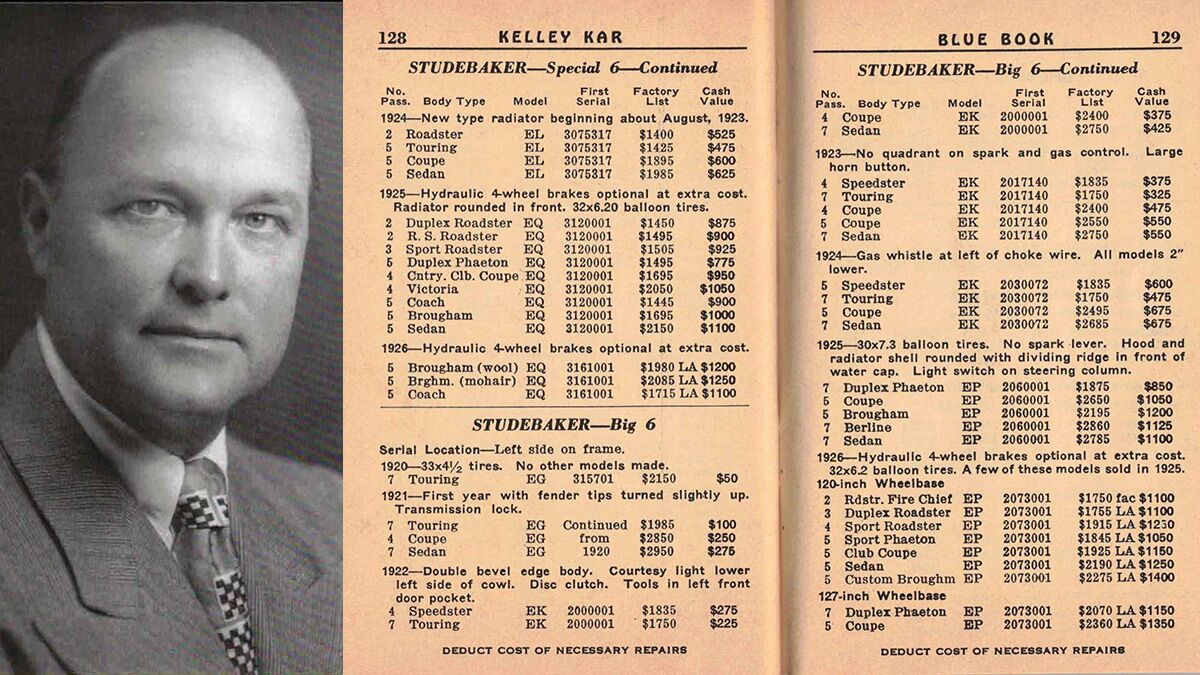
Les Kelley published the first print edition of the “Blue Book of Motor Car Values” in 1926. The pocket-sized Blue Book included list prices for new cars and used-car values. For a century, Kelley Blue Book has served as a standard in the United States auto industry.
Now entirely online, vehicle values on the website are updated weekly. For anyone looking to buy or sell a car, a Blue Book Value provides a market-based estimate of the vehicle’s value and a basis for initial negotiations. Schoonover emphasized how crucial it is for car buyers and sellers to do their research. “There’s lots of information out there, and we provide as much information as possible to really help guide you in making an educated decision,” he said.
Kelley Blue Book has been a household name for 100 years for a reason: Consumers trust the data and the care that goes into the valuations. “That’s what separates us,” said Schoonover. “The data, the processing, the expertise, and our lineage.”