
First, there was the wheel. Later came the tire. The two inventions are forever linked, one wrapped around the other.
As we celebrate Kelley Blue Book’s 100th anniversary, let’s explore the evolution of one of the world’s great automotive innovations: The tire.
The Pneumatic Tire
The direct ancestor of the wheel on your car today is the wagon wheel.
And the direct ancestor of the tire that wraps around your wheel is the bicycle tire.
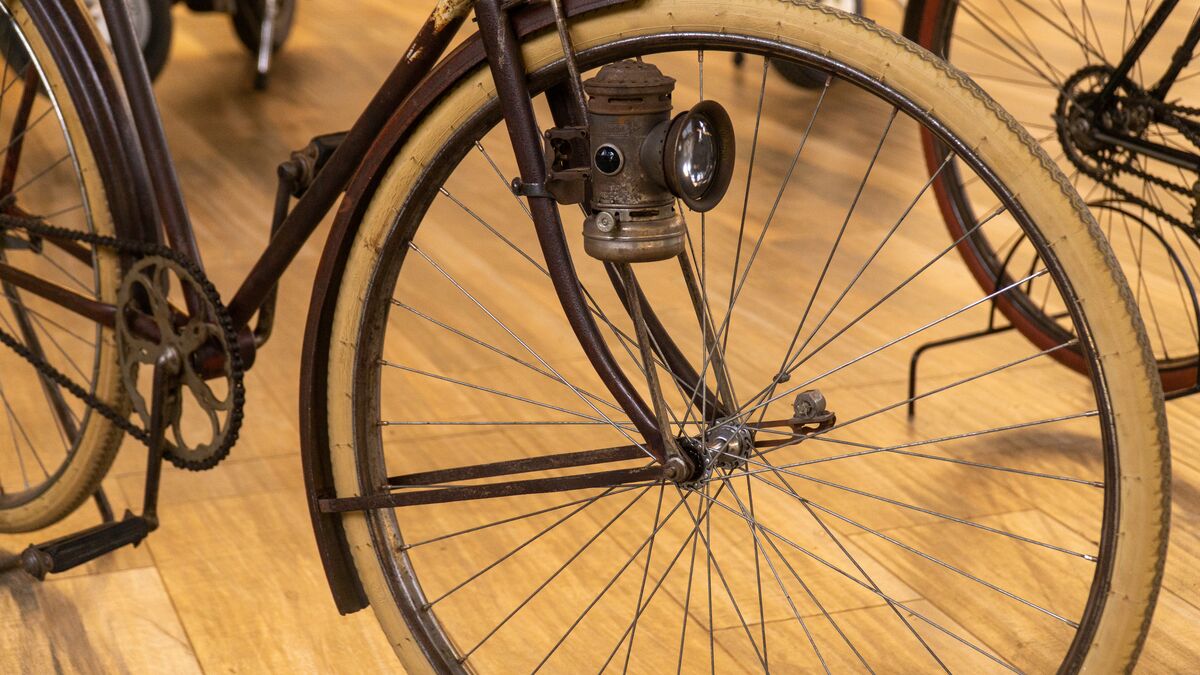
The bicycle craze swept across Europe and the United States in the 19th century, when French inventor Pierre Michaux (1813 – 1883) built the first pedal bicycle in his workshop in 1863. At least that’s what many bicycle historians believe, though there’s no definitive proof that Michaux and his son, Ernest (1842 – 1882), had a legitimate claim.
Two inventions by familiar names brought major advances to the world of wheels: Charles Goodyear’s vulcanized rubber and John Boyd Dunlop’s pneumatic tires.
In 1844, Goodyear (1800 – 1860) patented a process that toughens rubber to resist heat and cold. He called it “vulcanization,” and bicycle makers later used vulcanized rubber on their wheels to improve rider comfort and traction.
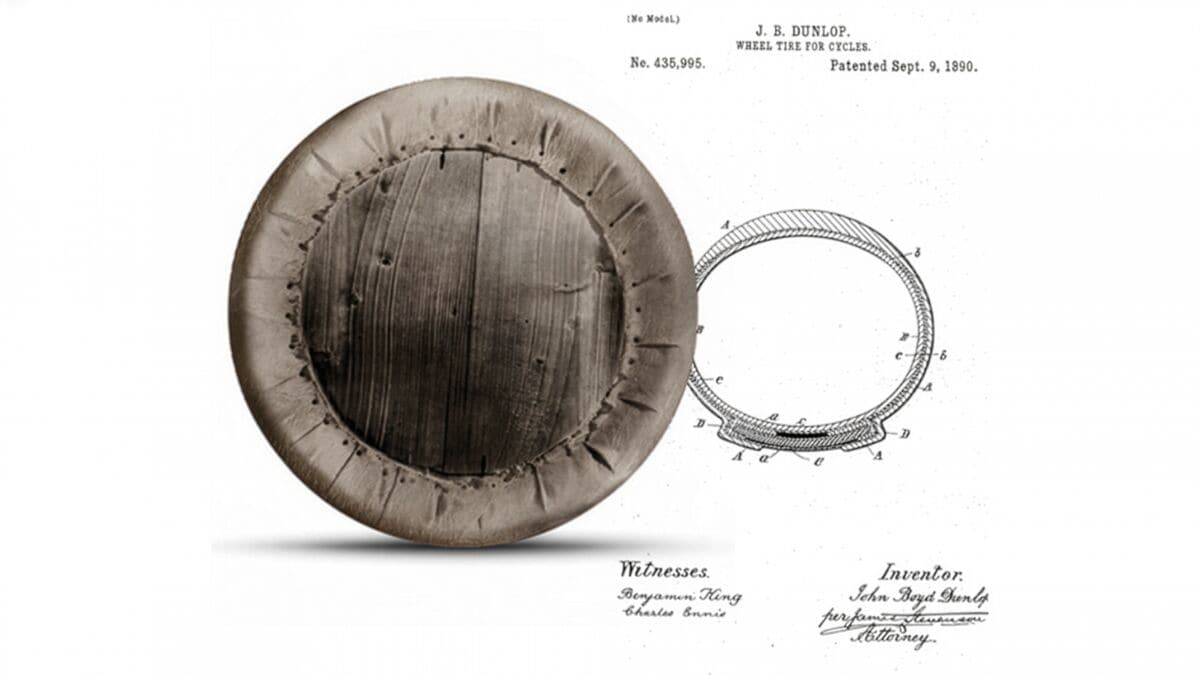
According to the National Inventors Hall of Fame, Scottish veterinary surgeon John Boyd Dunlop (1840 – 1921) developed a significant improvement for bicycle wheels later in the century. “In 1887, he began working on a way to make his son’s tricycle ride more comfortable. His practical ingenuity led him to cut up an old garden hose, make it into a tube, pump it up with air, and fit it to the rear wheels of the tricycle.” Dunlop patented his pneumatic tire in Great Britain in 1888 and secured a U.S. patent in 1890. His tire business, which evolved into the Dunlop tire company, “served as the genesis for the modern tire industry,” according to his entry in the Hall. Dunlop expanded from bicycle tires to automobile tires in the 1890s.
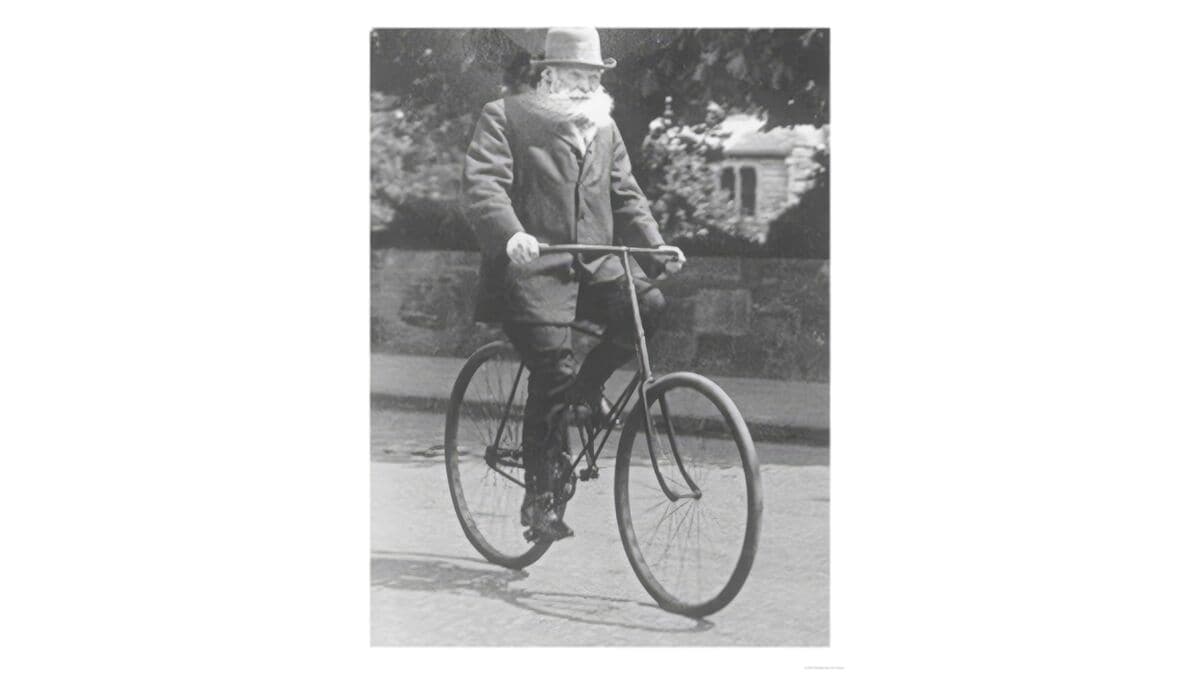
Goodyear’s vulcanization and Dunlop’s pneumatic tire helped set the stage for the automobile wheel. As cars and trucks grew heavier and faster, narrow wooden wheels, inherited from wagon technology, proved inadequate. Automotive engineers (a new class of work) created wider wheels, and tire innovators did what they do — innovated.
Tire Treads
Once innovators understood the benefits of rubber tires, they worked on improvements. An early discovery found that carving treads into the tire surface improved traction, which helped in starting, stopping, and roadholding.
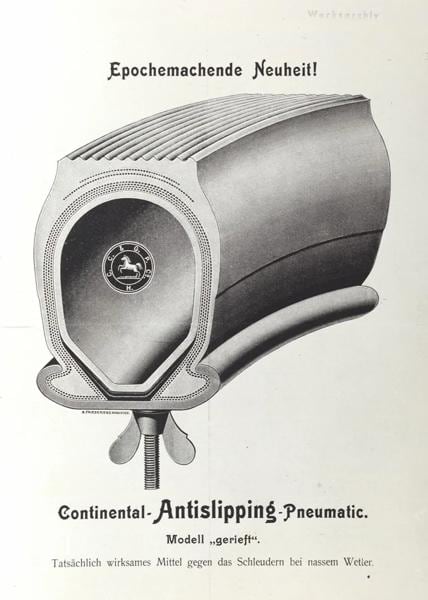

Continental Tires boasts of introducing the first grooved tires at an auto show in 1904. The advantages were immediately apparent, and tire tread development accelerated across the industry. Today, manufacturers use unique tread designs and treatments tailored to specific vehicles and uses. Tread wear has become an important measurement of a tire’s service life and an indicator that replacement is needed. Tread patterns and wear are even useful for law enforcement agencies. Watch a police procedural, and you’ll see technicians measuring tire tracks to match them to a suspect vehicle.
Bias-ply Tires
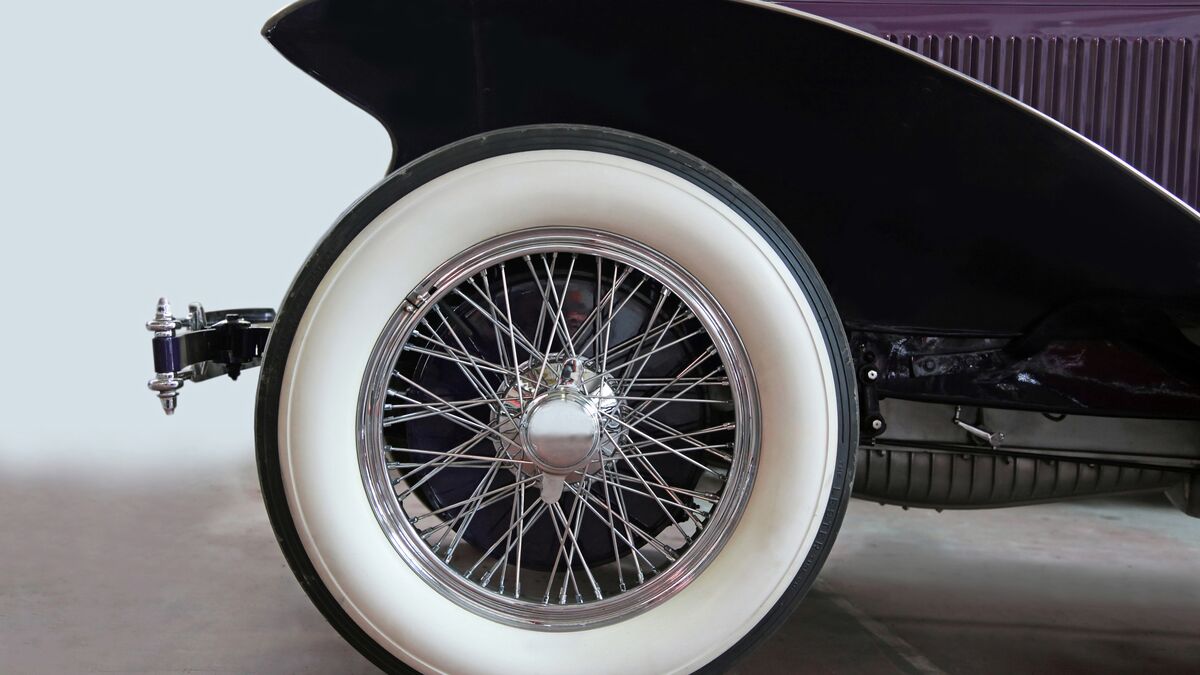
As automobiles grew heavier and faster, tires had to evolve. Tubeless tires improved durability, eliminating friction and complexity that limited tire life. Bias-ply tires greatly improved load-carrying capability beginning in the early 1900s, in part due to a technology pioneered by Goodyear in 1898.
A bias ply tire uses layers of fabric cords in the tire carcass, arranged in a crisscross pattern from bead to bead (where the tire meets the wheel). This weave gives the rubber tire more strength and stiff sidewalls, working well for heavy loads on paved roads. Bias-ply tires were the standard into the 1970s, with continuous improvements in materials and manufacturing.
Steel-belted Radials

French tire giant Michelin changed the game with the commercial launch of steel-belted radials in 1948. The technology took a while to catch on, but by 1983, all new cars sold in the U.S. had steel-belted radials. Federal regulation doesn’t require this specific construction, but tire safety standards make the choice a natural.
Steel-belted radials, as the name implies, use steel belts where fabric cords once lurked. Instead of a crisscross weave, the belts run at a 90-degree angle across the tire from bead to bead. This design is substantially stronger and more stable than bias ply and makes a world of difference in high-speed handling and tire stability. Not only that, but steel-belted tires deliver longer life, especially with the constantly improving tread designs and rubber composition from tire makers.
Synthetic Belts
Tire technology never stands still. Multiple tire manufacturers have introduced specialty tires with synthetic belts in place of steel. Stephanie Kwolek, a chemist working for the textile division of DuPont, invented the high-strength synthetic fiber Kevlar in the mid-1960s. Tiremakers could spin Kevlar fibers into threads to create fabric for belts that were stronger and lighter than steel belts. Improving strength was great for durability, and reducing weight paid off in fuel efficiency.
Kevlar has multiple uses in automobiles beyond tires, including engine belts, brake pads, and more. And it has saved at least 3,000 lives when used in protective vests (ballistic-resistant soft armor, in LEO-speak) for police officers.
Kevlar-belted tires are expensive compared to steel-belted radials and are generally a high-end, specialized option. Off-roading enthusiasts may find them valuable, as Kevlar sidewalls can be remarkably resistant to tearing and puncturing on the trails.
Run-flat Tires
One of the inherent weaknesses of pneumatic tires is a blowout or flat tire. You pick up a roofing nail or run over some sharp debris, and the next thing you know, your car is wobbling, and you have to pull over. Michelin created an early run-flat tire in 1935, possibly informed by a patent John D. Beebe obtained in 1896. Michelin’s initial offering was for trains, trolleys, and military armored vehicles, and it used a foam lining to support the tire structure in the event of a puncture. Other manufacturers developed their own approaches in the 1950s through the 1970s. Michelin’s modern zero-pressure tire was offered on the 1996 Lincoln Continental, and the run-flats you’ll find today are iterations of those efforts.
In most cases, run-flats are a luxury feature on premium vehicles. Since they are not as vulnerable to catastrophic deflation (blowouts) as most conventional tires, tiremakers market run-flats as a safety and convenience feature. When you drive a car with run-flats, you don’t need to carry a spare tire or an inflation kit, saving trunk space and some weight. The best run-flats deliver a smooth ride with good traction, comparable to conventional tires. Some drivers disagree, finding the run-flats harsh on the highway and too stiff in the corners. Run-flats are more expensive than conventional tires, and replacements can be tough to find. This technology is still evolving, but the safety, space, and weight benefits will likely motivate tire innovators to continue seeking solutions.
Future Tires
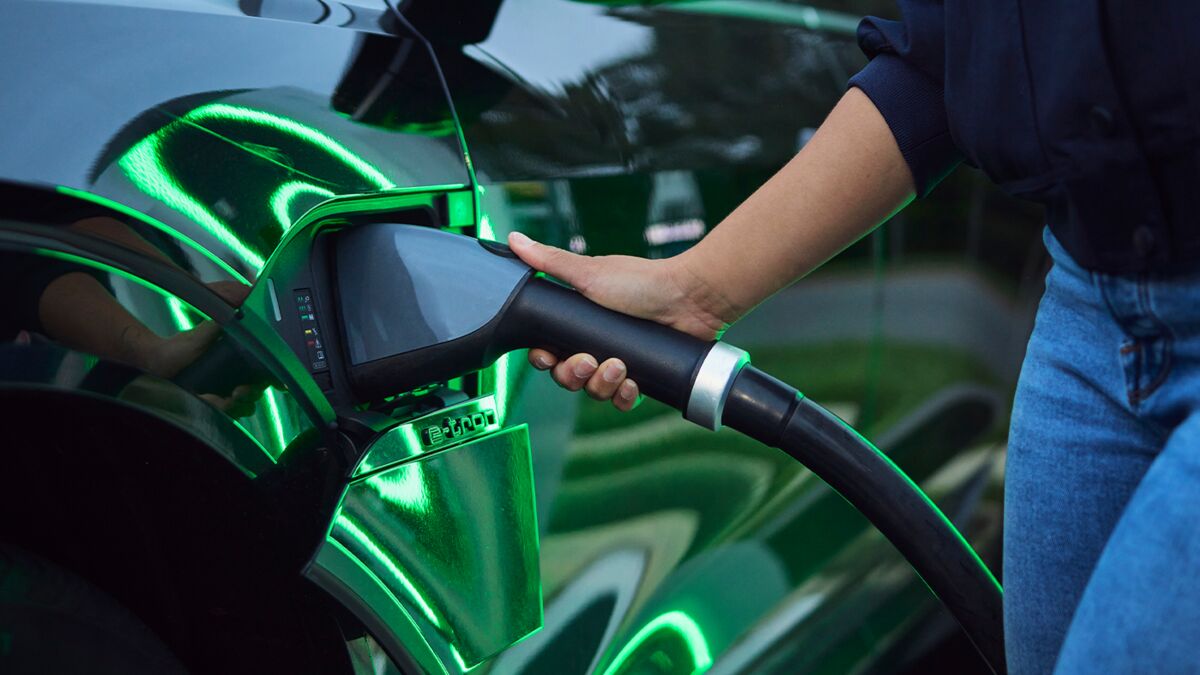
Tire development moves alongside advances in vehicles. For instance, electric vehicles (EVs) are heavier than their gas-powered counterparts, placing unique demands on tires. At the same time, automakers challenge tire companies to deliver lower rolling resistance to help improve efficiency and range. A narrower tire generally has a smaller contact patch (the part of the tire that touches the ground) and less friction, but it also has disadvantages, such as lower load capacity and more vulnerable sidewalls. Tire designers must balance the demands to find workable solutions.
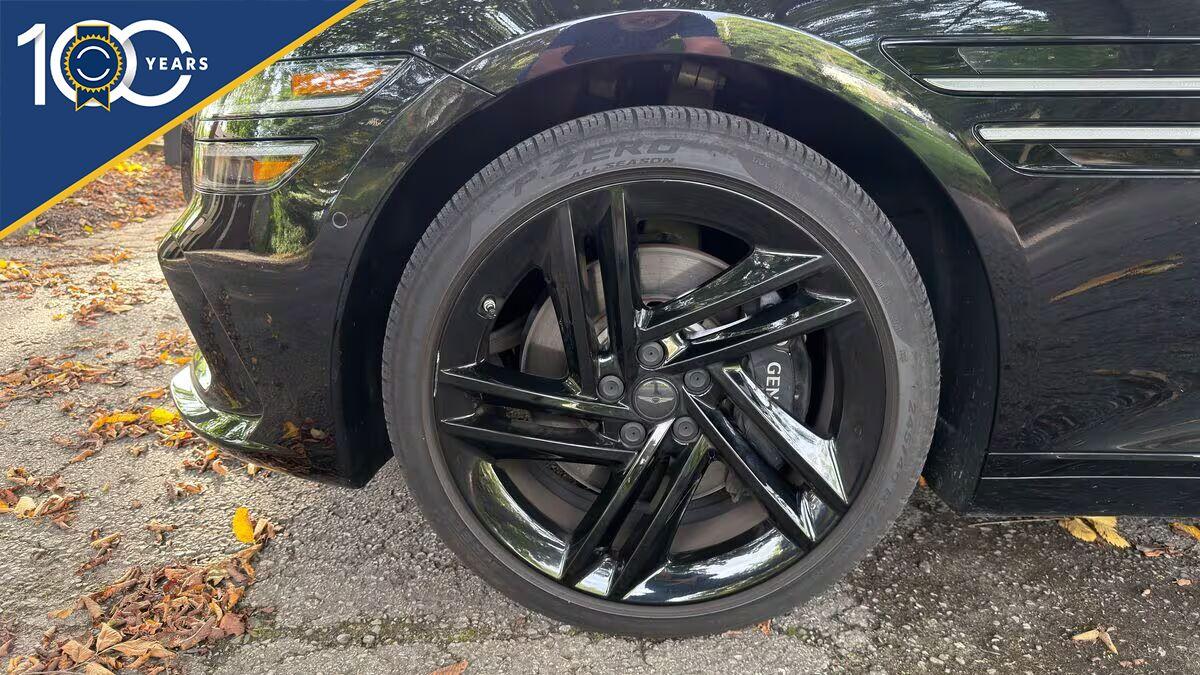
Changes in consumer taste also influence tires. The quest for ever-larger wheels has consequences. There’s less room in the wheel well, so tread and sidewall height — known as “profile” in the tire world — must be reduced. That can affect ride comfort and handling. At the opposite end, the adventure styling on many SUVs demands a rugged-looking tire with an aggressive tread pattern. Yet many outdoorsy owners demand a comfortable ride on the highway, short stopping distances in the city, and off-road appearance and capability. Tiremakers must continuously innovate to meet those competing demands.
Who knows what the future holds for tires? As long as the rubber meets the road, tire technology will continue to advance.