

From first-time drivers to experienced million-mile road trippers, keeping certain items on hand at a moment’s notice is essential for peace of mind on the road. Most people would vouch for specific items, such as a spare tire or a lug wrench, if they had limited choices on what to keep in their car every day. This list consists of seven things I think every driver should carry in their vehicle based on my own experiences.
Not included in this list are the expected items you would find in your vehicle, such as registration, insurance information, and the owner’s manual. Let’s dive in!
#1: A Basic Tool Kit (Wrenches, Ratchets, Sockets, and More!)
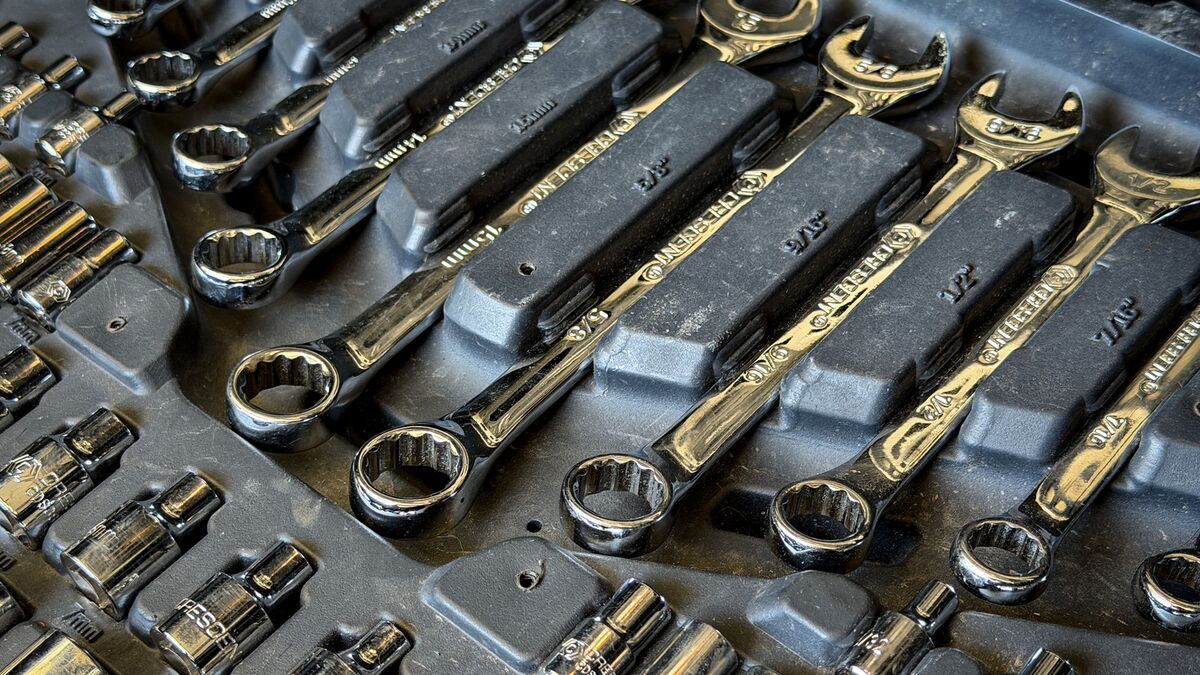
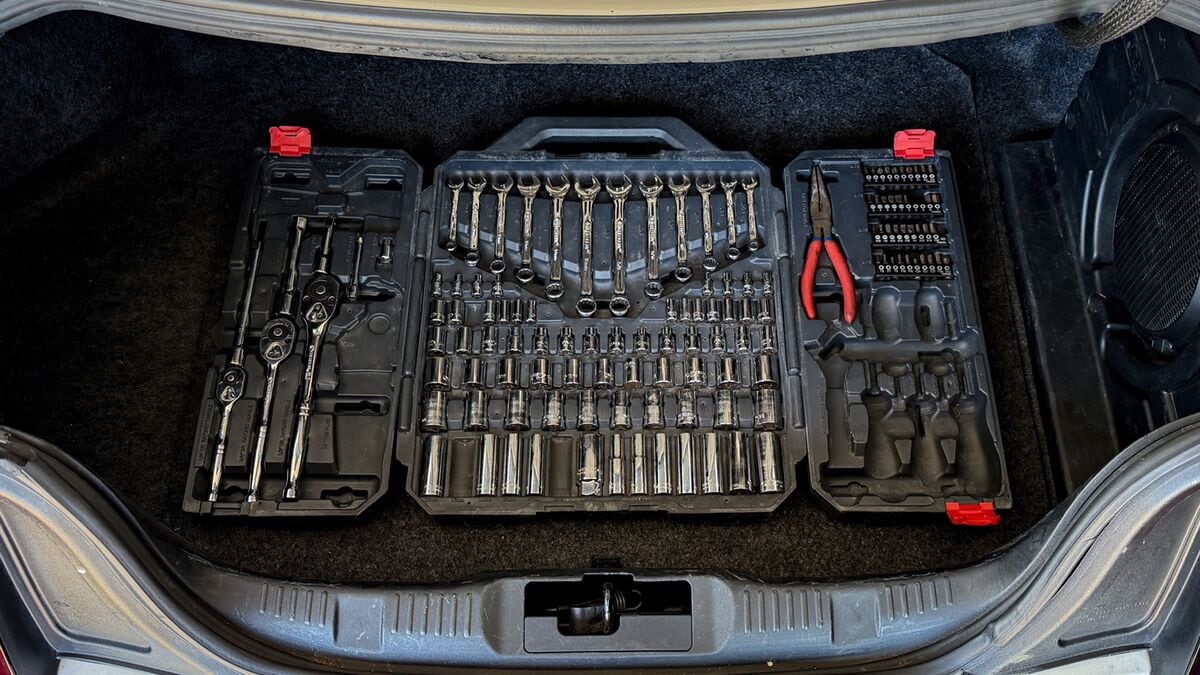
A good set of tools can cover a significant range of issues you might come across on the road. Personally, I would recommend bringing a mechanic’s tool set. You will usually find these “complete sets” online or in hardware stores, and they come in a variety of sizes, price ranges, and materials. Ideally, you should find a kit with (at minimum) common hand wrenches, a decent set of sockets with ratcheting wrenches, a screwdriver set, and pliers.
I received a 200-piece set as a gift when I graduated from high school in 2015 and have used it regularly ever since. I’ve found a good tool set to be the most critical item to always carry in your vehicle. It isn’t a requirement to carry a full mechanic’s set, and you can likely find a kit that will fulfill your needs at almost any price range.
#2: A Handheld Multitool
Handheld multitools are a great item to keep on hand, with many options featuring various knives, bottle openers, screwdrivers, and even scissors! These tools are compact, making them easy to store and keep in your vehicle. They can provide a sense of safety in emergencies, such as an accident, when you may have to cut a seat belt or break a window to escape. Beyond emergency situations, a multitool can be used in a variety of ways outside your vehicle, so it’s a good item to keep handy.
#3: A Change of Clothes, Blankets, or a Jacket
Accidents and foul weather can happen any day, often when we least expect them. I can think of several situations I’ve experienced where having an extra set of clothes, a warm blanket, or a spare jacket would have made a world of difference to my comfort or safety.
If you spill hot coffee on your pants on the way to work, an extra set of clothes could save you a trip to the store or back home. Perhaps you blow a tire while driving through a sudden snowstorm, with help several hours away. A blanket could help keep you warm while you wait. Say you have to walk a long distance in cold weather because your car ran out of gas? That extra jacket could turn a brutal, frigid walk into something much more manageable.
The point is, preparing some extra gear ahead of time can be extremely beneficial in the long run, especially when dealing with accidents or unusual circumstances.
#4: Tire Inflator and Repair Kit
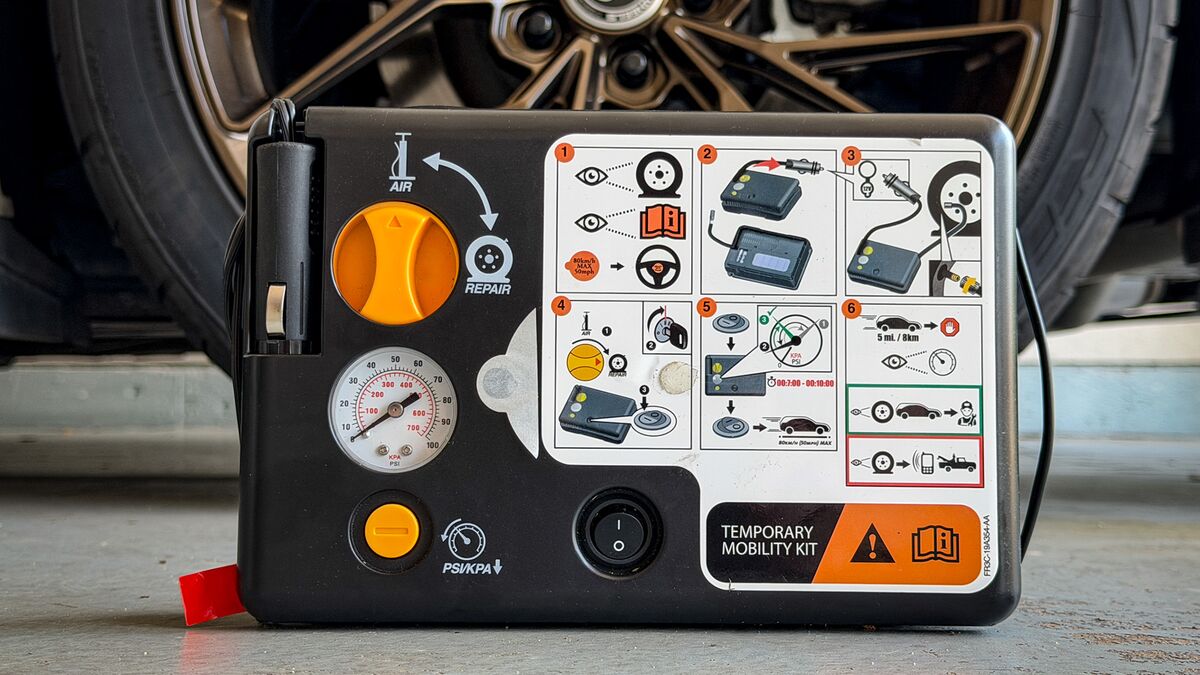
It used to be far more common for vehicles to include a full-size or even a small spare tire. In most modern vehicles, this is an extra option that many drivers go without. While a spare tire is the best solution, sometimes space or financial constraints don’t allow for it. In this case, my next recommendation is an air compressor and tire patch kit. These kits won’t fix every tire, but they are an inexpensive, easily stored option that can get you back on the road long enough to replace a tire in many situations.
Many modern cars include these two tools, sometimes within the same device. If your vehicle doesn’t include them, I highly recommend picking them up for your ride. The peace of mind alone is worth the cost!
#5: First-Aid Kit
This is likely one of the first choices to come to mind when discussing what should be included in your priority list, and that’s also why it made mine. There is a wide variety of first-aid-kit options on the market, so choosing a kit that fits your needs and budget is always an option. You never know when you might need to patch up a cut, disinfect a wound, or even help an injured traveler on the side of the road. I would recommend finding a kit with a wide variety of tools, bandages, and basic medical supplies. In some cases, you can even find vehicle-inspired first-aid kits that include items such as emergency blankets, flashlights, road flares, emergency markers, and more.
#6: Fire Extinguisher
In my mind, a fire extinguisher often gets put into the same “essentials” bucket as a plunger for your house: You should probably buy one before you need it. Keeping a fire extinguisher on hand provides peace of mind in case of emergency, especially if you drive performance cars. It’s important to purchase an extinguisher that is both large enough and rated for the types of fires you may experience on the road. It’s also worth noting that, should you drive past another vehicle with a car fire, you would be prepared to help.
Once you purchase a fire extinguisher for your vehicle, placement is also very important. Be careful not to put the extinguisher in a place where it could become a dangerous flying object in an accident. I keep mine in the trunk, under the floor where the spare tire would go.
#7: Jumper Cables or Battery Jump Pack
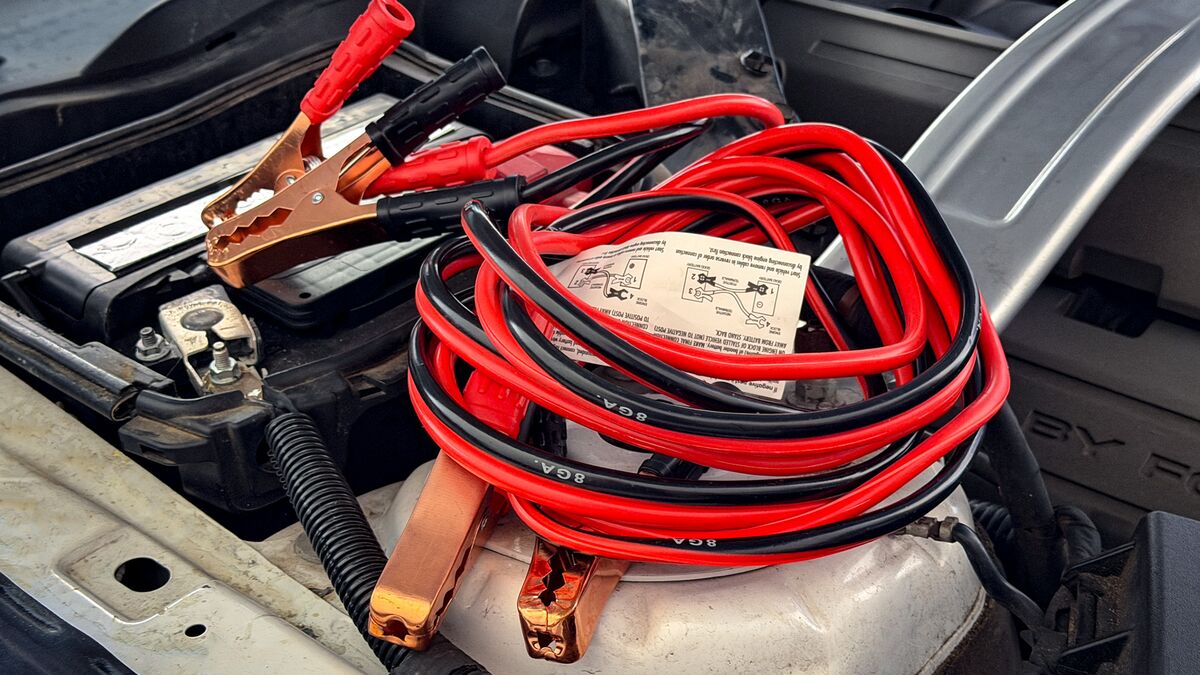
If you’ve ever been running errands, gone to start your car, and nothing happens because the battery is dead, you know how important it is to have a set of cables to jump-start your vehicle. These cables, sometimes included with your car from the manufacturer, allow you to draw a charge from another battery or vehicle and recharge your battery enough to turn the starter. If your vehicle doesn’t come with a set, I recommend finding a cable with a thick gauge, good insulation, durable clamps, and a good length. Cheap cables can end up causing more problems than they’re worth, so do your research and find a quality set.
Alternatively, you can keep a battery jump pack in your car as a plan B. These small packs are rechargeable and powerful, sometimes holding enough charge to jump a vehicle several times. They do come with the downside of limited charging capacity and the need to keep them fully charged, so I would only recommend them as a backup to traditional jumper cables.
Bottom Line
That’s my list of the seven items you should always keep in your car. While there are hundreds, if not thousands, of other items you could keep on hand, these seven are what I would consider most important for a wide variety of scenarios you may encounter. As always, staying educated and prepared for the road ahead can pay dividends the next time you come across an emergency on the road.
Visit our Car Maintenance and Repair Information Center for curated articles to help you make smart maintenance decisions with confidence.