

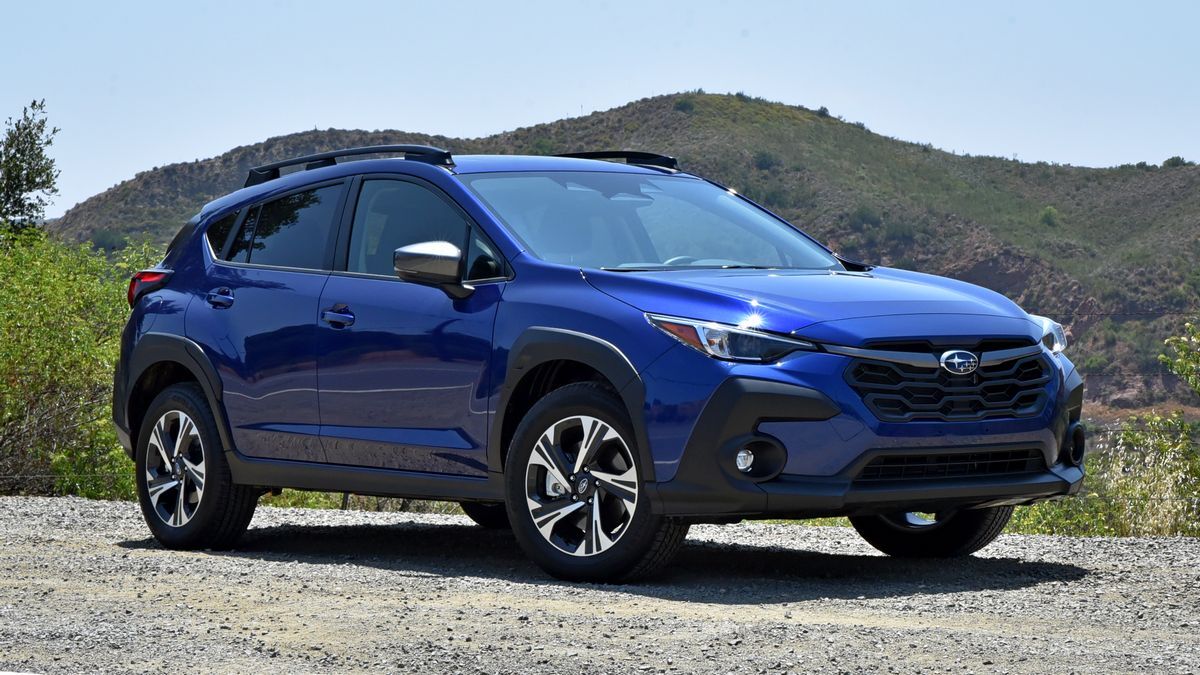
When shopping for a small SUV, buyers consistently point to three decisive factors: safety, reliability, and affordability. For years, the Subaru Crosstrek easily secured the first two, while its low entry price locked in the third. However, the subcompact utility segment has undergone a radical shift. Competitors are aggressively slashing entry costs, and Subaru’s rollout of the new Crosstrek Hybrid pushes pricing past the $35,000 mark.
This raises a question for budget-conscious buyers: Is the Crosstrek still a good value, or are you paying a premium for a lifestyle badge? To find out, we have to look past the sticker price and focus on the real-world numbers.

What You Actually Pay: The 2026 Lineup
Subaru splits the Crosstrek lineup into distinct tiers, separating standard gas engines from the new hybrid powertrain:
New 2026 Subaru Crosstrek Prices
|
Retail Price
|
Fair Purchase Price (92620)
|
|||
|---|---|---|---|---|
$28,445 |
$27,200 |
|||
$29,445 |
$28,100 |
|||
$32,075 |
$30,600 |
|||
$34,445 |
$32,900 |
|||
$35,245 |
$33,600 |
New 2026 Subaru Crosstrek Hybrid Prices
|
Retail Price
|
Fair Purchase Price (92620)
|
|||
|---|---|---|---|---|
$35,445 |
$33,700 |
|||
$36,445 |
$34,900 |
The Kelley Blue Book Fair Purchase Price for any individual used vehicle can vary greatly according to mileage, condition, location, and other factors. The prices here reflect what buyers are currently paying for New 2026 Subaru Crosstrek vehicles and New 2026 Subaru Crosstrek Hybrid vehicles in typical condition when purchasing from a dealership. These prices are updated weekly. The manufacturer’s suggested retail price (MSRP) quoted includes the destination fee, but does not include tax, license, document fees, and options.
On paper, this lineup seems slightly more expensive than an ultra-budget rival like the Chevrolet Trax, which tops out at $27,195 for its top-tier ACTIV trim. But the retail sticker price doesn’t tell the whole story.
What the Price Buys (That Rivals Charge Extra For)
The reason the Crosstrek’s base price sits higher than its rivals is that Subaru includes its most valuable hardware as standard equipment. First and foremost is Symmetrical all-wheel drive (AWD). If you want AWD on a Honda HR-V or Toyota Corolla Cross, you have to pay a $1,300-$1,500 premium. On a Chevy Trax, you can’t get it at all, as it’s strictly a front-wheel drive (FWD) crossover, while the slightly pricier Chevy Trailblazer is available with AWD.
Furthermore, the Crosstrek serves as a scaled down, more affordable version of the Forester or Outback. It delivers 8.7 inches to 9.3 inches of ground clearance and functional off-road capability that many rivals simply cannot match.
The second major value pillar is the Crosstrek’s strong resale value, tracking well above the segment average toward the top of its class. Recouping more money when selling a vehicle can mean a bigger down payment and lower monthly payments on the next one.
Because it holds its value well and costs very little to maintain, the 5-Year Cost to Own index ranks the Crosstrek as one of the lowest-cost vehicles to operate in its segment.

The Potential Value Perception Gap
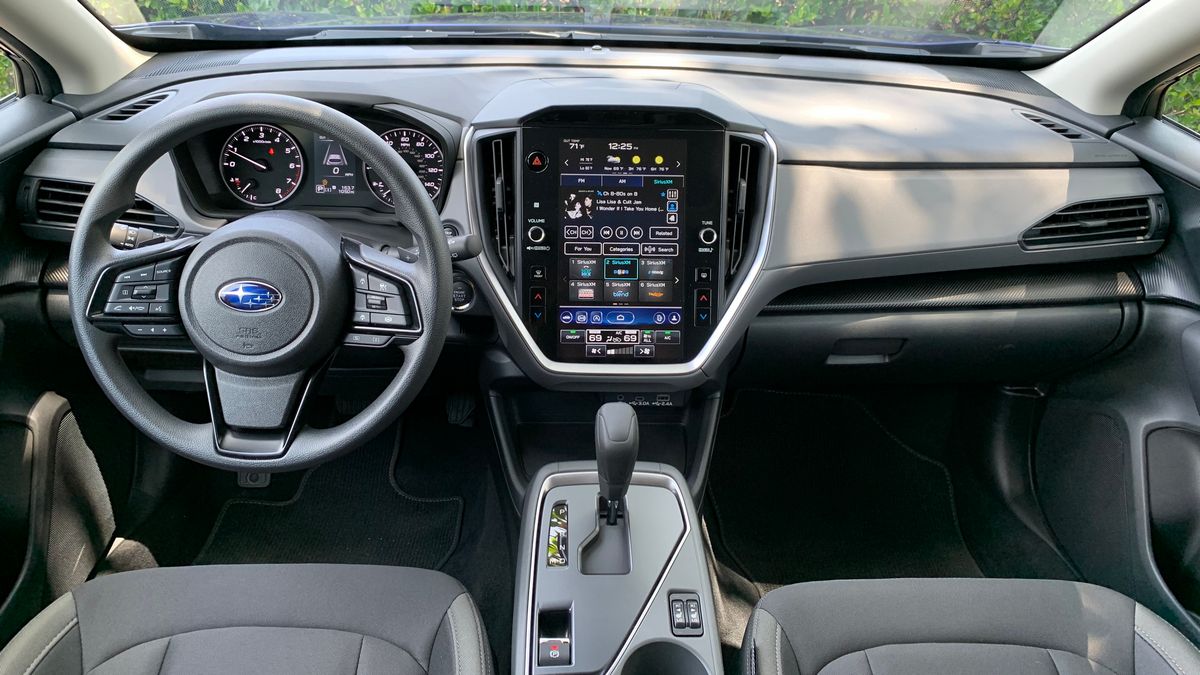
Subaru’s interior design prioritizes rugged durability over premium comfort, which may make it feel less upscale than a loaded Honda HR-V or Mazda CX-30. And while the large 11.6-inch vertical touchscreen looks impressive, the interface is occasionally sluggish and bundles critical climate controls into digital menus rather than the physical buttons many buyers appreciate.
Storage utility also lags the pack. The standard gas Crosstrek offers 54.7 cubic feet of maximum cargo space, which falls short of the Corolla Cross’s cavernous 61.8 cubic feet. If you buy the Hybrid model, the battery packaging raises the floor deck, reducing your maximum cargo capacity to a tighter 50.6 cubic feet. But in return, the Hybrid offers many benefits.
The Hybrid Premium: Does it Pay Back?
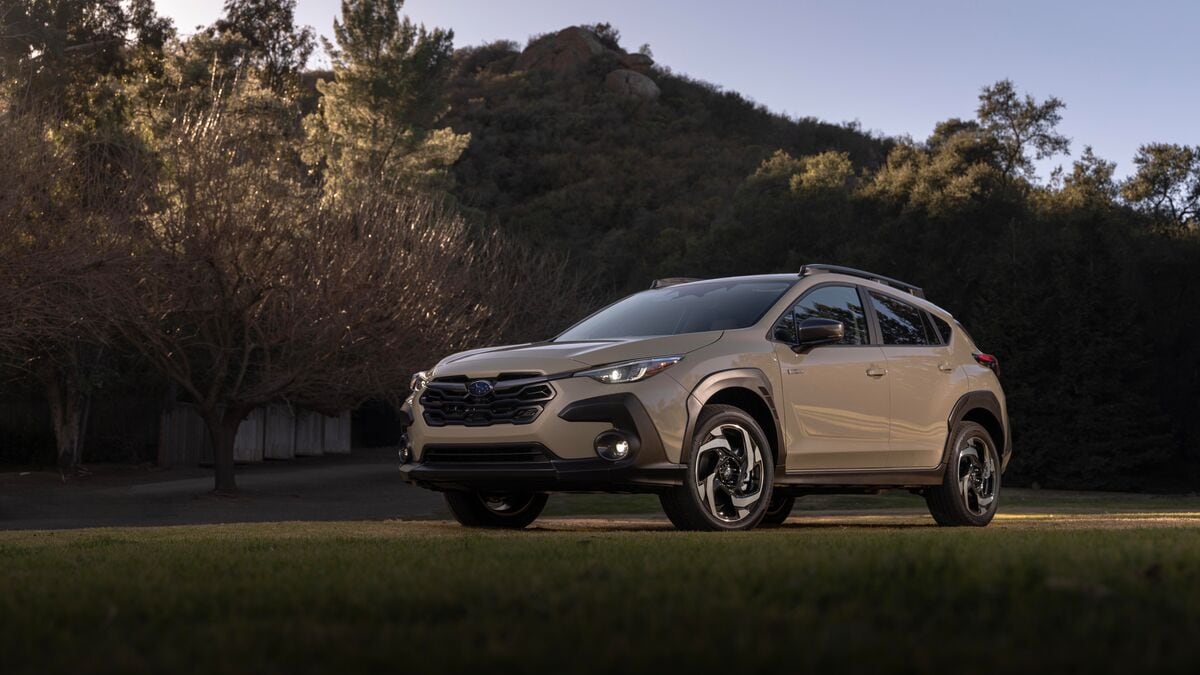
The new Sport Hybrid trim requires a $3,370 premium over a similarly equipped gas-powered Crosstrek. It delivers an EPA-estimated 36 combined mpg alongside standard AWD.
Historically, buyers calculate a hybrid’s value by tracking how many miles it takes to “break even” on fuel savings. Because the gas-only HR-V (27 mpg AWD) and Trax (30 mpg FWD) don’t offer hybrid variants, the Crosstrek Hybrid may justify its cost over them if you drive heavily in stop-and-go city traffic or high-mileage commuting.
However, the closest comparison is the Toyota Corolla Cross Hybrid. A base Corolla Cross Hybrid undercuts the Crosstrek’s entry price while delivering a superior combined 42 mpg. But to match the high-end technology packed into the Crosstrek Sport Hybrid (like the 12.3-inch digital gauge cluster), you must step up to Toyota’s higher XSE trim, which starts at $35,225.
At this tier, the price gap virtually vanishes to less than $200. While the Corolla Cross Hybrid XSE remains the undisputed fuel efficiency champ, it cannot match the Crosstrek’s off-road clearance and trail-ready suspension. The decision thus comes down to a clear lifestyle choice: Do you want maximum efficiency, or more trail capability?

The Value Verdict
If you genuinely want AWD, class-leading ground clearance, and the adventure-minded company ethos, the Crosstrek remains an incredible value. Its higher entry price is fully redeemed by standard mechanical capability, rock-solid reliability, and an industry-leading cost-to-own story that saves you thousands down the road … or trail.