
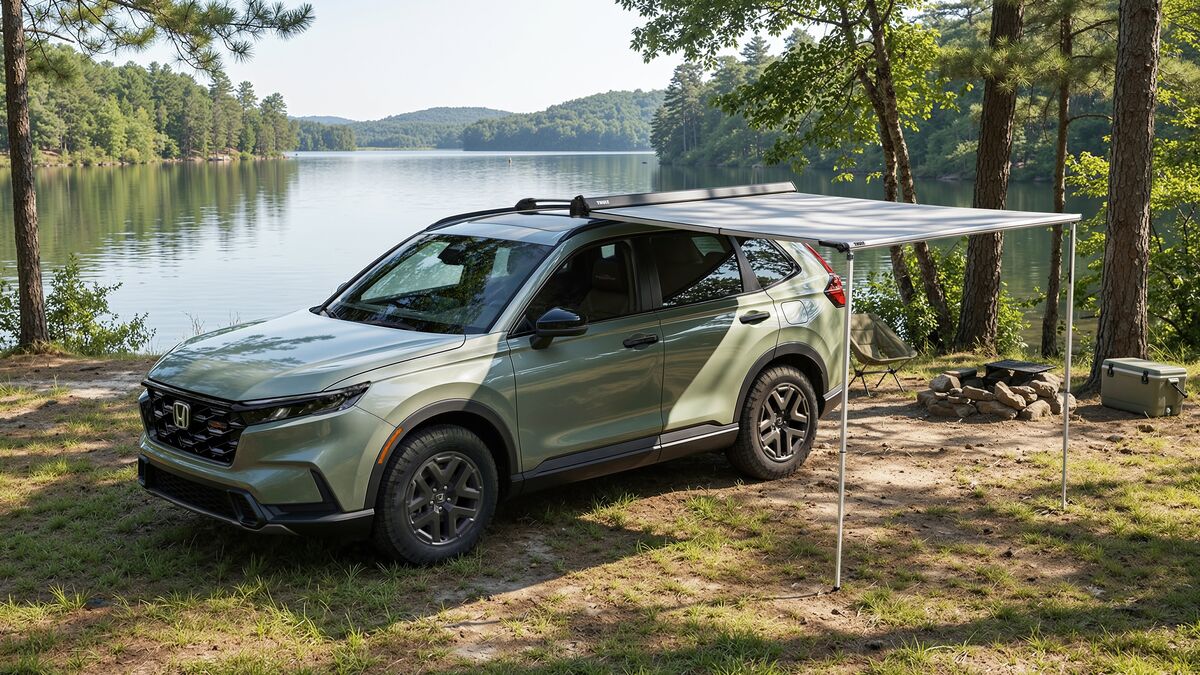
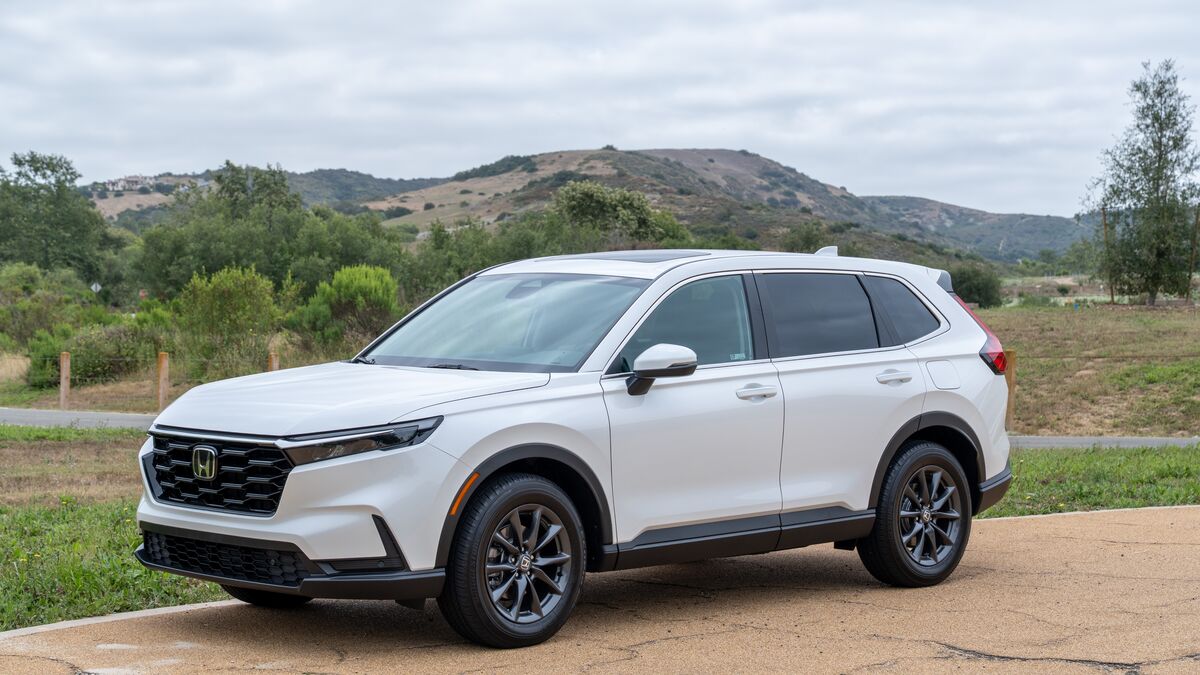
The 2026 Honda CR-V is a familiar and beloved vehicle to millions of drivers across the country. Why? Because if you don’t own a CR-V right now, chances are good you have at some point, or that you will.
It’s a famously practical, reliable, and affordable vehicle that’s flexible enough to meet most folks’ daily driver needs. From picking up the kids (two-legged or four-legged) to the weekend home improvement haul to the daily commute, the CR-V is built for it all.
For 2026, the Honda CR-V gets a dash of tech upgrades, including standard wireless smartphone integration and charging, a 9-inch touchscreen display across the range, and all-wheel-drive (AWD) models get upgraded traction management software.
Like many vehicles, the CR-V is available with both a standard combustion powertrain and a hybrid drivetrain. The base engine is a turbocharged 1.5-liter 4-cylinder engine rated at 190 horsepower and 179 lb-ft of torque. The CR-V’s other option is the hybrid, powered by two electric motors, a small battery pack, and a 2.0-liter 4-cylinder engine rated for a total system power of 204 hp.
What’s the Price Difference?
The standard non-hybrid 2026 Honda CR-V starts at just $32,370, about $1,000 less than its rival, the 2026 Toyota RAV4, but the all-new RAV4 is a hybrid even in base form. The hybrid 2026 CR-V starts from $37,080, a significant step up from the RAV4’s hybrid base price.
Comparing the price of the non-hybrid CR-V to the CR-V Hybrid, the difference is $4,710. In addition to the hybrid drivetrain, the extra cash also includes upgraded features like heated front seats, roof rails, and a sport appearance package.
Which is More Efficient?
It’s no surprise that the hybrid drivetrain is more efficient than the combustion-only version. The base 2026 Honda CR-V is still pretty efficient, however, earning ratings of 28 mpg city, 33 mpg highway, and 30 mpg combined in front-wheel drive (FWD) form. Add AWD and those figures drop slightly to 27 mpg city, 31 mpg highway, and 29 mpg combined.
Step up to the hybrid, and you’ll get up to 43 mpg in the city, 36 mpg on the highway, and 40 mpg combined with the FWD model. The AWD 2026 CR-V Hybrid earns 40 mpg city, 34 mpg highway, and 37 mpg combined. If you prefer a more off-road-themed vehicle, the CR-V Hybrid TrailSport comes with AWD and a range of upgrades to improve performance in the dirt, and it scores 38 mpg city, 33 mpg highway, and 35 mpg combined.
The fuel cost of the 2026 CR-V is similar across powertrains, with the most expensive option being the AWD combustion-only CR-V at $2,150 in gas costs per year, according to estimates from the EPA. The most efficient is the FWD CR-V Hybrid, which has an estimated annual fuel expense of just $1,550. That means the fuel costs could cover the $4,710 price difference between the base model and the base hybrid over about eight years.
Which is Faster?
While it’s often the case that the hybrid powertrain is considerably more or less powerful than the non-hybrid option, Honda has bucked the trend and provided two powertrains that are very similar in maximum power and performance. The hybrid is still about 10% more powerful than the non-hybrid; however, the extra power is somewhat offset by the hybrid system’s extra mass, so both vehicles feel roughly comparable in terms of acceleration and passing power. Both variants use a continuously variable transmission (CVT), which is tuned well enough to avoid most of the common criticisms lobbed at CVTs.
Whichever powertrain you choose, the CR-V exhibits Honda’s excellent balance between nimble, easy-to-drive road manners and passenger comfort.
Which 2026 Honda CR-V Powertrain is Best?
The base, combustion-only 2026 Honda CR-V is more affordable off the lot, but it costs about $600 more per year in fuel. That takes a while to add up, but it’s worth considering if monthly cash flow is a top concern. On the other hand, the slightly more expensive up-front cost of the CR-V Hybrid could end up leaving a little more cash in your pocket each week, especially if you drive more than the standard 15,000 miles per year used in the EPA’s fuel cost estimates. With either powertrain, you’ll get a reliable, efficient, and peppy system to power your daily tasks.