
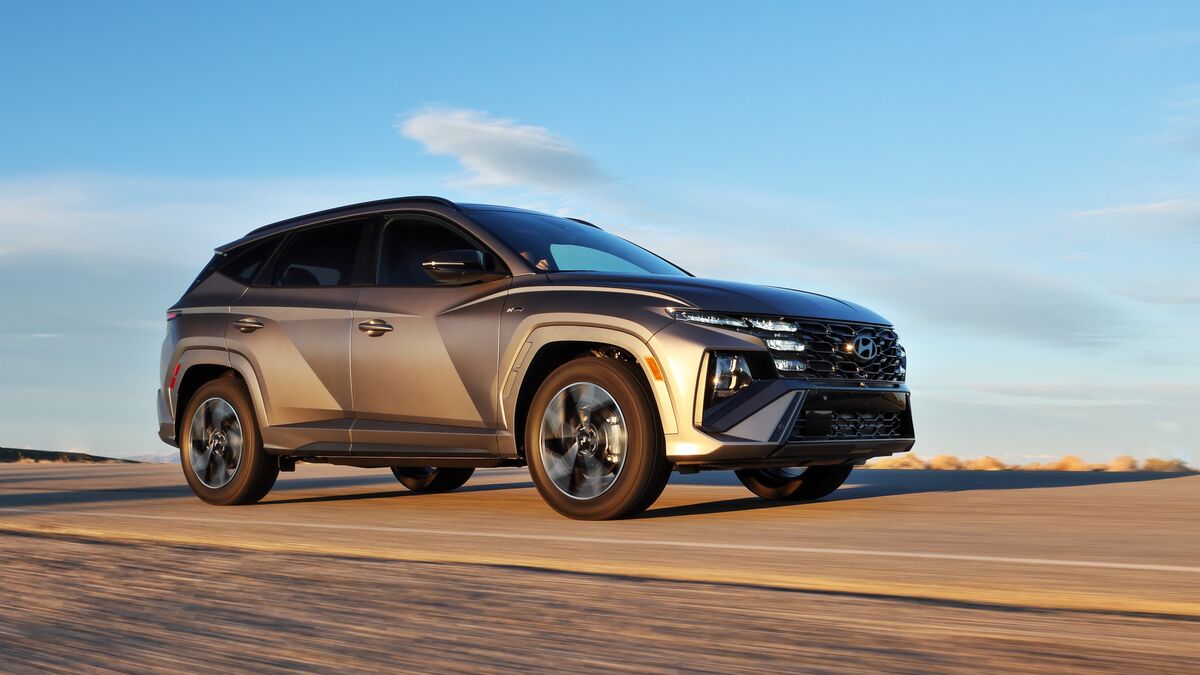
The 2026 Hyundai Tucson is the brand’s best-selling model due in part to its safety features, comfort, and array of tech. Another strong selling point for the Tucson is that it’s available in three powertrains: gas, hybrid, and plug-in hybrid.
Read on to see which powertrain is right for you.
Gas-Powered
The 2026 gas-powered Tucson has a 2.5-liter 4-cylinder engine that makes 187 horsepower and 178 lb-ft of torque. When compared to the broader SUV segment, the Tucson’s horsepower is average.
Front-wheel drive (FWD) is standard, while all-wheel drive (AWD) is an option. The Tucson gets an EPA-rated 28 mpg in combined city/highway driving with FWD and 26 mpg in AWD. For daily driving and road trips alike, the gas-powered Tucson is competent and capable.
The gas-powered model offers improved towing capacity for 2026, improving from 2,000 pounds to 2,750 pounds.
The XRT model is more rugged, offering a Terrain Mode and HTRAC AWD. Snow mode comes with the AWD version, as does mud and sand mode.
Hybrid

The 2026 Hyundai Tucson Hybrid’s middle name is “efficiency.” The things that make the gas-powered Tucson great are still included, such as roominess, tech, and safety, but this model improves upon its power and fuel economy.
The hybrid model comes standard with AWD. It also produces 231 hp and 271 lb-ft of torque, which beats the gas engine model. In terms of towing, it can only handle 2,000 pounds, which is less than its gas-powered counterpart.
It also bests the gas-powered Tucson in fuel economy, recording 38 mpg combined in city/highway driving for the base trim. The higher trim levels get 35 mpg.
Our experts appreciate the Tucson Hybrid’s smooth ride quality and quiet cabin. For even greater quiet, the exclusive Baby Mode delivers gentle acceleration to avoid disturbing the tiniest passengers.
Plug-in Hybrid
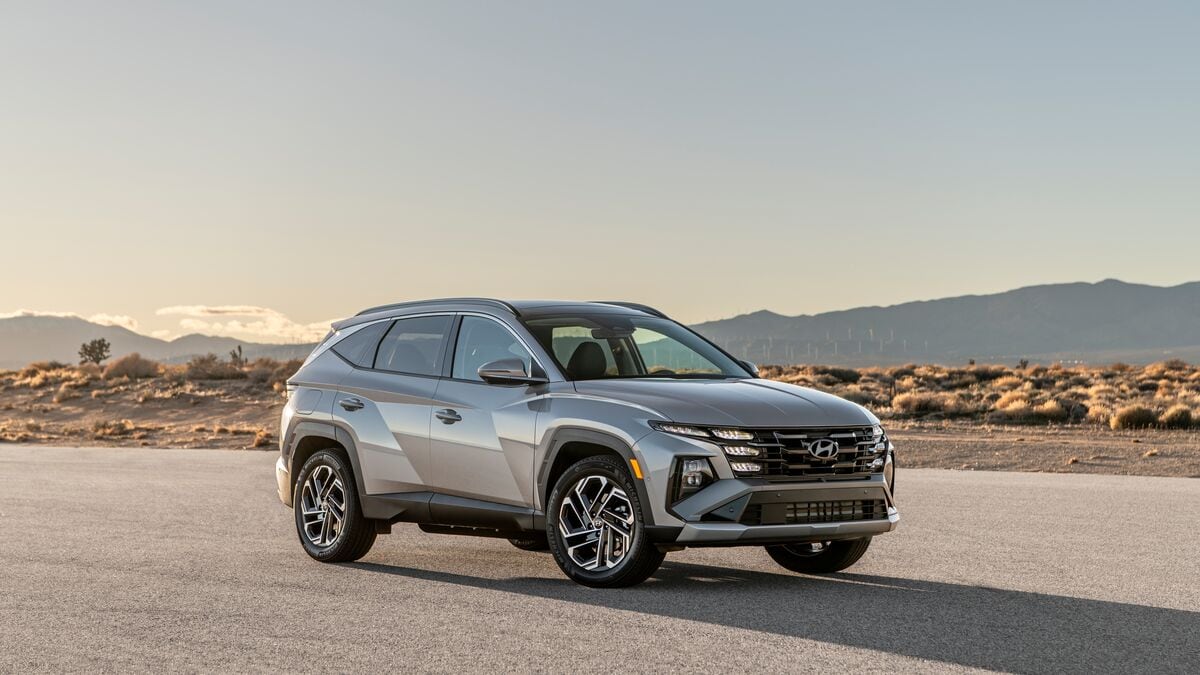
The 2026 Tucson Plug-in Hybrid takes the power and efficiency of the hybrid model a step further.
It gets 268 hp, the most of any Tucson model. The torque remains the same as the hybrid model with 271 lb-ft. Like the hybrid version, the Tucson PHEV comes standard with AWD, offers smooth driving, and includes the aforementioned Baby Mode.
Fuel economy is where the PHEV version of the Tucson shines. It runs on 32 miles of battery alone. Afterward, it operates as a hybrid, achieving 35 mpg combined city/highway, comparable to the upper hybrid trims.
The engine in the PHEV is a turbocharged 1.6-liter 4-cylinder and has a 6-speed automatic transmission, the same as the hybrid. The PHEV also has a 2,000-pound towing capacity.
What’s the Price Difference?
The gas-powered Tucson is the cheapest and comes with six trim levels, priced from $31,050 to $41,025. The Hybrid Tucson is available in four trim levels, with an entry price of $34,050 and a top price of $43,675. So, for just $1,500 more, you can get better fuel economy, more power, and AWD with the hybrid.
A big difference from the other Tucson models is that the PHEV comes in only two trim levels and starts at a higher price point of $41,925. Factor in the savings on fuel costs thanks to the EV battery, though, and it could be worth it. The battery in the PHEV takes about two hours to fully recharge, and a Level 1/Level 2 charging cable is included.
Which Tucson Engine is Better?
With so many Tucson options to choose from, driving patterns can be the determining factor in picking the right powertrain.
For those who drive a little less and say, work from home, the gas-powered Tucson is a solid choice with several price points to accommodate various budgets. Those in need of more towing capacity would favor it as well.
Commuters and performance seekers should consider the more efficient and powerful hybrid. All-weather drivers will also appreciate the AWD that comes standard while new parents would likely be big fans of Baby Mode standard on the hybrid and PHEV Tucson. Tech enthusiasts will gravitate toward the array of features in the hybrid and PHEV models, too.
Those who love road trips would put the PHEV to good use, since they wouldn’t have to stop to refuel as often. Short-distance commuters would also embrace the plug-in version since they could charge at home overnight and wouldn’t have to rely on gas for local driving.
Regardless of which Tucson you choose, Hyundai’s unbeatable five-year/60,000-mile warranty and 10-year/100,000-mile powertrain and battery warranty are included, as is free scheduled maintenance for three years or 36,000 miles plus five years of roadside assistance. The Tucson lineup also claim top safety ratings from the Insurance Institute for Highway Safety (IIHS) and National Highway Traffic Safety Administration (NHTSA).