
Nissan builds cars under two brand names in the U.S. The mainstream models they badge as Nissan products. The luxury models they sell under the Infiniti name.
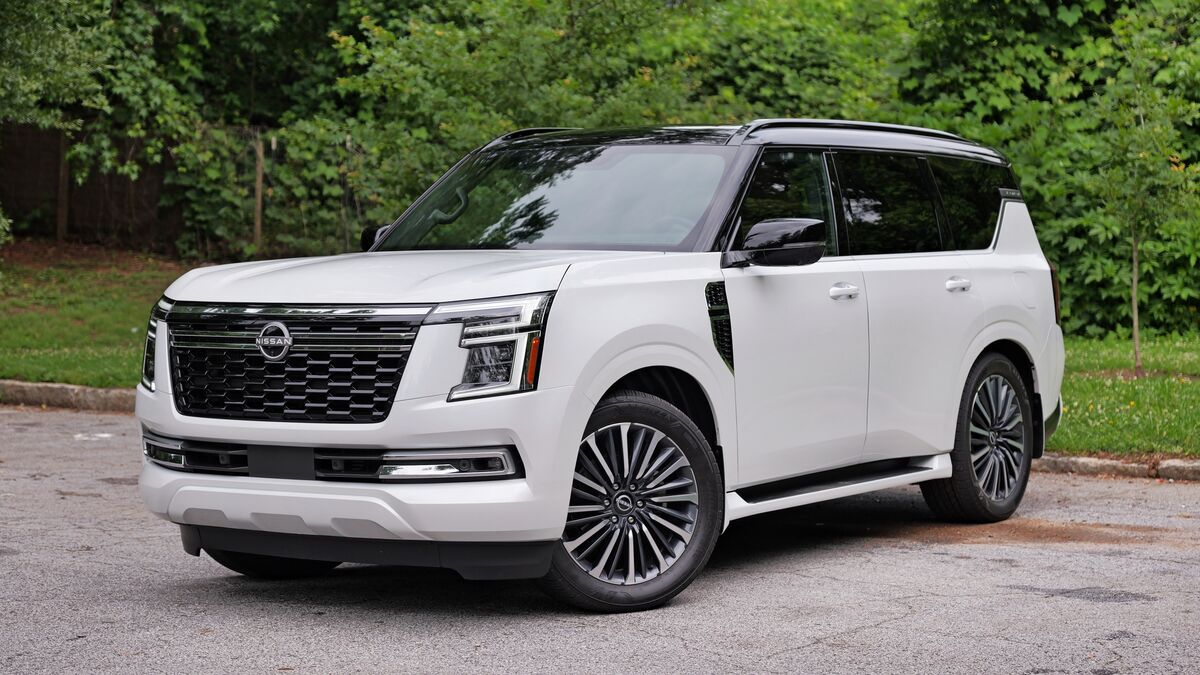
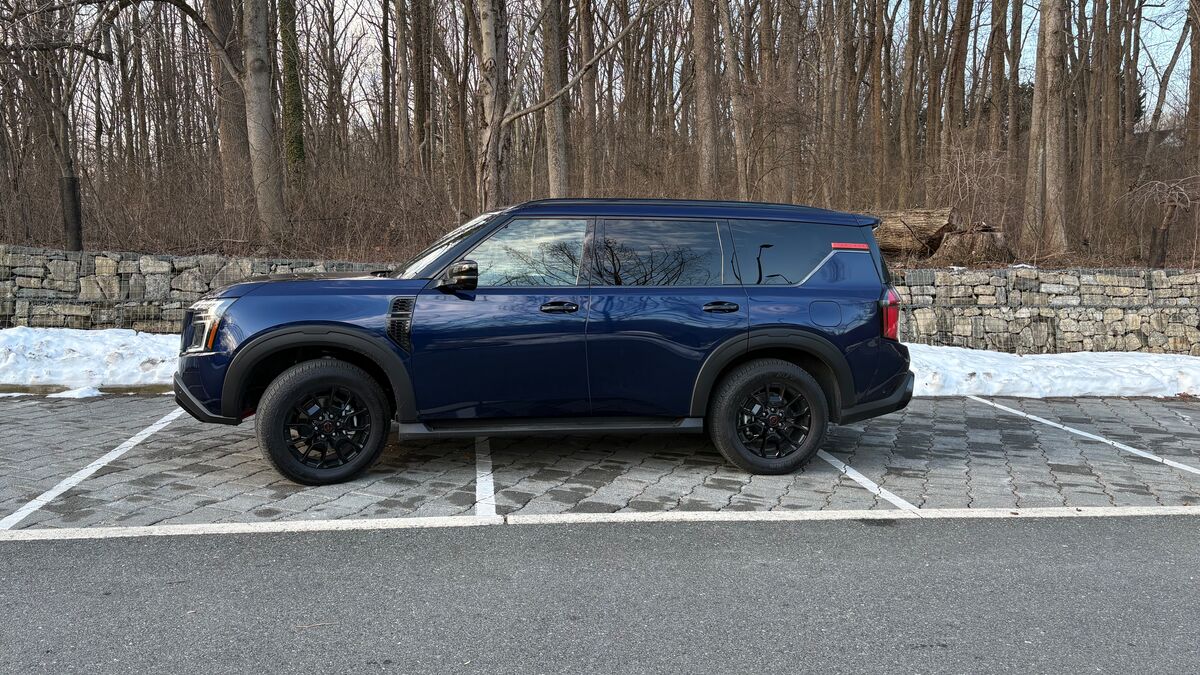
The distinction was on my mind often as I spent a week driving the 2026 Nissan Armada PRO-4X around Washington, D.C., and its suburbs. The Armada is Nissan’s largest SUV – a full-size model with three spacious rows of seating and the ability to tow up to 8,500 pounds.
By a quirk of scheduling, I happened to have it shortly after I test-drove the 2026 Infiniti QX80, which shares a platform with it.
The Armada starts at a price well under that of the QX80. But the model Nissan loaned me for the week, the off-road-oriented PRO-4X, carried a sticker price of over $80,000. At that price, it competes with some luxury cars.
There are probably reasons to argue that the Armada isn’t quite a luxury vehicle. In my tester, much of that cost went to trail capability. A surprising eight drive modes for different terrains, 4-wheel drive, an electronic locking rear differential, and an invisible hood view for negotiating over trail obstacles genuinely do make it a capable off-roader.
But Klipsch audio, leather upholstery, 3-zone climate control, and other creature comforts mean it infringes on Infiniti territory.
If you’re genuinely looking for luxury car comfort, the Armada PRO-4X probably can’t stand in for an Infiniti. But if you want to get close with more rugged looks and the option to drive on mud and sand, Nissan’s big bruiser can do a convincing impression of a luxury SUV.
Which Trim Level
Nissan builds six grades of Armada, including two specialized performance trims – a high-performance NISMO edition for the road, and my tester, the off-road PRO-4X model. It’s not a soft-road model that just looks rugged. It’s the only Armada available with an electronic locking rear differential and steel skid plate.
Favorite Feature
Hopefully, none of us will ever experience the best thing about the Armada.
It’s the only large SUV outside the luxury category to earn the Insurance Institute for Highway Safety’s highest safety award, Top Safety Pick+.
Every car shopper has their own priorities, but that would carry a lot of weight with me. The IIHS is a safety lab funded by a group of insurance companies and has a reputation as a tougher grader than the federal government’s own crash-testing agency.
What It’s Like to Drive
The Armada PRO-4X is powered by a 3.5-liter turbocharged V6 making 425 horsepower and 516 lb-ft of torque. You might be used to V8s at this size, but Nissan’s turbo-6 makes V8-like power. It doesn’t improve fuel economy as much as you might hope. The EPA rates the PRO-4X for 16 mpg in combined driving – not a great score (more on that later).
If you don’t need the off-road gear, other trim levels get up to 18 mpg.
The 9-speed transmission tends to hunt for the right gear between 15 and 20 mph. If your regular driving routes include a lot of urban or suburban traffic, you’ll notice it. Sport mode helps it settle into a gear, but you may not want to drive in it Sport all the time.
I suspect owners in more wide-open spaces would barely notice the issue.
The adaptive suspension found in the off-road model is very well tuned, keeping bodyroll to a minimum. I find many off-road SUVs too softly sprung for my liking, but I never noticed that issue in this one.
Brakes are confident and provide plenty of stopping power even for a big vehicle.
Interior Comfort and Technology
The PRO-4X is an off-road model, but you could easily mistake it for a high-end trim. Quilted leather seating greets first- and second-row passengers. Front-row seats are heated, and buyers can choose the Premium Package to make them ventilated as well.
The leather in Infiniti models is a little softer. But this starts to crowd into Infiniti territory.
A pair of high-mounted screens, one for the driver and one in the center, gives it a bit of a high-tech look. But the design theme is more rugged than in its luxury cousin, with real buttons and knobs for climate control, large enough to use with gloves.
My tester came equipped with second-row captain’s chairs. Those always introduce a dilemma for designers: Do you leave an open path between them to make accessing the third row easier, or put a useful console between so passengers have cupholders and easy access to charging ports?
Nissan split the difference, with a small half-width console. I’m surprised how much I like it, but I’m built small. If you’re shopping in the full-size class because you need the shoulder and hip room, this pass-through may not let you through.
The third row is relatively spacious and has power outlets and vents.
Klispch is a relatively new name in car audio. This model comes equipped with a 12-speaker Klipsch audio system. It sounds nice, but lacks the headrest speakers that make the QX80 and even the new Nissan Leaf sound so great.
Limitations
Fuel costs are a big issue for many Americans this year, and I had hoped Nissan’s move to a 6-cylinder engine for a full-size SUV would provide greater savings. You can get up to 24 mpg in a Chevrolet Tahoe or 23 in a Suburban.
Key Considerations
One area where the Armada excels is accessibility. Nissan’s push-button transmission means no twisting motion. Big running boards provide a stable footing when getting in, and Nissan puts a grab handle at every position, so you’re not left relying on an unstable steering wheel to pull yourself up.
The second-row folding seats are not powered, and can be heavy to move out of the way to access the third row. Beyond that, it’s one of the easiest vehicles in its class to live with as your mobility evolves.