
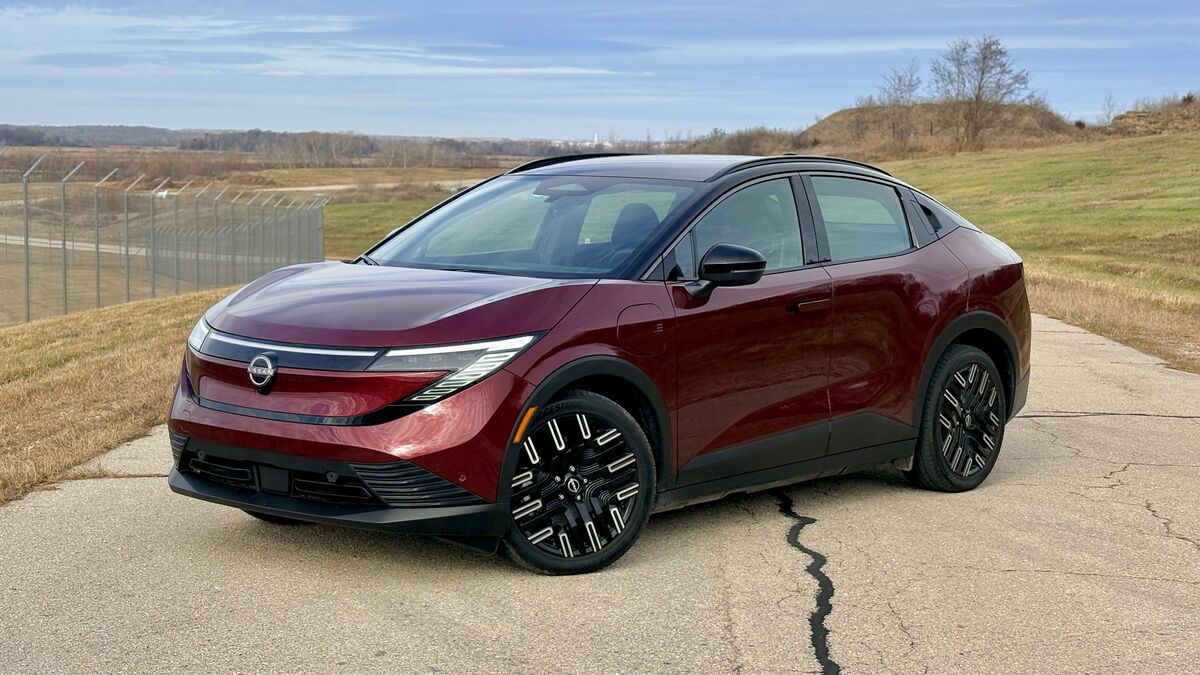
We found the 2026 Nissan Leaf’s 214 horsepower and 261 lb-ft of torque enables plenty of perk. Those numbers aren’t huge, but this also isn’t a big EV. The Leaf easily squirts through traffic in the city, yet still feels substantial enough on the highway.
EVs in general feel quicker than traditional combustion cars because power delivery is immediate, like turning on a light switch. That means the Leaf is always ready to jump off the line, while its battery platform provides a low center of gravity that makes this tidy little car still feel planted. We also found the Nissan Leaf to be pleasantly quiet, even by EV standards.
Unlike many rivals, the Nissan Leaf does not feature a one-pedal drive mode, in which brake regen is enough to bring the car to a complete stop. But it gets pretty close. Steering wheel-mounted paddles enable you to adjust the regen level, or you can use the e-step button to enable even greater regen stopping power.
Range and Charging
The 2026 Nissan Leaf’s maximum range rating crushes the old one’s; it now gets up to 303 miles of range on a full charge, versus the 2025 model’s 212-mile max range. Notably, only the S+ trim gets that 300-plus-mile range, while the SV+ is rated at 288 miles, and the Platinum+ gets 259 miles. This beats the max range ratings of the Kia Niro EV and Hyundai Kona Electric, which don’t reach the 300-mile mark.
Nissan estimates a charge time of 10% to 80% in 35 minutes with DC fast charging, which is about on par with modern-day EVs. One big perk of the new Leaf is its two charge ports; a familiar J1772 port on one side and a Tesla-style NACS port on the other. Moreover, Nissan is promising the Leaf’s battery thermal management system will keep the charge times consistent, even in winter temperatures.
Also see:
- 2026 Nissan Leaf Overview & Pricing
- 2026 Nissan Leaf Interior
- 2026 Nissan Leaf: Our Favorite Features & Tech