

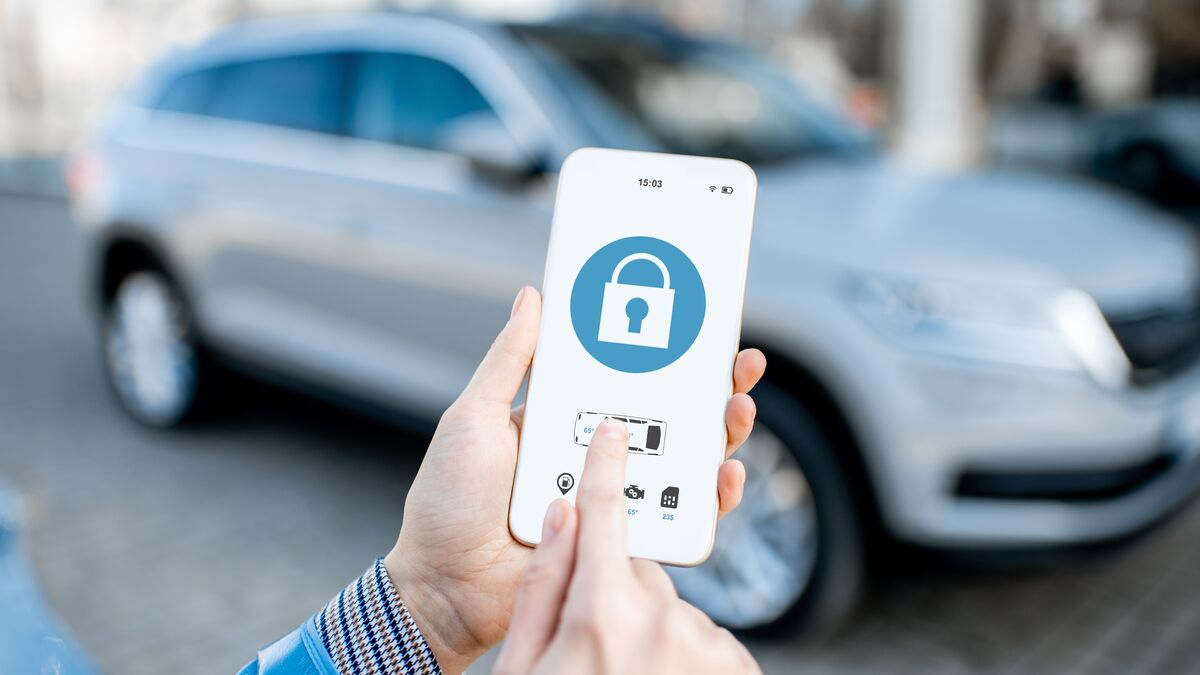
For those of us who remember “freedom fries,” it’s easy to picture the “freedom car” as some sort of cultural rebranding of a non-American automobile. However, that’s not what it’s about. The term actually originated in 2002 to refer to a developing car technology. In 2026, it refers to the removal of technology from cars.
The First FreedomCAR
The FreedomCAR Partnership launched in 2002. “Car” was an acronym for “Cooperative Automotive Research.” The idea behind this program was to get the industry to adopt hydrogen/fuel-cell technology, with the end goal of reducing dependence on foreign oil.
Twenty-four years later, the “freedom car” is back in a different way.
Protecting Consumer Choice
Transportation Secretary Sean Duffy wrote the term on page seven of a letter to Congress sent on July 22. The term appears in the appendix on policy priorities, under the heading “Protecting Consumer Choice.” He writes, “Freedom Car – Right to Drive Disconnected and Non-Automated: Prohibit any Federal, State, tribal, or local authority from mandating that vehicles sold or operated on public roads be equipped with automated driving systems or be capable of transmitting data wirelessly.”
The Disconnect
Duffy is asking for protection of the right to drive a car that does not transmit data. While this seems like a fair idea, there is a lot that’s left to be desired. The Freedom Car concept is not a proposed law, so there are no additional specifics or policies associated with it yet. For example, there is no legislation requiring automakers to make cars that are disconnected.
While there are used cars on the market without digital connectivity, that number will dwindle over time. Unless automakers choose to make cars without Bluetooth connectivity or autonomous driving capability, there is no real protection against advances in car-tracking technology.
Insurance Interference
Another thing to consider is that some insurance companies offer discounts to drivers who install trackers in their cars to monitor their driving, and therefore receive a lower rate. In other cases, the vehicles themselves can collect information on the driving habits of their owner and then report it to data brokers.
So far, there are no comprehensive federal laws prohibiting this type of tracking and data sharing. And then there’s the possibility that insurance companies could opt not to cover non-tracked vehicles. Since almost every state requires car insurance, this would rob shoppers of their choice on the insurance side of the equation.
The idea of a car free from data sharing is an appealing one, but all parties involved would have to participate for an effective policy to take shape. This is just one of the many issues that arise as car technology advances. Automakers offer shoppers plenty of choice when it comes to size, shape, color, powertrain, and price. The choice to share data is one that, for now, is still in the hands of the customer.