
- A new law in New York state will ban many subscriptions for car features.
- It may not apply to driver assists like Tesla’s Autopilot, though there will doubtless be court disputes over how to interpret its wording.
New York Gov. Kathy Hochul (D) on Monday signed a bill into law that would ban many in-car subscriptions.
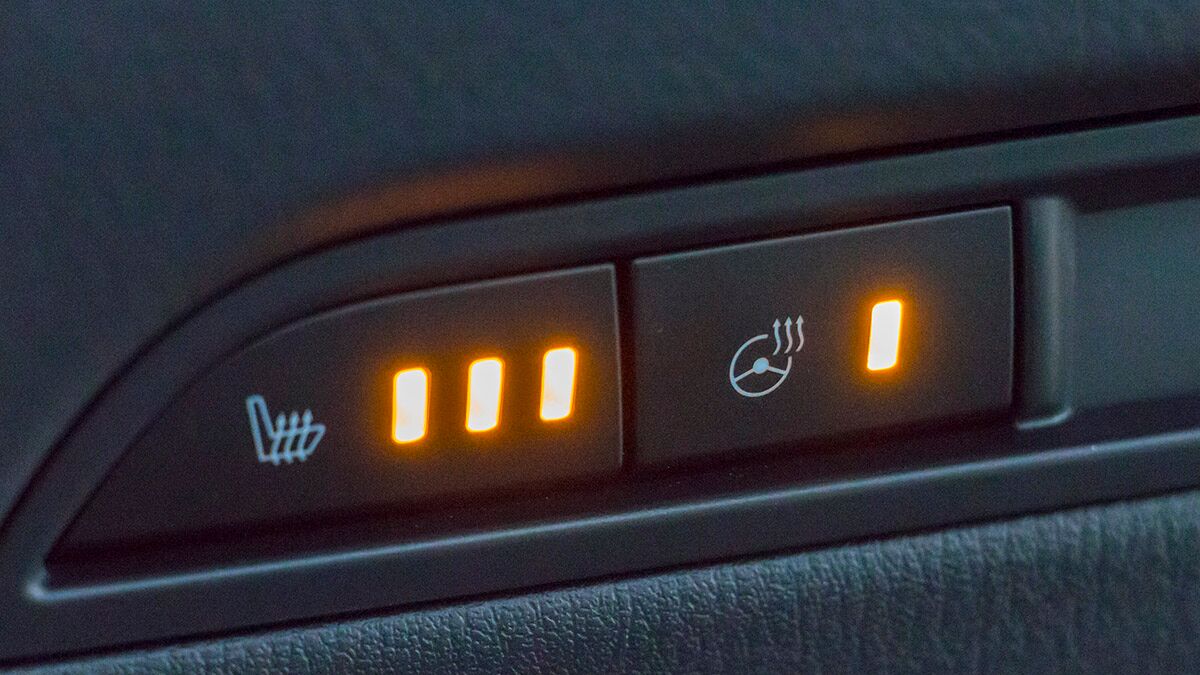
The way the law is worded could allow subscriptions for things like partial self-driving or streaming entertainment. But it will likely ban others, like those for additional horsepower or heated seats.
In case the idea is new to you, we’ll explain.
How In-Car Subscriptions Work
- Subscriptions could give drivers the option of turning features on or off, for a fee.
- For automakers, they’re a way to keep a revenue stream going even on cars already sold.
- For drivers, they could mean paying monthly fees even on used cars.
Automakers have spent several years signaling that the future of car shopping will be very different than shopping today.
Traditionally, shoppers select the features they want on their car at the time of purchase. They then pay a fixed price for the car or take out a loan with fixed monthly payments to drive it home. Automakers often bundle features into packages — if you want heated seats, you have to pay for a premium audio system and a leather steering wheel, too — to make building cars in bulk easier.
But most of today’s cars are always connected to the internet. That gives automakers some control over cars long after they’ve left the factory. Americans also keep their cars longer than ever; the average car on American roads today is nearly 13 years old.
That has automakers considering a new business model. Someday, they tell investors, they may build every car with every feature. They’ll then charge fees to turn some features on.
BMW has, for instance, experimented with a monthly fee for heated seats. Mercedes has charged some EV owners for extra horsepower.
Volkswagen even once revealed a concept car that would charge ticket prices to use self-driving for far-off destinations.
The move would allow automakers to build just one combination of features, easing manufacturing. But it might mean that even owners of used cars paid fees to automakers.
What New York Bans, and What It May Not
- The law clearly covers hardware like heated seats and sound systems.
- It may not cover partial self-driving systems, which require ongoing support from automakers.
New York’s new law would likely apply to many of these ideas, but not all of them.
A press release from the governor’s office says that the law bans “built-in features like heated seats, enhanced navigation, hands-free driving and entertainment options that do not present an ongoing expense for dealers and manufacturers.”
That last exception is important.
It means, for instance, that an automaker couldn’t install 24 speakers and charge owners different fees to use 12, 16, or 24. But a company like Tesla might successfully argue that its partial self-driving systems are exempt because the manufacturer constantly updates them. That includes the expense of employing developers.
The law takes effect Feb. 27, 2027. We anticipate legal disputes over which features it does and does not apply to.