
Starting a new vehicle manufacturing company might be one of the most difficult challenges in business today. Lucid is a great example.
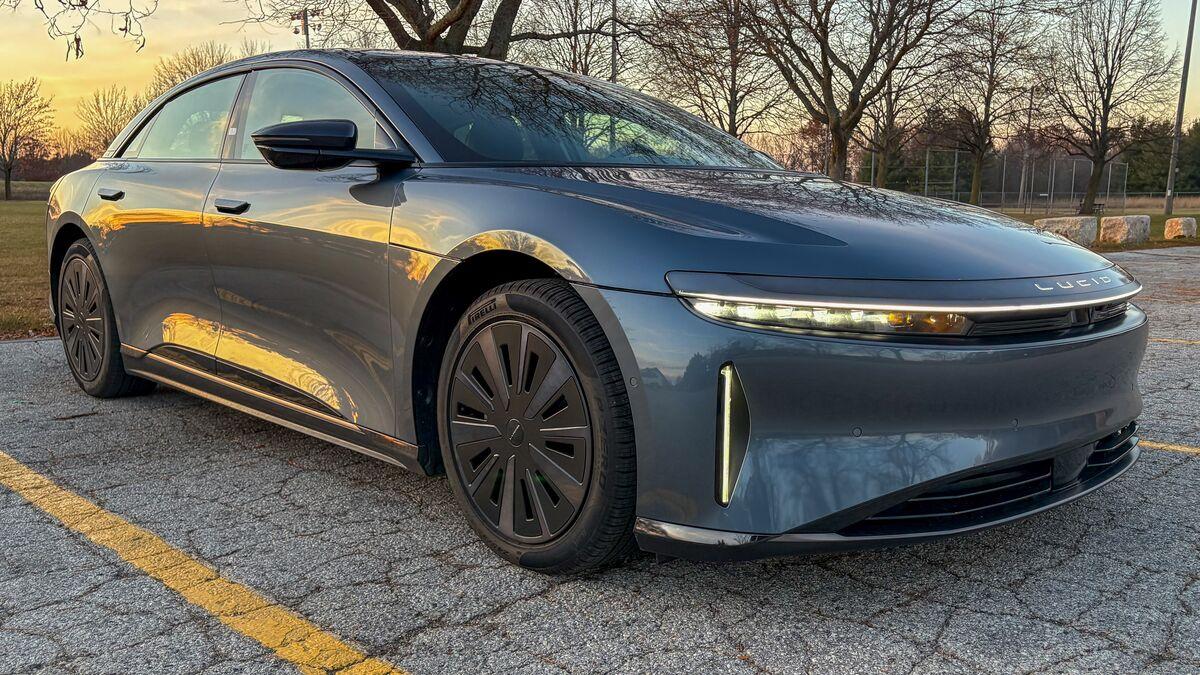
The California-based company manufactures the luxurious all-electric Air sedan and Gravity SUV, with plans for several smaller electric vehicles (EVs).
On paper, the automaker appears to have all the elements needed to build success: compelling vehicles, American manufacturing, and financial backing from the deep-pocketed Saudi Arabian government. However, Lucid’s reality in late 2026 doesn’t look quite as bright, as it recently reported a 6.7% year-over-year decline in vehicle deliveries in the third quarter.
Lucid delivered just 3,806 electric vehicles and built 2,954 between July and September of this year, down from 4,078 deliveries and 3,891 completed vehicles during the same period in 2025.
To compensate, the company says, it has cut production. The move will “align production with near-term demand,” Lucid says.
Even with the recent sales drop, the automaker’s year-to-date deliveries are still 3.4% higher than last year. Lucid cited lighter demand for electric vehicles, especially expensive high-end models, as one of the primary drivers of its decision to slow output.
The moves call to mind the recent bankruptcy of rival Fisker. Several startup automakers have failed or come close in recent years. Lucid’s situation may end better. It has deep-pocketed investors Fisker never did, incuding significant financial backing from the Saudi Arabian Public Investment Fund, but it is still in a tight spot.
This is the company’s first production cut under its new CEO, Silvio Napoli, who took the position in June.
Napoli is eying an “operational reset” to right the ship. His plan includes delaying the launch of Lucid’s third electric vehicle (EV) until the second half of 2027 and identifying opportunities to improve cash flow, which he said could save as much as $1.4 billion. That number includes cutting expenditures and more closely managing Lucid’s vehicle inventory.
Lucid’s premium pricing and market position mean that it would never have reached the production numbers of mainstream automakers like Ford or Toyota, but it hasn’t yet balanced its books. It reached a record output of almost 7,900 vehicles in the fourth quarter of 2025, but that number dropped to around 5,500 in early 2026.