
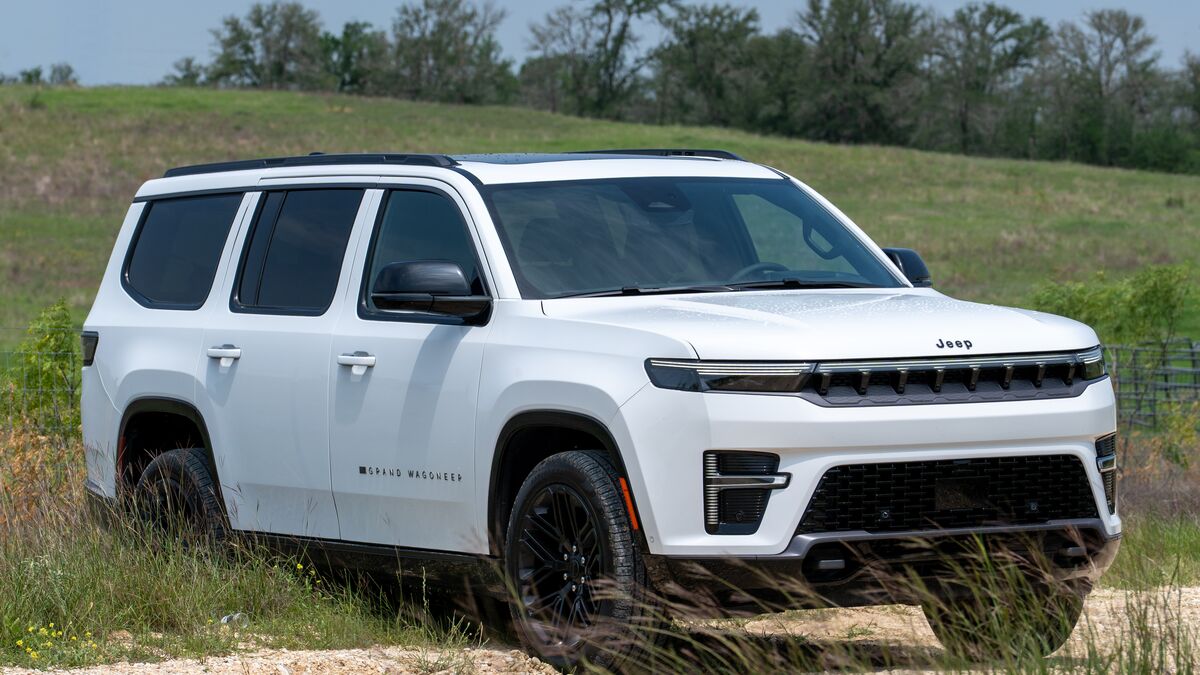
Jeep unveiled its refreshed 2026 Grand Wagoneer last week in Austin, Texas. Much of the attention focused on new styling, streamlined trims, and a lower starting price. Updated models, however, already began arriving in dealerships earlier this year. The more significant development lies in what the Grand Wagoneer signals about Jeep’s future powertrain strategy. That shift is led by its upcoming range‑extended electric vehicle (REEV), a hybrid system Jeep calls a first for an American full‑size SUV.
Unlike traditional hybrids or plug‑in hybrids, the Grand Wagoneer REEV relies exclusively on electric motors for propulsion. The gasoline engine never drives the wheels. Instead, it acts as an onboard generator. It produces electricity when the battery depletes. In day‑to‑day driving, the SUV behaves like a battery‑electric vehicle. It delivers quiet, smooth acceleration and reduces the need for frequent charging stops.
REEV vs. EREV
Jeep refers to the system as a range‑extended electric vehicle. The technology closely aligns with what other manufacturers label an extended-range electric vehicle (EREV). In both cases, electric motors drive the vehicle. A gasoline engine operates only as a generator and does not directly drive the wheels. The difference comes down more to terminology and positioning than engineering. Jeep’s use of “REEV” highlights its focus on real-world range and long-distance confidence for full-size SUV buyers. Other brands, including Scout Motors, emphasize electric‑first driving by using the extended range electric vehicle (EREV) label.
Jeep built the REEV system around a 92-kWh liquid-cooled battery pack. Engineers mounted the pack centrally to preserve interior space and maintain a flat cabin floor. When the charge runs low, a 3.6‑liter V6 engine spins a 130‑kW generator. The generator produces electricity to extend the total range. Jeep projects a combined driving range of more than 500 miles. The system pairs electric operation for daily use with gasoline‑powered reassurance for longer journeys.
That reassurance stands out as one of the REEV’s key advantages. Many drivers still experience range anxiety. This concern grows when traveling long distances, towing, or driving in areas with limited charging infrastructure. With the REEV setup, drivers do not rely exclusively on public charging networks. Refueling with gasoline allows the vehicle to generate power virtually anywhere.
Electric Power
Jeep plans to release the REEV later in 2026 as the flagship powertrain for the Grand Wagoneer. The automaker estimates output at 647 hp and 620 lb-ft of torque. That makes it the most powerful Grand Wagoneer to date. Jeep claims the SUV can reach 60 mph in about five seconds. That figure is notable for a 3‑row vehicle designed for family use and serious towing.

From the outside, Jeep takes a restrained approach. The electrified Grand Wagoneer looks nearly identical to its internal‑combustion counterparts. Jeep made this decision to normalize the technology rather than spotlight it. External identifiers are limited. They include a charging port behind the driver’s side front wheel and 8‑lug wheels instead of six. The wheels support the added weight of the battery pack. Otherwise, the REEV carries over the same design updates as the rest of the 2026 lineup. These include a redesigned front fascia, an illuminated 7-slot grille, full-width LED lighting, and a chrome-free exterior.
Internal Combustion Still Leads The Way
Current 2026 Grand Wagoneer models continue to use Stellantis’ 3.0-liter Hurricane twin-turbo inline-6. The engine delivers a palpable 420 hp and 468 lb-ft of torque. It also offers best-in-class available towing of up to 10,000 pounds. While that engine will remain an important option, the REEV should position Jeep ahead of competitors such as Scout Motors. Scout has announced similar extended‑range electric technology for its upcoming Terra and Traveler models. Those vehicles are not expected to reach the market until 2027.
The new powertrain arrives amid a broader branding shift. Beginning with the 2026 model year, Jeep unified its full‑size SUV lineup under the Jeep Grand Wagoneer nameplate. The move eliminates the previous distinction between Wagoneer and Grand Wagoneer models. The SUVs will be offered in short‑ and long‑wheelbase configurations. Buyers can choose 4×2 or 4×4 drivetrains across six trim levels. Pricing starts at $66,790 and climbs past $103,000 for the Summit Reserve.
Automakers continue to search for ways to electrify large SUVs without sacrificing range or capability. Jeep’s range‑extended approach stands out. The refreshed 2026 Grand Wagoneer sharpens the model’s design and packaging. The REEV, scheduled to arrive later this year, represents Jeep’s most consequential step forward in electrification.