
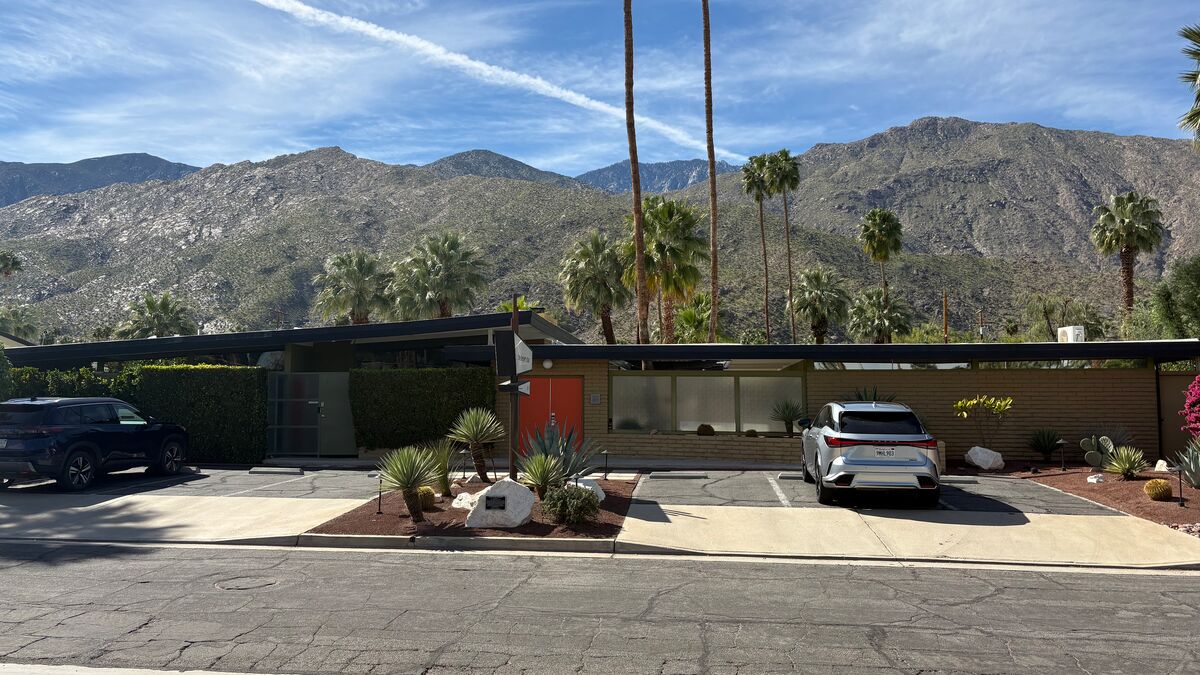
It’s a tantalizing prospect: a weekend of sun-drenched palms surrounded by mid-century “desert modernism” architecture, complete with a sparkling pool, bike riding, vintage shopping, and good eats. All within a few hours’ drive. Do it in an affordable car, and you might feel like you’re living large on a budget.
Of course, well-laid plans are all too often tempered by reality: the smooth cruise into the desert meets Friday afternoon traffic. Or, war erupts abroad and gas prices skyrocket, impacting the general appeal of a road trip. Not to mention the cost of the car itself.
As it turns out, volatility at home and overseas and steadily increasing costs for both manufacturers and consumers may actually be shifting the divide between “high end” and “affordable.” As consumers are forced to pay more, they are demanding more from their cars, and manufacturers must respond in ways that both keep customers interested and don’t hurt profits. Is the answer to this dilemma that manufacturers and car buyers meet in the middle? Perhaps it’s indeed the way we will all comfortably make it out to our weekend getaways – those that also represent a happy compromise of value and experience.
Driving Loud Value?
As the average transaction price for a new car hovers around $50,000 and inflation continues to impact our wallets, “affordability” and “value” are becoming frequent visitors to the lexicons of manufacturers and car buyers alike. For Nissan, a Palm Springs, California, getaway on a budget is one example of a vision for those looking to take a meet-in-the-middle approach and take a road trip more locally in an affordable vehicle.
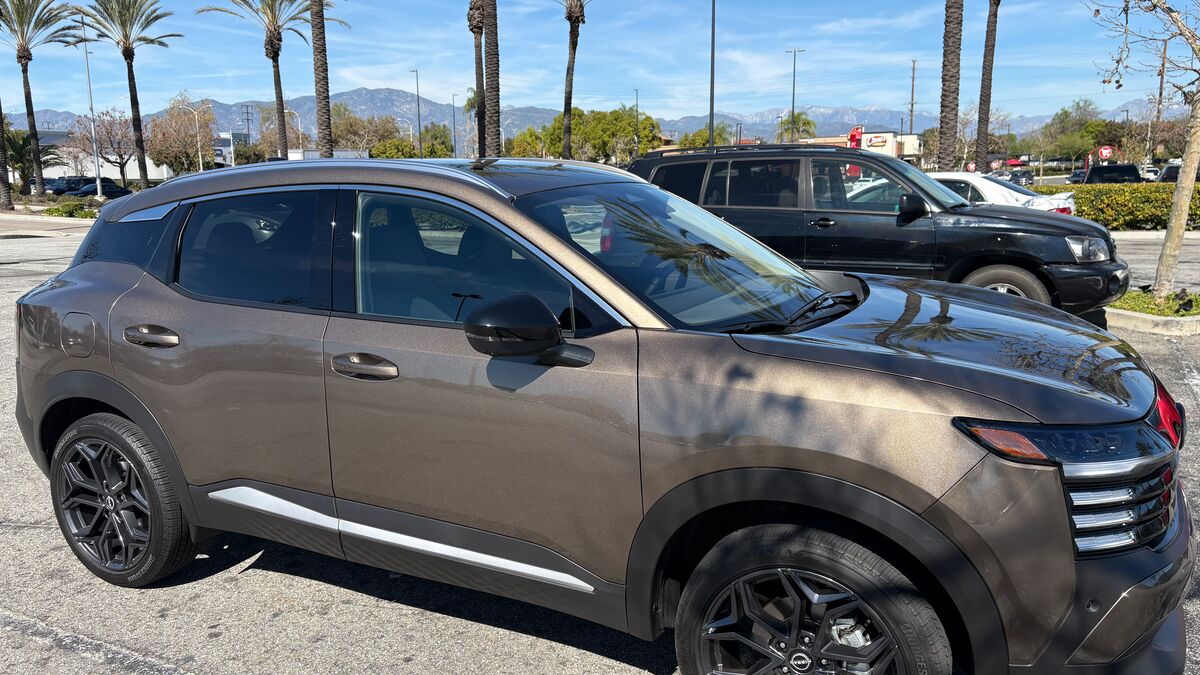
This is “experience-driven travel,” and to get a taste of it, I headed to Palm Springs in a 2026 Nissan Kicks for the manufacturer’s Drive Loud Value program, featuring Nissan’s lineup of cars starting under $30,000 – the Rogue, Kicks, Sentra, and Leaf – and the idea that an economical getaway in an affordable car can be closer to home and still feel luxurious without breaking the bank.
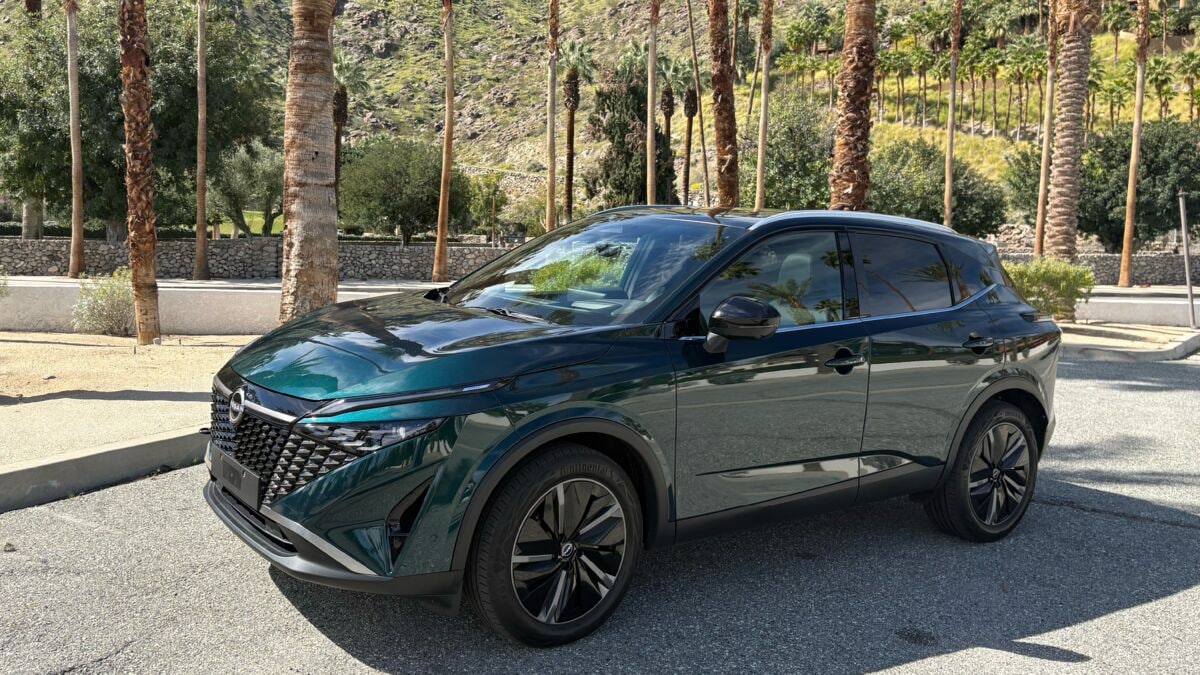
While in the desert, I also took a spin in a Nissan Qashqai. The Qashqai is coming to the United States later this year as the 2027 Rogue e-Power. It’s essentially a series hybrid system, where a small gas engine works as a generator to charge the battery pack, which in turn powers the electric motor — or motors, in models with all-wheel drive (AWD). The gas engine only charges the battery – it doesn’t power the wheels. “E-Power” technology is in its third iteration overseas and has now been tuned for American roads.
It was a quick ride, and my initial impression was this: quiet, efficient, and promising for a new hybrid SUV option for the 2027 market. However, I didn’t drive the car on the highway or spend much time exploring its features, and the U.S. version won’t necessarily be a complete copy-and-paste of the Qashqai.
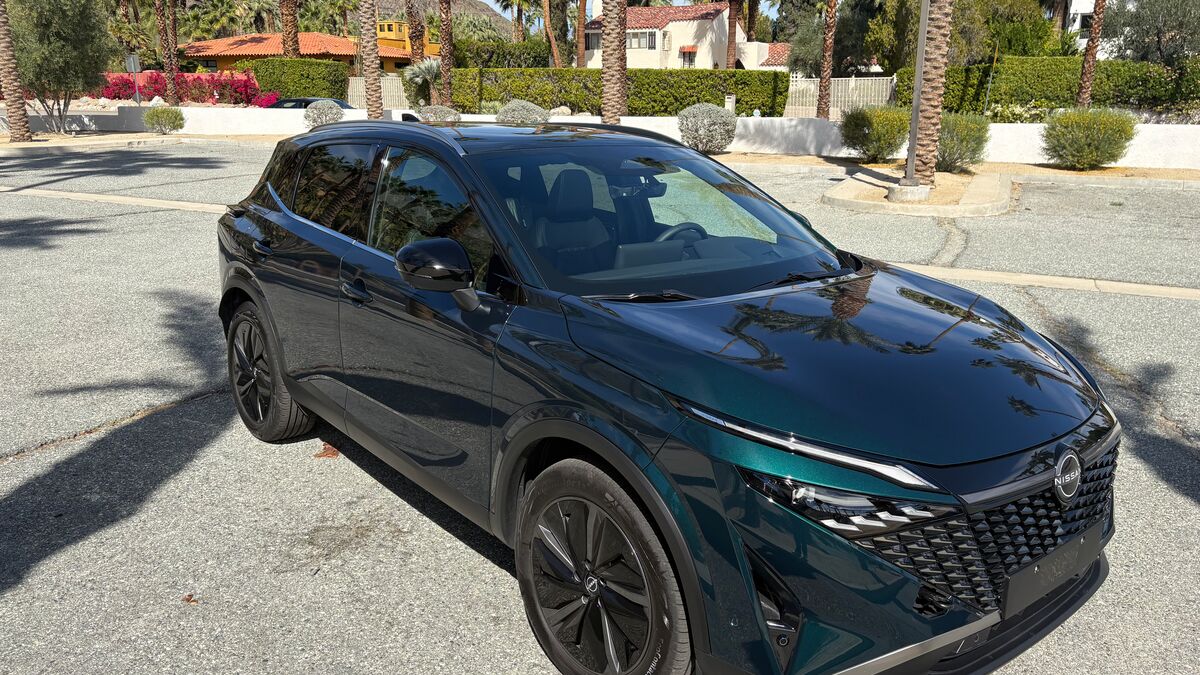
It’s also crucial to note, in this discussion of affordability and value, that while the gasoline-only Rogue may start at under $30,000, the Rogue e-Power almost certainly won’t, if the new 2026 PHEV Rogue is any indication (it starts at $45,590).
The Dollars and Sense of It
A new vehicle has always been a big purchase, but various factors in recent years have contributed to a significant spike in vehicle prices, along with sharply rising costs in virtually every other aspect of life.
“Affordability these days is a multifaceted issue,” said Ed Kim, President and Chief Analyst of the automotive consulting firm AutoPacific. “It’s not just the transaction price and it’s not just the MSRP. It’s a combination of factors. Everything from financing, maintenance costs, even insurance.”
Groceries, rent, and fuel are up, while incomes are flat. But people still need to live and find joy in times of rest. So what should car shoppers make of this puzzle: finding travel adventure, balancing affordability, and identifying a car that best meets their needs?
Affordability vs. Value
An important step is differentiating between “affordability” and “value.” The terms are often used interchangeably, but adding some nuance to how they are deployed can help buyers reframe the vehicle shopping and buying process.
“Something being affordable means it’s within the means of your budget to buy. But just because something is within your means to purchase doesn’t necessarily mean it’s always the best deal or the best value,” said Kim. “You could have car A and B, and let’s say both of these are $30,000 vehicles. On the surface level, they’re equally affordable. But one may offer additional attributes at that price point that ultimately make it a better value.”
Buyers can think of it like a funnel that starts with affordability – you can only get what you can afford, after all – and then narrows to value. Value will look different to different individuals, including for travel and vacations, as people seek to prioritize affordability and unique experiences.
Is “Experience-Driven Travel” a Value Answer?

The affordability-and-value funnel idea doesn’t just apply to vehicle purchases. Travel is expensive, and the average person or family can’t necessarily afford frequent lavish vacations to far-flung places.
Nissan billed our Palm Springs weekend as “experience-driven travel,” and to better understand this concept, I spoke to Kathryn Evans of Fora Travel about what exactly the term means. “It’s less people saying, ‘I really want to go to Paris,’ or ‘I really want to go to Morocco,’ and more, ‘I want to experience great food and wine’ or ‘I want to stargaze in the desert,’” Evans said.
In short: It’s not just about going to a location, but rather immersing yourself in a destination. “It’s about starting from an experience that you want to have or from a feeling you want to have, and then matching that with a destination. And then, once you’re planning for that destination, matching it with the things that you’re doing,” said Evans.
As it happens, car travel can be a great way to engage in these types of adventures. You can slow the pace of your trip, go on unplanned side quests, not have to worry about checked-bag fees, and generally have more autonomy and freedom in your traveling.

However, while it does come with that added freedom, travel by road still isn’t free. In the face of rising gas prices, it might look a little less appealing, but in the value funnel, there’s an awful lot you can get from this mode of travel.
Don’t overlook road trips as an option. It’s tempting to think that the only way to get to amazing places is by plane, but that can be a self-limiting perspective. “There’s not a single state where there’s not something historic, naturally beautiful, and interesting, whether it’s an arts and culture scene, a food scene, or an outdoor natural site,” said Evans. “There is something beautiful to see near your hometown.”
Where Value Meets Vehicle
Rising costs are a stressful burden, but they do not have to mean despair or being forced to stay at home. Another trend is emerging, and it’s an interesting one. Because people are holding on to cars longer now, manufacturers need to incentivize buyers to consider new vehicles. How do they do that? One trend we may be seeing more of is OEMs raising the bar on base trims.
Affordable Doesn’t Mean Bare-Bones
If you think of vehicles in previous decades, there was often a very sharp divide between “luxury” and “affordable.” Base trims were truly basic. These cars might have been cheaper price-wise, but they also sure felt that way.
However, as economic pressures grow and car buyers are finding themselves investing tens of thousands of dollars in vehicles (“After your house, a car tends to be one of your biggest expenses,” reminded Kim), consumer pressure is also increasing on manufacturers to produce cars that meet a much higher standard for those investing so heavily in them.
“If you look at, for example, a base grade Sentra or Kicks, they have everything that you fundamentally need in a vehicle. They even have the fancy screens and all that as standards,” said Kim. “Increasingly, you don’t have to sacrifice nearly as much as you once had to. That in and of itself makes it easier on the shopper.”
More often now, we’re seeing base trims come with many standard features. This is a trend Kim sees continuing in the long term. “Think about a Sentra from 20 years ago, which would have been a truly basic car with wind-up windows and probably didn’t even have a CD player,” he said. “Compare that to a Sentra S of today, and the new Sentra S is not more expensive than the base Sentra from 20 years ago…the customer is getting a lot more for their inflation-adjusted dollar than they were 20 years ago.”
How Automakers Keep Costs in Check
How is it that manufacturers can afford to raise the standard of their base trims? There are a few ways manufacturers can do this while still keeping their ledgers balanced. Steve Diehlman of Nissan’s communications team explained that one way manufacturers can help balance costs is by extending vehicle refresh cycles.
“Years ago, the typical refresh cycle was five years,” said Diehlman, “and you’re starting to see some automakers stretch into six, seven years so they can amortize those costs over a little bit longer period of time.” He pointed to the previous-gen Frontier, for example, which lasted 16 years.
Of course, some manufacturers and models are under pressure to refresh more frequently, but this can also be tempered by factors such as broader technological progress. “As time passes, technologies become cheaper. Things that used to be really expensive aren’t expensive anymore,” said Kim. “That’s why Nissan and some of the other automakers can afford to put big screens in even their most basic cars now. Screens used to be a really premium item. Now, screens are cheap. You can put them in a cheaper car, and it doesn’t hurt the affordability of it.”
Although the subscription fees for what you can access on those screens are certainly a topic for another article.
Final Thoughts
What does all of this ultimately mean for car shoppers? What it comes down to is this: you’ll be spending more on a new or used vehicle no matter what. The good news is that the quality and features of base trims are greatly improving, so just because you make the most economical choice doesn’t necessarily mean you have to sacrifice comfort or advanced features.
There’s also a lifestyle consideration. If you are flexible and willing to have adventures that are a road trip away, you can have amazing (and valuable) experiences closer to home with just your car as transportation. Value doesn’t have to mean sacrifice, and getting to a sun-soaked desert weekend in a comfortable car that fits your budget can hold an awful lot of satisfaction if the alternative is debt and stress.